
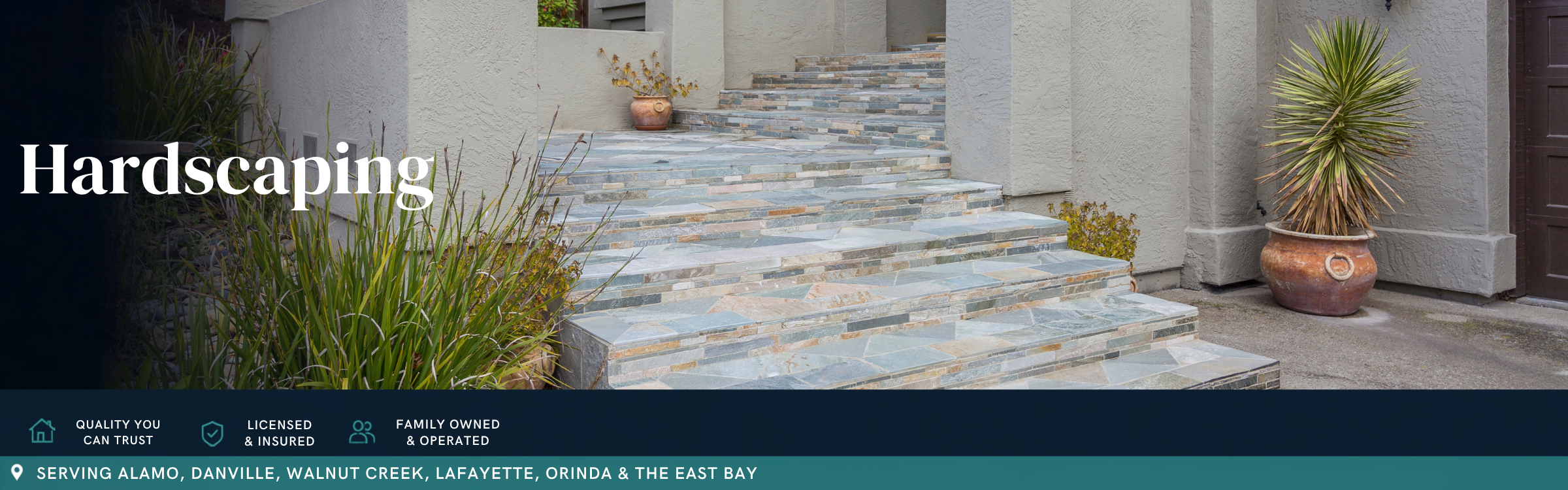
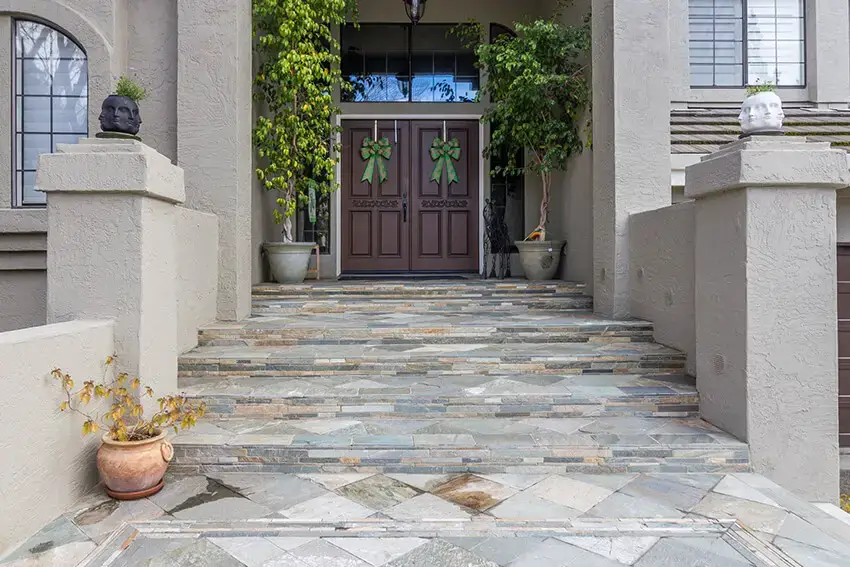

Custom slate stone staircase and hardscaping with decorative entry steps and landscaping for a Walnut Creek home remodeled by Toupin Construction.

We are Covid compliant according to OSHA guidelines.

Concrete & Hardscaping in Walnut Creek & the East Bay
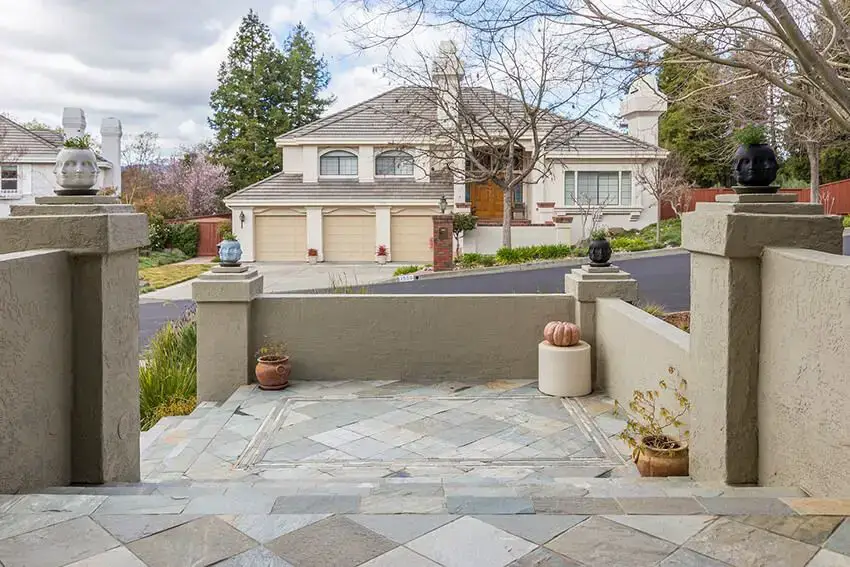
Concrete & Hardscaping in Walnut Creek & the East Bay

Concrete doesn't usually get the glamorous part of the remodel.

Until you step onto a beautifully finished patio.

Or follow a new walkway through the yard.

Or finally replace the cracked driveway you've been looking at every time you come home.

At Toupin Construction, we build concrete patios, walkways, steps, driveways, and hardscapes in Walnut Creek and throughout the East Bay with the same philosophy we bring inside the house: prepare it correctly, build it for the way people actually live, and pay attention to what's underneath the finished surface.

Because concrete may look simple when it's done.

Getting it there isn't.

Request a Concrete Consultation

Concrete Is Only as Good as What's Underneath It

  • The finished surface gets all the attention.
  • Smooth.
  • Broom finished.
  • Stamped.
  • Colored.
  • Exposed aggregate.
  • But concrete starts long before the truck arrives.
  • The existing soil, excavation, base material, grading, compaction, forms, reinforcement, drainage, thickness, joints, and placement all affect how the finished work performs.
  • Pouring concrete on poorly prepared ground doesn't make the ground stop moving.
  • That's why preparation matters.

Know the Lingo: What Is the Base?

The base is the prepared material underneath the concrete slab.

Depending on the project and conditions, the existing soil may be excavated and a compacted aggregate base installed before concrete placement.

Think of it as the foundation underneath the finished slab.

Homeowners will never see it again once the concrete is poured.

But they'll live with the consequences if it wasn't prepared correctly.

Concrete Patios in Walnut Creek

A patio can completely change a backyard.

Suddenly there's somewhere to put the table.

The grill has a real home.

Furniture isn't sinking into dirt or grass.

And the transition from inside to outside starts to feel intentional.

We build concrete patios for homeowners throughout Walnut Creek and surrounding East Bay communities, whether the patio is the entire project or part of a larger outdoor remodel.

That can include:

  • New concrete patios
  • Replacement patios
  • Outdoor dining areas
  • Seating areas
  • Concrete around pergolas
  • Concrete adjoining decks
  • Walkways connecting outdoor spaces
  • Steps and landings
  • Decorative concrete finishes
  • Outdoor living areas

The best patio isn't necessarily the biggest slab you can fit in the yard.

It's the one that makes the yard more useful.

Start With How You'll Use the Patio

Before talking about finish or color, we want to know what happens out there.

Do you eat outside?

Entertain?

Want space for a grill?

Need room for a large table?

Have kids?

Dogs?

Want a fire feature?

Need a clear path to another part of the yard?

A four-person table and a ten-person dining table don't need the same patio.

Neither does a quiet reading area and a backyard built for parties.

We design around real life first.

Concrete + Decking = Better Outdoor Living

Concrete + Decking = Better Outdoor Living

Some of our favorite outdoor spaces don't rely on one material.

A raised deck can transition down to a concrete patio.

Concrete pathways can connect the deck to the yard.

A hardscape landing can make deck stairs feel intentional.

A pergola might sit over one portion while another remains open to the sky.

The materials don't need to match.

They need to work together.

Concrete Walkways & Garden Paths

A walkway is more than a line from Point A to Point B.

It affects how someone moves through the property.

Good pathways can connect:

  • Front doors
  • Driveways
  • Side yards
  • Backyards
  • Patios
  • Decks
  • Gates
  • Garden areas
  • Accessory structures
  • Outdoor entertaining spaces
  • Width matters.
  • Slope matters.
  • Drainage matters.
  • The relationship to landscaping matters.

And once mobility becomes part of the conversation, those details matter even more.

Walkways & Aging in Place

A pathway that's easy to ignore at 30 can become a real obstacle later.

  • Loose stepping stones.
  • Uneven surfaces.
  • Abrupt changes in elevation.
  • Narrow routes.
  • Poor lighting.
  • Steep transitions.

During an aging-in-place remodel, outdoor circulation deserves the same attention as doorways and showers inside the home.

Where conditions allow, thoughtful hardscape design can create more stable, predictable routes around the property.

Explore Aging-In-Place Remodeling

Know the Lingo: What Does “Grade” Mean?

Grade refers to the slope or elevation of the ground or finished surface.

You don't necessarily want outdoor concrete perfectly flat.

Water needs somewhere to go.

A properly planned surface typically incorporates slope so water moves toward an appropriate drainage location rather than pooling against the house or sitting on the slab.

In construction, flat and level aren't always the same thing.

Outside, intentional slope is often part of good workmanship.

Drainage Is Part of Hardscape Design

Concrete doesn't absorb water the way soil does.

Rain hits the surface and moves somewhere else.

That means every new patio, walkway, or driveway changes the way water moves across the property.

We don't want to solve one problem and create another.

A beautiful new patio isn't very beautiful when rainfall sends water toward the foundation.

That's why we're looking at:

  • Existing grade
  • Direction of drainage
  • Adjacent landscaping
  • Downspouts
  • Property conditions
  • Existing hardscape
  • Low areas
  • Connections to the house

Good outdoor construction respects water.

Because water always finds somewhere to go.

Concrete Driveways

A driveway has to do a lot more work than a patio. Vehicles are heavy. The concrete experiences repeated loads in similar locations over and over again.

Driveway construction therefore requires careful attention to the conditions underneath, slab design, joints, drainage, and the transitions to the garage and street.

Driveway projects can include:

  • New concrete
  • Replacement of deteriorated concrete
  • Driveway widening where allowed
  • Improved transitions
  • Decorative finishes
  • Connections to walkways
  • Associated drainage work where appropriate

And there's an important permit distinction in Walnut Creek.

Private-property concrete flatwork such as replacing a driveway, creating a patio, or forming a pathway generally doesn't require a building permit by itself. However, work involving the driveway approach or public sidewalk falls within the public right-of-way and requires a City encroachment permit.

We check the actual scope rather than assuming the whole driveway follows one rule.

Know the Lingo: Driveway vs. Driveway Approach

They sound like the same thing.

They're not.

The driveway is generally the portion on your private property.

The driveway approach is the portion connecting your private driveway through the public right-of-way to the street.

That distinction matters because work in the public right-of-way can involve different permits and City requirements.

Concrete Steps & Landings

Steps look simple.

Until they're uncomfortable.

Or inconsistent.

Or the landing doesn't leave enough room to comfortably open the door.

Concrete steps require planning around:

  • Rise
  • Run
  • Landings
  • Adjacent doors
  • Handrails where required
  • Drainage
  • Existing grade
  • Connections to surrounding walkways
  • Finished elevation

Small dimensional changes can make a big difference in how stairs feel underfoot.

Know the Lingo: Rise & Run

  • The rise is the vertical height of a step.
  • The run is the horizontal depth where your foot lands.
  • Consistency matters.
  • Our bodies get into a rhythm when walking stairs. One step that's noticeably different from the others can become a trip hazard because your foot expects the next step to behave like the last one.
  • That's why stair layout gets measured carefully.

Concrete Finishes

Concrete doesn't have to mean one gray surface.

Finish options can change the texture and appearance dramatically.

Broom Finish

A broom is drawn across the surface while the concrete is still workable, creating fine texture.

It's common on exterior surfaces because the texture provides more grip than a highly smooth finish.

Smooth Finish

A smoother finish creates a more refined surface but needs to be chosen carefully for outdoor areas where slip resistance may matter.

Exposed Aggregate

An exposed aggregate finish reveals some of the stone within the concrete surface.

It creates texture and visual variation.

Stamped Concrete

Stamped concrete uses forms or mats to create patterns in the surface while the concrete is still workable.

Depending on the design, it can reference stone, pavers, or other patterns.

Integral or Applied Color

Concrete can incorporate color to create something other than standard gray.

But concrete is a natural-looking material.

Variation happens.

For us, that's part of its character.

Toupin Tip: Look at Concrete Outside

Like decking, paint, and tile, concrete samples look different under natural light.

Color changes as concrete cures.

Sunlight changes how texture reads.

Wet concrete looks different than dry concrete.

And a tiny sample can't completely predict the natural variation across a full patio.

If you're considering decorative concrete, look at completed outdoor installations whenever possible.

Why Does Concrete Crack?

  • Here's the question every homeowner eventually asks.
  • Can you guarantee my concrete will never crack?
  • No responsible contractor should promise that.
  • Concrete is strong.
  • It's also rigid.
  • It shrinks as it cures, reacts to temperature changes, sits over soil that can move, and experiences loads throughout its life.
  • The goal of good concrete construction isn't pretending movement doesn't exist.
  • It's planning for it.

Know the Lingo: Control Joints

Those lines you see intentionally placed in concrete aren't necessarily cracks.

They're often control joints.

Concrete naturally shrinks as it cures and may eventually crack as stresses build.

Control joints create intentionally weakened locations designed to encourage that movement to occur along planned lines rather than randomly through the middle of the slab.

You can't control everything concrete does.

But good construction gives it a better place to move.

Expansion & Movement

Concrete expands and contracts as temperatures change.

It can also interact with buildings, existing slabs, posts, and other fixed elements.

That's why different types of joints and separation details may be used depending on the project.

This is another reason one giant uninterrupted slab isn't automatically better.

Sometimes the lines in a concrete patio are doing real work.

Reinforcement

Depending on the application, concrete can include reinforcement such as steel reinforcing bars or welded wire reinforcement.

The appropriate approach depends on the project design, loads, site conditions, and applicable construction requirements.

Reinforcement doesn't make concrete magically immune to cracking.

Its job is more nuanced than that.

It can help the slab manage stresses and maintain integrity when movement occurs.

Know the Lingo: Rebar

Rebar is short for reinforcing bar.

It's steel installed within concrete to add tensile strength.

Concrete itself is excellent under compression—meaning it handles squeezing forces very well.

Steel complements it by helping where concrete is weaker under tension.

Together, they make a very useful construction team.

What About Existing Cracked Concrete?

A crack doesn't automatically tell us what the correct repair is.

A small stable crack is different from:

  • Significant vertical displacement
  • Widespread deterioration
  • Settlement
  • Drainage-related movement
  • Major structural cracking
  • Heaving
  • Crumbling concrete

Sometimes repair makes sense.

Sometimes replacement is the better long-term decision.

Before covering or patching the symptom, we want to understand what's happening underneath it.

Concrete Repair vs. Replacement

Repair May Make Sense When:Replacement May Make More Sense When:
Damage is localizedSettlement is significant
Most of the slab remains soundLarge areas are deteriorated
The underlying problem has been identifiedDrainage needs to change
The surface is still generally usableThe layout no longer works
Replacement would be unnecessarily extensiveElevations need substantial correction
Previous patches have accumulated
The new outdoor design requires a different footprint

We're not interested in recommending demolition just because concrete looks old.

We're interested in figuring out which work actually solves the problem.

Concrete Near the House

Concrete installed next to a home deserves extra attention.

We're thinking about:

  • Finished height
  • Door thresholds
  • Siding or stucco clearances
  • Drainage
  • Water direction
  • Existing foundation conditions
  • Steps
  • Door operation
  • Future flooring transitions
  • Landscaping

Putting the patio at the wrong elevation can create problems at doors or against exterior finishes. These aren't decorative details. They're construction decisions.

Permeable Hardscaping

Traditional concrete is an impervious surface, meaning rainfall generally runs across it rather than passing through it.

In some outdoor projects, permeable paving systems may be worth considering.

These systems are designed to allow water to move through the surface into underlying layers rather than becoming immediate runoff.

Options can include permeable pavers and certain pervious pavement systems.

Whether that's appropriate depends on the site, soil, drainage strategy, intended loads, and project design.

It's one more tool in the outdoor-remodeling toolbox.

Concrete Around Pools & Wet Areas

Outdoor surfaces around water need an additional layer of consideration.

Slip resistance matters.

Drainage matters.

Heat matters.

Texture matters.

Bare feet matter.

A finish that's beautiful in a front entry isn't automatically the right surface around a wet area.

Material decisions should respond to how the space will actually be used.

Hardscaping Throughout the East Bay

Walnut Creek isn't flat.

Neither are many of the communities around it.

Homes in Lafayette, Orinda, Moraga, Alamo, Danville, and neighborhoods throughout Contra Costa County often sit on sites with slopes, grade changes, mature landscaping, and established drainage patterns.

Hardscaping has to respond to the property.

Sometimes the goal is creating a level outdoor gathering space.

Sometimes it's connecting two elevations.

Sometimes it's creating usable areas within a sloped yard.

The site drives the design.

Concrete & East Bay Ranch Homes

Many East Bay ranch homes have wonderful relationships with their backyards.

Large sliders.

Covered patios.

Single-story floor plans.

Outdoor spaces directly off kitchens and living rooms.

Updating the concrete can help strengthen that indoor-outdoor connection without changing the architecture of the house.

A new patio can make a remodeled kitchen feel larger simply because people naturally move outside.

That's one reason we like thinking about hardscape during whole-house remodeling instead of treating the yard as completely separate.

Concrete During a Remodel

Concrete work often intersects with other trades.

A patio may connect to a new sliding door.

A walkway may lead to a remodeled entry.

Deck stairs may land on a new concrete pad.

Electrical may be planned for outdoor lighting.

A pergola may need structural footings.

Drainage may need to coordinate with the new hardscape.

This is where being a full residential remodeling contractor becomes useful.

We can see the outdoor project as part of the house rather than an isolated slab.

Concrete Footings

Not every concrete project is something you'll eventually walk on.

Concrete also supports structures.

  • Decks.
  • Pergolas.
  • Posts.
  • Other outdoor structures.

A footing is the structural concrete element that transfers loads into the ground.

The size, depth, reinforcement, and design depend on the structure and site conditions.

That little patch of concrete hidden underground may be doing more work than the entire visible patio.

Concrete & Fences

Fence posts also live at the intersection of carpentry and concrete.

The post has to stay plumb.

The fence has to resist wind.

A gate places additional load on its supporting post.

So the post installation matters as much as the boards attached to it.

That's why our Concrete page and our Decks & Fences page should work together.

Do You Need a Permit for Concrete in Walnut Creek?

It depends on the project.

For straightforward private-property flatwork, Walnut Creek currently states that a homeowner can create a patio, replace a private driveway, or form a pathway without a building permit.

But that doesn't mean all concrete work is permit-free.

Work within the public right-of-way—such as a sidewalk, curb and gutter, or driveway approach—requires an encroachment permit.

Projects involving grading, drainage changes, retaining conditions, structural work, or other construction can involve additional requirements.

The scope matters.

That's why we check before we build.

Learn About Our Remodeling Process

What to Expect From Toupin Concrete & Hardscape Work

Step 1

Tell Us What's Not Working

Maybe the patio is too small.

The concrete is failing.

There's nowhere comfortable to put outdoor furniture.

Water moves the wrong direction.

Or the backyard simply feels disconnected from the house.

We start there.

Step 2

Evaluate the Site

We look at:

  • Existing concrete
  • Grade
  • Drainage
  • Access
  • Soil and site conditions
  • Adjacent structures
  • Doors and thresholds
  • Landscaping
  • Other planned outdoor improvements

Outdoor construction doesn't happen in a vacuum.

Step 3

Plan the Layout

This is where we decide size, shape, transitions, walkways, steps, connections, and how the concrete relates to the rest of the yard.

Step 4

Choose the Finish

Broom finish?

Decorative finish?

Color?

Texture?

The answer depends on appearance, maintenance, safety, and where the concrete is being installed.

Step 5

Permits & Approvals

If the scope requires permits, right-of-way approval, or other review, we account for that before work begins.

Step 6

Prepare

  • Excavation.
  • Base.
  • Forms.
  • Compaction.
  • Reinforcement where required.
  • Grade.
  • Preparation is where the finished slab starts.
Step 7

Place & Finish the Concrete

Concrete placement is coordinated carefully because once the material arrives, the clock is running.

The crew places, levels, works, joints, and finishes the concrete according to the project.

Step 8

Cure

Concrete doesn't become fully mature the moment it feels hard.

Curing is the process that allows concrete to develop strength after placement.

The surface needs time.

Step 9

Final Walkthrough

Once the project is ready, we walk through the finished work and surrounding area with you.

Why Choose Toupin Construction for Concrete & Hardscaping?

More Than 40 Years Remodeling East Bay Homes

We've worked throughout Walnut Creek and Contra Costa County for decades.

We understand the homes.

We understand the terrain.

And we're used to solving the unexpected things remodeling uncovers.

We Think Beyond the Slab

Concrete often touches the house.

  • Doors.
  • Decks.
  • Drainage.
  • Fences.
  • Steps.
  • Electrical.
  • Landscaping.
  • Outdoor living.

We look at those connections instead of treating the slab as an isolated project.

Real Construction Knowledge

  • Base preparation.
  • Grade.
  • Forms.
  • Reinforcement.
  • Control joints.
  • Drainage.
  • Footings.
  • Those aren't extras.
  • They're the work.

One Contractor for the Outdoor Space

If your project includes a patio, deck, fence, exterior door, pergola, painting, or other remodeling work, we can coordinate the pieces together.

Local to Walnut Creek

Toupin Construction is located at:

1818 Tice Valley Blvd.
Walnut Creek, CA 94595

We serve homeowners throughout Walnut Creek and surrounding East Bay communities.

Licensed & Insured

CA LIC #626819

Concrete & Hardscaping FAQs

Does concrete always crack?

Concrete can crack because it shrinks as it cures, experiences temperature changes, carries loads, and sits over ground that can move. Good design and construction use preparation, reinforcement where appropriate, and planned joints to help manage movement, but promising that exterior concrete will never develop a crack isn't realistic.

How long does concrete take to cure?

Concrete starts hardening quickly, but curing and strength development continue well beyond the day of placement. When the surface can be walked or driven on depends on the mix, project, weather, thickness, and other conditions. We give homeowners project-specific instructions rather than one rule for every slab.

Do I need a permit for a concrete patio in Walnut Creek?

Walnut Creek currently states that straightforward concrete flatwork on private property—such as creating a patio—does not itself require a building permit. Other work associated with the project may still trigger requirements, so the complete scope needs to be reviewed.

Do I need a permit to replace my driveway?

The private-property portion of a driveway can generally be replaced as flatwork without a building permit in Walnut Creek. Work involving the driveway approach in the public right-of-way requires an encroachment permit.

Can you replace cracked concrete?

Yes. We first evaluate the extent of damage and likely cause to determine whether repair or replacement makes more sense.

Can you build a concrete patio next to a deck?

Yes. Combining decking and concrete can create distinct outdoor zones and work especially well where elevation changes are involved.

Can concrete help make my yard more accessible?

Potentially. Properly designed hardscape can create more stable pathways, reduce certain uneven transitions, and improve circulation around a property. The appropriate design depends on the existing grade and homeowner's needs.

Do you install stamped concrete?

Decorative concrete finishes, including stamped applications, can be considered depending on the project and desired design.

Do you build concrete steps?

Yes. Steps, landings, walkways, patios, and associated outdoor hardscaping can all be incorporated into a project.

Do you do concrete outside Walnut Creek?

Yes. Toupin Construction serves homeowners throughout the East Bay and Contra Costa County, including Lafayette, Moraga, Orinda, Danville, Alamo, Pleasant Hill, and surrounding communities.

The Concrete You See Starts With the Work You Don't

That's a theme you'll hear from us a lot.

The beautiful tile depends on the substrate.

The deck depends on the framing.

The cabinets depend on good installation.

And concrete depends on preparation, grade, drainage, forms, joints, and everything else that's about to disappear underneath the finished surface.

That's construction.

For homeowners looking for a concrete contractor in Walnut Creek or throughout the East Bay, Toupin Construction brings more than 40 years of remodeling experience to patios, walkways, driveways, steps, and the outdoor spaces that connect them.

Let's make the backyard feel like part of the home.

Request A ConsultationView Our Portfolio

  • Toupin Construction
    1818 Tice Valley Blvd
    Walnut Creek, CA 94595
  • 925-937-4200
  • CA LIC #626819