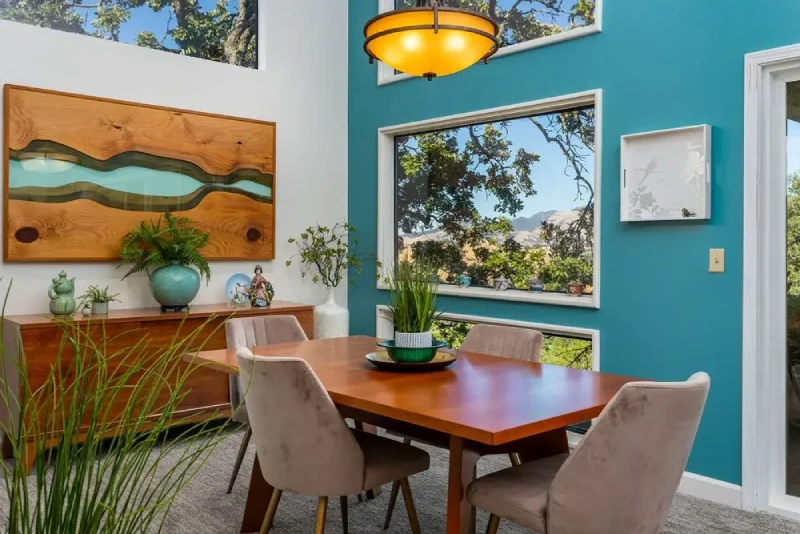






Modern living room featuring a bold blue accent wall, natural wood fireplace surround, and professionally painted interior finishes by Toupin Construction in Walnut Creek, California.

We are Covid compliant according to OSHA guidelines.

Painting

Aging in Place & Accessibility Remodeling in Walnut Creek

Interior Painting & Finishes in Walnut Creek & Rossmoor

Paint is usually one of the last things to go into a remodel.

It's also one of the first things you notice when you walk into the room.

A beautiful kitchen can still feel unfinished if the walls are poorly patched. Crisp new trim loses its impact under a rough coat of paint. And even the most carefully chosen color won't look right if the surface underneath it wasn't properly prepared.

At Toupin Construction, we provide professional interior painting and finishes in Walnut Creek, Rossmoor, and throughout the East Bay as part of the same craftsmanship-first approach we've brought to remodeling for more than 40 years.

Because the paint matters.

But the preparation matters even more.

Request a Painting Consultation View Our Remodeling Portfolio

Professional Painting Is Mostly Preparation

This is one of the biggest differences between a quick paint job and a professional finish.

The actual rolling and brushing are only part of the work.

Before finish paint goes on, the surface may need:

  • Patching
  • Sanding
  • Cleaning
  • Deglossing
  • Caulking
  • Drywall repair
  • Nail-hole filling
  • Priming
  • Masking
  • Protection of surrounding surfaces

Our painters treat preparation as part of the finished product, not something to rush through so they can start painting.

That's particularly important during a remodel.

By the time painting begins, there may already be new flooring, tile, cabinetry, countertops,

plumbing fixtures, lighting, and finish carpentry in the room.

We don't just need to make the walls look good.

We need to protect everything around them too.

Know the Lingo: What Does “Cutting In” Mean?

  • Cutting in is painting the clean edge where a roller can't reach—along ceilings, corners, trim, windows, doors, cabinetry, and other finished surfaces.
  • It's usually done by hand with a brush.
  • A good cut line disappears into the finished room.
  • A bad one catches your eye every time you walk past it.
  • That steady-hand work is one of the details that separates professional painting from simply getting color onto a wall. Toupin's own painter feature highlights cutting in, maintaining a wet edge while rolling, and careful surface preparation as core parts of professional paint work.

Know the Lingo: What Is LRV?

LRV stands for Light Reflectance Value.

It describes how much visible light a paint color reflects.

The scale runs from 0 for very dark colors toward 100 for highly reflective light colors.

You don't need to become a paint scientist.

But LRV can help explain why two seemingly similar colors make a room feel completely different.

A lower-LRV color absorbs more light and can feel deeper or moodier.

A higher-LRV color reflects more light and can make the room feel brighter.

It's another tool—not a rule.

Interior Painting in Walnut Creek

Fresh paint can change the entire feeling of a home without changing the floor plan at all.

We provide interior painting for spaces including:

Living rooms

Kitchens

Bathrooms

Bedrooms

Hallways

Entryways

Offices

Laundry rooms

Whole-home interiors

Ceilings

Doors

Trim and molding

Cabinetry

Built-ins

Sometimes painting is the final step of a larger remodel.

Other times it's the project.

Either way, we approach the finish with the same attention to preparation and detail.

Walls

Walls

Walls occupy a huge amount of visual space.

That means little imperfections become surprisingly noticeable once everything is freshly painted.

Before painting, we look for things like nail holes, dents, old repairs, cracking, damaged drywall, and inconsistent texture.

Simply painting over them doesn't make them disappear.

Sometimes it makes them easier to see.

Good wall preparation creates the smooth, consistent surface the finish coat needs.

Ceilings

Ceilings

Ceilings are easy to ignore until they're painted badly.

Uneven coverage, roller marks, repaired areas, stains, and changes in sheen can become especially visible when daylight moves across the room.

Ceilings may need patching and priming before finish paint goes on, particularly after lighting changes, drywall work, or other remodeling.

And ceiling color doesn't automatically have to be bright white.

Depending on the room, wall color, natural light, and ceiling height, slightly warmer or softer tones can create a much more cohesive result.

Read Our Paint & Color Articles

Trim, Baseboards & Doors

  • This is where precision really shows.
  • Baseboards.
  • Window casing.
  • Door casing.
  • Crown molding.
  • Interior doors.
  • Built-ins.
  • Trim paint typically needs to stand up to more touching, cleaning, bumps, and everyday wear than wall paint.
  • The finish also tends to catch more light, which makes drips, brush marks, rough caulk lines, and poor preparation easier to see.
  • That's why finish carpentry and painting are so closely connected.
  • Beautiful molding deserves a beautiful finish.

Know the Lingo: What Is Caulking?

  • Caulk is a flexible material used to close small gaps and joints.
  • In painting, you'll often see it where trim meets drywall or where different finished surfaces come together.
  • That little line matters.
  • Proper caulking can make baseboards and casing look integrated into the room rather than like separate pieces attached to the wall.
  • It's one of those details most homeowners don't consciously notice when it's done well.
  • They definitely notice when it isn't.

Cabinet Painting

Cabinets are not walls.

And painting them like walls usually produces a result that looks exactly like what it is: cabinets that were painted like walls.

Cabinet painting requires a different level of surface preparation and finish work.

Depending on the cabinetry and existing finish, the process can involve:

  • Removing doors and drawer fronts
  • Removing hardware
  • Cleaning and degreasing
  • Sanding or deglossing
  • Repairing imperfections
  • Priming
  • Applying a durable cabinet finish
  • Proper curing
  • Reinstalling doors, drawers, and hardware
  • Checking alignment

Kitchen cabinets get touched constantly.

They're exposed to grease, moisture, cleaning products, spills, and everyday use.

So the coating has to do more than look pretty on day one.

Painting vs. Refacing Cabinets

They're not the same thing.

Cabinet painting keeps your existing doors, drawer fronts, and cabinet boxes and changes their finish.

Cabinet refacing keeps the cabinet boxes but replaces the doors and drawer fronts while changing the visible exterior surfaces.

And cabinet replacement removes the existing cabinetry completely.

If your kitchen layout works and the cabinets are structurally sound, we can help determine which approach actually makes sense rather than automatically recommending the largest project.

Explore Cabinet Refacing Explore Kitchen Remodeling

Primer Isn't Optional Prep

Primer isn't just inexpensive paint that goes underneath the expensive paint.

It has a job.

Primer helps create a consistent surface for finish coats and can be especially important over:

  • New drywall
  • Drywall repairs
  • Bare wood
  • Significant color changes
  • Certain stains
  • Patched areas
  • Previously glossy surfaces
  • Difficult substrates

Skipping necessary primer can lead to inconsistent sheen, poor adhesion, uneven color, or repaired areas showing through the finished wall.

The topcoat can only perform as well as the surface beneath it allows.

Know the Lingo: What's a Paint “Holiday”?

  • This one sounds much more fun than it is.
  • A holiday is an area the painter missed or where the paint coverage is too thin.
  • It basically “took the day off.”
  • These spots can become especially visible when light hits the wall at an angle.
  • Professional painters check their work from different directions and under different lighting rather than assuming a wall is finished because it looks good from one spot.
  • Toupin's painter article specifically identifies holidays and raking light as part of checking professional paint coverage.
Why Two Coats Matter

Why Two Coats Matter

Color isn't the only reason for applying multiple finish coats.

Consistent coverage matters too.

A complete paint system gives the finish more uniform color and sheen and reduces the chance of underlying colors or variations showing through.

Paint manufacturers have their own application requirements, and specific projects can vary, but we don't approach finish painting with a “whatever covers fastest” mentality.

The goal isn't to use the least paint possible.

The goal is a finished surface that looks intentional.

Choosing the Right Paint Sheen

Paint color gets all the attention.

Sheen quietly changes how that color actually looks and performs.

Flat & Matte

Flat & Matte

Flat and matte finishes reflect relatively little light.

That can help minimize the appearance of surface imperfections and create a soft finish.

They're commonly considered for ceilings and lower-contact areas, although today's washable matte products give homeowners additional options.

Eggshell

Eggshell

Eggshell has a slight sheen without becoming obviously shiny.

It's a popular wall finish because it balances appearance with cleanability.

Satin

Satin

Satin reflects more light and can offer increased durability for areas that receive more contact.

Semi-Gloss

Semi-Gloss

Semi-gloss is often used on doors, trim, and other surfaces where durability and easy cleaning matter.

The extra reflection can also emphasize the profile of molding and architectural details.

Toupin Tip

Toupin Tip

Don't choose paint sheen from a chart alone.

Light changes everything.

A sheen that looks subtle on a small sample can become much more noticeable across an entire wall facing a large window.

Whenever possible, look at the actual finish in the actual room.

Color Selection: Why Paint Looks Different at Home

  • You find the color.
  • It looks great in the store.
  • You bring it home.
  • Suddenly it's green.
  • Or purple.
  • Or beige.

Welcome to undertones.

Paint interacts with everything around it:

  • Natural light
  • Artificial lighting
  • Flooring
  • Cabinetry
  • Countertops
  • Tile
  • Furniture
  • Window orientation
  • Time of day

That's why we like testing colors in the actual room before committing to an entire house.

Your East Bay light matters too. Toupin's existing color content already discusses how natural light conditions around Rossmoor, Walnut Creek, and neighboring communities can shift the appearance of neutrals throughout the day.

Know the Lingo: What Is LRV?

LRV stands for Light Reflectance Value.

It describes how much visible light a paint color reflects.

The scale runs from 0 for very dark colors toward 100 for highly reflective light colors.

You don't need to become a paint scientist.

But LRV can help explain why two seemingly similar colors make a room feel completely different.

A lower-LRV color absorbs more light and can feel deeper or moodier.

A higher-LRV color reflects more light and can make the room feel brighter.

It's another tool—not a rule.

Don't Choose Paint Color Before the Fixed Finishes

If you're remodeling, paint should rarely be the first selection.

Paint comes in thousands of colors.

Your countertop doesn't.

Neither does your flooring.

Or tile.

Or cabinet finish.

We generally want the harder-to-change materials to establish the palette first.

Think:

Flooring → cabinetry → countertops → tile → paint

Paint can then connect those materials instead of forcing everything else to coordinate with a color you chose six months earlier.

Explore Our Selections Process

Painting After a Remodel

Painting is often the trade that brings everything together at the end.

The tile setter has finished.

Cabinets are installed.

Finish carpentry is complete.

Drywall repairs are done.

Electrical and plumbing fixtures are going in.

Then the painter gets to make all those transitions feel intentional.

It's why painting can't be treated like an afterthought.

The painter is working around some of the most finished—and expensive—surfaces in the entire home.

Protection and patience matter.

Rossmoor Interior Painting

We've spent decades working in homes throughout Rossmoor.

Sometimes the project is a complete condo renovation.

Sometimes it's a kitchen or bathroom.

And sometimes a homeowner simply wants to refresh the home they've loved for years.

Paint can be particularly transformative in older Rossmoor condos where the floor plan may not need major changes but darker colors, dated finishes, or years of accumulated repairs make the home feel tired.

A thoughtful palette can:

  • Brighten rooms
  • Connect adjoining spaces
  • Highlight new cabinetry
  • Refresh trim
  • Modernize an older interior
  • Create better visual flow
  • Make remodeled areas feel connected to existing spaces

And because we're a remodeling contractor rather than simply a paint crew, we can look at the conditions surrounding the paint too.

If the wall needs drywall repair, trim work, carpentry, or another correction before painting, that's part of the conversation.

Explore Rossmoor Remodeling Explore Condo Remodeling

Exterior Painting & Finishes

Exterior paint doesn't only affect curb appeal.

It's also part of the protective finish system on your home.

Depending on the home and surface conditions, exterior preparation may include:

  • Cleaning
  • Scraping
  • Sanding
  • Repairs
  • Caulking
  • Priming
  • Surface preparation
  • Protecting surrounding landscaping and hardscape
  • Applying appropriate exterior coatings

Again, preparation drives the result.

Putting fresh paint over a failing surface doesn't fix the failure underneath it.

Wood Staining & Finishing

Not every wood surface should be covered with opaque paint.

Sometimes the grain is the whole point.

Wood stains and clear or protective finishes can highlight natural character while helping protect the material.

Depending on the project, that can include:

  • Doors
  • Trim
  • Built-ins
  • Woodwork
  • Architectural details
  • Other finished wood surfaces

The appropriate preparation and finish depend on the wood species, existing coating, location, exposure, and desired appearance.

When Paint Problems Aren't Actually Paint Problems

This is an important one.

Peeling paint doesn't always mean “bad paint.”

A stain doesn't automatically mean “paint over it.”

Cracking doesn't automatically mean “add caulk.”

Sometimes the visible finish is showing you a problem underneath.

Possible causes can involve:

  • Moisture
  • Drywall movement
  • Failed caulk
  • Damaged substrate
  • Poor previous preparation
  • Contamination
  • Incompatible coatings
  • Wood movement
  • Water intrusion

Before covering something up, we want to understand why it's happening.

That's the remodeler's advantage.

We're used to looking beyond the finished surface.

What to Expect From Toupin Painting

Step 1

Evaluate the Space

We look at what you're painting and, just as importantly, what condition it's currently in.

  • Are there repairs?
  • Stains?
  • Damage?
  • Old glossy finishes?
  • New drywall?
  • Fresh cabinetry or flooring we need to protect?
  • That determines the preparation.
Step 2

Choose Colors & Finishes

We help make sure color and sheen work with your flooring, cabinets, counters, tile, lighting, and the overall feeling you want for the room.

Step 3

Protect the Home

Floors, cabinetry, fixtures, countertops, hardware, furniture, and other finished surfaces need protection before painting begins.

Step 4

Prepare

  • Patch.
  • Sand.
  • Clean.
  • Caulk.
  • Prime where appropriate.
  • This is where much of the work happens.
Step 5

Paint

Once the surface is ready, finish paint can be applied using the appropriate tools and techniques for the surface.

Step 6

Detail & Walkthrough

We inspect edges, coverage, trim, transitions, and other finished details before calling the work complete.

Why Choose Toupin Construction for Painting?

More Than 40 Years Remodeling East Bay Homes

Our experience isn't limited to putting paint on finished walls.

We've spent decades building and remodeling the things underneath them too. Toupin's site describes the company as serving Walnut Creek, Rossmoor, and the East Bay and identifies its long-standing local remodeling presence.

We Understand the Whole Remodel

Painters work at the intersection of drywall, finish carpentry, cabinetry, flooring, tile, electrical fixtures, windows, and almost every other finished element.

Because we manage complete remodels, we understand how those trades interact.

We Respect Painting as a Trade

Painting isn't the easy job at the end.

Surface preparation, cutting, rolling, caulking, trim work, masking, spraying, and finish work require skill.

We believe the people doing that work deserve the same respect as every other craftsman on the job.

Preparation Comes First

A professional finish begins long before the paint can opens.

A professional finish begins long before the paint can opens.

We want to address them.

Local to Walnut Creek

Toupin Construction is located at 1818 Tice Valley Blvd. in Walnut Creek, and the company's listed service area includes Walnut Creek, Rossmoor, and the East Bay.

Licensed & Insured

CA LIC #626819

Painting FAQs

How often should I repaint the inside of my home?

There isn't one schedule that applies to every home. High-traffic spaces, children's rooms, kitchens, bathrooms, hallways, and trim may show wear sooner than lower-use spaces. Paint quality, preparation, moisture, sunlight, household activity, and the existing surface all affect longevity.

Should I paint before or after installing new floors?

During a remodel, sequencing depends on the project. Some painting work may happen before flooring while final coats and touch-ups happen later. The important part is coordinating the trades and protecting finished surfaces throughout construction.

Can you paint kitchen cabinets?

Yes. Cabinet painting requires different preparation and coatings than standard wall painting, and the existing cabinet condition needs to be evaluated first.

Can you repair drywall before painting?

Painting and drywall repairs often go hand in hand during remodeling. Damaged or poorly repaired areas should be addressed before finish paint is applied.

Do I need primer?

Not every previously painted wall automatically needs a full primer coat, but new drywall, bare materials, significant repairs, stains, difficult surfaces, and certain color changes may require primer. We evaluate the actual condition instead of applying one rule to every surface.

What paint sheen is best for walls?

It depends on the room, desired appearance, condition of the walls, amount of traffic, and product. Matte, eggshell, and satin finishes can all have appropriate applications.

Can you help choose paint colors?

Yes. Paint should work with the other fixed finishes in the room, including cabinetry, flooring, tile, countertops, and lighting.

Do you provide painting in Rossmoor?

Yes. Toupin Construction serves Rossmoor as part of its Walnut Creek and East Bay service area.

Do you paint as part of larger remodels?

Yes. Painting and finishing are part of Toupin's remodeling services and can be coordinated with kitchens, bathrooms, whole-house renovations, cabinetry, flooring, and other work.

A Great Paint Job Should Almost Disappear

You shouldn't walk into a finished room thinking about roller marks.

  • Or rough patches.
  • Or crooked cut lines.
  • Or why one section of the wall seems shinier than another.
  • You should notice the room.
  • The cabinets.
  • The tile.
  • The light coming through the windows.
  • The way everything finally feels connected.
  • That's what good finish work does.

For professional interior painting in Walnut Creek, Rossmoor, and the East Bay, Toupin Construction brings the same attention to preparation, craftsmanship, and detail that we bring to the rest of the remodel.

Because painting may be one of the last steps.

That doesn't make it the least important.

  • Toupin Construction
    1818 Tice Valley Blvd.
    Walnut Creek, CA 94595
  • CA LIC #626819