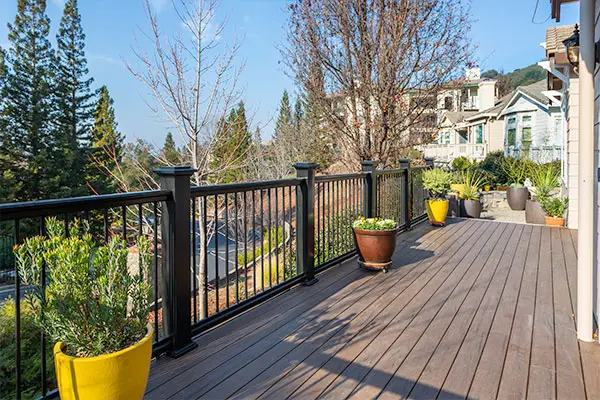
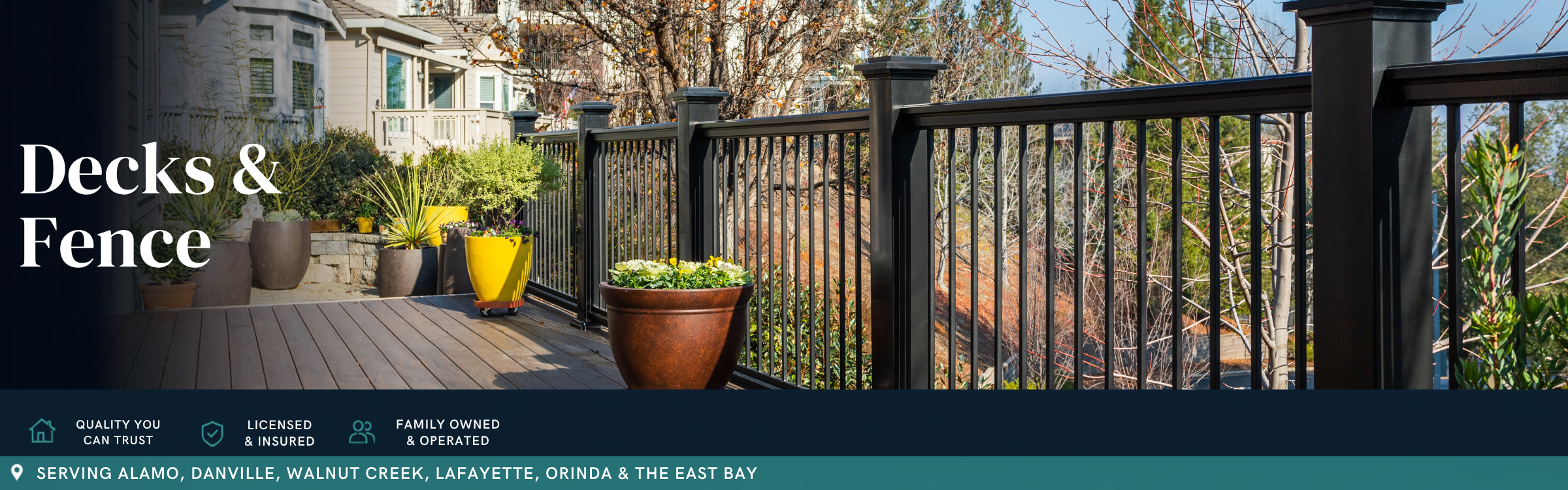






Composite backyard deck with black aluminum railing, decorative planters, and custom outdoor living space built by Toupin Construction in Walnut Creek, CA.

We are Covid compliant according to OSHA guidelines.

Decks/Fences

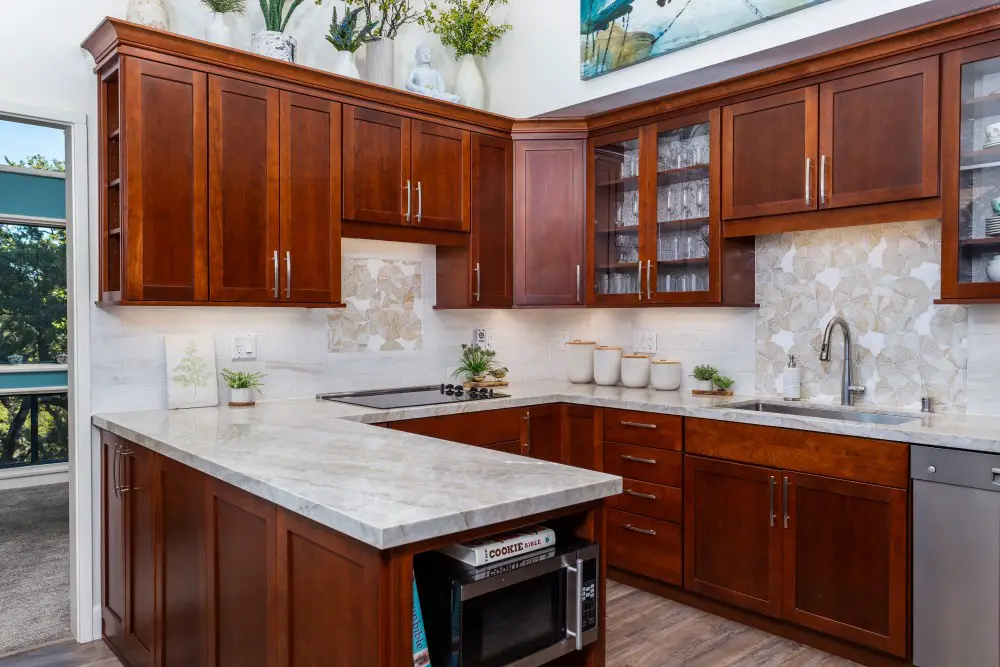
Open-concept kitchen featuring natural wood cabinetry, large island, black countertops, exposed wood beam ceiling, and modern fireplace in a luxury whole home remodel.

Decks & Fences in Walnut Creek & the East Bay

A good outdoor space changes the way you use your house.

Dinner moves outside.

The backyard becomes another living room.

Morning coffee gets a better view.

Kids and dogs have somewhere to run. Friends stay longer. And that forgotten stretch of yard finally becomes somewhere you actually want to spend time.

At Toupin Construction, we build decks and fences in Walnut Creek and throughout the East Bay, combining thoughtful design with the carpentry and structural knowledge that outdoor construction demands.

Because a deck isn't patio furniture.

It's part of the house.

A Beautiful Deck Starts Underneath It

This is the part nobody puts on Pinterest.

Joists

Posts

Beams

Footings

Connectors

Flashing

Fasteners

The framing underneath your deck determines whether the beautiful surface on top has a solid foundation.

Outdoor structures live through hot East Bay summers, winter rain, moisture, temperature changes, insects, and years of people walking, gathering, moving furniture, and living on them.

That's why we treat deck building as carpentry.

Not assembly.

Know the Lingo: What Is a Joist?

Joists are the horizontal framing members underneath the deck boards.

Think of them as the ribs of the deck.

The decking you see sits on top of them, but the joists help carry the load and transfer it through the rest of the structure.

Their size, spacing, material, connections, and condition all matter.

A beautiful composite deck installed over bad framing is still a bad deck.

Deck Building in Walnut Creek

Decks can solve several problems at once.

They can create usable space on a sloped yard.

Connect an interior room to the landscape.

Provide an outdoor dining area.

Create a gathering space around a view.

Or simply give you somewhere comfortable to sit outside.

We design and build decks for East Bay homeowners using materials and details appropriate for the home, site, and way the space will actually be used.

That can include:

  • New deck construction
  • Replacement decks
  • Wood decking
  • Composite decking
  • Deck stairs
  • Railings
  • Landings
  • Pergolas
  • Covered outdoor areas
  • Gates
  • Integrated outdoor living spaces

The goal isn't simply to add square footage outside.

It's to create outdoor space that feels connected to the home.

Wood vs. Composite Decking

This is usually one of the first decisions homeowners make.

And there's no universal winner.

Kitchen

Wood Decking

Real wood has something manufactured materials intentionally try to reproduce.

  • Variation
  • Texture
  • Grain
  • Warmth

Depending on the species and finish, a wood deck can complement traditional, ranch, mid-century, Craftsman, and contemporary East Bay homes beautifully.

But wood lives outside.

That means maintenance matters.

Depending on the material and exposure, wood may need periodic cleaning, staining, sealing, or refinishing to maintain its appearance and help protect it.

Composite Decking

Composite Decking

Composite decking is manufactured rather than milled from a solid piece of lumber.

Products vary by manufacturer, but composite decking is popular because it can provide the appearance of wood with reduced routine maintenance.

It doesn't need to be stained in the same way traditional wood decking does.

But “low maintenance” doesn't mean “no maintenance.”

Composite still needs cleaning, and product quality, installation requirements, heat exposure, expansion, fastening systems, and framing all matter.

Which Would We Choose

Which Would We Choose?

We'd ask questions first.

How much direct sun does the deck get?

What's the architecture of the house?

How much maintenance are you comfortable doing?

What look do you want?

How will you use the space?

What's underneath it?

What's your budget?

The best material is the one that fits the actual project.

Toupin Tip: Don't Pick Decking From a Tiny Sample

  • Take the sample outside.
  • Seriously.
  • Decking looks completely different in natural sunlight than it does under showroom lighting.
  • And if you're considering a darker composite color, leave that sample in direct afternoon sun and touch it.
  • The material you choose will spend its life outside.
  • Evaluate it there.
The East Bay Climate Matters

The East Bay Climate Matters

Outdoor construction in Walnut Creek isn't dealing with the same conditions as outdoor construction in Seattle or Phoenix.

  • We get hot, dry summers.
  • Strong sun.
  • Periods of winter rain.
  • Temperature swings.
  • And depending on the property, significant exposure.

Those conditions affect wood, finishes, fasteners, framing, and manufactured decking products differently.

Our own carpentry work has taught us how important proper wood selection, flashing details, and structural hardware are for exterior framing in this climate.

The material on top matters.

So does everything supporting it.

Know the Lingo: What Is Flashing?

Flashing is material used to help direct water away from vulnerable parts of a structure.

On a deck attached to a house, the connection between the deck and the home deserves particular attention.

Water should have a path away from the structure.

Not into it.

Flashing isn't glamorous.

You probably won't show it to anyone at your first backyard barbecue.

But it's one of those hidden construction details that can have a major impact on long-term performance.

What Is a Ledger Board?

On many attached decks, the ledger board connects the deck structure to the house.

That's a serious connection.

It isn't just a board screwed onto the siding.

The attachment, flashing, fasteners, framing, and existing structure all need to work together properly.

When we're evaluating an older deck, this is one of the areas worth paying attention to.

Deck Railings

Railings have two jobs.

Keep people safe.

Look like they belong on the house.

Depending on the project and applicable code requirements, railing options can include different materials, profiles, and styles.

A traditional wood railing creates one look.

A simpler contemporary railing creates another.

The important thing is that the railing isn't treated like something we remembered after the deck was already designed.

It's part of the architecture.

Deck Stairs

Deck stairs are another place where carpentry precision matters.

  • Rise.
  • Run.
  • Landing.
  • Handrails.
  • Guardrails.
  • Headroom.
  • Connections.

Small inconsistencies become noticeable very quickly when you're walking up and down a staircase.

And because exterior stairs are exposed to weather, material choice and construction details matter too.

Good stairs should feel comfortable without you having to think about why.

Know the Lingo: Rise & Run

The rise is the vertical height of each stair.

The run is the horizontal depth where your foot lands.

Consistent rise and run help stairs feel natural and predictable.

When one step is noticeably different from the others, your body notices—even if your brain doesn't immediately understand why.

That's why stair layout is measured carefully.

Pergolas & Covered Outdoor Spaces

Sometimes a deck needs something overhead.

A pergola can define an outdoor room, create visual structure, and provide partial shade depending on its design.

Covered outdoor spaces can go further by providing greater protection from sun and weather.

But adding overhead structure changes the project.

We're no longer thinking only about the deck surface.

We're thinking about posts, beams, attachment, loads, drainage, roofing where applicable, permits, and how the structure connects visually and physically to the house.

That's why we design the whole space together.

Building Around an East Bay View

One of the best things about remodeling around Walnut Creek, Lafayette, Orinda, Moraga, Alamo, and Danville is that the landscape is rarely boring.

  • Hills.
  • Oaks.
  • Mount Diablo.

Backyards that drop away into views you don't want to block.

Deck design should respond to that.

Sometimes that means thinking carefully about railing.

Sometimes it's deck orientation.

Sometimes it's deciding where people will actually sit.

And sometimes the best design move is doing less.

If the view is the star, let it be the star.

Fence Installation in Walnut Creek

A fence seems simple until you start asking what it's supposed to do.

  • Privacy?
  • Security?
  • Keep a dog in?
  • Define a property line?
  • Hide equipment?
  • Reduce visibility from the street?
  • Create a backdrop for landscaping?
  • Improve curb appeal?
  • Different goals produce different fences.

We build and replace fences throughout Walnut Creek and surrounding East Bay communities with attention to both function and appearance.

Wood Privacy Fences

Wood remains one of the most familiar residential fencing materials because it's versatile, repairable, and works with a wide range of home styles.

A wood privacy fence can create a strong visual boundary without making the backyard feel commercial or institutional.

Design options can vary through:

  • Board orientation
  • Spacing
  • Cap details
  • Post details
  • Stain or finish
  • Gate style
  • Height where permitted
  • Decorative elements

A fence can be practical and still look considered.

Good Fences Start With Good Posts

The fence boards get the attention.

The posts do the work.

Fence posts have to resist wind, movement, gate loads, soil conditions, and years of outdoor exposure.

If the posts move, the fence moves.

If the posts fail, the fence follows.

That's why we don't think of fence installation as simply attaching boards together.

The foundation matters here too.

Gates & Entryways

A gate is basically a moving section of fence.

Which means it needs more thought than a stationary section.

  • A gate has weight.
  • It swings.
  • People pull on it.
  • Wind pushes it.
  • Hardware moves.
  • Posts carry the load.

We've all seen the backyard gate that has to be lifted two inches before it'll latch.

That's usually not a hardware problem alone.

The structure supporting the gate matters.

A well-built gate should operate smoothly, latch correctly, and feel like an intentional part of the fence.

Know the Lingo: What Does “Plumb” Mean?

If something is plumb, it's perfectly vertical.

You'll hear carpenters talk about things being:

  • Level — perfectly horizontal.
  • Plumb — perfectly vertical.
  • Square — meeting at the correct angle.

Fence posts need to be plumb.

Deck framing needs to be level where appropriate.

Corners and layouts need to be square.

These basic carpentry concepts sound simple.

Getting them right across an entire outdoor structure is the craft.

Fence Design & Your Home's Architecture

We don't believe every house needs the same six-foot fence copied down the property line.

The fence should make sense with the house.

A traditional wood fence may complement an older ranch beautifully.

A cleaner horizontal design may work better with contemporary architecture.

A decorative front-yard fence needs a different level of openness than a backyard privacy fence.

The goal is for the fence to feel like it belongs there.

Not like it arrived from a catalog.

Privacy Without Building a Fortress

More privacy doesn't always mean taller and more solid.

Sometimes landscaping can do part of the work.

Sometimes changing the fence orientation helps.

Sometimes a screen near a seating area solves the problem better than enclosing the entire yard.

And sometimes a full privacy fence really is the right answer.

We start with what you're trying to hide—or what you're trying to protect—before deciding what to build.

Deck & Fence Repair vs. Replacement

Not every aging outdoor structure automatically needs to be torn down.

But not every old structure is worth saving either.

That's where evaluation matters.

A Repair May Make Sense When:

A Repair May Make Sense When:

  • The underlying structure is sound
  • Damage is isolated
  • Most framing remains in good condition
  • The problem has a clear, repairable cause
  • The existing design still works for you
Replacement May Make More Sense When:

Replacement May Make More Sense When:

  • Structural deterioration is widespread
  • Posts or framing are failing
  • The deck no longer meets your needs
  • Significant portions need rebuilding
  • The existing layout is poor
  • Previous repairs have accumulated
  • You're already changing the outdoor design substantially

We don't want to put beautiful new deck boards over framing that shouldn't stay.

And we don't want to demolish sound structure just because something looks old.

We look first.

Signs Your Deck Needs Attention

Call someone to evaluate your deck if you notice:

  • Soft or deteriorating wood
  • Loose railings
  • Significant movement
  • Sagging areas
  • Cracked or damaged structural members
  • Loose stairs
  • Corroded hardware
  • Water damage near the house connection
  • Posts that appear deteriorated
  • Boards that are badly splitting or failing
  • A deck that simply doesn't feel solid underfoot

Don't diagnose structural safety from a website checklist.

If something feels wrong, have it looked at.

Decks, Fences & Aging in Place

Outdoor spaces should remain usable as life changes too.

During an accessibility or aging-in-place remodel, we may consider:

  • Safer stair configurations
  • Handrails
  • Better lighting
  • Easier transitions
  • Clearer pathways
  • Appropriate landings
  • Gates that are easier to operate
  • Reduced trip hazards

Sometimes accessibility isn't about adding something obvious.

It's about removing the little obstacles that make a space harder to use.

Deck Lighting

The backyard doesn't stop existing when the sun goes down.

Thoughtful lighting can improve both atmosphere and safety.

Depending on the project, outdoor lighting might help illuminate:

  • Stairs
  • Landings
  • Railings
  • Pathways
  • Seating areas
  • Gates
  • Outdoor dining spaces

We prefer thinking about lighting while the project is being designed rather than figuring out where to hide wires after everything is finished.

That's the benefit of planning the outdoor space as a whole.

How Decks Connect to Patios & Hardscapes

Not every outdoor surface should be wood or composite.

Sometimes the best backyard combines materials.

A deck may step down to a concrete patio.

A path may connect the deck to a side yard.

Hardscape can create a landing around stairs.

Concrete and decking can define different outdoor zones.

That's why our Deck & Fence service connects naturally with our Concrete & Hardscape work.

The backyard doesn't care which service-page category something belongs to.

It all has to work together.

Do Decks & Fences Require Permits?

Sometimes.

Requirements depend on the type of structure, dimensions, height, location, attachment to the home, property conditions, and local jurisdiction.

Decks involving elevated structures, stairs, guards, structural framing, or attachments to a home can trigger building requirements.

Fence requirements can involve height, location, corner visibility, property lines, and other local standards.

The important part is figuring this out before construction.

Not after the neighbor asks a question.

Toupin Construction handles permitting as part of the larger remodeling process when permits are required.

Property Lines & Fences

Here's one place where we slow down.

A contractor shouldn't casually decide where your legal property line is.

Existing fences aren't always proof of the actual boundary.

If there's uncertainty about property ownership or boundary location, that needs to be resolved appropriately before building a new fence.

Moving a fence six inches sounds insignificant.

Until those six inches belong to your neighbor.

What to Expect From Toupin Deck & Fence Construction

Step 1

Talk About How You Want to Use the Space

Forget materials for a minute.

What do you actually want to do outside?

Entertain?

Eat dinner?

Get more privacy?

Create a safe place for kids or pets?

Replace something that's failing?

That tells us much more than “I want a deck.”

Step 2

Evaluate the Property

We look at the home, grade, existing structures, access, drainage considerations, surrounding landscape, and how the proposed work connects to everything around it.

Step 3

Design & Materials

  • Wood or composite?
  • Railing style?
  • Stairs?
  • Pergola?
  • Fence style?
  • Gate?
  • Finish?

This is where the outdoor space starts taking shape.

Step 4

Permits & Planning

When permits or other approvals are required, we account for them before construction begins.

Step 5

Build the Structure

  • Footings.
  • Posts.
  • Beams.
  • Joists.
  • Connections.

This is where the carpentry earns its keep.

Step 6

Finish the Visible Surfaces

  • Decking.
  • Railings.
  • Stairs.
  • Fence boards.
  • Gates.
  • Hardware.

Stain or finish where appropriate.

Step 6

Finish the Visible Surfaces

  • Decking.
  • Railings.
  • Stairs.
  • Fence boards.
  • Gates.
  • Hardware.

Stain or finish where appropriate.

Why Choose Toupin Construction for Decks & Fences?

More Than 40 Years of East Bay Remodeling

We've spent decades building and remodeling homes throughout Walnut Creek and Contra Costa County.

We understand how the parts of a home connect.

Inside and outside.

Real Carpentry Experience

Toupin Construction was built on carpentry.

They're carpentry.

And we treat them that way.

We Look Underneath

The surface gets the compliments.

The structure determines whether it deserves them.

We pay attention to framing, connections, flashing, hardware, and preparation before covering everything with beautiful finish materials.

We Can Build the Whole Outdoor Space

Deck stairs are another place where carpentry precision matters.

  • Deck.
  • Fence.
  • Concrete.
  • Doors.
  • Windows.
  • Painting.
  • Lighting coordination.

When several elements come together, having one remodeling contractor looking at the whole picture can simplify the project.

Local to Walnut Creek

Toupin Construction is located at:

1818 Tice Valley Blvd.
Walnut Creek, CA 94595

We serve homeowners throughout Walnut Creek and surrounding East Bay communities.

Licensed & Insured

CA LIC #626819

Frequently Asked Questions

Is wood or composite decking better?

Neither is universally better. Wood offers natural character but typically requires more maintenance. Composite can reduce maintenance while providing a wide range of appearances. Budget, sun exposure, architecture, maintenance expectations, and homeowner preference all matter.

How long does a deck last?

There isn't one honest number for every deck. Material, construction, exposure, drainage, maintenance, structural details, and environmental conditions all affect lifespan.

Does composite decking get hot?

It can. Surface temperature varies by product, color, sun exposure, and weather conditions. Darker materials exposed to strong direct sun can become quite warm, which is why we recommend evaluating actual samples outdoors.

Can you replace the decking but keep the framing?

Sometimes, if the existing structure is in good enough condition and appropriate for the new decking system. We evaluate the framing before recommending that approach.

Do I need a permit for a deck in Walnut Creek?

Permit requirements depend on the specific project, including deck height, size, location, structural design, and attachment. We determine the applicable requirements for the proposed work rather than assuming every deck is the same.

Do I need a permit for a fence?

Fence requirements vary based on height, location, property conditions, and local rules. Front-yard and corner conditions can also have different restrictions than backyard fencing.

Can you build a pergola over my deck?

Depending on the property and design, yes. Adding overhead structure affects framing, loads, connections, and potentially permitting, so we evaluate it as part of the complete structure.

Can you repair an existing deck?

Potentially. Whether repair makes sense depends on the extent and location of deterioration and the condition of the underlying structure.

Can you build gates with the fence?

Yes. Gates and entryways can be incorporated into the fence design.

Do you build decks outside Walnut Creek?

Yes. Toupin Construction serves homeowners throughout the surrounding East Bay, including communities such as Lafayette, Moraga, Orinda, Pleasant Hill, Alamo, and Danville.

Build the Part of Your Home Without a Ceiling

Some of the best rooms don't have four walls.

  • They have a table.
  • A grill.
  • A few chairs.
  • Maybe a view of Mount Diablo.
  • And people you actually want to spend time with.
  • A well-built deck or fence doesn't just improve the backyard.
  • It changes how you use your home.

For deck building in Walnut Creek and throughout the East Bay, Toupin Construction brings more than 40 years of remodeling and carpentry experience to the structure underneath, the details you see, and everything in between.

Let's build something worth going outside for.

  • Toupin Construction
    1818 Tice Valley Blvd.
    Walnut Creek, CA 94595
  • CA LIC #626819