


By using our website, you agree to the use of cookies as described in our Cookie Policy
Blog
Permits Aren't the Scary Part
Remodeling Process · Permits
Permits Aren't the Scary Part
What you actually need to know before remodeling in Walnut Creek or Rossmoor — and why skipping permits is a much bigger deal than people think
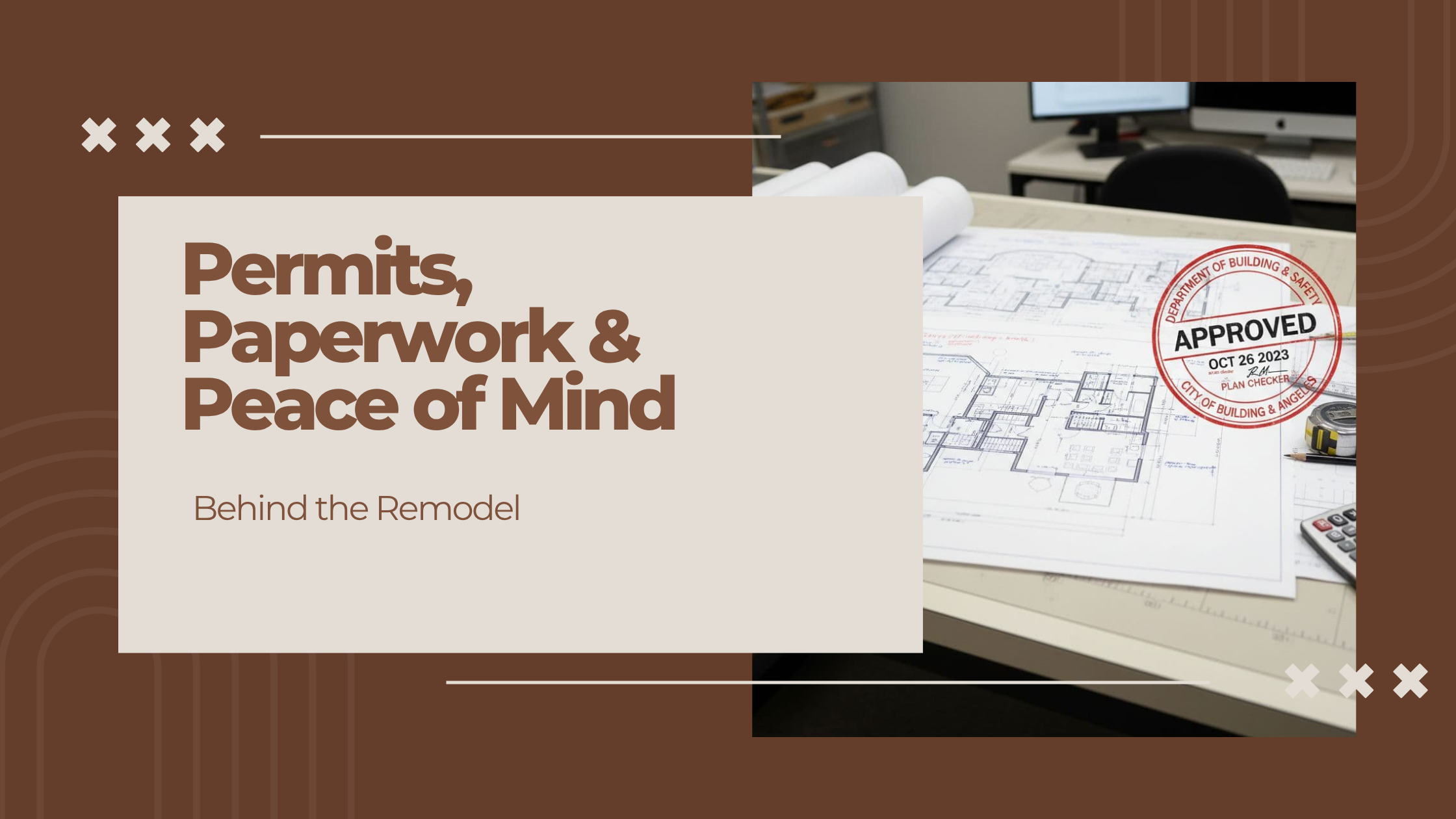
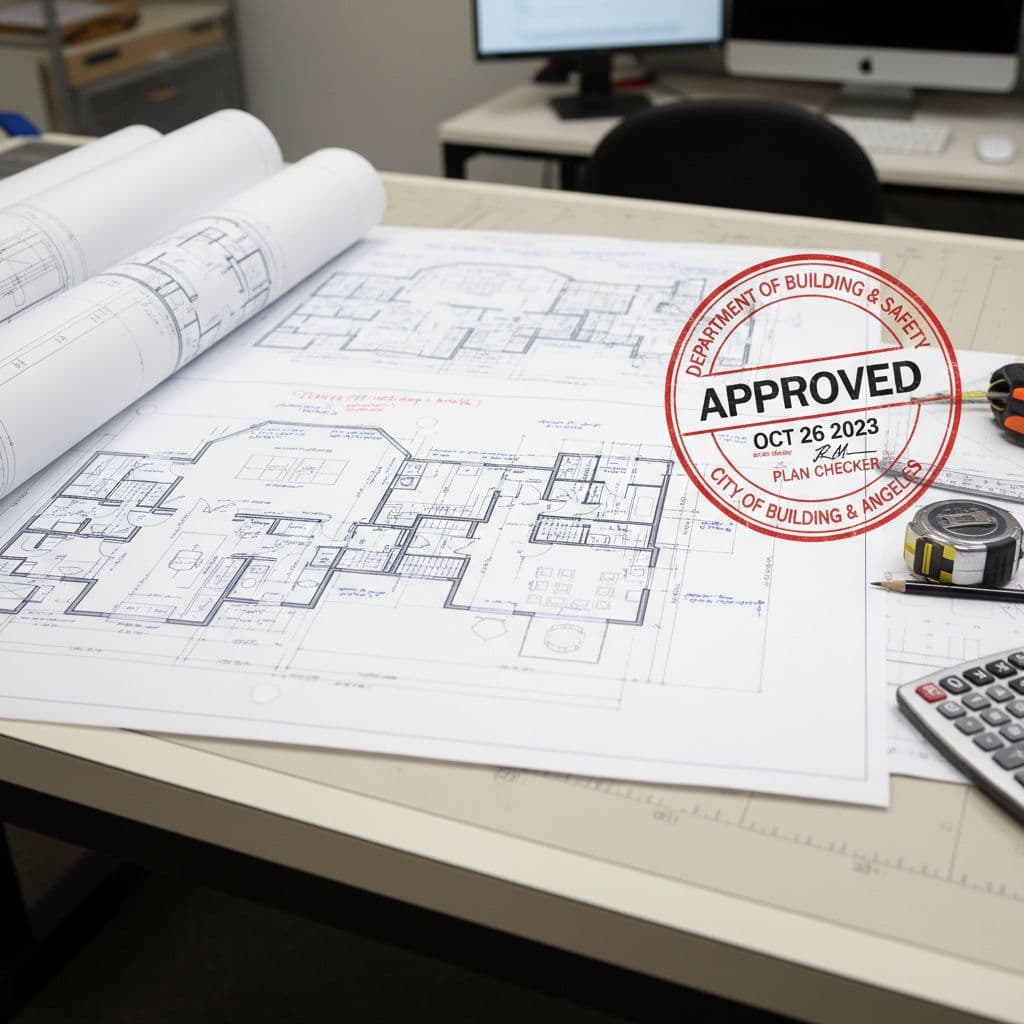 Detailed house floor plans with an official approved permit stamp, representing the completion of the building permit approval process.
Nobody daydreams about permits. You daydream about the new kitchen, the spa-like bathroom, the wall that finally comes down to open up the living room. Permits are the paperwork between you and all of that — and most people would rather not think about them at all.
Here's the thing though: permits are the part of a remodel that protects you. They're what stands between you and an unpermitted remodel that fails a home inspection when you try to sell, or structural work that no one ever verified was done correctly. After 40 years of permitted work in Walnut Creek, Rossmoor, and throughout the East Bay, we've watched what happens when people skip them. It's not a shortcut — it's deferred liability.
Let us demystify the actual process, because it's more manageable than it looks from the outside.
What Requires a Permit
The Honest Breakdown
A lot of people don't know where the line is — what requires a permit and what doesn't. Here's the practical answer:
| Type of Work | Permit Required? | Notes |
|---|---|---|
| Cabinet replacement (same location) | Usually no | Unless plumbing or electrical is being relocated |
| Countertop replacement | No | Cosmetic change only |
| Flooring replacement | No | Unless subfloor structural work is involved |
| Painting, tile replacement | No | Cosmetic work |
| Plumbing fixture replacement (same location) | Usually no | Swapping faucets, toilets in place is typically fine |
| Relocating plumbing (sink, shower, toilet) | Yes | New rough-in = permit required |
| Any electrical work (new circuits, panel work) | Yes | All permitted; no exceptions in Walnut Creek |
| Exhaust fan installation (new duct run) | Yes | Requires permit and inspection |
| Wall removal (non-load-bearing) | Yes | Opens walls = permit |
| Wall removal (load-bearing) | Yes + Engineering | Structural engineer drawings required |
| Window or door relocation | Yes | Structural and energy code involved |
| Addition or square footage change | Yes + Planning | May also require planning department review |
Trade Term: Rough-In Inspection
A rough-in inspection happens after new plumbing, electrical, or mechanical systems are installed but before the walls are closed. The inspector verifies that everything is correctly run, properly supported, and code-compliant before it gets covered up. This is the inspection that matters most — it's the one you can't go back and fake after the drywall is up. A licensed contractor schedules this automatically. It's one of the primary reasons you want permitted work done by a licensed contractor.
The Cost of Skipping
What Unpermitted Work Actually Does to You
We understand the temptation. Permits add time and cost — typically 4–8 weeks for a standard kitchen or bathroom permit in Walnut Creek, plus permit fees that range from a few hundred to a couple thousand dollars depending on scope. Some contractors offer to skip them to save time and cost. Here's what that actually buys you:
- Home sale complications: Unpermitted work frequently surfaces in a buyer's inspection. The remedy is typically a permit after the fact — which requires opening walls to expose the work, having it inspected, and closing everything back up. The cost of retroactive permitting usually far exceeds what the permit would have cost upfront
- Insurance gaps: If a fire or water damage claim involves unpermitted electrical or plumbing work, your homeowner's insurance has grounds to deny or reduce the claim
- No inspection safety net: Permitted electrical and plumbing work gets inspected before walls close. If something was wired or plumbed incorrectly, the inspector catches it. With unpermitted work, nobody looks. The wiring in your walls has never been verified by anyone
- Fines and stop-work orders: If discovered by a neighbor complaint or adjacent permit-triggered inspection, unpermitted work can result in formal stop-work orders and fines
"The contractor who says 'we can skip the permit to save you money' is saving themselves time and you nothing. The liability transfers entirely to you the moment that wall closes without an inspection."
 Homeowner and contractor reviewing construction plans and blueprints during the home design and permitting process.
How It Actually Works
The Permit Process, Step by Step
1
Project Scope Review
We walk through your project and identify which elements require permits. Some homeowners are surprised to learn what doesn't require a permit — it's often less paperwork than they feared.
2
Plans & Drawings
For anything structural or complex, we prepare architectural drawings showing the scope of work. For electrical or plumbing relocation, we document the new layout. Simpler projects may not require drawings at all.
3
City of Walnut Creek Application
We submit the permit application to the Walnut Creek Building Division on your behalf. We track the status and respond to any requests for additional information. You don't stand in line at a city counter.
4
Rossmoor Mutual Submission (if applicable)
For Rossmoor projects that require Mutual board approval, we prepare and submit the modification request form, including drawings and material specifications. Mutual reviews happen on board meeting schedules — typically monthly — so we factor this into the project timeline from the start.
5
Permit Issued — Construction Begins
Once permits are in hand, work starts. The permit placard is posted at the job site as required.
6
Rough-In Inspection
Before walls close, the city inspector verifies plumbing, electrical, and mechanical work. We schedule this and are present for it.
7
Final Inspection & Sign-Off
At project completion, the inspector does a final walkthrough. When it passes, the permit is finaled — your documentation that the work was done correctly and to code.
How long does the permit process take?
For a standard kitchen or bathroom remodel in Walnut Creek, plan for 4–6 weeks from permit application to approval in most cases. Complex projects with structural work or large scope take longer. Rossmoor adds 4–8 weeks for Mutual review depending on the Mutual's meeting schedule. We build this into every project timeline from day one — it's not a surprise, it's just part of the calendar.
Does my remodel need to be completely finished before final inspection?
The final inspection verifies that the permitted scope of work is complete and code-compliant. Cosmetic items that aren't part of the permitted work — paint color, hardware selection, light fixture style — don't affect the inspection. We'll tell you clearly what needs to be in place for your final.
What happens if I bought a home with unpermitted work?
You're not automatically liable for the previous owner's unpermitted work, but it becomes your problem to resolve if you want to add permitted work that touches it, or when you sell. We handle retroactive permit situations — sometimes called "legalization" — and can assess what's involved for your specific situation.
We handle the paperwork. You focus on the design.
Every Toupin project includes full permit management — applications, submittals, inspections, Mutual coordination. We've pulled thousands of permits in this area. It's just part of how we work.
Start Your Project Call 925-937-4200
Toupin Construction
Ready to start your remodel?
Whether you're dreaming of a new kitchen, a spa-worthy bathroom, or a whole-home transformation — we’d love to hear about your project. Reach out and let's talk.
‹ Back
Comments