

By using our website, you agree to the use of cookies as described in our Cookie Policy
Blog
Kitchen Cabinet Refacing: Is It Right for You?
Cabinetry · Remodeling Tips
A homeowner in Rossmoor called us last spring. She loved her kitchen's layout. The counters were solid, the footprint worked, the light was great. She just couldn't stand looking at those cabinets anymore. We told her she didn't have to tear everything out to fix it.
That conversation is more common than you'd think — especially in East Bay homes built in the '60s, '70s, and '80s, where the bones are solid but the surfaces are showing their age. Cabinet refacing is one of the most underrated tools in a remodeler's kit. Done right, it's not a shortcut. It's a smart decision.
Here's what you need to know before you decide.
Key Takeaways
- Refacing keeps your existing cabinet boxes and replaces only the doors, drawers, hardware, and visible frame surfaces.
- No layout changes means no permits — less red tape, less time, less cost.
- Most jobs wrap in 5–10 days. You'll be making coffee again before the dust settles.
- Refacing typically costs 30–50% less than full cabinet replacement with comparable visual results.
- Add-ons like crown molding, toe-kick drawers, and under-cabinet lighting take the finish from updated to genuinely custom.
What Refacing Actually Means
Let's start with what we're talking about, because "refacing" gets used loosely. Here's what a professional reface actually includes:
1
The cabinet boxes stay
We keep your existing frame structure — as long as it's sound. This is what makes refacing so efficient.
2
New doors and drawer fronts
Every door and drawer front is replaced with new ones in your chosen style — shaker, slab, raised panel, whatever fits your vision.
3
Frame faces get solid wood overlays or fresh paint
The visible face frames — the strips of wood around the cabinet openings — get covered with 3/8" solid wood veneer or a professional paint finish.
4
All hardware is replaced
Hinges, drawer glides, pulls, and knobs are swapped out. This alone makes a significant difference.
5
Optional add-ons
Crown molding, toe-kick drawers, under-cabinet lighting, and decorative trim round out the custom finish.
Plain English
The "face frame" is the front border of your cabinet — the flat strips of wood you see around the door opening. During a reface, we cover those strips with a thin layer of solid wood (called a veneer) and stain or finish it to match your new doors. Think of it like resurfacing a countertop instead of replacing the whole counter.
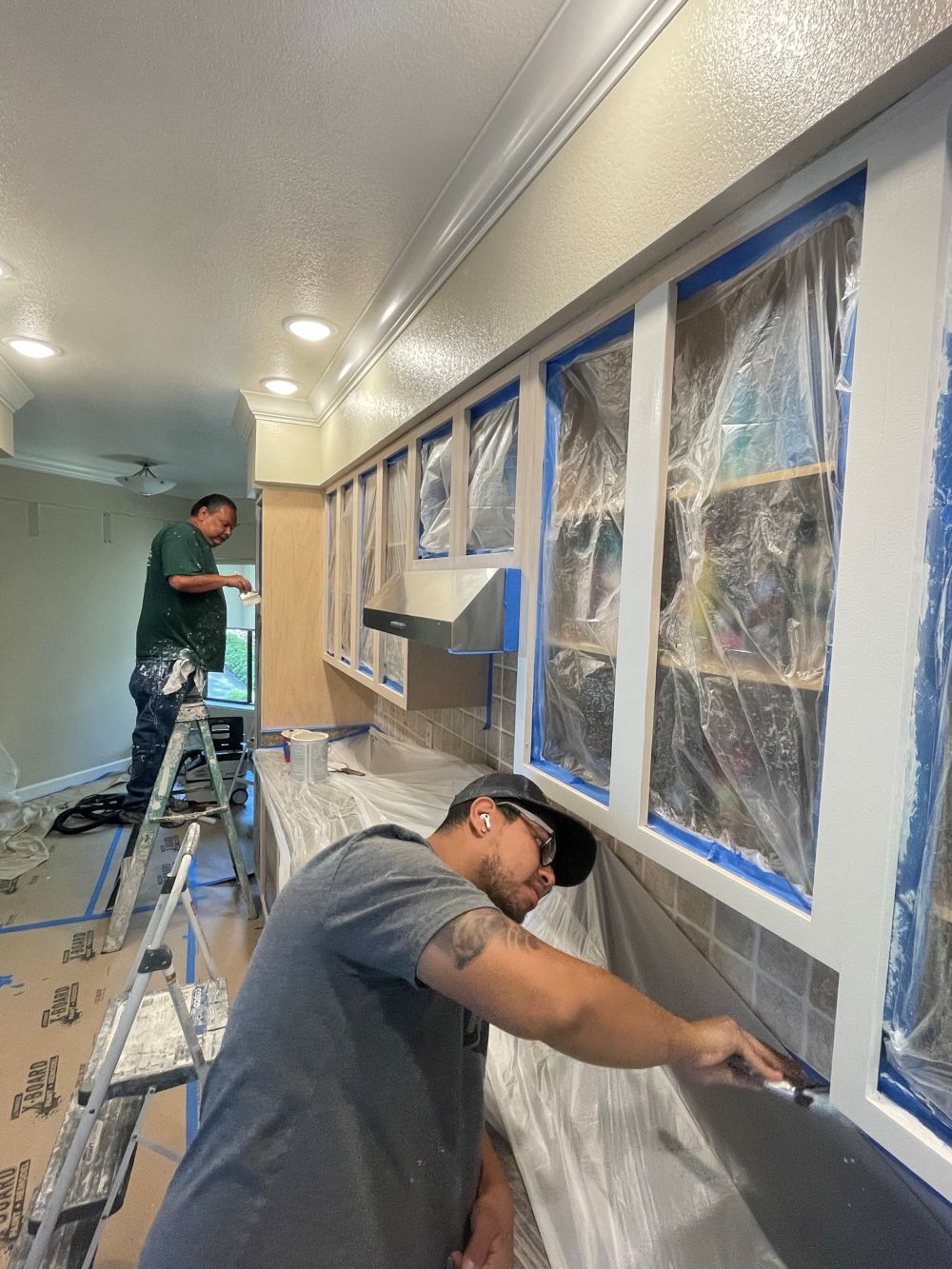 A kitchen cabinet refacing project in progress, with cabinets masked off and protected while a team carefully refinishes surfaces. The workspace is prepped with plastic coverings and tape to ensure clean, precise results during the update.
The Refacing Process, Step by Step
We're not a company that shows up, slaps some veneer on, and leaves. Here's what the actual process looks like on a Toupin jobsite:
1
Inspection
We evaluate every cabinet box for structural integrity before anything else. If a box is damaged, warped, or has moisture issues, we'll tell you upfront.
2
Removal
Old doors, drawer fronts, and hardware come off. The kitchen stays partially functional during this phase.
3
Surface prep
Frames are sanded, nicks are repaired, everything is cleaned. Quality painting is 90% prep and 10% paint — same principle applies here.
4
Veneer or paint application
Solid wood overlays go on the face frames, or we apply a durable paint finish — both done off-site and on-site depending on the piece.
5
New doors and drawers installed
Soft-close hinges, smooth drawer glides. The feel of the hardware matters as much as the look.
6
Hardware and finishing details
Crown molding, pulls, knobs — all installed with the same care as our full remodels.
7
Final punch list
We go door by door, drawer by drawer. Alignment checks, touch-ups, full clean-up.
Why Refacing Makes Sense — and When It Doesn't
Here's where we get honest with you. Refacing is the right call in a lot of situations — but it's not the right call in all of them. We'd rather tell you upfront than send you down the wrong path.
If you're not sure which category you fall into, that's what consultations are for. We'll give you an honest read — not a sales pitch. Check out our Kitchen Remodeling services page to get a sense of what full remodels look like, or visit our Portfolio to see both approaches side by side.
The Real Benefits — Beyond "It's Cheaper"
No Permits Required
If you're not touching plumbing, electrical, or walls, you don't need a permit. That means no waiting on inspections and no added stress.
Fast Turnaround
Most refacing projects complete in 5–10 days. Compare that to 6–8 weeks for a full kitchen remodel. You keep your life intact.
Real Cost Savings
Cabinetry is one of the largest line items in any kitchen remodel. Refacing typically runs 30–50% less than full replacement — real money in your pocket.
Less Waste
Reusing structurally sound cabinet boxes keeps material out of the landfill. It's a better choice for the environment without sacrificing quality.
Immediate Impact on Value
Updated cabinetry is one of the first things buyers and appraisers notice. A professional reface delivers a fresh kitchen feel with strong return.
Customization Options
New door style, new hardware, crown molding, under-cabinet lights — you have more design choices than you might expect.
Plain English
Soft-close hinges are the hardware that makes cabinet doors ease shut quietly instead of slamming. They're a small upgrade that changes how a kitchen feels to use every single day — and they're standard in every Toupin reface.
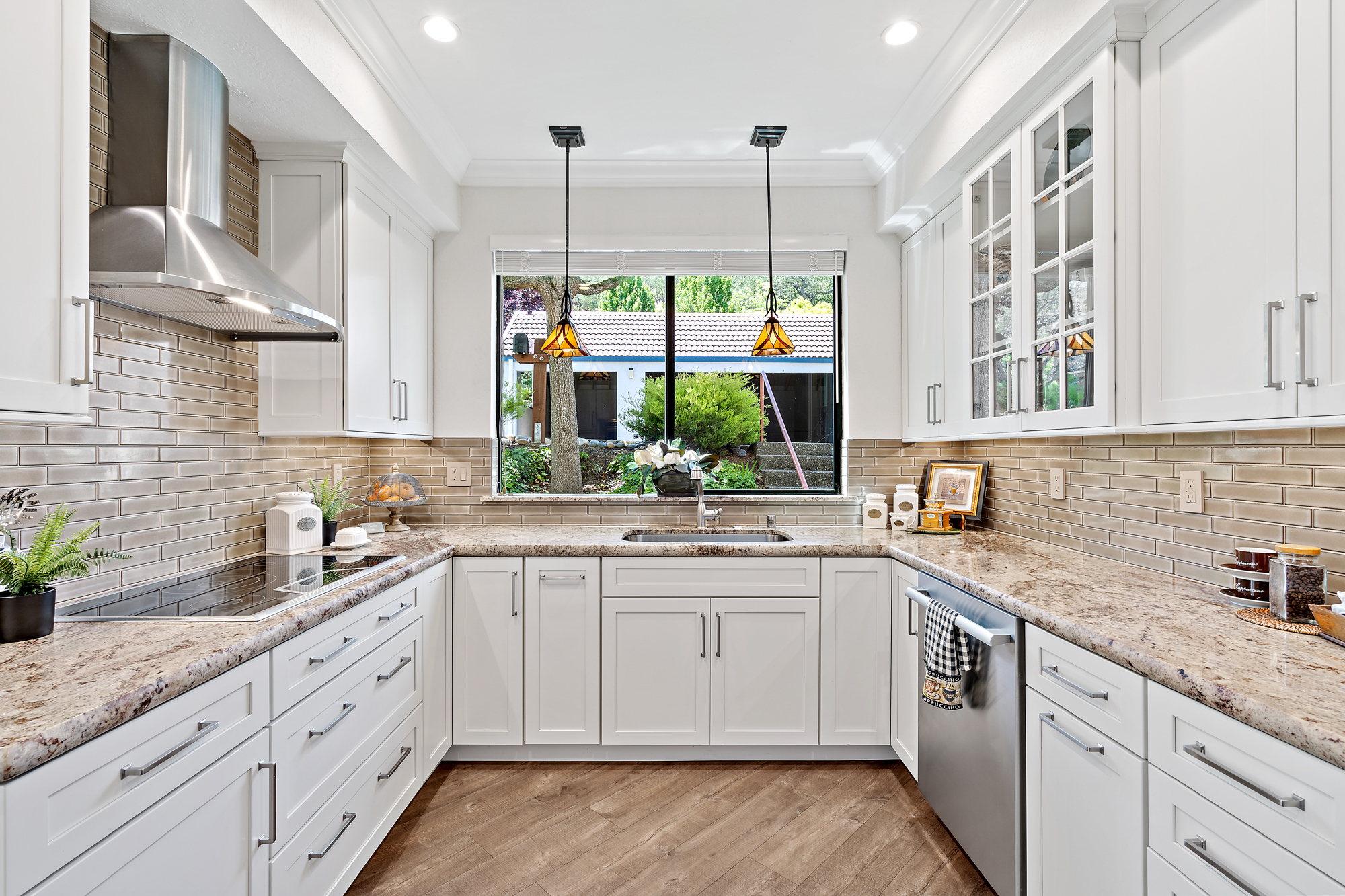 A fully updated kitchen after cabinet refacing, featuring crisp white shaker cabinets, warm granite countertops, a neutral tile backsplash, and modern pendant lighting. The refreshed space feels brighter, cleaner, and more functional without a full remodel.
What Does It Cost — and How Long Does It Last?
We don't post flat rates here because every kitchen is different. Size, door style, finish choice, and add-ons all move the number. What we can tell you is this: refacing consistently runs 30–50% less than full cabinet replacement while delivering a comparable finished look.
As for durability — with proper prep and quality finishes, painted cabinets hold up well for 10–15 years. Stained wood veneer can last even longer. The prep is everything. Cut corners on prep and you'll see it in two years. Do it right and you won't think about those cabinets again for a decade.
For a broader look at how to think about your remodeling budget, take a look at our post on Is $30K Enough for a Kitchen Remodel.
A Note on East Bay Homes
We see this project a lot in Rossmoor and the surrounding Walnut Creek area, where a huge number of homes were built in the late '60s and '70s. The cabinet boxes in those kitchens were often built well — solid wood construction, sound joinery. They just look dated. Refacing is a natural fit because the structure is there; it just needs a new face.
The East Bay climate is also worth mentioning. Our dry summers and mild but damp winters can be hard on cabinetry finishes over time. Using quality materials and proper finish sealing makes a significant difference in how long your reface holds up — and it's something we take seriously on every job.
Frequently Asked Questions
How do I know if my cabinet boxes are in good enough condition to reface?
That's exactly what our initial inspection is for. We check for water damage, structural integrity, and whether the box construction can support new veneer and doors. If something's wrong, we'll tell you before any work starts.
What exactly gets replaced during a reface?
All doors, all drawer fronts, and all hardware. The visible face frames get either solid wood veneer overlays or a professional paint finish. The cabinet boxes themselves stay in place.
Will I need permits?
Not if you're keeping the same layout. No walls moved, no plumbing relocated, no electrical changes means no permit required. It's one of the genuine advantages of refacing.
How long does a typical reface take?
Most projects finish in 5–10 days. You can usually still use parts of your kitchen during the work — we keep the space organized and functional as we go.
Can I customize the look significantly, or am I limited?
You have a lot of design latitude. Door style, finish, hardware — all your choice. Add crown molding, toe-kick drawers for hidden storage, under-cabinet lighting, decorative trim. We've done everything from classic shaker to sleek flat-front modern on reface projects.
Is refacing the same as painting my existing cabinets?
No — and it's worth being clear on this. A paint job refreshes color. A reface replaces the doors, drawers, and hardware entirely and adds new material to the frame surfaces. It's a more thorough transformation, and it shows.
Not sure if refacing is right for your kitchen?
We're always happy to take a look and give you an honest answer — no obligation, just a real conversation. We've been doing this for over 40 years in Walnut Creek and the East Bay. We'll tell you what makes sense.
Get a Free Consultation Call 925-937-4200
Toupin Construction
Ready to start your remodel?
Whether you're dreaming of a new kitchen, a spa-worthy bathroom, or a whole-home transformation — we’d love to hear about your project. Reach out and let's talk.
‹ Back
Comments