


By using our website, you agree to the use of cookies as described in our Cookie Policy
Blog
Fiberglass vs. Wood Front Doors: An Honest Guide for East Bay Homeowners
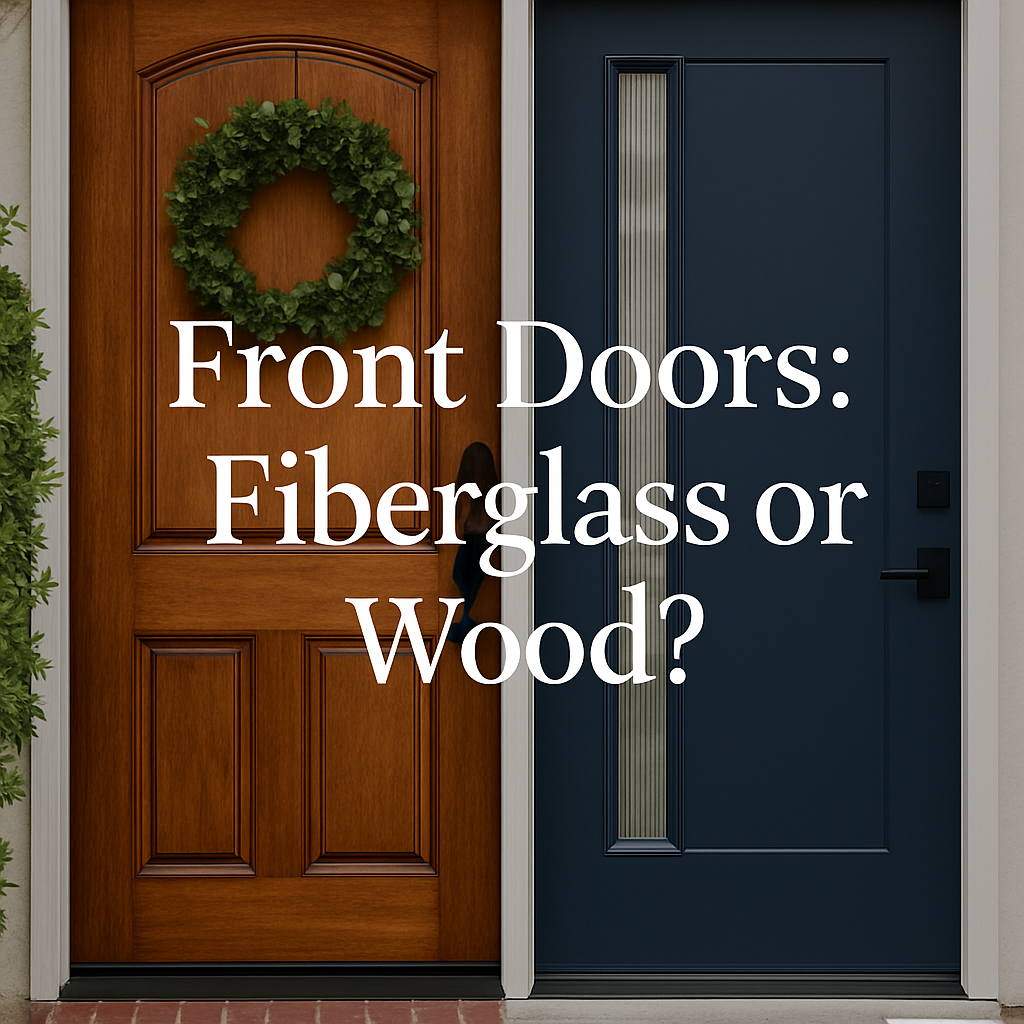
Fiberglass vs. Wood Front Doors: An Honest Guide for East Bay Homeowners
We replaced a front door on a Danville home last spring — a beautiful craftsman, original fir door, sixty years old. The owner loved it. He'd repainted it three times himself, reseated the threshold twice, and nursed a crack in the bottom rail with epoxy filler for two seasons. He asked us straight: should I keep fighting for this door, or let it go?
Tim looked at the bottom rail, the gap at the threshold, the way the door had dropped on its hinges. "The door's done the work," he said. "Let it retire."
That's usually how the front door conversation goes. Not a dramatic failure — just a slow accumulation of weather, time, and deferred maintenance until the door is working harder than it should. If you're here, you're probably at that point. This guide will help you understand your three real options — fiberglass, wood, and steel — and what each one means for your home, your maintenance schedule, and your wallet.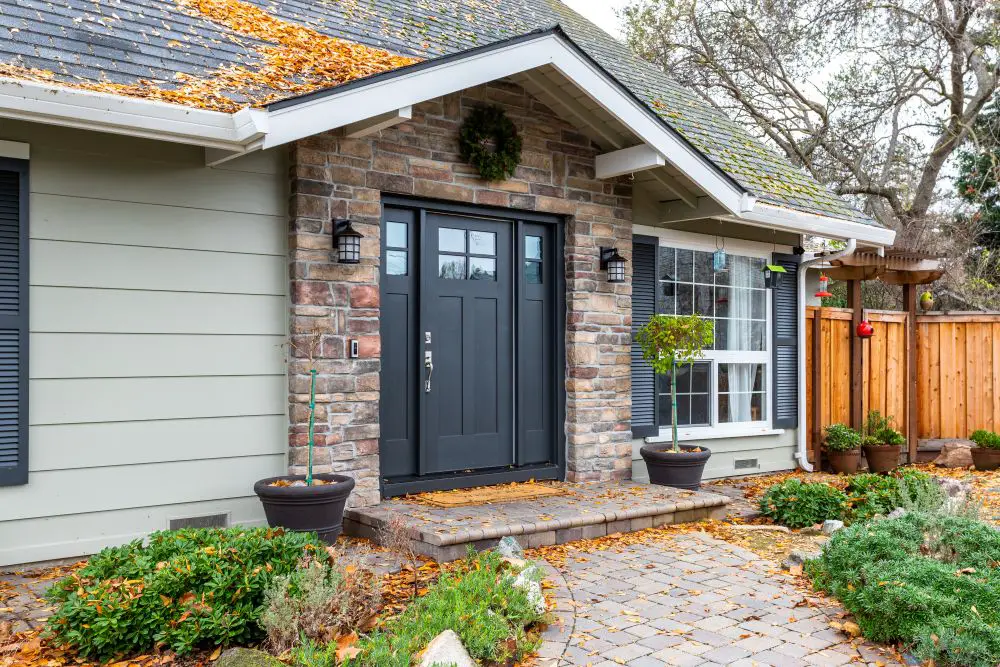
Walnut Creek home exterior with black double front doors, stone veneer entry, and landscaped walkway highlighting strong curb appeal and inviting front entry design.
Terms That Come Up in Every Door Conversation
Front door replacement has a vocabulary that gets thrown around without explanation. Here's what the important ones actually mean before we get into the materials:
Prehung Door
A door that comes already mounted inside a complete frame — hinges attached, bore holes drilled, weatherstripping installed. You remove the old door and frame together and drop in the new unit. This is what most replacement installations use. The alternative is a slab door — just the door panel itself — which goes into an existing frame and is only appropriate if the original frame is in excellent condition.
Jamb
The vertical sides and horizontal top of the door frame — the structural members the door hinges to and latches against. In older East Bay homes, the jamb is often the thing that fails first, not the door itself. Wood jambs rot from the bottom up when water pools at the threshold. If your door sticks or has visible gaps, check the jamb before replacing the door.
Weatherstripping
The compressible seal around the perimeter of the door that prevents air and water from getting past the closed door. It compresses when the door closes and springs back when it opens. Weatherstripping wears out — it's the most common reason a well-maintained door suddenly feels drafty. It's also cheap to replace, so if your only issue is a draft, replace the weatherstripping before the door.
Threshold
The metal or composite strip at the bottom of the door opening that seals the gap between the door bottom and the floor. A good threshold creates a tight seal when the door closes. A worn or improperly adjusted threshold is a major source of air infiltration, bugs, and water intrusion — and a common source of drafts that people blame on the door itself.
Rail & Stile
The structural members of a door panel. Stiles are the vertical pieces on the left and right edges. Rails are the horizontal pieces — top, bottom, and any intermediate. When a wood door cracks, it's almost always at a rail (especially the bottom rail, which stays wet longest). When a door warps, it's usually pulling away from true at the corners where the rails and stiles meet.
U-Factor (Doors)
The same thermal performance metric used for windows — measures how much heat escapes through the door assembly. Lower is better. An insulated fiberglass or steel door will have a U-factor around 0.20–0.30. A solid wood door runs higher because wood, while a decent insulator, doesn't have a foam core. For California's Title 24, doors over a certain size in conditioned space need to meet U-factor requirements — your installer will verify compliance.
The Three Real Options — What We've Learned Installing Hundreds of Them
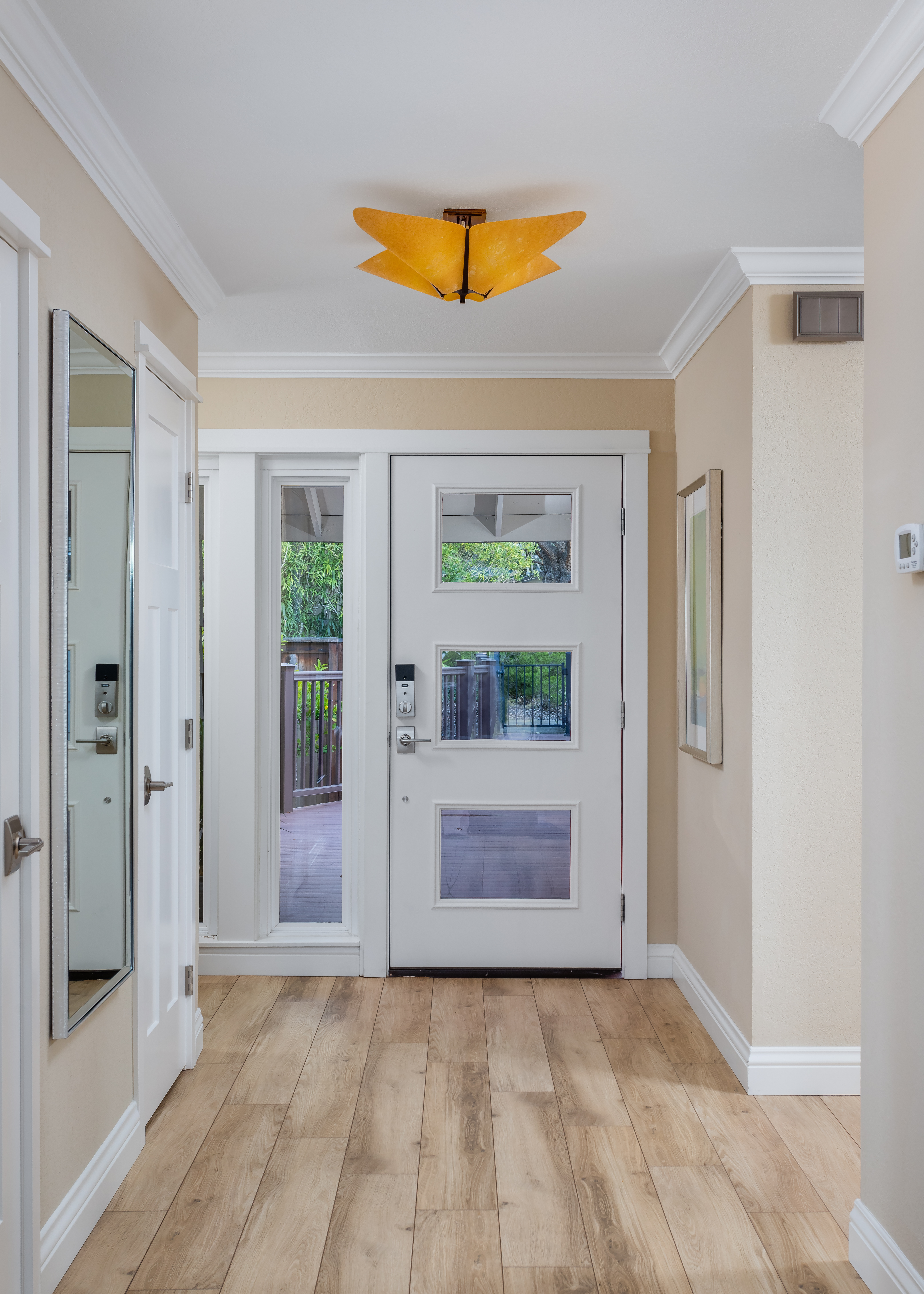
East Bay entryway featuring a modern front door with glass inserts, natural light, wood-look flooring, and a ceiling-mounted light fixture creating a clean and welcoming interior transition.
Side-by-Side: All Three Materials
| Feature | Fiberglass | Wood | Steel |
|---|---|---|---|
| Installed Cost | $1,800–$4,500+ | $2,000–$5,000+ | $1,200–$2,800 |
| Maintenance | Low — clean every 1–2 yrs | High — refinish every 1–2 yrs | Medium — touch up paint as needed |
| Warps / Rots | ✅ No | ❌ Yes, if neglected | ✅ No |
| Security | Good | Good | Best |
| Energy Efficiency | Excellent — foam core | Good | Excellent — foam core |
| Finish Options | Stain or paint — wide range | Best — any stain or paint | Paint only |
| Dent / Damage | Resists denting; hard to repair | Scratches repairable in place | Dents permanently; no repair |
| Lifespan | 30–50 years | 20–40 years (with upkeep) | 25–30 years |
| Warranty | Limited lifetime (Therma-Tru) | Varies by manufacturer | Varies by manufacturer |
| Resale Impact | Strongest | Strong (if in good condition) | Moderate |
How to Actually Decide
If you want...
Zero maintenance and long-term value
→ Fiberglass. Install it, clean it occasionally, forget about it for a decade. Best resale performance of the three.
If you want...
The real thing — authentic wood
→ Wood. Go in with eyes open about the maintenance. Choose a species suited to your exposure. Budget for refinishing every 1–2 years.
If you want...
Best security and lowest cost
→ Steel. Especially for secondary entries, garage doors, and rental properties. Underappreciated and underused in our market.
If you want...
The wood look without the wood work
→ High-quality fiberglass in a wood-grain stain. Therma-Tru's mahogany and knotty alder stains, done right, are genuinely convincing from the curb.
If you want...
A custom or historic match
→ Wood, or custom fiberglass profiles. Non-standard sizes and profiles are easiest in wood. Some Therma-Tru lines accommodate wider profiles for craftsman-style homes.
If you want...
The best energy performance
→ Fiberglass or steel, both with foam cores. Pair with quality weatherstripping and a good threshold seal. Don't skip the threshold — that's where most of the air infiltration lives.
"The door conversation almost always comes down to one question: how honest are you going to be with yourself about maintenance? If you'll actually refinish it every eighteen months, wood is beautiful. If you won't — and most people won't — fiberglass is the smarter choice."
— Tim Toupin, Toupin ConstructionWhat the Installation Process Looks Like
A front door replacement is usually a one-day job. Here's what the sequence looks like when we do it:
1
Site Assessment
We look at the existing frame condition, check the jamb for rot or moisture damage, assess the rough opening dimensions, and identify anything that needs to be addressed before the new door goes in. A door installed into a compromised frame is a problem waiting to happen — this step is how we catch it first.
2
Selection & Ordering
You choose your material, style, finish, glass options, and hardware. Prehung doors are typically manufactured to order — lead times of 3–6 weeks are common for custom sizes and finishes. Stock sizes in standard configurations can move faster. We don't pull the old door until the new one is on site.
3
Permits (If Required)
In most straightforward like-for-like replacements — same size, same location — a permit isn't required in Walnut Creek. Any rough opening modification, structural change, or Rossmoor installation adds a permit and/or Mutual approval step. We handle the paperwork.
4
Remove & Prep
Old door and frame come out. The rough opening is inspected, cleaned up, and any framing repairs are made. Flashing is assessed and replaced or supplemented if needed. This is the step where deferred issues from the old installation get addressed — improper flashing causes water intrusion that doesn't show up until years later.
5
Install & Seal
The new prehung unit goes in, is shimmed level and plumb, fastened to the framing, and sealed at the perimeter with flashing and weatherproof caulk. Hardware is set. Threshold is adjusted for a tight seal. Weatherstripping is checked around the full perimeter.
6
Trim & Finish
Interior and exterior casing trim is reinstalled, caulked, and painted or stained to match. We walk you through the operation — hardware adjustment, how to maintain the threshold seal, what the warranty covers. The door should swing like it was made for that opening, because it was.
Keeping Your New Door in Shape
Fiberglass & Steel
- Wash with mild soap and water once or twice a year — that's genuinely most of it
- Inspect weatherstripping annually; replace when it stops compressing fully
- Adjust threshold seal if drafts develop — most thresholds have a set screw adjustment
- For fiberglass: apply a UV protectant every few years if the door gets direct sun; it extends the stain life significantly
- For steel: touch up any paint chips quickly with matching paint before rust can establish at bare metal
- Lubricate hinges and lockset hardware annually with a dry silicone spray
Wood
- Inspect the finish — especially at the bottom rail — each spring before the dry season
- Refinish (sand lightly, restain or repaint, reseal) every 1–2 years on exposed entries; every 2–3 on covered entries
- Never let water pool at the threshold — the bottom rail is always the first thing to go
- Check for soft spots at the bottom rail and corners every year; address any rot immediately with epoxy consolidant before it spreads
- Repaint or restain after any long period of direct sun exposure or storm exposure
Common Questions
Will a fiberglass door actually look like real wood?
From the curb — yes, convincingly. Up close and in bright light, an experienced eye can tell the difference. The grain texture is molded, not grown, so it has a regularity that real wood doesn't. That said, a Therma-Tru door in a mahogany or knotty alder stain, installed and finished correctly, fools most people most of the time. The question to ask yourself: how close are your guests standing when they're waiting at the door?
How much does front door replacement cost in the East Bay?
Installed costs vary significantly based on door size, material tier, glass inserts, hardware, and whether framing repairs are needed. Rough range: steel $1,200–$2,800; fiberglass $1,800–$4,500+; wood $2,000–$5,000+. Sidelights or transom windows add to cost. Always get an itemized quote that specifies what's included — material, labor, hardware, disposal, and any framing work.
Do I need a permit to replace my front door in Walnut Creek?
A like-for-like replacement — same door size, same location, no structural changes — typically doesn't require a permit in Walnut Creek. Changing the rough opening size, adding sidelights, or modifying structural framing does require a permit. Rossmoor adds Mutual board approval regardless of permit status. When in doubt, we check before we order.
What's the difference between a prehung and a slab door?
A slab door is just the door panel — no frame, no hinges, no bore holes. It goes into an existing frame and is the right choice only if your current frame is in perfect condition and the right dimensions. A prehung door comes with a complete frame assembly — hinges set, lockset bored, weatherstripping installed. Most replacements use prehung units because it's the cleaner, faster, and more reliable installation. If your frame is rotted or damaged, you need prehung regardless.
How long does front door installation take?
The installation itself is typically a half-day to full-day job. Add 3–6 weeks lead time for the door to be manufactured if you're ordering a custom size or finish. We don't remove the old door until the new one is physically on site — you shouldn't be without a front door for a week while the replacement is in transit.
Does a new front door affect my home's energy bill?
It can, especially if the old door was single-pane with glass, had a failed threshold seal, or had significant weatherstripping gaps. A properly installed insulated door with a quality threshold and fresh weatherstripping eliminates a meaningful source of air infiltration. The savings are real, but modest — the bigger impact is usually comfort (eliminating drafts near the entry) rather than a dramatic reduction in your PG&E bill.
The Bottom Line
That Danville craftsman with the sixty-year-old fir door? We installed a Therma-Tru fiberglass unit in a knotty alder stain — the same warm tone the original had. The owner stood on the porch and looked at it for a while. "It's not the same," he said. Then: "But it's right."
That's about as good as it gets. The right door for the house, the exposure, the neighborhood, and the person who has to maintain it. If you're in Walnut Creek, Rossmoor, Alamo, Danville, or anywhere in the East Bay and you're thinking about a front door replacement, we'd love to take a look at what you're working with and give you an honest answer about what makes sense for your specific situation.
Ready to Talk About Your Front Door?
We'll come out, look at your existing door and frame, and give you a straight answer about what makes sense — no upsell, no pressure, just forty-plus years of knowing what holds up in East Bay homes.
Schedule a Free Consultation See Our WorkOr call us directly: 925-937-4200
Toupin Construction
Ready to start your remodel?
Whether you're dreaming of a new kitchen, a spa-worthy bathroom, or a whole-home transformation — we’d love to hear about your project. Reach out and let's talk.
‹ Back
Comments