


By using our website, you agree to the use of cookies as described in our Cookie Policy
Blog
Should You DIY Your Bathroom- ask the Pros

|
REMODELING TIPS Should You DIY Your Bathroom Remodel? What 40 years on East Bay jobsites has taught us about when to grab a tool — and when to call us. By Candi Toupin · Walnut Creek, CA · Updated 2026 |
|
|
We get this question all the time. A homeowner in Rossmoor finds a YouTube tutorial, gets inspired, and wonders: how hard can it be? The honest answer is — it depends. And we mean that genuinely, not as a sales pitch. |
Some bathroom projects are completely within reach for a motivated DIYer. Others look manageable on screen but hide real complexity behind the walls — and when things go sideways in a bathroom, they tend to go sideways fast. Water, electricity, and tight deadlines aren't a forgiving combination.
We've been remodeling bathrooms across Walnut Creek, Rossmoor, and the East Bay for over 40 years. We've also walked into plenty of homes where someone tried a DIY bathroom first. So here's our honest take — no fluff, no sales pitch — on how to think through this decision.
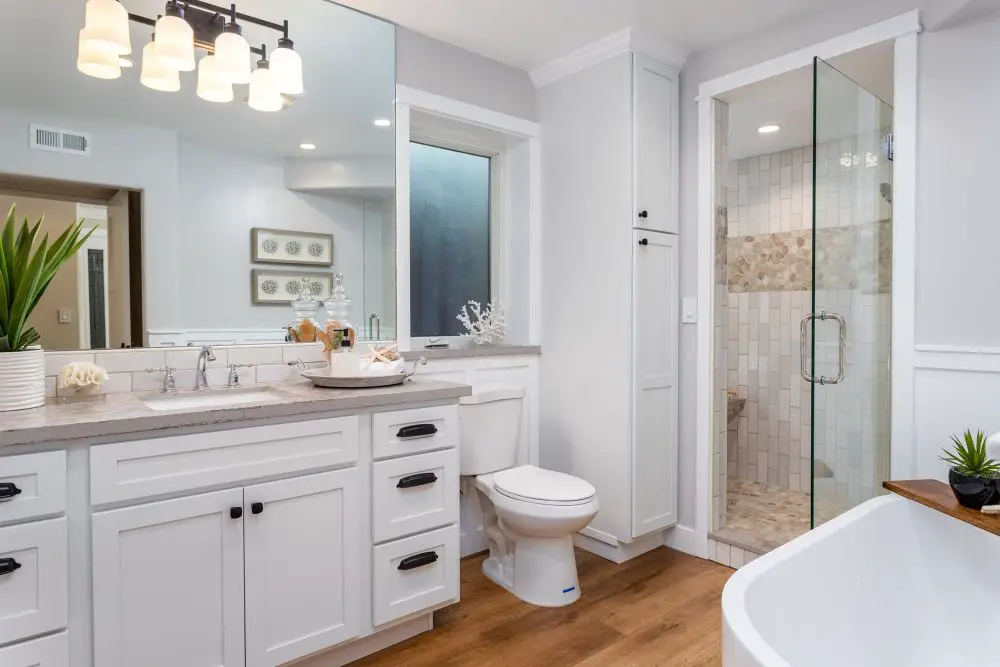
This bright, neutral bathroom showcases a timeless, contractor-executed remodel with white shaker cabinetry, quartz countertops, and matte black hardware. A glass-enclosed walk-in shower with a subtle tile pattern keeps the space feeling open and airy, while warm wood flooring adds contrast and warmth. The layered lighting and large mirror enhance both function and visual space, making it a great example of a polished, professionally finished bathroom.
The Budget Math (It's Trickier Than It Looks)
On paper, DIY saves you labor costs. That part is true. But here's what we've seen happen when things go wrong: a cracked tile job leads to water behind the wall, which leads to mold, which leads to a tear-out that costs three times the original project. That's not a hypothetical — we've walked into homes like that.
The actual savings from DIY depend almost entirely on how clean the execution is. If you nail it, you save real money. If you don't, you're calling a contractor anyway, except now you're paying them to fix someone else's work first — which is always more expensive than starting fresh.
|
If you're trying to stretch your budget smartly, check out our post on top remodeling ideas on a budget — there are some genuinely great ways to get more value without cutting corners on the things that matter. |
What the Work Actually Requires
Not all bathroom work is created equal. There's a real spectrum here, and it's worth being honest with yourself about where your skills land.
|
DIY-Friendly |
Call the Pros |
|
Painting walls or cabinetry |
Moving or rerouting plumbing |
|
Replacing towel bars & hardware |
New electrical runs or outlets |
|
Swapping out a faucet |
Tile work requiring waterproofing |
|
Updating a mirror or shelving |
Structural wall changes |
|
Replacing a toilet (if straightforward) |
Full bathroom layout changes |
The cosmetic stuff — paint, hardware, a new mirror — those are genuinely great DIY projects. They're low risk, they transform the look of a room, and if something doesn't go perfectly, it's easy to redo.
The deeper work is a different story. Plumbing and electrical in bathrooms are regulated by code for a reason, and in California, there are specific requirements that trip up even confident DIYers. A mis-wired outlet near a wet area isn't just a code violation — it's a safety hazard. Read more about what's at stake in our guide to California bathroom electrical codes.
|
|
PLAIN LANGUAGE Waterproofing membrane — this is the layer that sits between your subfloor (the structural base beneath your flooring) and the tile itself. Think of it as a flexible, waterproof skin. When the house shifts — and every house shifts, especially the older East Bay homes built in the '50s and '60s — the membrane absorbs that movement so your tile doesn't crack or separate. Skipping it or doing it wrong is one of the most common and costly DIY bathroom mistakes we see. |
Time and the One-Bathroom Problem
Here's a scenario we've heard from more than a few Walnut Creek homeowners: they started a DIY bathroom thinking it'd take a weekend. Three weeks later, they're showering at a neighbor's house and staring at an open wall with half the tile laid.
Life gets in the way. Materials ship late. You discover a problem you didn't expect. Weekends fill up. For a kitchen or a bedroom, that's annoying. For the only bathroom in the house, it's a real problem.
Professional crews work on these jobs every day. We have the tools, the materials on hand, and the experience to anticipate what's coming. Our guide to the complete Bay Area bathroom remodel walks through realistic timelines so you can plan accordingly, whether you DIY or hire it out.
Safety: This Is Where We Get Direct
Bathrooms combine three things that don't play well together: water, electricity, and slippery surfaces. Professional contractors are trained to navigate that combination. We know what waterproofing failures look like five years later. We know which electrical shortcuts cause problems. We carry insurance specifically because surprises happen even for experienced crews.
If you're considering replacing your exhaust fan — one of the more manageable DIY bathroom jobs — we actually wrote a step-by-step guide for it: How to Replace a Bathroom Exhaust Fan. It's a real, doable project for the right person. That's the kind of honest guidance we try to give.
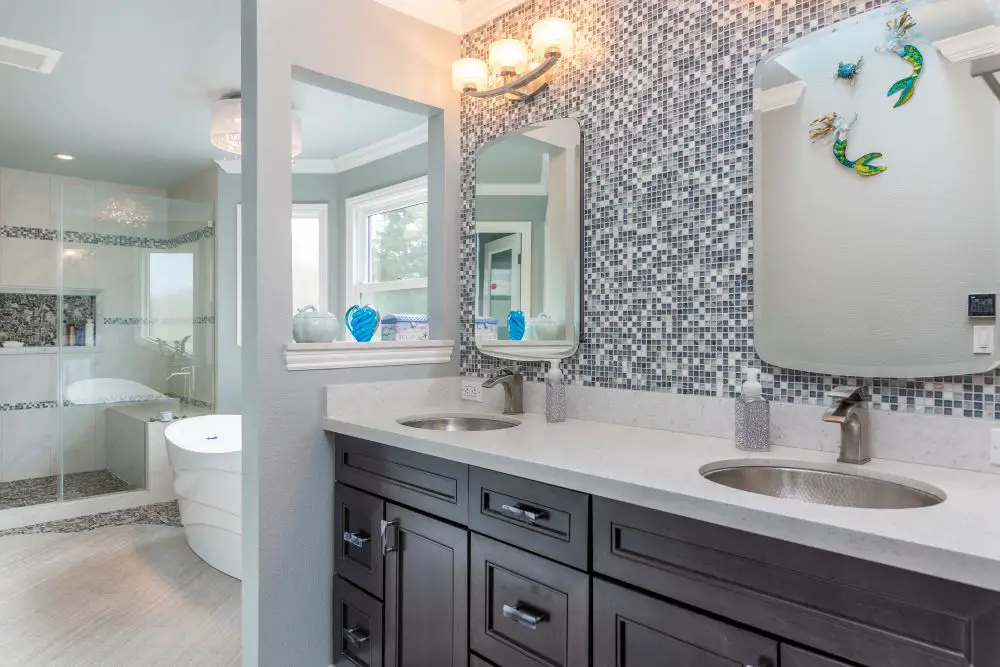
This bathroom features a more personalized design with a bold mosaic tile backsplash, dark wood vanity, and dual sinks. The curved mirrors and brushed metal fixtures soften the look, while the walk-in shower continues the tile detail for a cohesive feel. Pops of blue decor and natural light give the space personality—highlighting how design choices can shift a bathroom from standard to statement.
Permits, Licenses, and Why They Matter
In Walnut Creek and throughout Contra Costa County, most significant bathroom work — anything involving plumbing changes, electrical, or structural alterations — requires a permit. This isn't bureaucratic red tape. It's the process that protects your home's value and your family's safety.
We pull permits on every job that requires them. A licensed contractor also carries liability insurance and workers' comp, which means if something goes wrong, you're covered. DIY work without permits can create real headaches when you go to sell — buyers' inspectors find this stuff, and it can derail a sale or force a costly remediation. We covered this in more depth in our post on why hiring an insured remodeler matters.
Our Honest Take
We're not going to tell you never to DIY. Some of our favorite homeowners are deeply handy people who want to stay involved in the process. We love that. There's something real about working on your own home, and we respect it.
Here's the line we'd draw: if the project stays cosmetic — paint, hardware, fixtures that don't require moving supply lines or running new wiring — go for it. Learn something. Take pride in it.
But if you're moving walls, changing the layout, retiling a shower, or touching anything plumbing or electrical, get a professional involved. The cost of doing it right the first time is almost always less than the cost of fixing it later. And the peace of mind of knowing your bathroom is waterproofed properly, wired safely, and built to last? That's worth something too.
We've been doing this work in the East Bay for over 40 years, and we genuinely love talking it through with homeowners. No pressure, no hard sell. Just an honest conversation about what makes sense for your home.
|
Have Questions About Your Remodel? We're always happy to talk it through — no obligation, just an honest conversation about what makes sense for your home. Get a Free Quote: toupinconstruction.com/contact-us | Call: 925-937-4200 |

Toupin Construction
Ready to start your remodel?
Whether you're dreaming of a new kitchen, a spa-worthy bathroom, or a whole-home transformation — we’d love to hear about your project. Reach out and let's talk.
‹ Back
Comments