
We were working on a kitchen in Walnut Creek a few years back — a '70s ranch house with a perfectly functional layout that made absolutely no sense for how the family actually lived. The fridge was around a corner from the stove. The island blocked the back door. Everything worked. Nothing fit.
That's the problem custom remodeling solves. And it has almost nothing to do with price.
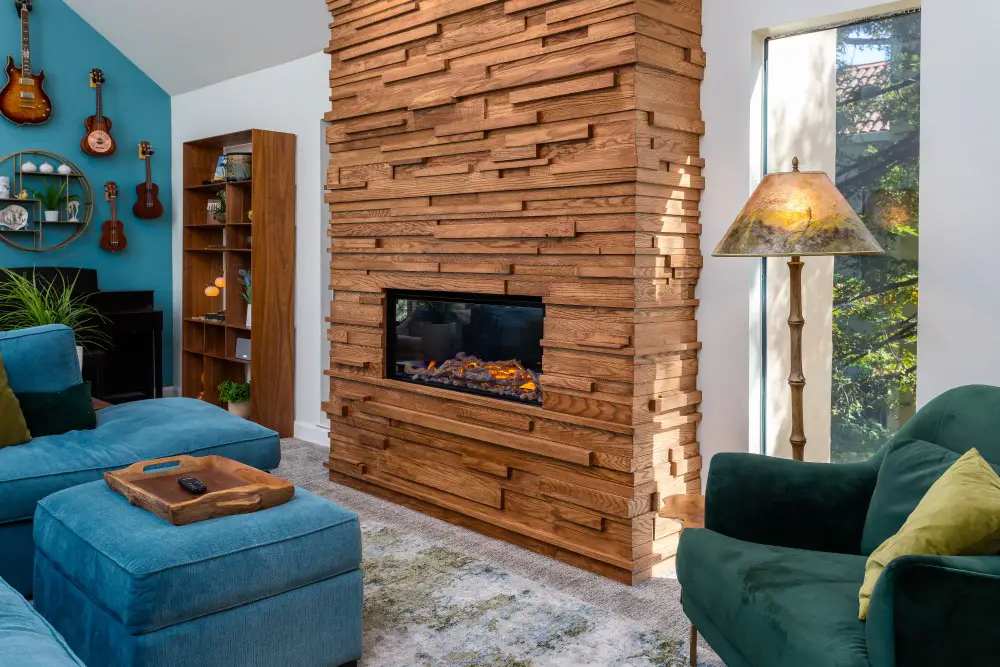 This custom living room remodel centers around a striking wood feature fireplace that adds warmth, texture, and architectural interest to the space. Vaulted ceilings, natural light, and a bold accent wall create an open, airy feel, while layered furnishings and curated décor—like the mounted guitars—bring personality into the design. It’s a great example of how custom remodeling can balance statement elements with everyday comfort.
Custom vs. Standard Remodeling
Custom gets used a lot in this industry. Sometimes it means hand-crafted millwork. Sometimes it means you got to pick the cabinet finish. Those aren't the same thing, and you deserve to know the difference before you hire anyone.
When we say custom at Toupin Construction, we mean the design starts with you — how you cook, how you move through your space, who else lives there, what bugs you every single day — and we build from that. Not from a catalog. Not from a standard floor plan that sort of fits.
That's different from a standard remodel, which typically starts with pre-set packages and works backwards. Standard isn't bad. Sometimes it's exactly right. But it's a different thing.
| Custom remodel | Standard remodel | |
|---|---|---|
| Starts with | Your life, your routines | Pre-set packages |
| Layout | Designed around you | Standard floor plan |
| Materials | Chosen for fit and durability | From the catalog |
| Budget | Goes where you'll feel it | Spread across all categories |
| Outcome | Feels like yours | Looks like everyone else's |
What That Looks Like in Practice
Here's a real example. We had a client in Rossmoor — one of those homes built in the '60s with the galley kitchen that felt like a hallway — who didn't want a bigger kitchen. She wanted a better one. Her ask: room to cook with her daughter, better lighting, and a place to actually set down groceries when she walked in from the garage.
We didn't blow out a wall. We moved the refrigerator, added a pull-out landing zone next to the door, swapped in under-cabinet LED lighting — that's the strip lighting mounted beneath your upper cabinets so you're lighting the counter directly instead of relying on overhead fixtures — and rebuilt the layout so two people could actually stand in there without colliding.
"No extra square footage. Completely different kitchen. That's custom — a design conversation, not a product selection."
The Order of Decisions That Actually Makes It Custom
Custom design isn't just about materials — though materials matter. It's about a sequence of decisions that all connect back to how you live. Most homeowners start at step 3. That's the wrong place to start.
For bathrooms, the same logic applies. We see a lot of East Bay homes with bathrooms that were fine in 1975 and haven't been touched since. The square footage is usually workable. What's missing is intentionality — a real shower niche (that's a recessed shelf built directly into the wall of your shower, so your shampoo isn't balanced on the tub edge), a vanity that fits the people actually using it, lighting that doesn't make you look like you're being interrogated.
Why This Matters for Your Budget
This is the part nobody talks about enough. Custom design is actually how you protect your remodeling budget.
When you start with your specific needs, you stop spending money on things that don't serve you. We've seen clients invest heavily in an elaborate tile pattern in a space they walk through for four seconds a day — and then realize they didn't budget for the under-cabinet lighting that would have changed how they used the kitchen every night.
Custom means your dollars go where you'll actually feel them. That's a smarter investment, not necessarily a more expensive one. You can learn more about how we approach budget conversations on our kitchen and bathroom remodeling services pages — we believe in talking about money honestly before a single thing gets built.
How We Actually Do It
Our process starts with a conversation. We want to know how you live before we talk about how your home looks. That means questions like: Do you work from home? Do you have people over often? Are there mobility or accessibility considerations we should plan around now, before you need them?
From there we develop a design — sometimes that's a single concept, sometimes it's two directions we want to explore together. We source materials, price it honestly, and build a plan that fits your life and your budget.
We've been doing this in Walnut Creek and the surrounding East Bay for over 40 years. We've worked in Rossmoor ranches, Alamo estates, Danville two-stories, Lafayette craftsmans. Every single one of them needed something different. That's the whole point.
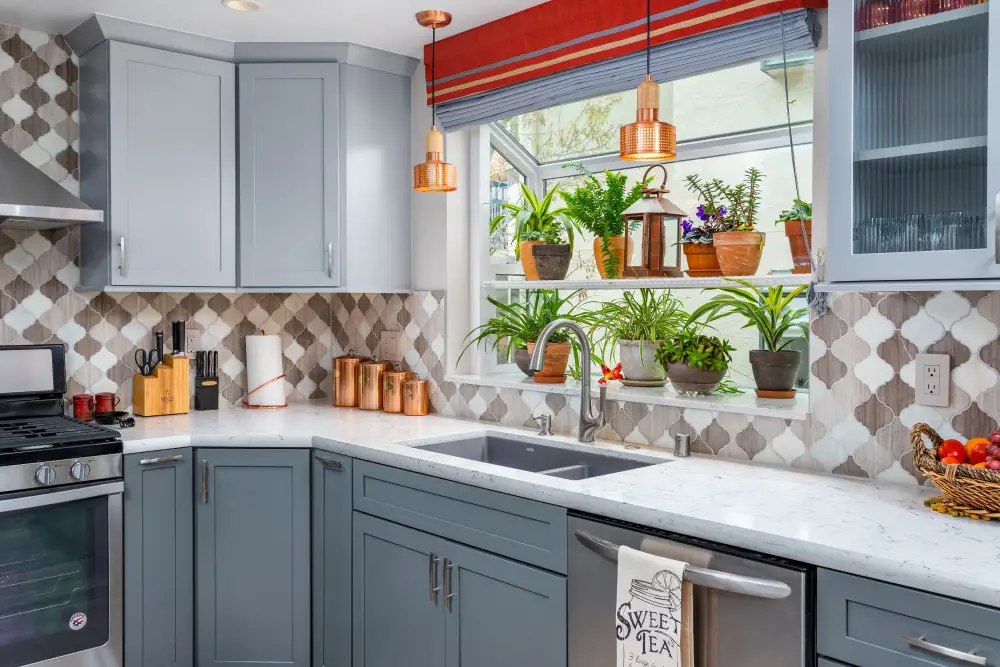 This custom kitchen remodel blends soft gray cabinetry, warm metallic accents, and patterned tile for a space that feels both tailored and inviting. A thoughtfully designed sink area beneath a sunlit window creates a functional focal point, while layered textures—from the backsplash to the natural greenery—add depth and personality. This design highlights how custom remodeling can transform everyday spaces into highly personalized, livable environments.
So Is Custom More Expensive?
Sometimes. Not always. It depends on what you're comparing.
A custom remodel done well — where the design is tailored to your actual needs — tends to hold up better, functionally and emotionally, than a standard package you compromised on. You stop noticing a kitchen that works perfectly for you. You notice every day the one that doesn't.
Trade Terms, Plain English
We use these words a lot. Here's what they actually mean.
Curious what your home could look like?
We'd love to have an honest conversation about what's possible — no obligation, no pitch, just a real discussion about your space and your goals.
Or call us at 925-937-4200


Comments