


But kitchens and bathrooms? Structural walls? Anything that touches your plumbing, electrical, or subfloor? That's different terrain. Here's why — and how to tell the difference before you're in over your head.
The work that quietly goes wrong
The tricky thing about renovation mistakes is that they don't always show up right away. A small plumbing leak behind a newly tiled wall might take months to become visible — by which point you've got water damage behind your fresh work, and you're tearing everything out to fix the original problem.
We've walked into jobs like that. More than once. The homeowner did everything right on the surface — good tile, careful grouting — but the waterproofing behind it wasn't there. That's not a judgment on them. Waterproofing is one of those things that looks simple but has a lot of nuance once you're actually on the jobsite.
In a shower or bathroom floor, a membrane is a flexible waterproof layer — often a sheet material or a liquid-applied coating — installed between your subfloor or wall board and the tile. It's what keeps moisture from migrating into the structure when water inevitably gets behind the tile surface. Without it, you get rot, mold, and eventually, a full redo. You won't see it once the tile's on, but it's doing the most important work in the room.
Where we see the most costly DIY mistakes
Electrical work
California's electrical codes are strict for good reason — a miswired outlet or an improperly grounded circuit can create a fire hazard that doesn't show up until years later. Licensed electricians pull permits, and inspectors check the work. When you skip that step, you're not just taking on physical risk — you're also creating a disclosure problem if you ever sell the home. California has specific electrical codes that govern even minor fixture work, and it's worth knowing them before you start.
Plumbing
Replacing a showerhead? Totally fine. Rerouting supply lines or moving a drain? That's a different job — one that requires permits in most East Bay municipalities and, if done incorrectly, can cause water damage that hides inside your walls for a long time before anyone notices.
Structural changes
The question "can this wall come down?" is not a question you want to answer with a sledgehammer and a hopeful attitude. Load-bearing walls carry the weight of everything above them. Getting that wrong isn't just expensive to fix — it's genuinely dangerous. A structural engineer or experienced contractor can tell you in about five minutes what would take a DIYer a lot of painful research to get wrong.
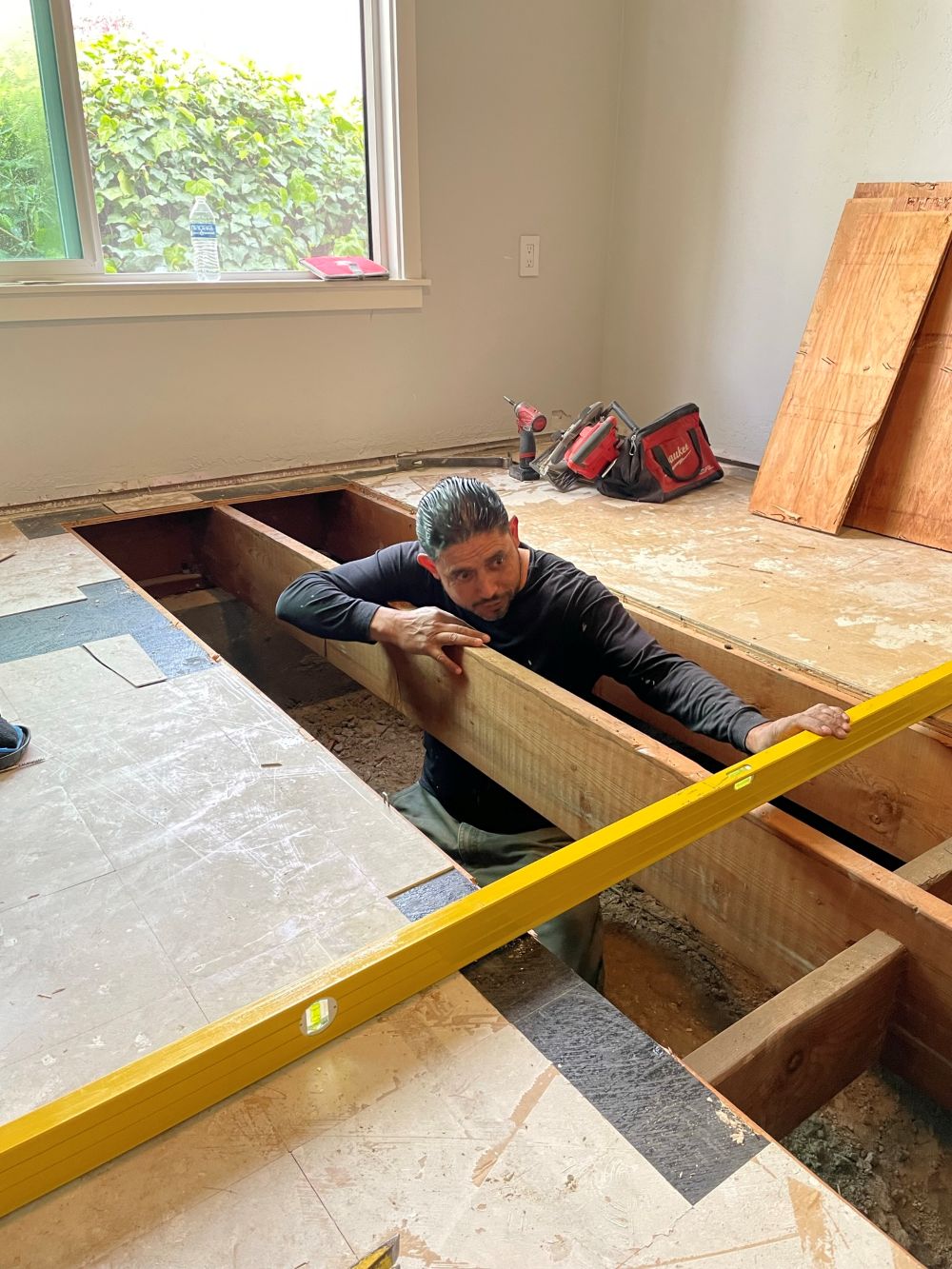
A lot of the homes in Rossmoor were built in the 1960s and '70s, and they come with their own set of quirks — older plumbing materials, original electrical panels, and floor systems that weren't designed with modern tile in mind. Before any significant renovation in that era of home, it's worth having someone take a look at what's actually under there. We do that as part of our process, and it saves a lot of surprises mid-project.
What DIY is actually good for
We want to be honest here: there's a real category of home updates that are low-risk, high-reward, and genuinely satisfying to do yourself.
- Painting walls or cabinets
- Swapping cabinet hardware
- Installing a new faucet (same location)
- Replacing a light fixture (same wiring)
- Adding shelving or storage organizers
- Updating a vanity mirror
These projects are cosmetic — they sit on top of the structure and infrastructure of your home, and they're forgiving if you make a mistake. The stakes are low, the learning curve is reasonable, and the payoff in personal satisfaction is real.

A bright, professionally remodeled kitchen featuring white shaker cabinets, light stone countertops, and a cohesive layout that maximizes both function and flow. Every detail—from appliance placement to cabinet alignment—reflects thoughtful planning and experienced execution.
Projects that belong with a licensed contractor
Here's a straightforward way to think about it: if the project requires a permit, it requires a professional. Full stop. Permits exist because those categories of work have real consequences when they go wrong.
- Moving or adding plumbing lines
- Electrical panel work or new circuits
- Removing walls (especially load-bearing)
- Full shower or tub replacement
- Subfloor replacement or repair
- Anything requiring a city permit
Beyond permits, the other signal is complexity. The more trades involved — plumbing, electrical, tile, framing — the more coordination matters. That's where experienced project management pays for itself. Sequencing those trades wrong doesn't just cost time; it means redoing work.
The real cost math
We understand the appeal: you see a number from a contractor and think, "I could save that." And sometimes you can. But when a DIY bathroom tile job fails because the waterproofing wasn't right, the repair involves tearing out the tile you just set, fixing the underlying problem, and re-tiling. You've now paid for the project twice — plus materials for the fix.
We've written about why hiring an insured remodeling company matters — especially when something unexpected comes up mid-project. That insurance isn't just for the contractor. It protects you.
For a deeper look at what goes into a full bathroom renovation — timeline, sequencing, what to expect — our Complete Bathroom Remodel Guide for Bay Area Homes walks through the whole process.
One honest question to ask yourself
Before starting any renovation project, ask yourself: if I get this wrong, what does it cost to fix? If the answer is "not much" — go for it. If the answer is "a lot of money, or potentially my family's safety" — pick up the phone.
We're always happy to talk it through, even if it turns out you don't need us. That's just how we operate.


Comments