


By using our website, you agree to the use of cookies as described in our Cookie Policy
Blog
Drywallers: The Real Heroes of a Remodel
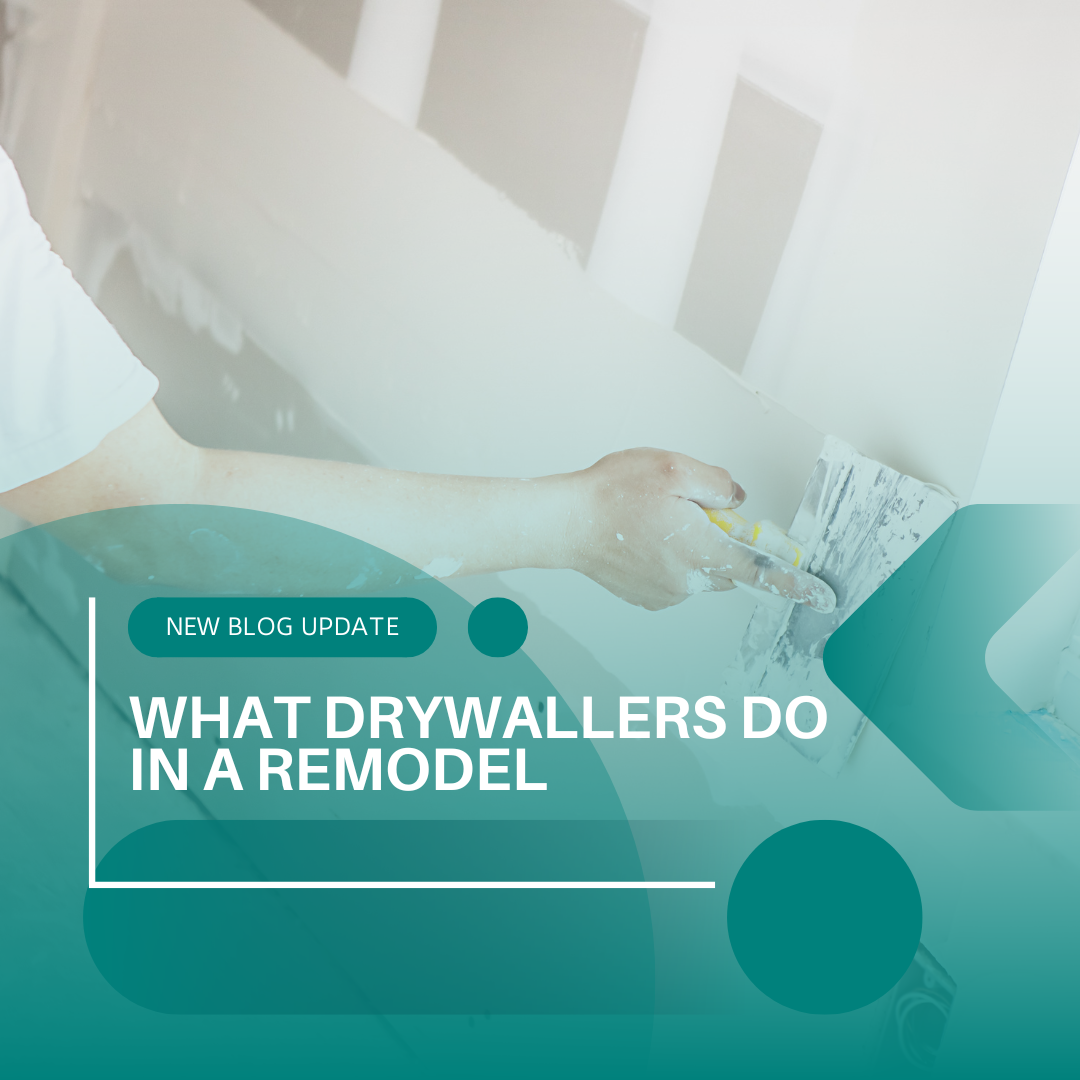
Series: What the Trades Actually Do · Post 3 of 8
The walls in your house? Someone built those. By hand. And they deserve more credit than they get.
By Candi Toupin· Toupin Construction · Walnut Creek, CA·CA Lic #626819·Behind the Scenes Remodeling Process East Bay
Nobody takes pictures of the drywall phase. I get it — there's not much to look at. It's dust and boards and a bunch of guys in respirators. No Pinterest-worthy moments. No dramatic before-and-afters yet.
But here's what's true: everything you see in a finished room — the paint, the texture, the trim, the tile — sits on top of a drywaller's work. If that work is done right, it's invisible. If it's done wrong, you see it every single day, in every shadow, on every wall.
These people are the most underappreciated trade in residential construction. Let's fix that.
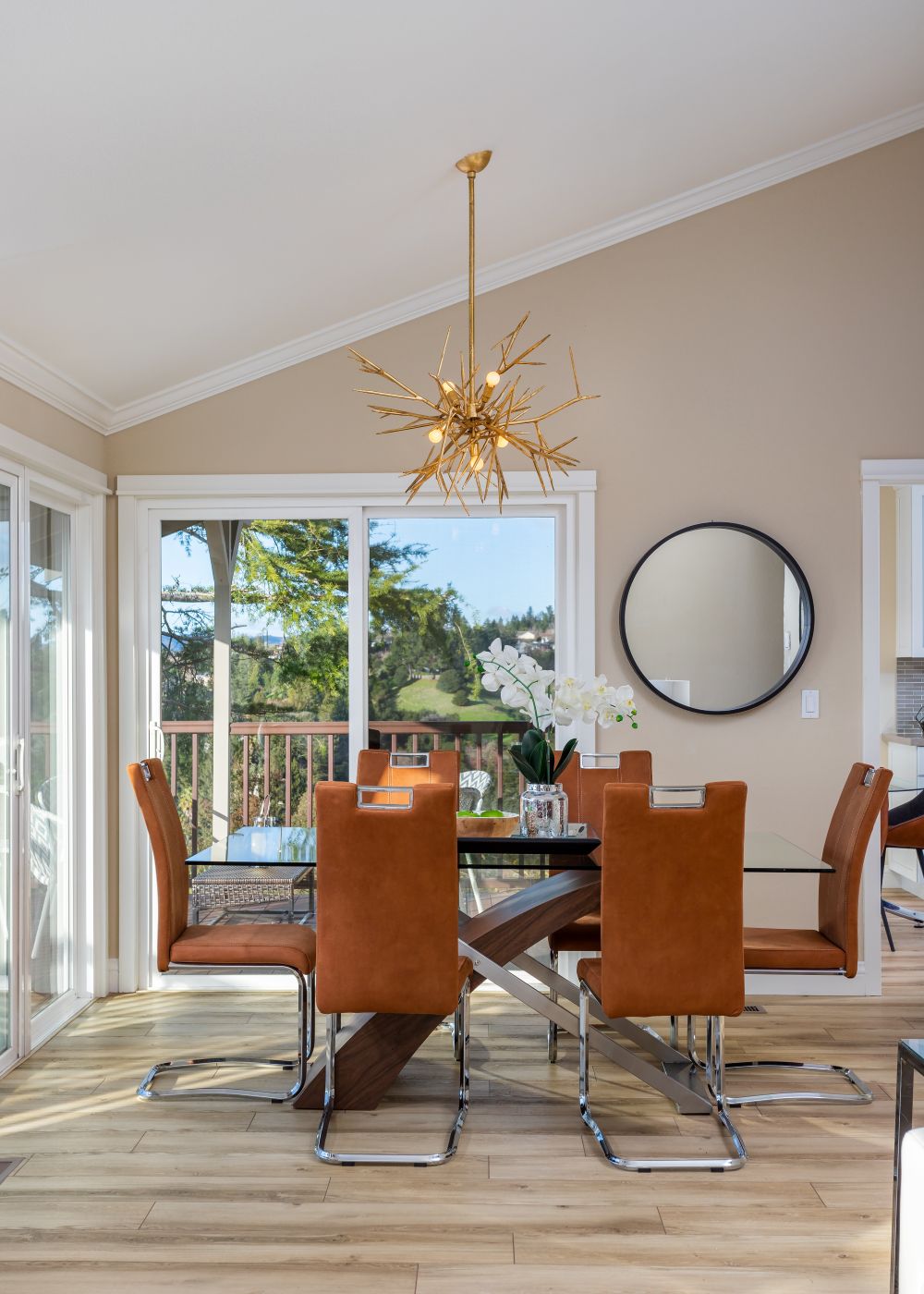 A bright, contemporary dining room features a glass-top dining table with six warm brown cantilever chairs beneath a sculptural gold chandelier. Large sliding glass doors flood the space with natural light and provide scenic backyard views, while vaulted ceilings enhance the open, airy feel.
What Drywall Actually Is
Drywall — also called gypsum board, wallboard, or by the brand name Sheetrock — is the panel system that forms the interior walls and ceilings of almost every home in America. It replaced plaster as the standard wall surface in the mid-20th century because it's faster to install, more consistent, and easier to work with. But "easier" is relative. Hanging and finishing drywall well is a genuine skill.
Trade Term Explained
Gypsum Board / Sheetrock
Gypsum board is the generic name; Sheetrock is USG's brand name that became so common people use it interchangeably — like calling every tissue a Kleenex. It's a panel made of gypsum plaster sandwiched between two layers of paper. Standard sheets are 4'x8', though 4'x12' and longer panels are common for ceilings where fewer seams are better. Different types exist for different applications: moisture-resistant board for bathrooms, fire-rated board for garages, impact-resistant board for high-traffic areas.
The Two Phases of Drywall Work
Drywall work happens in two distinct phases, and they require different skills. Some crews do both; some companies specialize in one or the other.
Phase 1: Hanging
Hanging is the physical work of cutting sheets to size and fastening them to the framing. It sounds straightforward until you're dealing with vaulted ceilings, curved walls, arched openings, or the awkward angles that show up constantly in real homes — especially in older East Bay houses that weren't built to modern tolerances. Ceiling work is particularly demanding — lifting and holding a 4x12 sheet overhead while driving screws is genuinely hard physical labor, and it has to be precise. Seams need to land on framing members. Sheets need to be tight. Gaps and gaps create problems that compound through every subsequent phase.
Phase 2: Finishing
Finishing is where the artistry lives. This is the process of making drywall look like a smooth, seamless wall — hiding every seam, every screw head, every imperfection — using joint compound applied in multiple coats. It's called taping and mudding, and a good finisher can make a wall look like it was poured in place. A bad one leaves ridges, shadows, and waves that become very obvious the moment light hits the wall at an angle.
The Finishing Process, Step by Step
Most homeowners don't realize that finishing drywall isn't one step — it's a multi-day process with drying time between each coat. Here's what actually happens:
-
Tape coat: Paper or mesh tape is embedded in the first coat of joint compound over every seam and inside corner. This tape is what holds the seam together structurally.
-
-
First finish coat (fill coat): A wider coat of compound goes over the tape to fill in the low spots and begin building a smooth surface. This dries completely before the next coat.
-
Second finish coat: An even wider, thinner coat feathers out past the first, blending the seam into the surrounding wall. Good finishers make this look effortless. It's not.
-
Skim coat (on some jobs): A thin coat of compound applied over the entire wall surface — not just the seams — to create a perfectly uniform texture. This is what separates a truly flat, premium wall from a standard finish.
-
Sanding: Each dried coat gets sanded between applications. Final sanding smooths everything before primer and paint. This is where a lot of the dust comes from — and why good drywall crews seal off the rest of the house.
-
-
"You don't think about drywall until you're in a room where it was done badly. Then you can't stop thinking about it — every time the light changes, there it is."
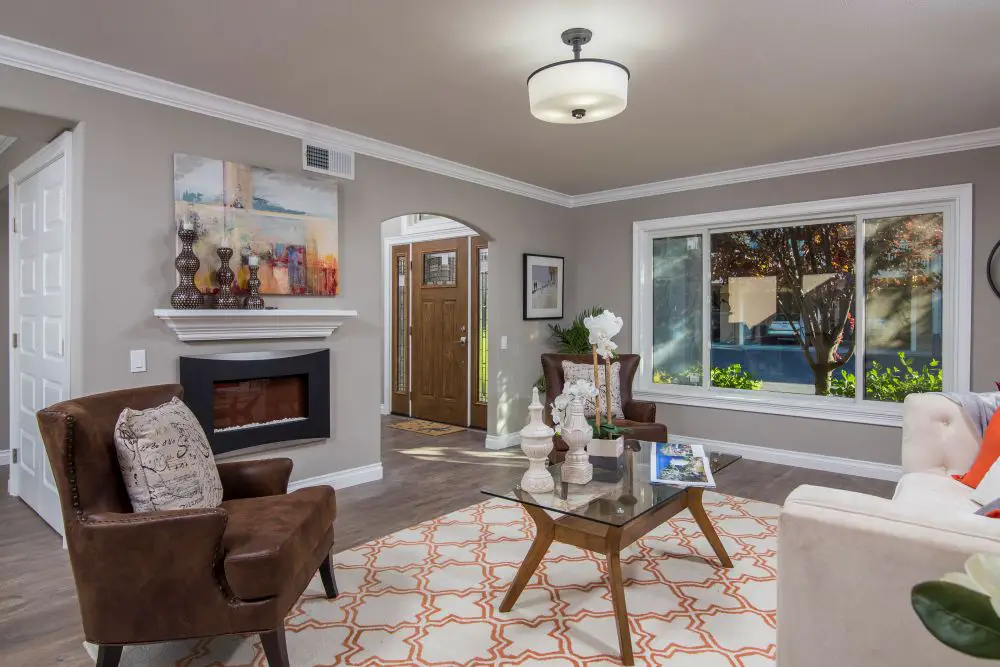 A beautifully remodeled living room showcases a sleek modern fireplace with a white mantel, luxury vinyl plank flooring, soft gray walls, and expansive windows that fill the space with natural light. Thoughtfully staged furnishings create a warm and inviting atmosphere.
Texture: More Complicated Than It Looks
Not all walls are smooth. Many homes — especially in Walnut Creek, Danville, and other East Bay communities built in the '70s and '80s — have textured walls. Orange peel texture. Knockdown texture. Skip trowel. Hand-applied swirl. When a section of wall gets repaired or replaced, matching the existing texture is a real skill. It takes a practiced eye and hand to blend new work into old so seamlessly that you can't tell where the repair happened.
We see this constantly in Rossmoor. When a bathroom gets updated or a wall gets opened for plumbing work, the drywaller has to match whatever texture was original to the unit — which might be decades old. The best ones nail it. It's not something you can fake with a spray can.
Trade Term Explained
Level 5 Finish
Drywall finishing is graded on a scale from Level 0 (bare board, no finishing) to Level 5 (full skim coat over the entire surface, the highest standard). Level 5 is required for walls that will be painted with high-sheen paint or that receive direct light — because any imperfection shows up brutally at those conditions. It's more labor-intensive and costs more, but in the right space, it's worth every penny.
Why It Matters More Than People Think
Here's the chain of quality in a remodel: if the drywall isn't right, the paint won't look right. If the paint doesn't look right, the whole room reads as "off" even if every other element is beautiful. Homeowners sometimes blame the paint color when the problem is actually the wall underneath it. A drywaller who does Level 5 finish work in the right spaces is giving the whole room a foundation it can succeed on.
We choose our drywall crews carefully. The speed is nice. The quality is non-negotiable.
What the Trades Actually Do · Full Series
8 posts. 8 trades. Real respect for real work.
-
What Plumbers Do in a Remodel
-
What a Real Carpenter Does (Not a Handyman)
-
What a Finish Carpenter Is
-
What a Painter Actually Does
Planning a Remodel?
Whether it's a kitchen, bathroom, or something bigger — we'd love to walk you through what the process actually looks like, trade by trade. Give us a call. No pressure, just honest conversation.
Toupin Construction · Walnut Creek, CA · CA Lic #626819
Serving Walnut Creek, Rossmoor, Lafayette, Orinda, Danville & the East Bay

Toupin Construction
Ready to start your remodel?
Whether you're dreaming of a new kitchen, a spa-worthy bathroom, or a whole-home transformation — we’d love to hear about your project. Reach out and let's talk.
‹ Back
Comments