

By using our website, you agree to the use of cookies as described in our Cookie Policy
Blog
Penny Tile: What It Is, Where to Use It, and What Nobody Tells You
Penny Tile: What It Is, Where to Use It, and What Nobody Tells You
The Boss’s Daughter Blog | Toupin Construction
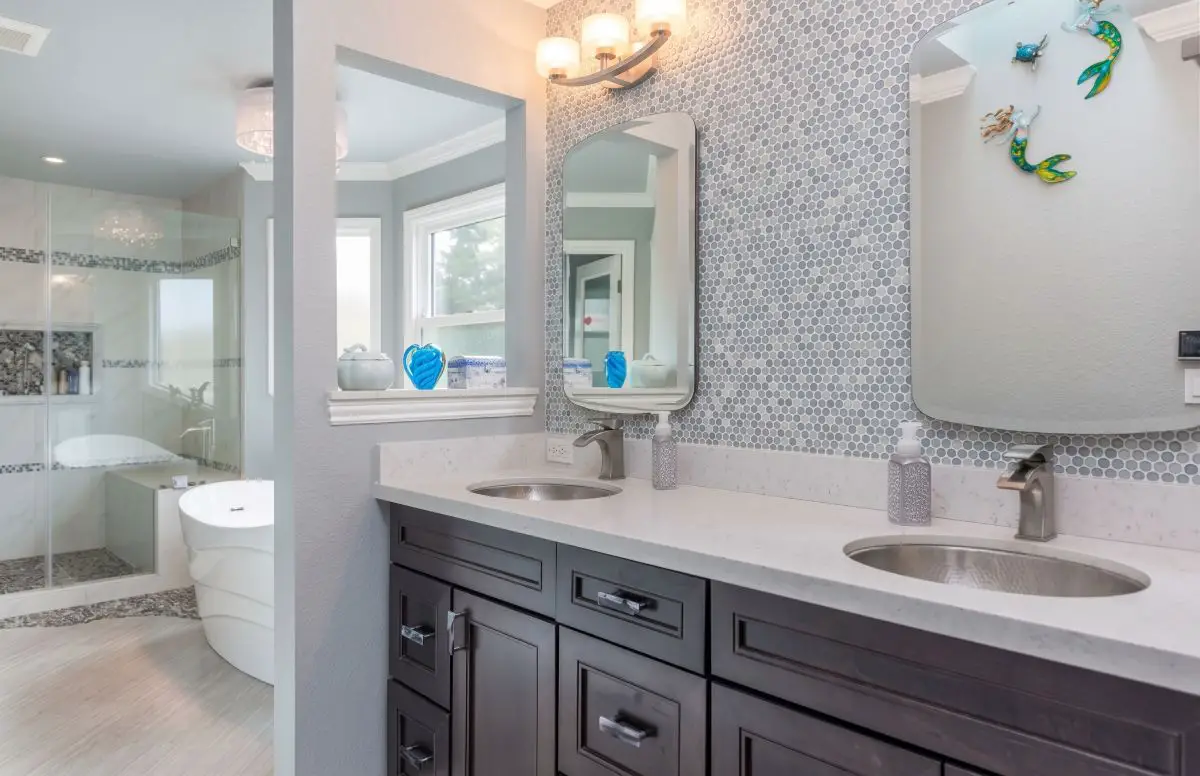 Explore this stunning bathroom featuring grey mosaic backsplash, a spacious dark wood double vanity, and a seamless walk-in wet room with a soaking tub.
 If you’ve spent five minutes on Pinterest or saved even one bathroom board on Instagram lately, you’ve seen it: those gorgeous, honeycomb-adjacent sheets of tiny round penny tile creating effortless vintage texture. It looks crisp, clean, and beautifully retro.
But if growing up in a family construction business at Toupin Construction has taught me anything, it’s that what looks effortless on a glossy screen often comes with a few hidden plot twists on the actual job site.
We love a good tile feature. Penny tile has been a classic design staple for over a century, and when it’s done right, it can completely transform a bathroom or kitchen. But before you fall head-over-heels and order ten boxes for your master suite, let’s talk about what penny tile actually is, where it performs best, and—most importantly—the honest trade realities nobody mentions until the contractor shows up with a trowel.
What Exactly Is Penny Tile?
Penny tile (sometimes called penny round tile) gets its name from its size and shape: small, circular tiles roughly the diameter of an old American penny—typically between 3/4 inch to 1 inch across. Rather than placing hundreds of tiny individual circles by hand, manufacturers mount them onto 12x12-inch mesh backing sheets to make installation manageable.
While Victorian homes originally featured matte white unglazed porcelain penny rounds, today's options come in practically every material and finish imaginable:
- Porcelain & Ceramic: The standard workhorses. Durable, water-resistant, and available in matte, gloss, or crackle glazes.
- Natural Marble: Carrara, Nero Marquina, or Calacatta penny rounds add instant luxury and subtle natural variation.
- Glass: Delivers incredible light reflection and depth, perfect for accent walls, pool, or spa features.
- Metallic Finish: Copper, bronze, and brushed stainless steel rounds for modern, edgy backsplashes.
Where Does Penny Tile Perform Best?
Because penny rounds are small and flexible, they excel in areas where larger format tiles struggle. In our Complete Bathroom Remodel Guide for Bay Area Homes, we highlight how flexible mosaic formats solve unique spatial challenges in East Bay remodels:
1. Shower Pan Floors (The Gold Standard)
If there is one absolute best place for penny tile, it’s the shower floor. Shower pans require a precise, multi-directional slope toward the drain to ensure proper water runoff. Trying to lay a large 12x24 tile on a sloped shower floor requires cutting the tile into awkward envelope folds.
Penny tile sheets, however, easily contour to the slope. Plus, the sheer volume of grout lines creates natural slip resistance underfoot—a crucial safety win for wet shower zones.
2. Recessed Shower Niches & Accent Strips
If you love the texture of penny rounds but don't want an entire room filled with them, a shower niche is your best friend. Lining the back wall of a built-in niche with a contrasting color or marble penny round creates a high-end designer focal point without overwhelming the eye.
3. Powder Room Floors & Vintage Accents
Powder rooms are low-moisture, high-impact spaces where you can afford to take design risks. While classic subway tiles remain a timeless choice for walls, pairing them with a dark charcoal or contrast-grout white penny tile floor gives a compact powder room immediate character and historic charm.
4. Kitchen & Bar Backsplashes
Running penny tile from the countertop to the upper cabinets or all the way to the ceiling brings subtle organic texture into a kitchen. It breaks up straight, linear cabinetry and adds tactile playfulness.
|
THE BOSS'S DAUGHTER DESIGN RULE: When using penny tile on a shower floor, always select matte porcelain or natural unglazed stone. High-gloss glazed tiles can feel slick when coated in soapy water, even with abundant grout lines! |
What Nobody Tells You: The 4 Trade Realities of Penny Tile
Here is where my 'boss’s daughter' persona gets candid. Showroom samples look flawless, but on an active job site, penny tile presents unique installation challenges that every homeowner should understand before signing off on materials.
1. The Grout Line Math (and Why Epoxy Grout Is Non-Negotiable)
Let’s do some quick contractor math. A standard 12x24-inch floor tile has minimal grout joints. A single square foot of 3/4-inch penny tile contains roughly 200 to 300 individual circles. That means a typical 3x5-foot shower pan floor contains thousands of inches of grout lines!
Standard cementitious grout is porous. In a damp shower environment, thousands of inches of porous grout become an open invitation for soap scum, hard water stains, and mildew. If you want to understand why grout selection can make or break your remodel, check out our deep dive on Grout Matters: The Unsung Hero of Every Tile Job.
At Toupin Construction, our non-negotiable recommendation for penny tile is Epoxy Grout. As we shared in our personal story on Why Epoxy Grout is the Gold Standard in Construction, epoxy grout is non-porous, 100% waterproof, and completely stain-proof. It acts like a plasticized seal that wipes clean effortlessly and never requires sealing. Yes, epoxy grout costs more in materials and labor, but for penny tile, it is the unsung hero that saves your sanity.
2. The 'Graph Paper' Trap (Sheet Seams Showing)
Have you ever walked into a restaurant bathroom or a renovated home and noticed square grid lines running across a penny tile floor? That is the dreaded 'graph paper effect.'
Because penny tiles come on 12x12-inch mesh sheets, inexperienced tile installers often lay the square sheets side-by-side like building blocks. If the spacing between the sheets is off by even 1/32 of an inch, the outline of every square sheet will scream at you once the grout dries. A true craftsman tile setter knows to offset the sheets, hand-pick edge tiles, and interlock the circles so the entire surface looks seamless.
3. Installation Labor Costs Significantly More Than the Tile
Homeowners often pick penny tile because the material cost looks friendly—sometimes just $6 to $12 per square foot. But material price is only half the equation.
Installing penny tile requires meticulous precision. Spreading thin-set mortar too thick will cause mortar to squeeze up between the tiny circles, requiring hours of tedious cleaning before grouting. Spreading it too thin results in poor adhesion. We break down these labor dynamics in our guide on Why Tile Installation Costs More Than the Tile. Because of the level of detail, interlocking requirement, and grout application, tile setters charge significantly higher labor rates per square foot for penny tile than for standard subway or large-format tile.
4. Your Subfloor Flaws Will Not Hide
Large tiles can bridge small dips in a subfloor. Small penny tiles on flexible mesh backing follow every tiny bump, dip, or curve in the surface underneath. If your shower pan or floor substrate isn't floated perfectly flat and smooth, your finished tile floor will look like a miniature roller coaster. Proper surface preparation is 80% of a successful tile job.
|
REALITY CHECK: LABOR VS. MATERIALS Never judge tile costs by the price tag on the home improvement store shelf. High-detail, high-grout tiles like penny rounds, mosaics, and herringbones carry a higher labor coefficient. Always budget for master-level tile setting! |
Is Penny Tile Right for Your Project?
So, should you pull the trigger on penny tile? Absolutely—provided you go in with your eyes open!
- YES, go for penny tile if: You want unmatched vintage texture, maximum slip resistance on shower floors, or a striking accent wall, and you are working with an experienced tile crew using epoxy grout.
- SKIP penny tile if: You hate grout cleaning and refuse to upgrade to epoxy grout, or you are trying to cut labor costs to the absolute minimum on a fast DIY project.
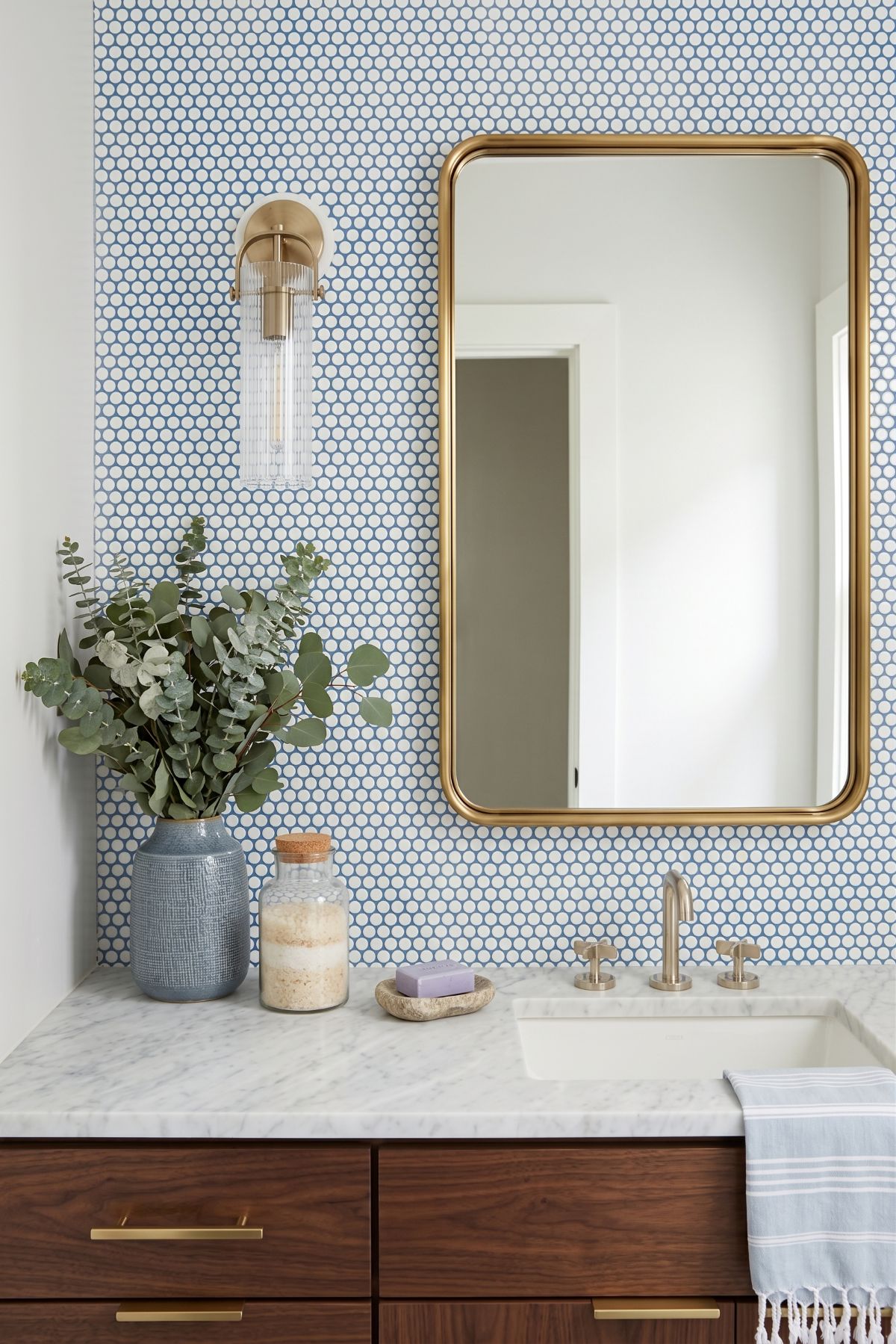 Discover how a patterned blue penny tile accent wall, brass hardware, and a walnut vanity create a luxurious modern bathroom that blends style with texture.
Ready to Bring Your Bay Area Remodel to Life?
At Toupin Construction, we’ve been helping homeowners throughout Walnut Creek, Rossmoor, and the East Bay navigate the fine line between Pinterest inspiration and bulletproof job-site execution for over 40 years. For a realistic picture of project investments, read our full breakdown on Bathroom Remodel Costs in the East Bay and Rossmoor or explore more remodeling advice on The Boss’s Daughter Blog Hub.
Have questions about your upcoming remodel or want to explore tile options in person? Reach out to our team today to schedule your consultation!

Toupin Construction
Ready to start your remodel?
Whether you're dreaming of a new kitchen, a spa-worthy bathroom, or a whole-home transformation — we’d love to hear about your project. Reach out and let's talk.
‹ Back
Comments