


By using our website, you agree to the use of cookies as described in our Cookie Policy
Blog
Oak Cabinets: Classic, Durable, and More Modern Than You Think
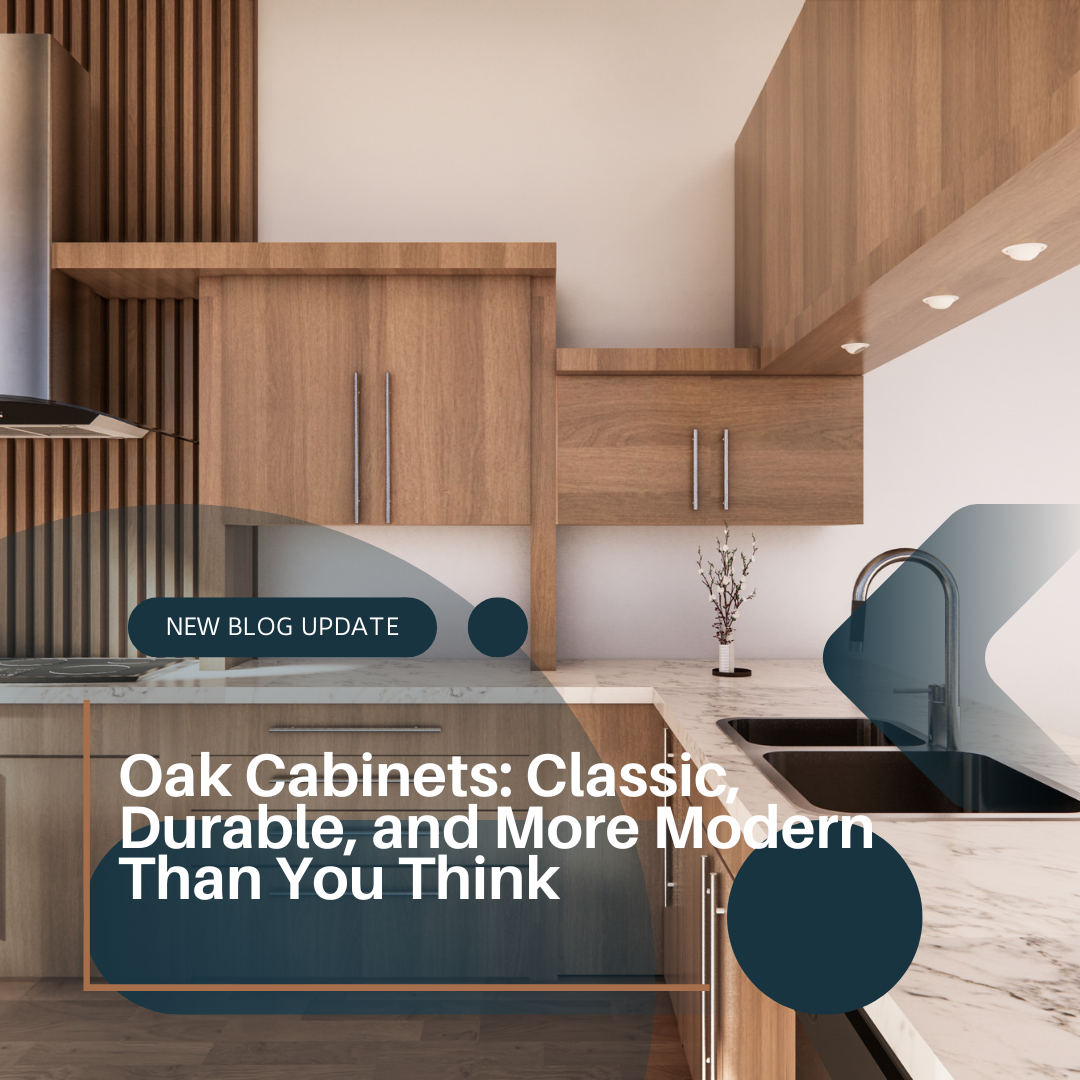
A couple in Lafayette walked into our consultation a few years back and led with a firm declaration: "We don't want oak."
They'd grown up with it. Orange-stained, cathedral-arched, heavy-grained — the kind that felt stuck in 1994. They had a vivid picture in their heads of exactly what they were trying to avoid.
Two hours later, they'd picked white oak. Light matte finish. Flat-panel doors. Matte black hardware. It looked nothing like their childhood kitchens. It looked like something out of an architectural magazine. They left genuinely excited.
That is the oak story right now — and it's worth understanding before you cross it off the list.
Wood Species Series
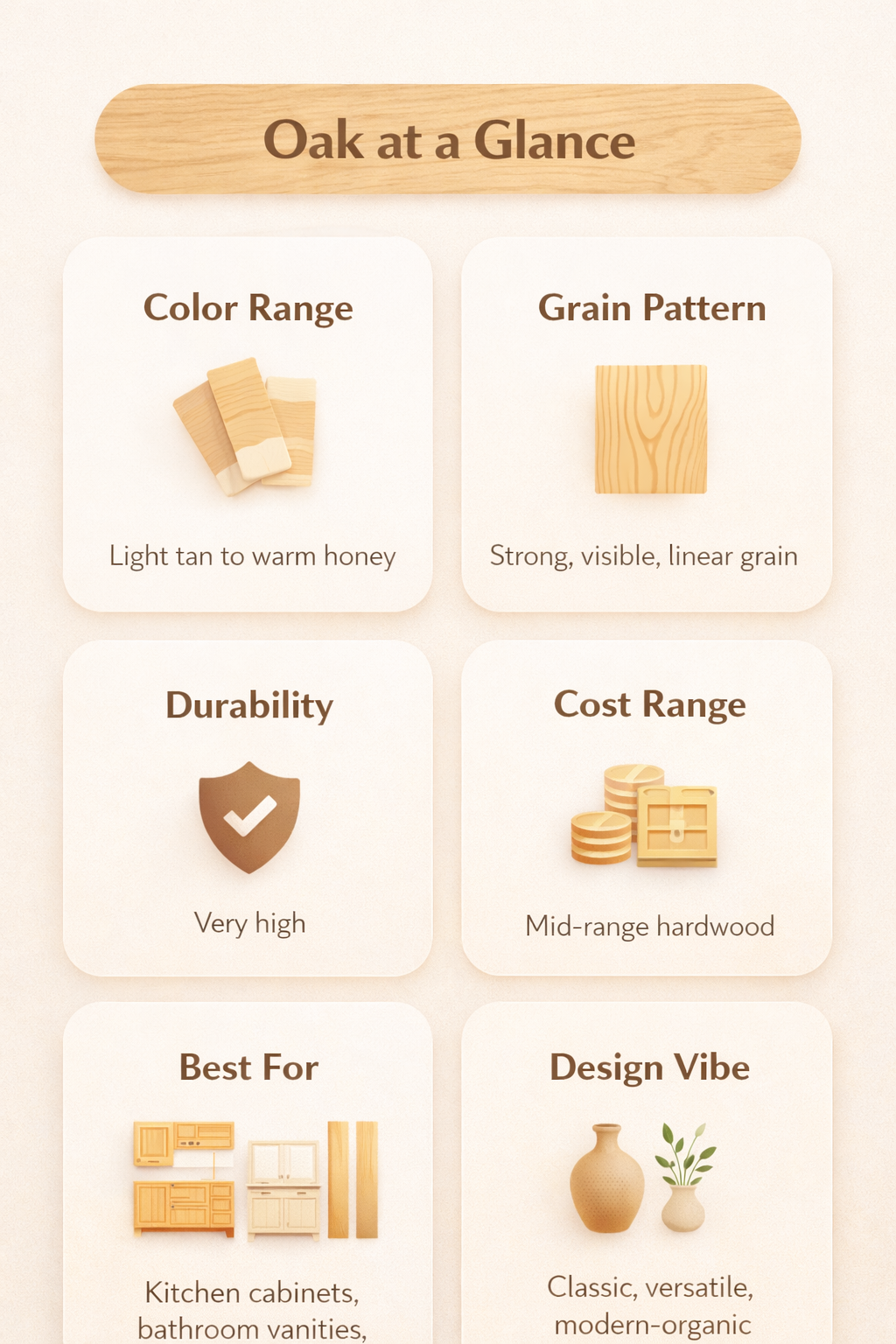 Bright kitchen featuring light oak cabinets, white countertops, and warm wood flooring, creating a clean and timeless design with natural textures.
Why Oak Has a Reputation — and Why It's Changing
Oak earned its "dated" reputation honestly. In the 80s and 90s, it was everywhere — paired with heavy cathedral-style doors, glossy finishes, yellow or orange stains, and busy backsplashes. Those combinations locked oak into a very specific era, and a lot of people who grew up with those kitchens carry that image into every remodeling conversation they have.
The wood itself didn't change. The design philosophy around it did. Today's oak kitchens use lighter finishes, flat-panel doors, clean hardware, and softer palettes. The result is a material that feels warm but not heavy, natural but not rustic. If you haven't seen modern oak in person recently, you'd genuinely be surprised.
Red Oak vs. White Oak: The Distinction That Changes Everything
This is the conversation that most salespeople skip, and it causes real confusion. Not all oak is the same. Red oak and white oak behave very differently in real kitchens.
Jargon Card
Red Oak vs. White Oak
Red oak has warmer, slightly pink or reddish undertones and a more open, pronounced grain. It was widely used in homes built before 2000 and tends to skew orange or pink under stain — which is exactly what most people are reacting to when they say they dislike oak.
White oak has cooler, more neutral undertones, a tighter and more refined grain, and better moisture resistance. It's what's showing up in modern kitchens and design publications right now — and it looks completely different from its red oak cousin.
If someone tells me they love modern wood kitchens but hate oak, nine times out of ten they're reacting to red oak, not white oak. These are two completely different visual experiences in person. It's worth seeing both before making a decision.
What Oak Looks Like in Real Life
Oak is not subtle — and that's intentional. This is a species with visible movement. The grain is meant to be seen. Depending on the finish, natural or clear coats emphasize the texture and warmth, light stains feel airy and modern, and dark stains add depth and drama.
One thing I always tell clients up front: painted oak will still show grain over time. As humidity cycles through the seasons — and Bay Area homes see more of that than people expect — wood moves, and that grain telegraphs through paint. If you want a perfectly smooth furniture-grade painted finish, oak is going to frustrate you. For that goal, maple is the better starting point. That conversation belongs at the very beginning of a project, not after installation.
"Oak doesn't pretend to be something it's not. It's honest, and that's part of its appeal."
Durability: Where Oak Really Earns Its Place
Oak is tough. It resists dents, scratches, and daily wear in a way softer woods simply can't match. Harder than alder, more durable than walnut, and comparable to maple — for busy kitchens, family homes, or any space where the cabinets are going to actually get used and not just admired, oak's durability is a meaningful advantage.
It also ages beautifully. Minor dents blend into the grain, wear feels natural rather than damaged, and color deepens slightly but doesn't dramatically shift. Oak doesn't fight aging — it settles into it. For homeowners who don't want to think about their cabinets every time someone sets down a pan too hard, that's a genuine quality-of-life win.
Door Styles That Make Oak Look Current
The door profile is where oak either updates or dates itself. The wood hasn't changed — but what we put it in has changed enormously.
| Door Style | Works With Oak? | Why |
|---|---|---|
| Flat-panel (slab) | Excellent | Grain runs uninterrupted — feels modern and intentional |
| Simple shaker | Great | Classic and clean — timeless without being trendy |
| Thin-rail shaker | Very good | Contemporary proportions, especially strong in white oak |
| Cathedral arch | Proceed carefully | Very 1990s — can work in traditional homes, risky elsewhere |
| Heavy raised panel | Avoid in most cases | Fights oak's natural beauty, locks it into a dated era |
| Ornate routed profiles | Skip it | Overwhelms the grain, works against a clean result |
What Oak Actually Costs
Oak sits solidly in the mid-range of hardwood pricing — more than birch or alder, less than walnut or cherry. For the durability and longevity you're getting, it's genuinely excellent value.
Oak is also widely available, which matters more than people realize. Shorter lead times, more competitive pricing between suppliers, and cabinet makers who are very experienced working with it — all of that translates to a smoother, more predictable project. When supply chain unpredictability is a real factor in remodeling timelines, oak's availability is a practical advantage.
White oak does command a slight premium over red oak in most markets — but the difference is modest enough that we almost always recommend white oak for the better long-term look, especially in modern or transitional kitchens.
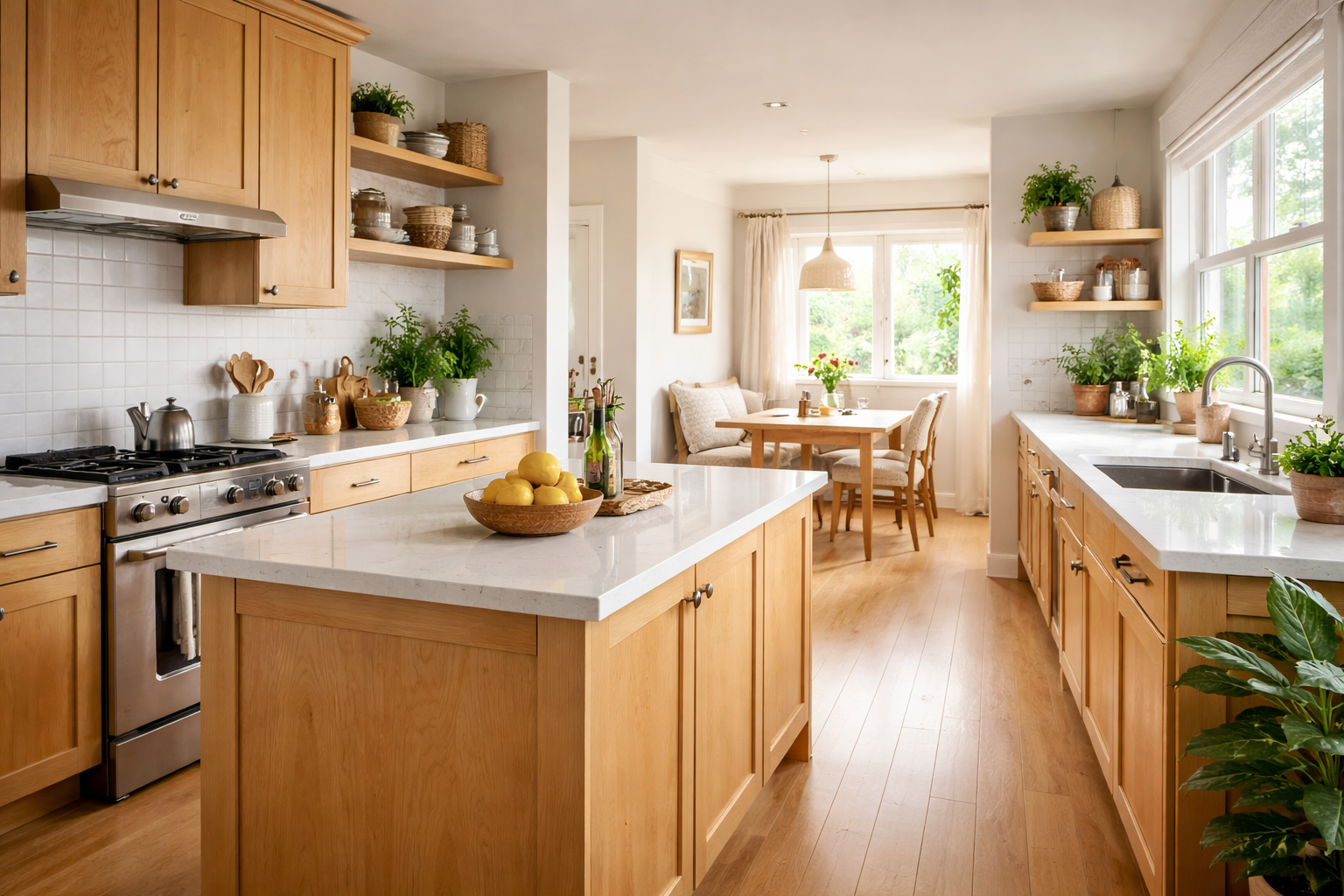 An infographic highlighting key characteristics of oak wood, including color range, grain pattern, durability, cost, and best uses for cabinetry and home design.
Pros and Cons
What Works
- Exceptional durability — handles daily wear without complaint
- Ages gracefully — looks better at year ten than year one
- Widely available — good lead times and competitive pricing
- Adapts to many design styles when finished correctly
- Mid-range cost with excellent long-term value
What to Watch For
- Visible grain is the point — not everyone wants it
- Painted oak telegraphs grain over time, especially in humid spaces
- Wrong stain reads very dated, very fast
- Red vs. white oak confusion causes costly mistakes if not addressed early
Rossmoor Homeowners
White oak is one of our most recommended species for Rossmoor kitchens. It photographs beautifully in the natural light that many hillside units get, holds up extremely well in the compact kitchen footprints common to co-op living, and lighter matte finishes keep spaces feeling open rather than closed in. It also resells well — white oak in a Rossmoor kitchen reads as a thoughtful, current update without feeling like a risky design choice. If your unit gets good afternoon light, a matte-finished white oak is going to look genuinely great in there.
Design Pairings That Work With Oak
Oak is remarkably responsive to what surrounds it — more than almost any other species. Get the pairings right and it looks extraordinary. Let the surroundings fight it and the whole room suffers.
Countertops: Light quartz for clean contrast, soapstone for moody depth, honed marble for classic balance, or matte porcelain for modern durability. What to avoid: heavily veined stone that competes with the grain. The wood is providing the texture — the countertop should be a resting point, not another statement.
Hardware: Matte black for strong contrast and a contemporary feel, brushed brass for warmth and richness, soft bronze for an elevated lived-in quality. Avoid polished chrome or bright nickel — they feel too cold against oak's natural warmth.
Wall colors: Warm whites, greige, muted sage green, and soft blue-gray all play beautifully with oak. Cool-toned bright whites tend to fight oak's warmth and make the grain look heavier than it is. When in doubt, pull the wall color from the warmer end of the palette.
Backsplash: Simple shapes — subway tile, zellige in a warm white, or large-format matte ceramic. Oak is providing the texture in the room; the backsplash should stay calm and support it rather than compete.
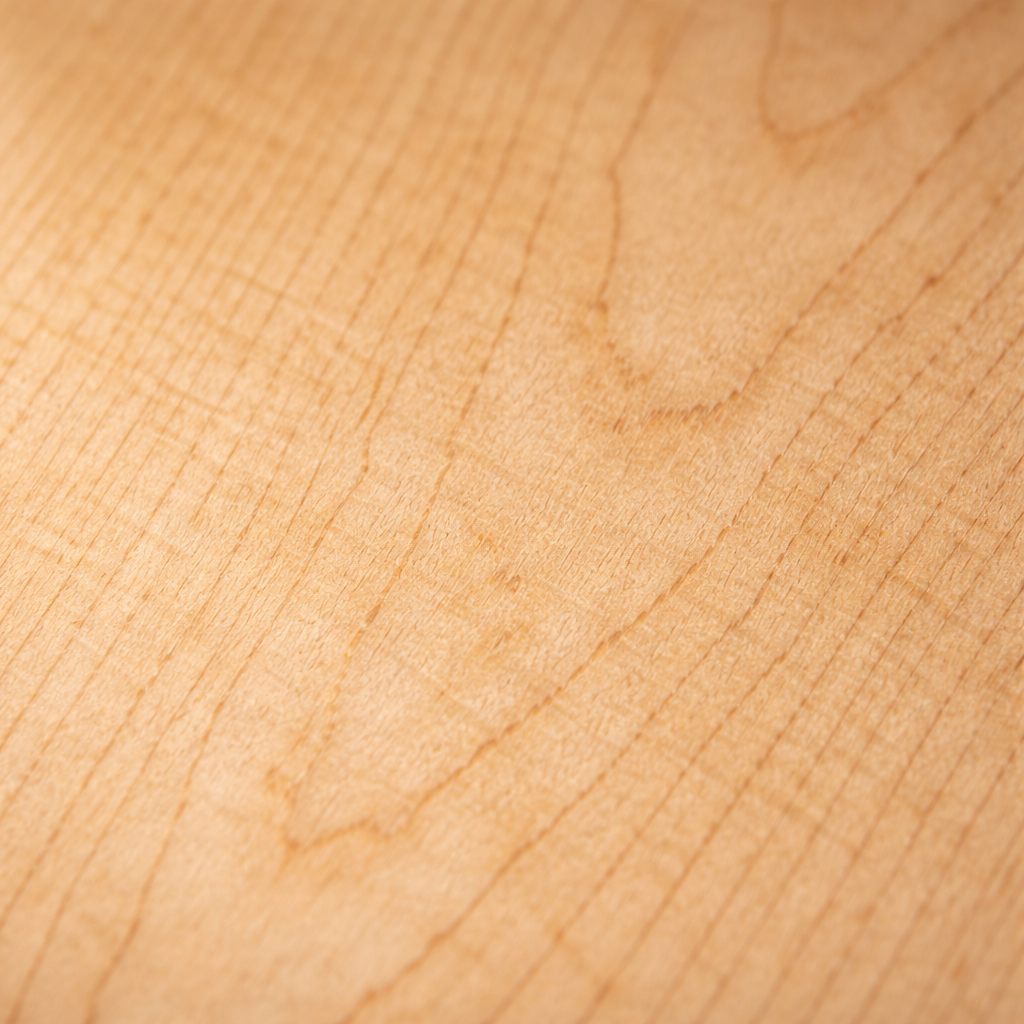 Close-up of natural oak wood grain showcasing its strong, linear pattern and warm honey-toned color variation.
Is Oak Right for You?
Oak is a strong fit if you want durability that holds up to real daily use, appreciate visible grain and natural materials, care more about how your kitchen looks at year ten than on day one, and want a warm space that won't feel trendy and dated in five years. It's one of the few woods that genuinely earns its place on all those counts simultaneously.
It's worth exploring other options if you want perfectly smooth painted cabinets that stay pristine — maple is built for that. If you genuinely dislike visible grain and want a calmer surface, ash gives you light wood with a quieter linear pattern. If you want maximum drama and richness, walnut is the direction to look.
But if you've been looking at kitchen photos and keep gravitating toward warm, natural wood spaces — especially those clean, slightly Scandinavian-feeling rooms with light grain and simple hardware — there's a good chance you've been looking at white oak all along.
From Candi
Oak is the wood I recommend most often — not because it's the flashiest option, but because it's the most honest one. It shows you what it is, does what it promises, and genuinely improves with age. That's a hard combination to beat. If you want to see some of our past installations, our portfolio is a good place to start. And if you're thinking about a full kitchen remodel, let's talk.
Thinking About Oak Cabinets?
Let's talk through your space, your lifestyle, and whether oak — or something else entirely — is the right move. Forty years of honest opinions. No pressure.
Start a Conversation →
Toupin Construction
Ready to start your remodel?
Whether you're dreaming of a new kitchen, a spa-worthy bathroom, or a whole-home transformation — we’d love to hear about your project. Reach out and let's talk.
‹ Back
Comments