

By using our website, you agree to the use of cookies as described in our Cookie Policy
Blog
What a Finish Carpenter Is
Series: What the Trades Actually Do · Post 7 of 8
What a Finish Carpenter Is
Finish carpentry is where a remodel either falls apart or comes together. No pressure.
By Candi Toupin· Toupin Construction · Walnut Creek, CA·CA Lic #626819·Behind the Scenes Cabinetry East Bay
A finish carpenter installing crown molding in a Walnut Creek home. The miters are cut once, by hand, fit to the exact angle of that specific room.
The last trade to leave a jobsite is usually the finish carpenter. They come in when everything else is done — the walls are painted, the floors are in, the fixtures are set. Their job is to take all of that work and make it look like it belongs together. Like the room was always this way.
That's a harder job than it sounds. Houses aren't perfect. Walls aren't always plumb. Floors aren't always level. Corners aren't always 90 degrees. The finish carpenter's entire skill set is built around working with those imperfections — cutting pieces to fit the actual room, not the theoretical one on the drawings. 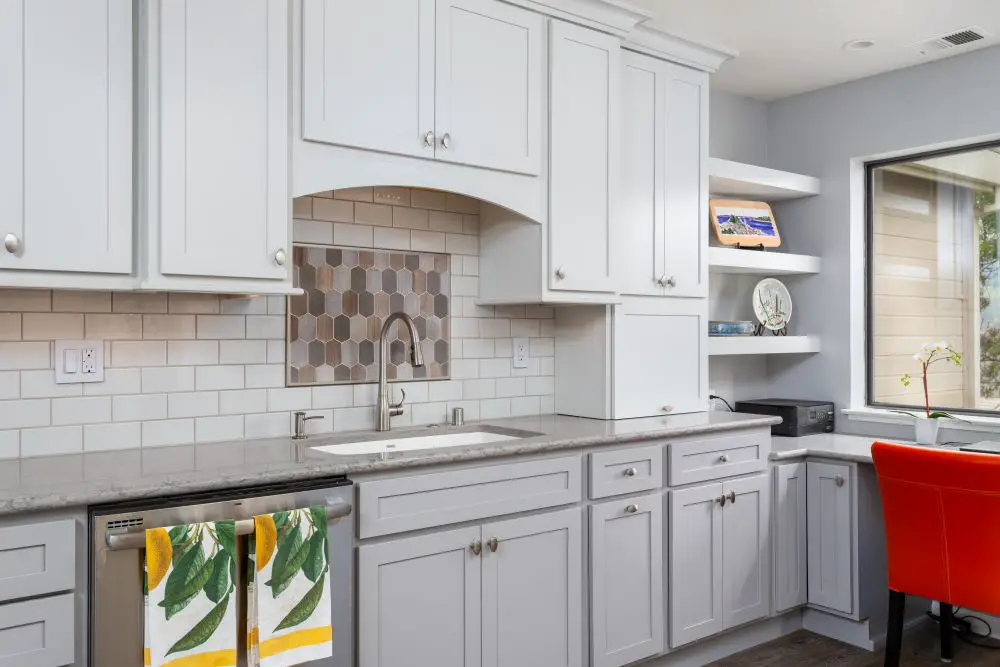
This kitchen showcases finish carpentry throughout — the cabinetry is the carpentry story here, not the countertops or backsplash.
Finish vs. Rough: The Distinction That Matters
We covered rough carpentry in the last post — the structural work of framing, headers, and subfloors. Finish carpentry is the visible layer. Everything you see and touch in a finished room that's made of wood falls under the finish carpenter's domain: trim, molding, doors, cabinetry, built-ins, stair work, paneling.
Some carpenters do both. Many specialize in one or the other, because the tools, the mindset, and the tolerance for error are completely different. Rough work is measured in fractions of inches. Finish work is measured in thirty-seconds and sixty-fourths. The same person who drives a nail gun through framing lumber in the morning needs to be fitting a coped joint on crown molding in the afternoon — and those are not the same activity.
Trade Term Explained
Coped Joint
When two pieces of molding meet at an inside corner, a beginner cuts both pieces at 45 degrees and hopes they line up. A finish carpenter copes the joint — they cut one piece square and cut the other piece to match the profile of the first, like a puzzle piece. Coped joints close up as the wood expands and contracts seasonally. Mitered inside corners open up and show gaps. Coping is harder. It's also correct.
What a Finish Carpenter Actually Installs
Trim and Molding
Base molding runs along the bottom of every wall. Casing frames every door and window opening. Crown molding runs at the ceiling. Chair rail, picture rail, wainscoting panels, beadboard — all of this is trim work. In a high-quality remodel, the trim is what separates a room that looks finished from one that looks built. It's also the work that reveals the carpenter's skill immediately — bad miter joints, gaps at corners, and inconsistent reveals are all visible at a glance.
Door Hanging
Hanging an interior door looks simple until you do it. The rough opening has to be shimmed perfectly plumb and level. The door has to be fitted to the opening with consistent reveals on all sides — the gap between the door edge and the jamb, which should be about ⅛ inch all the way around. The hinges have to be mortised precisely. The latch has to hit the strike plate cleanly. All of this, in a house where the floor might not be perfectly level and the wall might not be perfectly plumb. A door hung well swings freely, latches solidly, and stays wherever you leave it.
The corner where crown molding meets tells you almost everything you need to know about a finish carpenter's skill level. This one is telling a very good story.
Cabinet Installation
Installing kitchen and bathroom cabinets is finish carpentry. The cabinets themselves might be manufactured — KraftMaid, in our case, which we've used for over 30 years — but getting them plumb, level, and square in an imperfect room is skill work. Cabinets installed even slightly out of level look wrong immediately, because the doors and drawers reveal every deviation. The carpenter shims, scribes, and adjusts until everything sits exactly right.
Built-Ins
Built-in bookshelves, window seats, entertainment centers, mudroom lockers — these are all finish carpentry projects that require both design sense and technical execution. The carpenter has to fit the piece to the specific room, which means scribing to out-of-plumb walls, fitting to irregular ceilings, and making everything look intentional even when the house is doing everything it can to make that difficult.
"A good finish carpenter can make a mediocre room look considered. A bad one can make a beautiful room look sloppy. The trim is that important."
— Candi Toupin, Toupin Construction
The Eye for Detail That Can't Be Taught
The technical skills of finish carpentry can be learned. The eye — the ability to look at a room and know exactly what it needs, to see a joint and know instantly whether it'll read right from across the room — that develops over years of doing the work and caring about the outcome.
We've worked with finish carpenters over the years who could make any room sing. The ones who stay in the trade long-term are the ones who genuinely care about the last inch as much as the first. That's the only way to do this work and be proud of it.
In the East Bay — where so many homes have original mid-century trim details that clients want to preserve or restore — a finish carpenter who can match an existing profile, blend new work into old, and make it look like it was always there is worth their weight in lumber.
What the Trades Actually Do · Full Series
8 posts. 8 trades. Real respect for real work.
-
What a Finish Carpenter Is — You're reading it
-
What a Painter Actually Does
Want Custom Built-Ins or Trim Work Done Right?
Whether it's a mudroom, a built-in bookcase, or trim that makes a room feel finished — let's talk about what you're imagining. We'd love to help you get there.
Toupin Construction · Walnut Creek, CA · CA Lic #626819
Serving Walnut Creek, Rossmoor, Lafayette, Orinda, Danville & the East Bay

Toupin Construction
Ready to start your remodel?
Whether you're dreaming of a new kitchen, a spa-worthy bathroom, or a whole-home transformation — we’d love to hear about your project. Reach out and let's talk.
‹ Back
Comments