

By using our website, you agree to the use of cookies as described in our Cookie Policy
Blog
They Called Us Back: A Return Client Kitchen & Bath Remodel in Orinda
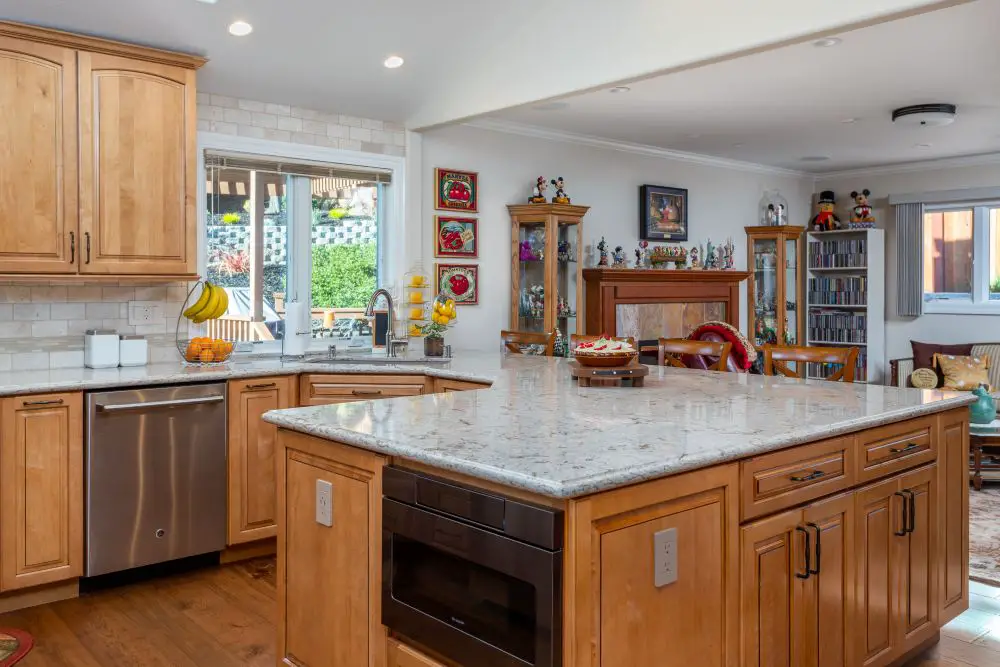
Open-concept kitchen flowing into living area with large island, maple cabinets, stone countertops, and stainless steel appliances.
The phone call that means the most to us isn't the first one — it's the second. When a homeowner who's already been through a remodel with us calls to say they want us back for another one, that's the whole ballgame. That's 40 years of this company distilled into a single moment.
That's exactly what happened with this Orinda kitchen and bath remodel. Our clients had worked with us before. They knew how we operate, how we communicate, what it feels like when the project is done right. And when it was time to reimagine their main living spaces, they didn't shop around. They called Tim.
Here's what we built together.
Project Snapshot
| Location | Orinda, California |
| Spaces | Kitchen and primary bathroom |
| Scope | Full remodel — structural reframing, skylight installation, custom cabinetry, windows, doors, lighting, and all finishes |
| Goal | Open the layout, bring in natural light, and create a kitchen and bath that felt as good as they looked |
| Key Features | |
| License | CA Lic #626819 |
Why Orinda, and Why It Matters
Orinda sits just over the hills from Walnut Creek — a quick shot through the Caldecott Tunnel — and has its own personality. Homes here tend to be a bit larger, set on hillside lots with views, and built across a wide range of eras. What they share is a connection to the natural landscape: oaks, hills, light that comes in at a different angle than you get in the flatlands.
That relationship to natural light was exactly what our clients wanted to lean into. Their kitchen had good bones but felt closed in — a wall blocking the sightline to the dining room, no connection to the backyard, not enough light to really appreciate the space. The first thing we talked about was how to fix that without blowing the whole footprint.
The answer: structural reframing and a new skylight above the island.
What Does "Structural Reframing" Actually Mean?
When a wall isn't just drywall — when it's load-bearing, meaning it's helping hold up the floor or roof above it — you can't just take it down. You have to transfer that load somewhere else first, usually by installing a beam (a heavy horizontal structural member) that carries the weight across the opening. That's structural reframing: the process of safely removing or reconfiguring walls while keeping the house from going anywhere it shouldn't. It adds cost and time, but it's the only right way to open up a closed floor plan when load-bearing walls are involved.
The Kitchen: Light, Flow, and a Lot of Thought
Once we opened up the layout, the kitchen could finally do what it was supposed to do — connect to the rest of the house. The dining room, the family room, the backyard: all of it visible and accessible from one space. That change alone transformed how the home felt to live in.
The new skylight above the island pulls daylight directly into the center of the kitchen, which is the hardest spot to reach with natural light. Even on a gray January morning in Orinda, that kitchen is bright. We also installed new sliding glass doors that frame the backyard and let light travel deeper into the interior — those Andersen windows and doors are doing real environmental work, not just looking good.
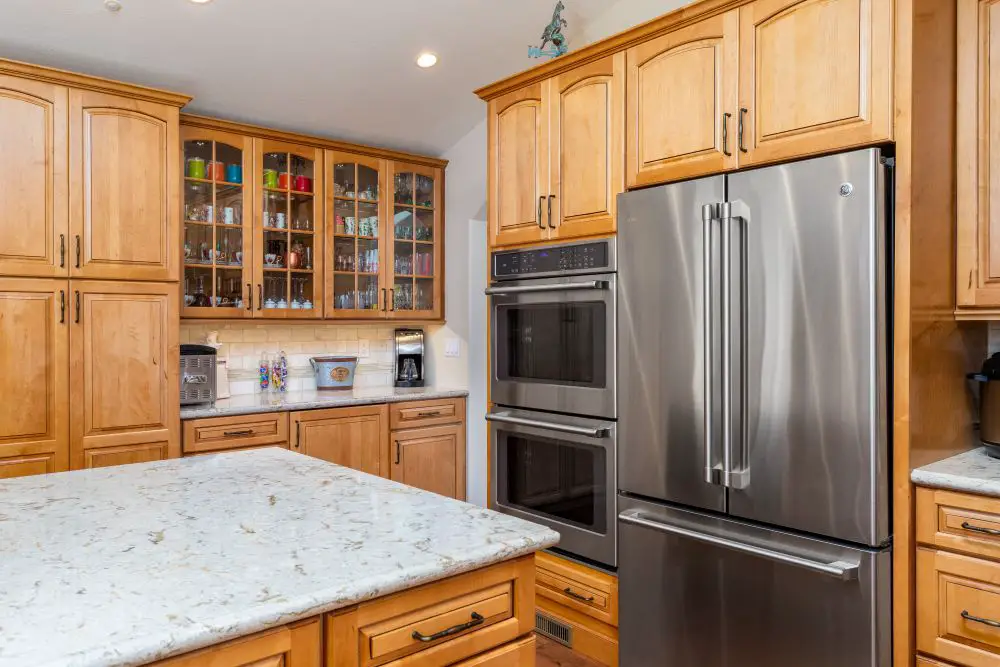
Kitchen with warm maple cabinets, glass-front uppers, double wall oven, and stainless steel refrigerator paired with light stone countertops.
What Is a Chimney Hood?
A chimney hood is a range hood — the ventilation unit above your stove that removes cooking fumes, smoke, and heat — that's designed to look like a fireplace chimney, with a wide, flared base that tapers into a narrower duct running up the wall. Unlike a microwave-style hood tucked under the cabinet, a chimney hood is a design statement. It becomes the focal point of the range wall, which is why pairing it with a full-height tile backsplash (tile that runs all the way from the countertop to the ceiling behind the hood) creates such a dramatic effect. We specified the full-height backsplash here specifically to make the most of that vertical space.
The cabinetry is warm wood — not painted white, not gray, not the cold minimalist look that's been everywhere the last few years. Our clients wanted warmth, and warm wood cabinetry with soft-close drawers and custom interior inserts delivers exactly that. The quartz countertops balance it out: durable, non-porous, and available in enough variation that we could find a slab that complemented the wood tones without competing with them.
Quartz vs. Granite: A Quick Honest Take
Quartz countertops are engineered — ground quartz crystals bound together with resin — which makes them non-porous and virtually maintenance-free. No sealing required, highly resistant to staining. Granite is natural stone: beautiful, unique, but porous enough to require periodic sealing, especially in a busy kitchen. We recommend quartz to most of our clients for kitchen countertops because of how it performs over time. It's not the cheaper option — a quality quartz slab costs as much as granite — but it holds up better in daily use, particularly in East Bay kitchens that see a lot of cooking.
Under-cabinet and interior cabinet lighting round out the kitchen — practical lighting that lets you actually see what you're cooking, but also the kind of ambient glow that makes the kitchen feel inviting after dark. Continuous engineered hardwood flooring runs from the kitchen through the adjacent rooms, tying the open floor plan together visually.
Engineered Hardwood vs. Solid Hardwood
Solid hardwood is exactly what it sounds like: a plank of wood, all the way through. Beautiful, refinishable, but susceptible to expanding and contracting with humidity changes — which matters in a California home where the seasons swing from dry summers to wet winters. Engineered hardwood is a wood product made with a real hardwood veneer on top and multiple layers of plywood underneath. That cross-ply construction makes it more dimensionally stable — less likely to cup or gap with humidity changes — while still giving you the look and feel of real wood. For open floor plans that span multiple rooms, engineered hardwood is almost always the smarter choice.
The Bathroom: Simple Goals, Executed Well
Our clients had a clear brief for the primary bathroom: spa-like but easy to maintain. Not a showroom that stresses you out to clean. A private retreat that matched the warmth of the rest of the house and worked well every single day.
We built a walk-in shower with a built-in bench and a recessed niche. The bench isn't a luxury add-on — it's a practical feature that makes the shower more comfortable and more functional, especially as you get older. The niche is a recessed shelf cut into the shower wall, flush with the tile, where shampoo and soap live without cluttering the floor or hanging over the door.
What's a Recessed Niche?
A recessed niche (sometimes called a shower niche or alcove) is a shelf built into the wall of a shower — not added on top of it. To install one, we open the wall between two studs (the vertical framing members inside the wall), frame a box, tile it to match the surrounding wall, and finish the edges. The result is a shelf that's perfectly flush and watertight. It's more work than a corner caddy you hang over the showerhead, but it looks intentional and clean — and it stays put for the life of the bathroom.
Brushed nickel fixtures throughout — faucets, handles, shower controls — for a finish that's warm without being gold, and clean without being cold chrome. Neutral porcelain tile on the walls with an aqua glass accent strip adds personality without committing to a theme that dates quickly. The custom wood vanity with a granite countertop and vessel sink echoes the kitchen's warm material palette, which is exactly the kind of detail that makes a home feel designed rather than assembled.
The deep soaking tub, framed in matching porcelain, is the room's quiet anchor. Not everyone uses a soaking tub every day — but the presence of one changes how a bathroom feels. It signals that this room is for more than just getting ready in the morning.
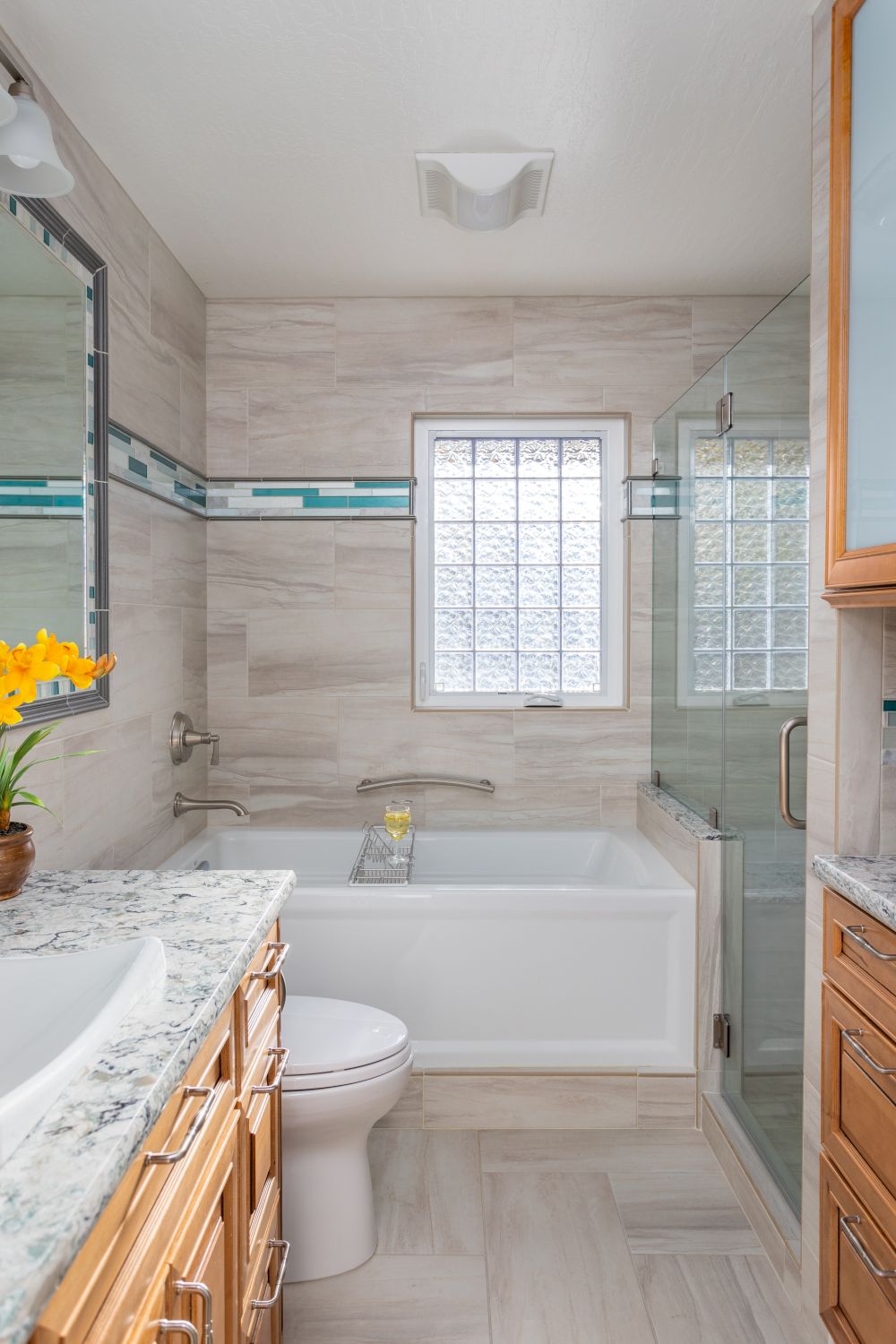
Bathroom remodel with tub and shower combo, glass block window for privacy, neutral tile surround, and built-in grab bar.
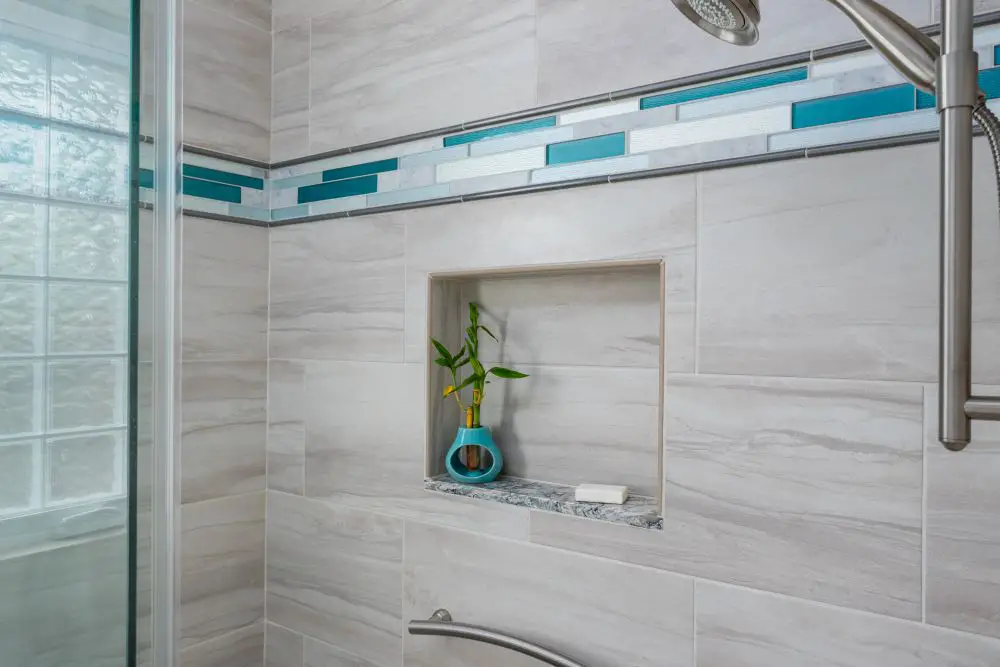
Close-up of shower niche with stone shelf and decorative horizontal tile accent strip in a neutral tiled shower.
The Part We're Most Proud Of
Here's the thing about return clients: they already know how we work. They've seen us handle a problem mid-project. They've gotten our update calls. They've watched their space transform from demo day through punch list. By the time they call us back, they're not hiring a contractor — they're calling someone they trust.
That trust changes how a project feels. It means the conversations are more honest, the decisions get made faster, and the finished product reflects what the homeowners actually want — not what they were afraid to ask for. It's a better experience on both sides, and it almost always produces better work.
"The phone call that means the most to us isn't the first one — it's the second."
This Orinda remodel is beautiful, and we're proud of the craft. But what we're most proud of is the relationship that made it possible.
Ready to Work with a Team You Can Trust?
Whether it's your first remodel with us or your third, we bring the same level of care to every project. Let's talk about what you're imagining.
Get a Free Estimate See Our Portfolio925-937-4200 · CA Lic #626819
Toupin Construction
Ready to start your remodel?
Whether you're dreaming of a new kitchen, a spa-worthy bathroom, or a whole-home transformation — we’d love to hear about your project. Reach out and let's talk.
‹ Back
Comments