

By using our website, you agree to the use of cookies as described in our Cookie Policy
Blog
Birch Cabinets: Clean, Affordable, and Surprisingly Versatile
Birch is rarely the wood people ask for by name. They usually arrive with walnut or oak in mind, or they want white painted cabinets and haven't thought much about what's underneath. But a lot of those clients end up with birch — not as a consolation prize, but as the smart, intentional choice when you understand what the material actually does well.
Birch has a branding problem: it sounds boring. But boring and dependable are two very different things in a kitchen that has to function well for fifteen years.
Wood Species Series
- Wood Species 101: Start Here
- Oak Cabinets
- Maple Cabinets
- Walnut Cabinets
- Cherry Cabinets
- Alder Cabinets
- Hickory Cabinets
- Birch Cabinets (this post)
- Ash Cabinets
- Pine Cabinets
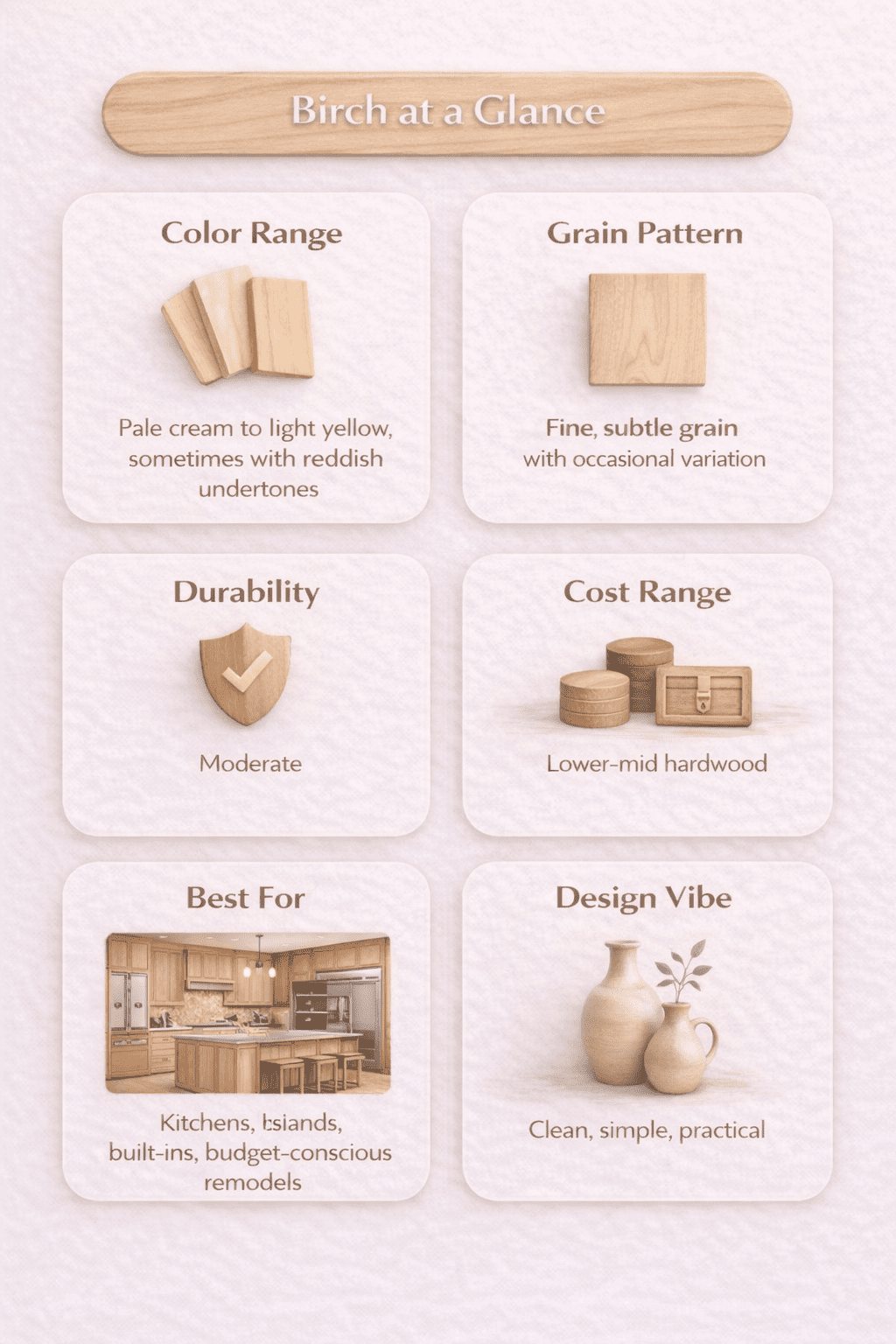 A visual guide to birch wood highlighting its pale cream to light yellow color, subtle grain pattern, moderate durability, and lower-mid price point. Birch is a practical and budget-friendly choice for kitchen cabinets and built-ins.
The Honest Case for Birch
Birch sits in a very specific and useful sweet spot: lighter than oak, more affordable than maple, and flexible enough to handle both paint and stain when expectations are calibrated correctly. It doesn't have walnut's drama or hickory's boldness. It doesn't have cherry's elegant aging or alder's warmth. What it has is practicality, real-wood construction, and a light, calm appearance that doesn't compete with the rest of your design.
"Boring and dependable are two very different things in a kitchen that has to function well for fifteen years."
Jargon Card
Birch Plywood
Even if your cabinet doors aren't birch, there's a good chance the box — the carcass that holds everything together — is birch plywood. Birch plywood is one of the industry standards for cabinet construction because it's stable, strong, and readily available. It's worth knowing this because it means birch is trusted at the structural level across the industry, not just as a face material.
In Bay Area condos and transitional homes where budget needs to go toward countertops, appliances, or a more complex layout, birch is often the move that makes the rest of the project possible.
Birch vs. Maple: The Comparison Everyone Makes
These two live near each other in price and visually share a pale, light tone — but they behave differently enough that it matters.
Maple is more uniform, more predictable under stain, and better for getting a truly smooth painted finish. Birch has slightly more color variation board to board, absorbs stain a bit less evenly — especially dark stains — and can grain-telegraph through paint over time in humid environments. If your goal is perfectly smooth painted white cabinets for the next twenty years, maple is still the safer choice. If you're open to subtle variation and want to control costs, birch is a very reasonable alternative.
| Quality | Birch | Maple |
|---|---|---|
| Color tone | Pale cream, occasional reddish variation | Very uniform, consistent pale tone |
| Painted finish | Works — some grain shows over time | Best real-wood option for painted cabinets |
| Dark stain | Risk of blotching — not ideal | More predictable, still not perfect |
| Cost | Lower | Slightly higher |
| Durability | Moderate | High |
| Grain character | Subtle with some variation | Very subtle, highly uniform |
Door Styles That Work With Birch
Birch's subtle grain and light color make it a flexible canvas — it doesn't demand a specific door style the way walnut or hickory do. That said, some pairings work better than others.
Simple shaker doors are birch's best partner — the clean lines suit the wood's unpretentious personality perfectly. Flat-panel and slab doors also work well, especially in more contemporary kitchens. Birch is one of the few woods that handles traditional raised-panel profiles without looking out of place, because its subtle grain doesn't fight the detail the way a bolder species would.
What to avoid: very ornate or heavy profiles that ask the wood to carry visual weight it isn't built for. Birch is a supporting player. The door style should be similarly understated.
What Birch Actually Costs — And Why That Matters
Birch is one of the most affordable real-wood cabinet options — typically less expensive than maple, oak, cherry, or walnut. That cost difference isn't trivial when you're doing a full kitchen remodel — it can translate into a meaningfully better countertop, upgraded appliances, or additional storage solutions that improve daily life far more than a premium cabinet wood would.
The reason birch is less expensive is availability. Birch grows widely across North America and is harvested in large quantities. It's not a specialty wood. That's actually a practical advantage — lead times tend to be shorter, supply is more predictable, and your cabinet maker is likely very familiar with working with it.
One honest caveat: birch isn't always dramatically cheaper than maple, depending on your cabinet maker and region. Get actual quotes for both before assuming there's a large gap. Sometimes the difference is modest enough that upgrading to maple is worth it for the long-term paint performance alone.
How Birch Ages
Birch is relatively stable in color over time — it doesn't deepen dramatically or develop the patina of darker woods. It may warm up very slightly with age, moving from cool cream toward a slightly warmer pale yellow. The grain stays subtle. The overall look remains calm and consistent, which is exactly what a lot of homeowners want.
In painted applications, birch performs reasonably well for several years — but in humid Bay Area kitchens, the grain can eventually begin to show through as wood moves with moisture changes. This isn't a disaster, but it's worth knowing. If long-term paint smoothness is important to you, factor in the cost of periodic repainting and touch-ups.
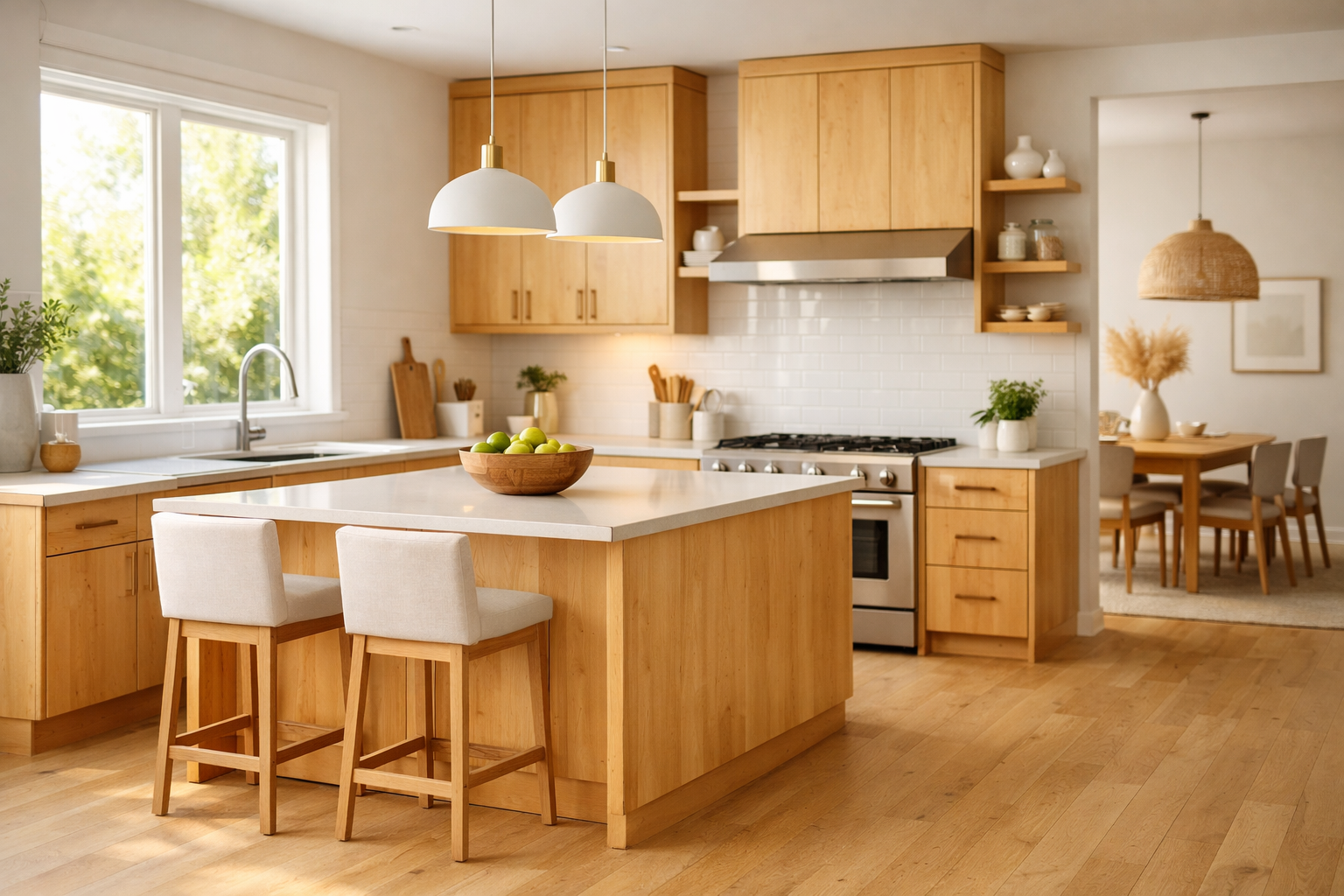 This kitchen features birch cabinetry with a light, natural finish and subtle grain, creating a clean and practical design. Birch cabinets are a great option for homeowners looking for a budget-conscious, modern kitchen aesthetic.
Pros and Cons
What Works
- More affordable than maple, oak, cherry, or walnut
- Light, clean appearance keeps spaces feeling open
- Real wood — warmer and more honest than MDF alternatives
- Versatile across traditional, transitional, and casual modern styles
- Industry-standard for cabinet box construction — structurally trusted
What to Watch For
- Not the right call for dark stained finishes — blotching risk
- Grain can show through paint in humid conditions over time
- Less visual character — not a statement wood
- Moderate durability — not as forgiving as oak or hickory
- Color variation board-to-board can be inconsistent
???? Rossmoor Homeowners
Birch is a solid fit for Rossmoor bathroom vanities and secondary spaces — laundry rooms, guest baths, smaller built-ins where the lower cost makes real sense. For primary kitchens, we usually steer clients toward maple or oak where budget allows. But birch plywood as the cabinet box material with a painted or light-stained maple face? That's an entirely sensible combination that keeps costs in check without sacrificing real-wood quality — and it's what many cabinet makers do by default anyway.
Design Pairings for Birch
Birch pairs best with simple, restrained materials. It's a calm wood that needs calm surroundings — not because it's fragile, but because it doesn't have the visual authority to anchor a busy room.
Countertops: Quartz with minimal veining, light porcelain slabs, and solid surface countertops all work well. Avoid heavily veined stone or dramatic patterns — they'll overpower birch and the whole room starts to feel mismatched.
Hardware: Brushed nickel, matte black, or simple brass — clean and unfussy. Nothing too ornate, because birch doesn't have the visual weight to support elaborate hardware. Simple bar pulls or cup pulls in a matte finish tend to look just right.
Wall colors: Soft whites, warm light neutrals, and warm grays. Birch's pale tone gives you a lot of flexibility here — it reads differently against cool whites versus warm creams, so sample both before committing. Avoid very dark or saturated wall colors, which will make birch look washed out rather than clean.
Backsplash: Simple subway tile, large-format matte ceramic, or a slab extension of the countertop. Birch does its best work in calm, uncluttered environments. A busy mosaic backsplash or bold patterned tile will dominate the space in a way birch can't balance.
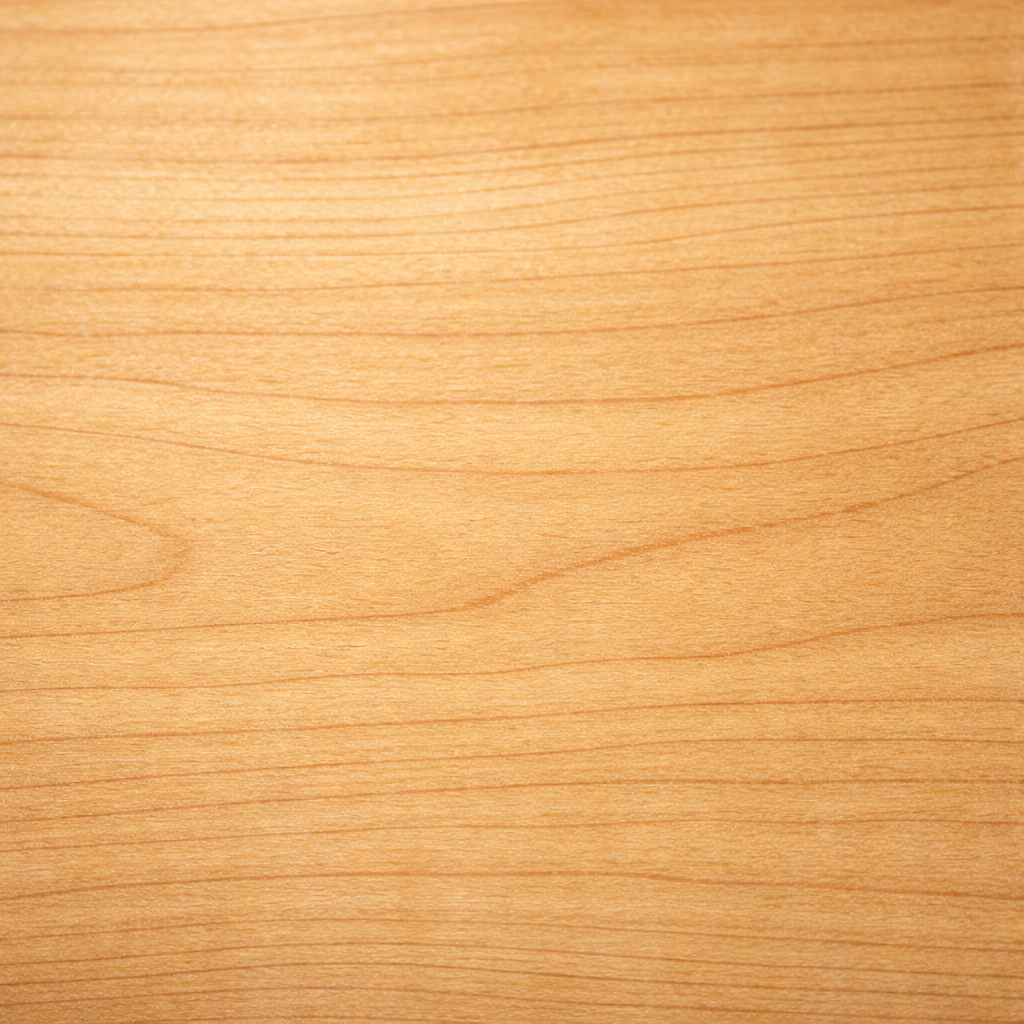 A detailed close-up of birch wood showcasing its fine, even grain and light, creamy tones. Birch offers a smooth and understated appearance, making it ideal for simple, modern cabinetry.
Is Birch Right for You?
Birch is a smart choice if you want real wood at a lower cost, prefer light and simple cabinetry, are comfortable with subtle natural variation, and need your budget to stretch toward other project priorities — a better countertop, an upgraded range, a more complex layout. It's a practical wood for practical people, and there's nothing wrong with that.
Think carefully before choosing birch if you want bold grain or visual drama, need ultra-smooth painted cabinets that stay pristine for twenty years, plan to use a dark stain, or are aiming for a premium design-forward feel. For bold grain, look at hickory or oak. For the best painted cabinet performance in a real hardwood, maple is the right answer. For warmth and a more relaxed character at a similar price point, alder is worth comparing side by side.
Birch won't be the most talked-about wood in the series. But for the right project and the right homeowner, it's the one that makes the whole budget work — and that's its own kind of smart.
From Candi
Birch is a material where the honesty of the conversation upfront makes everything go better. If we're clear about what it does well and where it has limitations — staining, long-term paint performance, visual character — clients who choose it end up very satisfied. If those conversations don't happen, they end up frustrated. We always have them. If you want to talk through your options, our cabinetry page is a good starting point, or just reach out directly.
Questions About Birch?
Let's figure out whether birch, maple, oak, or something else entirely makes the most sense for your project. Real answers, no runaround.
Start a Conversation →
Toupin Construction
Ready to start your remodel?
Whether you're dreaming of a new kitchen, a spa-worthy bathroom, or a whole-home transformation — we’d love to hear about your project. Reach out and let's talk.
‹ Back
Comments