

By using our website, you agree to the use of cookies as described in our Cookie Policy
Blog
Ash Cabinets: Light, Linear, and the Modern Alternative to Oak
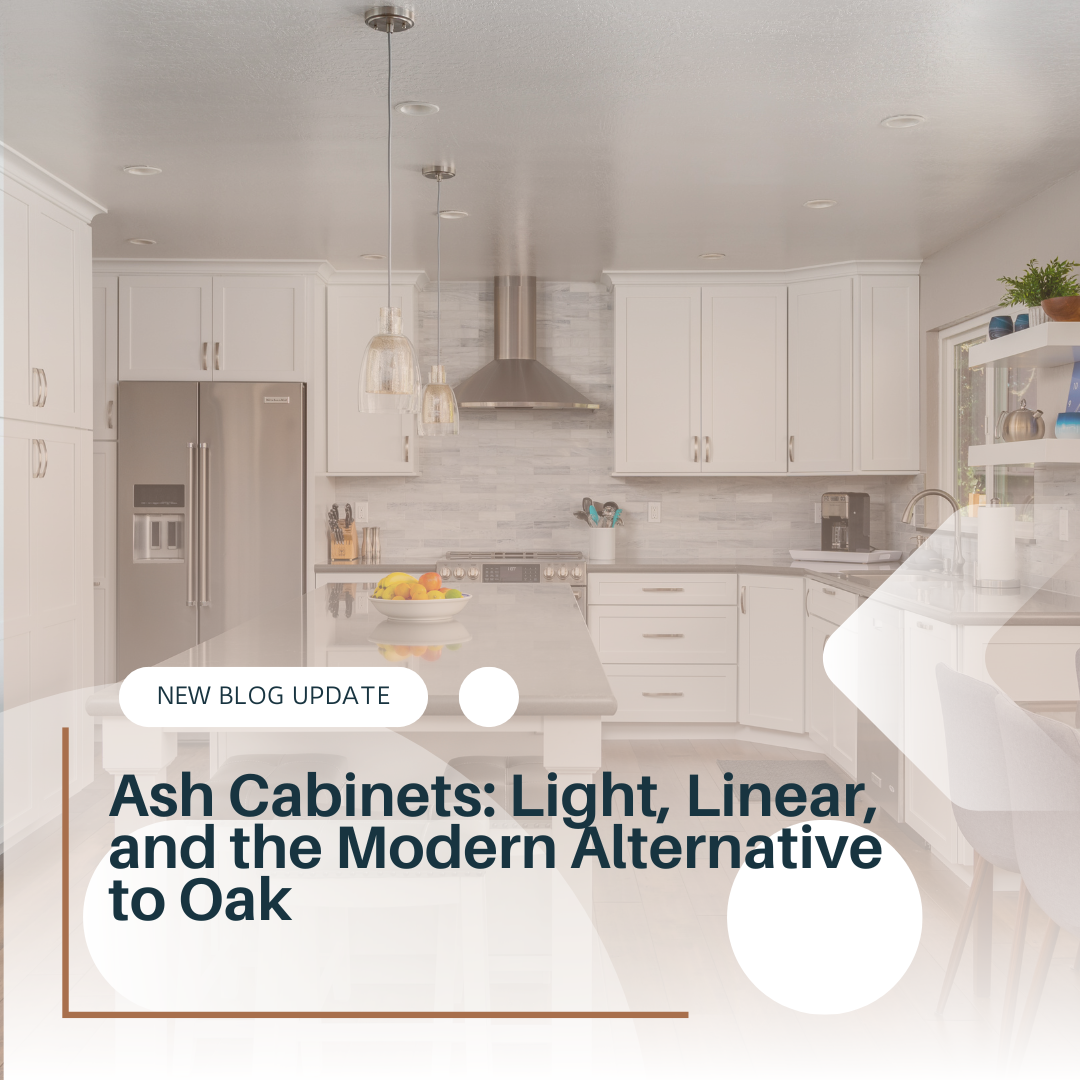
A client in Lafayette came in with a photo on her phone — a Copenhagen kitchen she'd been following on Instagram for two years. Light wood, straight grain, almost Scandinavian in its restraint. She asked me what the wood was.
I told her it was probably ash.
She'd never heard of it. Most people haven't, at least not in the context of kitchen cabinets. But once you see ash in person — especially in a space with good natural light — something clicks. It's clean without being sterile. It has grain without being busy. It's modern without being cold. That's a combination that's genuinely hard to find.
Wood Species Series
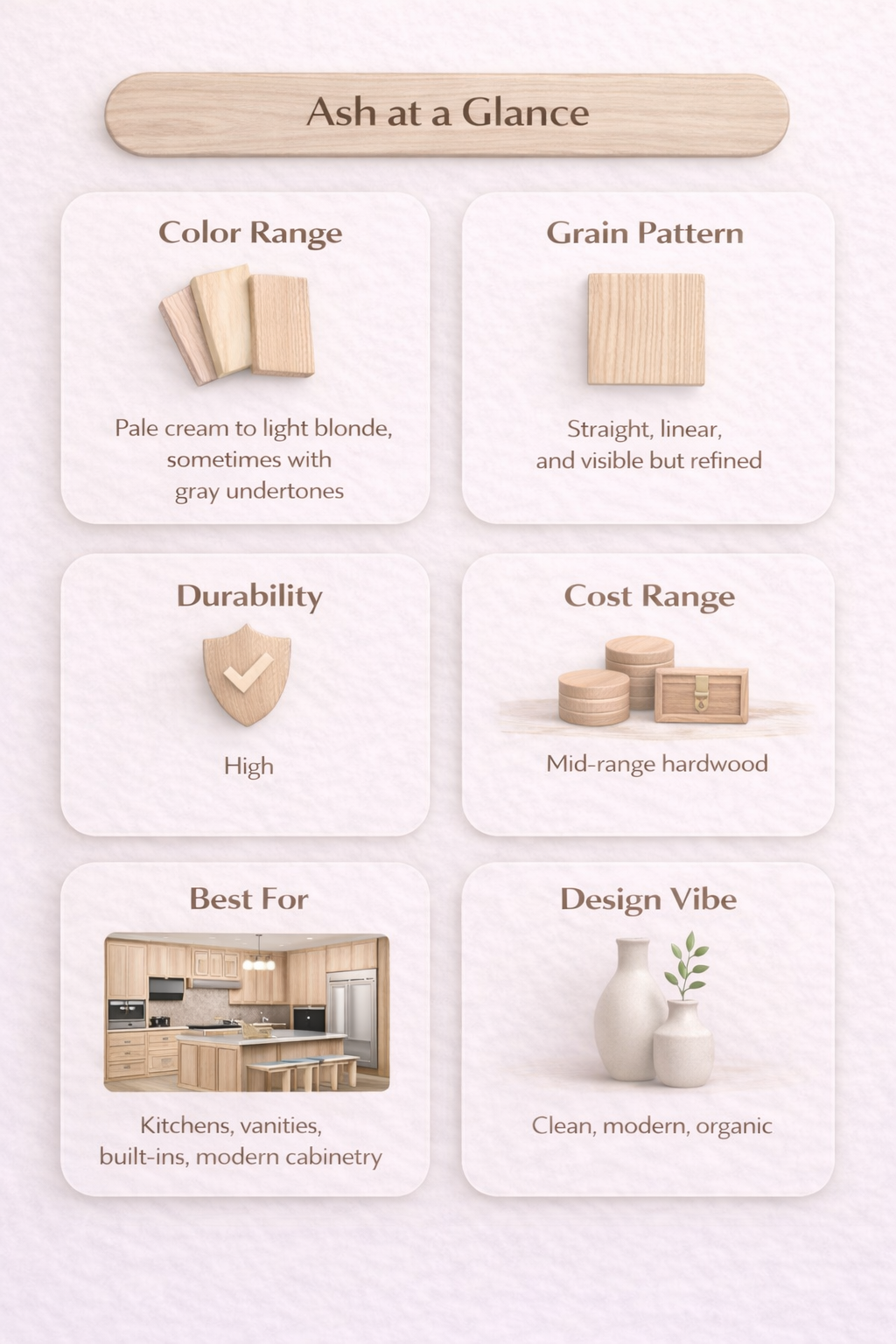 This infographic breaks down ash wood’s key features, including its pale cream-to-blonde color range, straight grain pattern, high durability, and mid-range cost. Ash is commonly used for modern kitchens, vanities, and built-ins due to its clean and versatile appearance.
Why Ash Is Gaining Ground Right Now
Design trends have been moving toward lighter, more natural interiors for several years — away from heavy contrast and ornate detailing, toward materials that feel honest and architectural. Ash fits that moment perfectly. It offers visible wood grain without chaos, a light neutral base, and a linear quality that reads as intentional and modern. More personality than maple. Less visual weight than oak. For a lot of East Bay homeowners who want contemporary design with real material quality, ash ends up being the answer.
Jargon Card
Linear Grain
Ash is known for its straight, consistent, linear grain pattern — boards tend to show parallel lines rather than the cathedral arches of oak or the dramatic swirls of walnut. This linear quality is what gives ash its modern, architectural feel. Slab and flat-panel cabinet doors showcase it beautifully because the grain pattern reads almost like a subtle texture across the whole surface.
Ash vs. Oak: The Comparison People Actually Want
Ash is often chosen by homeowners who say some version of "I like oak, but I want it sleeker." That's a fair description of the difference. Oak has more variation, more movement, a stronger personality. Ash has straighter grain, a lighter overall tone, and a more calm, organized visual rhythm. Both are real hardwoods with good durability. The choice comes down to how much grain expression you want in the room.
If oak feels busy to you — if you see samples and think "that's a lot" — ash is often the answer. It gives you the warmth and authenticity of real wood without demanding as much visual attention.
| Quality | Ash | Oak |
|---|---|---|
| Grain pattern | Straight, linear, calm | Pronounced, varied, strong movement |
| Color tone | Pale cream to light blonde | Light tan to warm honey |
| Visual weight | Light, airy | Moderate to heavy depending on finish |
| Design fit | Modern, Scandinavian, transitional | Classic, transitional, modern-organic |
| Durability | High | Very high |
| Painted finish | Not ideal — grain shows | Not ideal — grain shows |
Door Styles That Suit Ash
Ash's linear grain is its best feature, and the door style you choose either showcases it or buries it. The simpler the profile, the better ash looks. Flat-panel and slab doors let the grain run uninterrupted across the whole face — that parallel line quality becomes a subtle, sophisticated texture. Simple shaker profiles work well too, especially with thin rails that don't interrupt the grain too aggressively.
What to avoid: cathedral arches, heavy raised panels, or ornate routed profiles. These styles fight ash's calm linearity and push it toward a traditional aesthetic that doesn't suit the wood at all. Ash wants to be modern. Let it.
One Supply Chain Detail Worth Knowing
The emerald ash borer — an invasive beetle that has devastated ash tree populations across North America since the early 2000s — has affected ash availability and pricing in some regions. Sourcing is still possible and ash remains a viable cabinet wood, but it's worth asking your cabinet maker about availability and lead times early in the process. This isn't a reason to avoid ash; it's just a conversation to have before it becomes a surprise three months into your project timeline.
How Ash Ages
Ash is relatively stable in color over time — it doesn't deepen dramatically the way cherry does, and it doesn't develop the patina of walnut. What it does do is mellow slightly — the pale tones warm up a touch, the grain becomes a little more familiar, and the whole kitchen starts to feel very settled and intentional. For homeowners who want a consistent look over time, ash is a reassuring choice. It doesn't surprise you. It just quietly gets better.
Worth noting: like most light-toned woods, ash can show some yellowing with prolonged UV exposure. In kitchens with significant south- or west-facing sun, a UV-filtering window treatment can help maintain the original tone. It's not a dealbreaker — but it's worth knowing before installation.
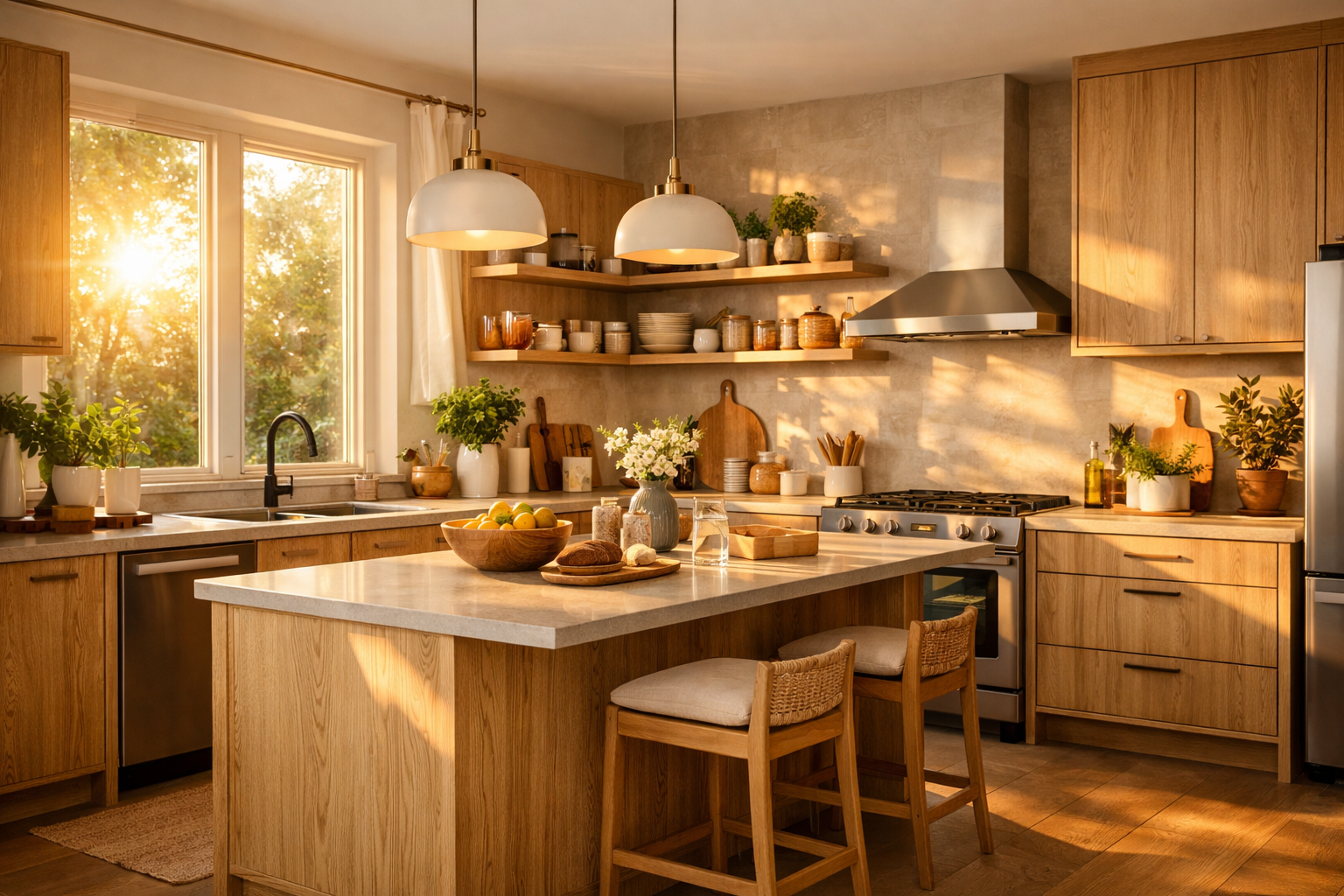 Modern kitchen with ash cabinets, light wood tones, and warm natural lighting
Pros and Cons
What Works
- Modern, clean grain — perfect for contemporary and transitional designs
- Lightens spaces visually — great for smaller kitchens and condos
- Strong and durable — performs well in high-use kitchens
- More character than maple without oak's visual complexity
- Ages gracefully — mellows without dramatically shifting
What to Watch For
- Less familiar — may require more explanation when selling the home
- Not ideal for traditional or rustic design styles
- Availability varies — check lead times with your cabinet maker
- Not the right choice if you plan to paint your cabinets
- Can yellow slightly with prolonged direct sun exposure
???? Rossmoor Homeowners
Ash is a genuinely interesting fit for Rossmoor condos with good natural light — it keeps spaces feeling bright and open, the linear grain doesn't compete with smaller rooms, and the contemporary feel works well with updated fixtures and hardware. For units that face north or get limited light, we'd probably steer toward something with a warmer base tone — alder or white oak with a warm finish. But for east- or south-facing units with good daylight? Ash is worth a serious look.
Design Pairings for Ash
Ash loves simplicity around it. The linear grain is already doing sophisticated work — everything else should support it without competing.
Countertops: Quartz with subtle or no veining, porcelain slab, or light honed marble. Busy stone patterns fight ash's calm rhythm and neither comes out looking right. Keep the countertop quiet and let the wood be the texture.
Hardware: Matte black for contrast and definition, brushed stainless for a clean modern feel, or integrated edge pulls that keep the cabinet face uninterrupted. Warm brass can work beautifully too — it plays off ash's natural undertones and adds warmth without weight.
Wall colors: Warm whites, soft greiges, pale stone tones, or muted sage. Ash is flexible here — it plays well with both cool and warm surrounding colors, which is part of what makes it useful in transitional spaces. Avoid very dark walls unless you're going for a deliberately high-contrast look.
Backsplash: Large-format tile, simple subway in a warm white, or a full slab extension of the countertop material. Ash doesn't need a dramatic backsplash partner. A calm, clean tile lets the wood do its job.
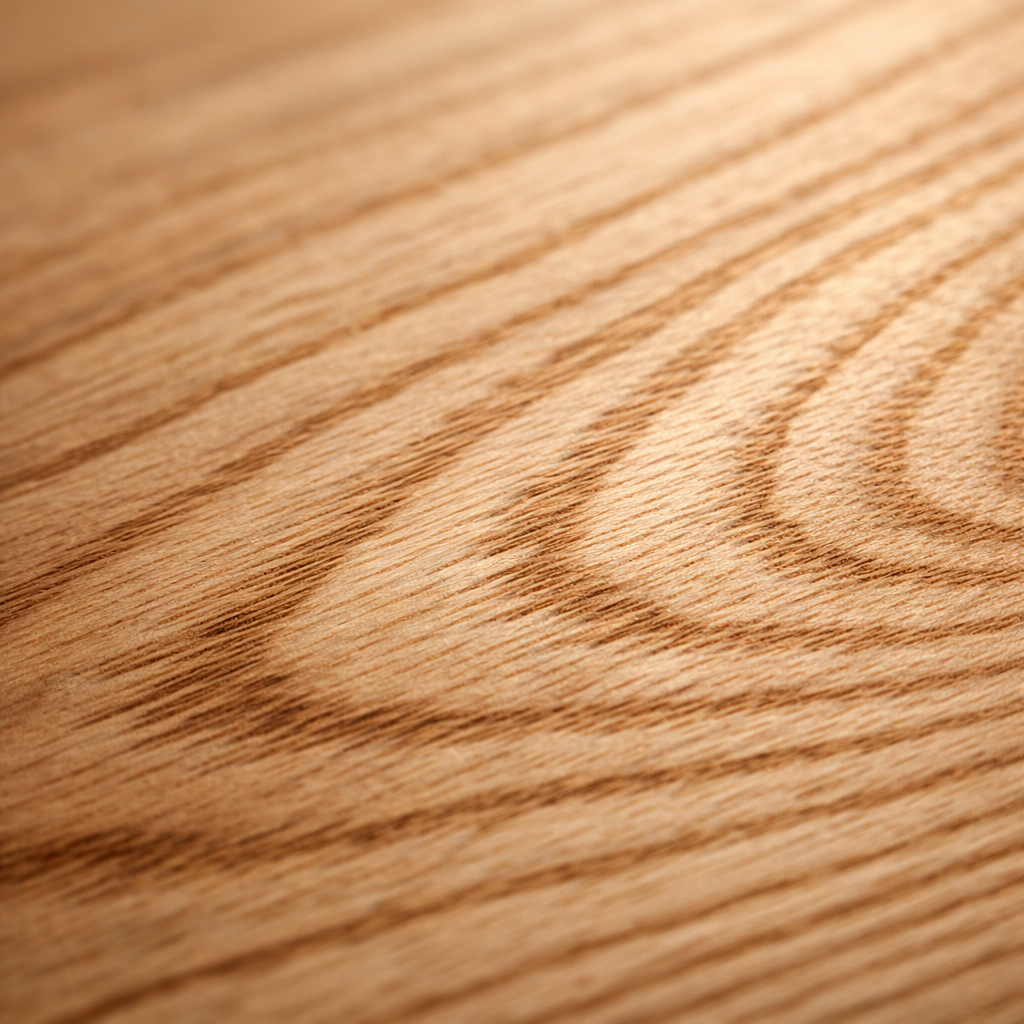 A detailed close-up of ash wood highlighting its signature light blonde coloring with subtle warm and gray undertones. The linear grain pattern gives ash a clean, modern look, making it a popular alternative to oak for contemporary cabinetry.
Is Ash Right for You?
Ash is worth serious consideration if you want light wood with real visible grain, you're drawn to modern or Scandinavian-inspired design, you want durability without visual heaviness, and you prefer spaces that feel calm and organized over expressive and bold. It's a wood that tends to appeal to homeowners who have a clear sense of what they like — and that aesthetic is clean, natural, and intentional.
Think carefully before choosing ash if you love rustic or traditional styles, want dramatic grain contrast, plan to paint your cabinets, or are looking for a darker statement wood. For bold grain and high contrast, hickory is your wood. For deep color and richness, walnut gets you there. For painted cabinets with a smooth finish, maple is the better starting point.
But if you've been looking at kitchen photos and keep gravitating toward light wood spaces that feel warm and modern at the same time — and you couldn't quite name what you were looking at — there's a good chance it was ash.
From Candi
Ash is one of my favorite recommendations for clients who walk in knowing they want "something modern but warm" and aren't sure what that means yet. Once they see it in person, they almost always understand immediately. If you want to see how ash might work in your specific space — layout, light exposure, what you're pairing it with — let's have that conversation. Check out our kitchen remodeling page or reach out directly.
Interested in Ash?
Let's figure out whether ash is the right fit for your kitchen — or if something else in the series gets you there faster. No guesswork, just experience.
Let's Talk →
Toupin Construction
Ready to start your remodel?
Whether you're dreaming of a new kitchen, a spa-worthy bathroom, or a whole-home transformation — we’d love to hear about your project. Reach out and let's talk.
‹ Back
Comments