


By using our website, you agree to the use of cookies as described in our Cookie Policy
Blog
Kitchen Remodel Questions, Answered Honestly
Remodeling Tips · Kitchen · FAQ
By Candi Toupin · Toupin Construction · Walnut Creek, CA
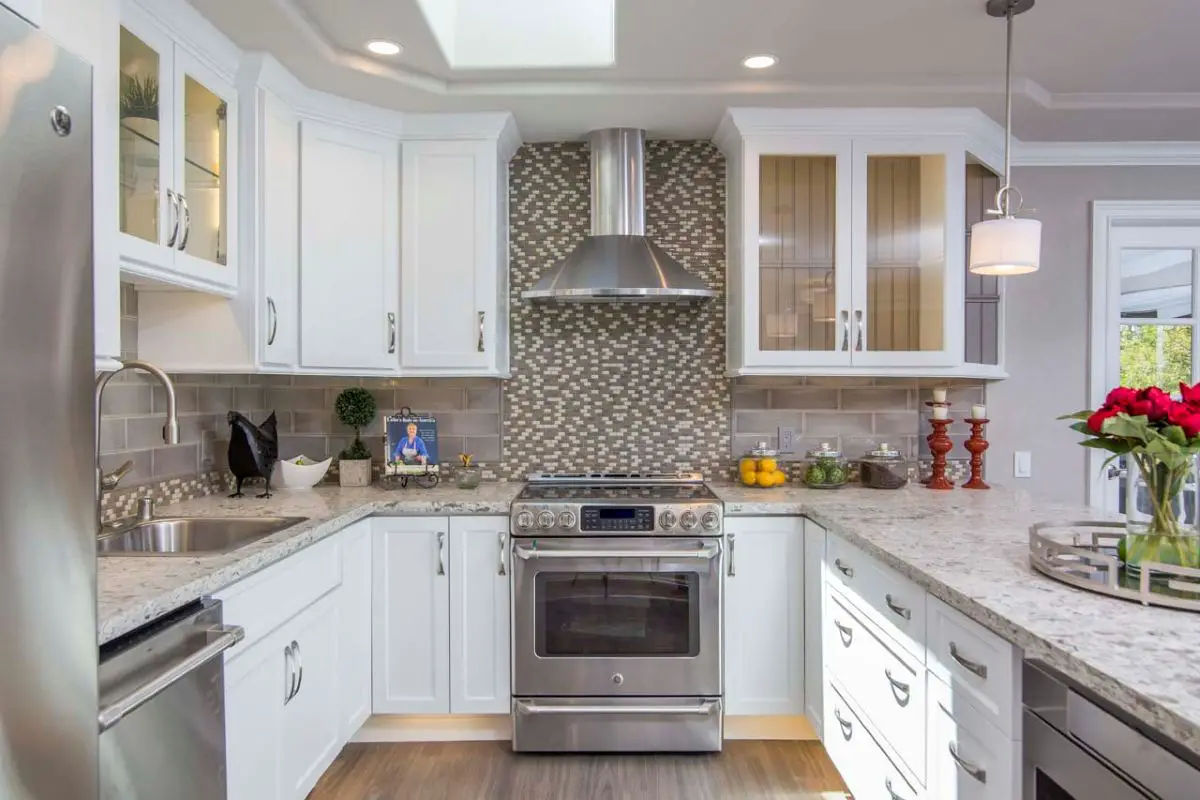
A bright kitchen with white cabinetry, a mosaic tile backsplash, and a skylight that brings in natural light, creating a clean and functional cooking space.
We get a lot of questions before a kitchen remodel starts. Most of them are some version of: how long, how much, what do I actually need, and what are you not telling me? Fair questions. Here are the honest answers — not the hedged, liability-softened version, but what we'd actually say if you were sitting across from us at a jobsite.
We've organized these by where most homeowners are in the process: planning the big picture first, then the practical details, then the finish decisions. Skip to wherever you are.
The Big Picture
How long does a kitchen remodel actually take?
From first conversation to finished kitchen: 14–24 weeks for a full remodel in the East Bay. Break it down: 4–6 weeks for design and material selection, 2–4 weeks for permitting, 6–12 weeks for construction once demo begins. Cabinet lead times are the most common schedule killer — semi-custom cabinets typically run 6–10 weeks from order to delivery, and nothing moves forward until they arrive.
In Rossmoor, add 4–8 weeks for Mutual board approval before any permitted work begins. This is the timeline piece that surprises people most. If you want to be in your new kitchen by spring, the conversation needs to start now.
What does a kitchen remodel cost in the East Bay?
| Scope | Typical Range | What This Gets You |
|---|---|---|
| Cosmetic Refresh | $8K–$25K | Cabinet reface or paint, new countertops, hardware, lighting, backsplash — no layout changes, no plumbing moves |
| Midrange Full Remodel | $40K–$75K | New semi-custom cabinets, quartz countertops, tile, updated plumbing fixtures, new lighting, minor layout adjustments |
| Full Custom Remodel | $75K–$150K+ | Custom cabinetry, premium counters, layout reconfiguration, plumbing and electrical rerouting, high-end appliances, structural changes |
These are East Bay numbers, not national averages. Our higher cost of living, California labor costs, and permit fees push budgets meaningfully above what you'll see quoted in national publications. Add 10–20% contingency regardless of tier — older homes especially.
See Our Kitchen Work →How much contingency should I build in?
10–20% of your total budget. 10% if the home is newer construction with no known issues. 20% if it's built before 1980, which describes most of the East Bay — and virtually all of Rossmoor.
Here's what contingency pays for: the plumbing that's corroded behind the cabinet we removed. The asbestos in the old floor tile that adds remediation cost. The electrical that hasn't been touched since 1972 and doesn't meet code. The wall we opened to find a vent pipe running exactly where the new island was supposed to go. We've seen every version of this. Contingency isn't pessimism — it's planning for what older homes actually contain.
Planning & Permits
Do I need permits for a kitchen remodel?
Yes — if you're moving plumbing, moving or adding electrical circuits, removing walls, or changing the gas line. No — for cosmetic work like cabinet refacing, countertop replacement, backsplash, flooring, or hardware swaps.
The test isn't whether the work is expensive or extensive — it's whether it involves the systems behind the walls. A full cabinet replacement with no plumbing moves doesn't require a permit. Moving a sink two feet requires one. We pull permits for all work that requires them as a standard part of our process. Uninspected electrical and plumbing work is a liability problem at resale — buyers' inspectors find it, and sellers pay for it.
Rossmoor Homeowners
Permitted work in Rossmoor requires Mutual board approval before the city permit can be applied for — not after. This is a sequential process. We handle the paperwork for both, but you need to plan for the timeline: Mutual boards typically meet monthly, which means a potential 4–8 week approval window before a shovel goes in the ground.
Should I keep my current layout or move walls?
Keep the layout if the work triangle — sink, cooktop, refrigerator — functions reasonably well and the kitchen doesn't have a fundamental flow problem. Moving walls adds 15–30% to a project cost and 4–8 weeks to the timeline. It also requires permits, engineering in some cases, and occasionally reveals surprises (load-bearing situations, plumbing in the wall) that add more cost.
Move walls when: the kitchen is genuinely isolated from the living space in a way that affects how your family uses the home, or when the triangle is so broken that the layout can't be fixed without moving something. Not when: the kitchen just feels small, or when you saw an open-concept kitchen on Pinterest. "Feels small" is often solved by better lighting, lighter finishes, and removing upper cabinets — not by a structural change that takes four extra weeks and $15,000.
Read: 5 Kitchen Layout Mistakes East Bay Homeowners Make →Can I live at home during a kitchen remodel?
Usually yes — with realistic expectations. Your kitchen will be completely non-functional during demo and framing, then partially functional as work progresses. Plan a temporary setup: microwave, electric kettle, small fridge, and one counter surface in another room. Crock pots and air fryers become your best friends for 6–8 weeks.
What makes living in place harder: if the kitchen is the primary path between the rest of the house and the backyard or garage, the daily disruption is higher. If you have young kids or pets who can't reliably stay out of an active construction zone, the safety considerations are real. We set up dust barriers, maintain clean egress paths, and give you a daily end-of-work update so you know what to expect. But it's a construction zone, and it looks and smells like one.
What's a change order and why does it matter?
A change order is a written document that formally records any change to the original project scope — added work, removed work, substituted materials, or anything that affects the price or timeline. It should be signed by both parties before the work happens, not after.
Change orders protect you as much as they protect the contractor. Without them, cost and timeline disputes happen because nobody agrees on what was originally agreed to. With them, every addition or change is documented, priced, and authorized. Any contractor who resists written change orders is a contractor you should reconsider hiring.
What Should Be in Your Contract Before Signing
Detailed scope of work (specific enough that you can verify what's been done), payment schedule tied to milestones not just dates, timeline with stated start and substantial completion dates, change order process, insurance documentation, warranty terms, and how disputes are handled. A contract that fits on one page is not sufficient for a kitchen remodel.
Materials & Finishes
Is cabinet refacing worth it, or should I replace?
Refacing is worth it when your cabinet boxes are structurally sound, the layout works for how you cook, and you want a significantly updated look without the cost and timeline of full replacement. Refacing replaces the doors, drawer fronts, and hardware and veneers the visible box surfaces — typically 40–60% of the cost of new cabinets.
Replace when: the boxes have water damage, the layout genuinely doesn't work, you want to add or remove cabinets, or the interior configuration (shelf spacing, drawer vs. door) isn't serving you. If you're keeping everything in the same place and the boxes are solid, refacing is often the smarter call.
Read: Cabinet Refacing — Is It Worth It? →What countertop material should I actually choose?
Our honest hierarchy for most East Bay households: quartz first, then engineered stone, then granite, then everything else. Here's the real reasoning.
Quartz (engineered stone like Cambria or Silestone) is non-porous, doesn't need sealing, resists staining from the things that actually happen in kitchens — wine, coffee, lemon juice — and maintains consistent color and pattern throughout. It's what we'd put in our own kitchens and what we recommend to most clients. The knock on it is that it's not heat-proof (don't put hot pans directly on it) and the pattern is manufactured rather than natural.
Granite is beautiful and genuinely unique, but it's porous and needs annual sealing to resist staining. Marble is gorgeous and gets ruined by lemon juice — we love it for bathrooms and low-traffic applications, not for kitchen counters where people actually cook. Butcher block is warm and forgiving to knives, but requires regular oiling and is not a great choice for households with kids who leave wet things on surfaces. Laminate has gotten significantly better and is a legitimate budget option.
What flooring holds up best in a kitchen?
For most East Bay kitchens: luxury vinyl plank (LVP) or porcelain tile, depending on your priorities.
LVP is warmer underfoot, quieter, more comfortable for long periods of standing, and handles dropped items better than tile (less shattering, for items and for the flooring itself). It's also faster to install and generally less expensive. The limitation is heat tolerance — don't put LVP next to a floor vent that blows very hot air directly on it.
Porcelain tile is more durable in high-moisture conditions and more heat-tolerant, but it's harder underfoot, colder, and anything glass that hits it is gone. It also requires grout maintenance unless you use large-format tile with minimal joints and epoxy grout. Engineered hardwood is beautiful but not ideal for kitchens with sink leaks, dishwasher drips, or any moisture exposure — which is most kitchens. For Rossmoor condos, LVP as a floating floor is often preferred because it doesn't require adhesive, which can affect units below.
How do I choose a backsplash that won't look dated in five years?
The safest approach with the most longevity: neutral field tile (a clean subway tile, a simple large-format ceramic, a warm handmade tile) as the main run, with a feature tile in one contained area — behind the range, in a niche, as a horizontal band. This gives you both timelessness and personality without the commitment risk of covering every wall in something that might feel very 2025 in 2032.
The tiles that age poorly are usually the ones chasing a very specific trend: highly saturated colors in non-neutral tones, very particular geometric patterns that are popular for exactly two years, or anything described as "maximalist" in a design magazine. The tiles that age well: zellige in muted tones, classic subway in any format, large-format porcelain in stone-look finishes, handmade tile in natural clay colors.
Read: Bold Backsplash or Timeless Neutral? →How important is the ventilation hood?
More important than most homeowners plan for, and more often under-specified than almost any other element in a kitchen remodel. A range hood that isn't sized correctly for your cooktop — or that recirculates instead of venting to the outside — leaves grease, smoke, and moisture in your kitchen air, which deposits on every surface including the new cabinets you just paid for.
The rule: CFM (cubic feet per minute, the airflow rating) should equal at least 100 times the BTU output of your range divided by 100. For a standard 30,000 BTU gas range, that's 300 CFM minimum. For a high-output professional range, significantly more. And it needs to vent to the exterior — not recirculate through a filter. California requires exterior venting for new installations in most cases. We spec the hood at the same time as the cooktop, not as an afterthought.
The Stuff Nobody Asks But Should
What do contractors not tell homeowners that they should?
The lowest bid almost always means something. It means cheaper materials, less experienced labor, skipped steps in waterproofing or prep, or a contractor who will make up the margin on change orders after you've already signed. We're not the cheapest option in the East Bay. We know that. But we also don't have a trail of callbacks, incomplete projects, or failed inspections. When you're comparing bids, ask what's included and what happens when something is found behind the wall that wasn't in the original scope.
Your timeline fantasy is probably not realistic. "Can we start in three weeks and be done in six?" — almost never, for a full kitchen remodel. Cabinets take 6–10 weeks to arrive. Permits take time. Good contractors are booked out. The projects that rush through planning have the most problems in construction.
Decision fatigue is a real project risk. When homeowners can't make material decisions — or keep changing them — projects stop. We build a decision deadline into every project so that indecision doesn't turn into a delay that costs everyone time and money.
How do I know if a contractor is actually licensed and insured — and why does it matter?
Verify independently: the California Contractors State License Board has a public license lookup at cslb.ca.gov. Search by license number or business name and confirm the license is active, the classification matches the work (General Building Contractor B license for most remodeling), and there are no disciplinary actions on record. Ask for a certificate of insurance and confirm you're named as an additional insured during the project — not just that they have insurance in principle.
Why it matters: unlicensed work doesn't get permits, uninspected work creates disclosure problems at resale, and if someone gets hurt on an uninsured job in your home, you may bear liability. In Rossmoor, unlicensed or uninsured contractors can't work in the community at all — it's a Mutual requirement. Our license is CA Lic #626819 and we're happy to provide insurance documentation before a contract is signed.
Read: Why Hiring a Licensed, Insured Contractor Matters →What's the single question I should ask every contractor I interview?
"What happens if you find something unexpected behind the walls?" Listen for: a clear process (written change order, pause for client decision, documented pricing), experience with the specific situation (older homes, Rossmoor plumbing, East Bay wiring), and honesty about the fact that it happens. A contractor who says "that never comes up" either doesn't do much work in older homes or isn't being straight with you. A contractor who has a clear, client-centered process for handling it has done this before and knows what they're doing.
"The projects that go smoothest are the ones where every decision was made before demo day. The projects that go sideways are the ones where the homeowner is still picking tile while we're waiting to set it."
Candi's Take
The question I actually love getting — and almost nobody asks — is: "What would you do if this were your kitchen?" Because that's when the conversation gets real. Not what's trending, not what's safe for resale, but what actually performs, what holds up, what we'd live with every day.
The answer is usually: quartz counters (Cambria, if we're choosing), semi-custom inset cabinets in a warm white or greige, under-cabinet lighting on a dimmer, a ventilation hood sized for the actual cooktop, and LVP flooring in a warm wood tone throughout. Clean, functional, and beautiful — not trying to be the most impressive kitchen in the neighborhood, just trying to be the best version of itself. That's what we aim for on every job.
— Candi Toupin, Toupin Construction
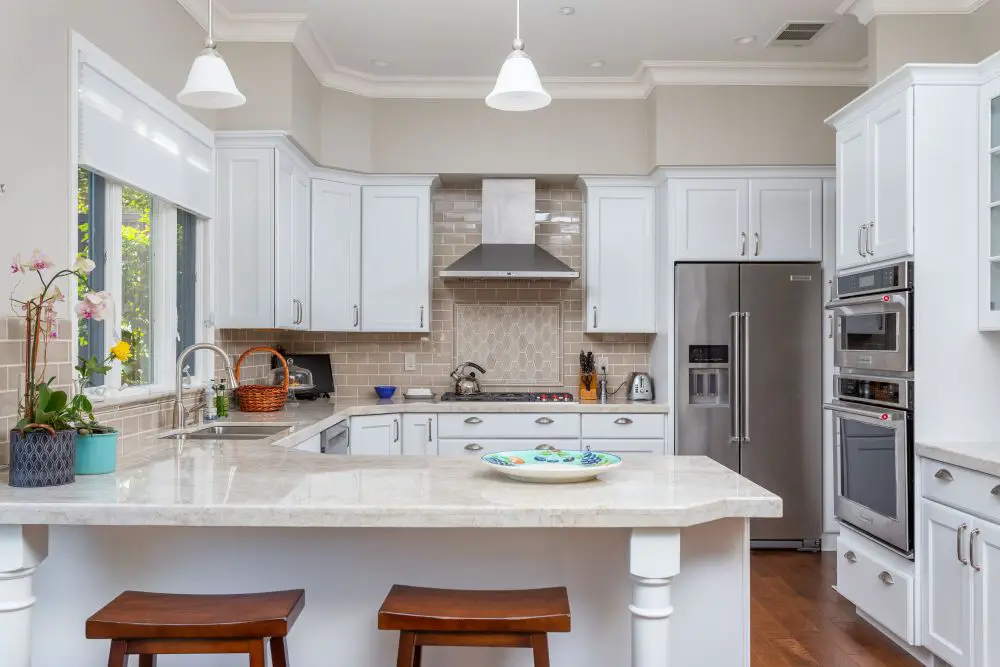
A welcoming kitchen with an island, pendant lighting, and white cabinetry, designed for both everyday use and casual gathering.
Keep Reading
Have a question we didn't cover?
We genuinely love kitchen talk. Call us, email us, or come by — we'll give you the same honest answers in person that we wrote here.
Get a Free Consultation See Our WorkCall us: 925-937-4200 · CA Lic #626819
Toupin Construction
Ready to start your remodel?
Whether you're dreaming of a new kitchen, a spa-worthy bathroom, or a whole-home transformation — we’d love to hear about your project. Reach out and let's talk.
‹ Back
Comments