


By using our website, you agree to the use of cookies as described in our Cookie Policy
Blog
Cherry Cabinets: Warm, Elegant, and Designed to Grow More Beautiful Over Time
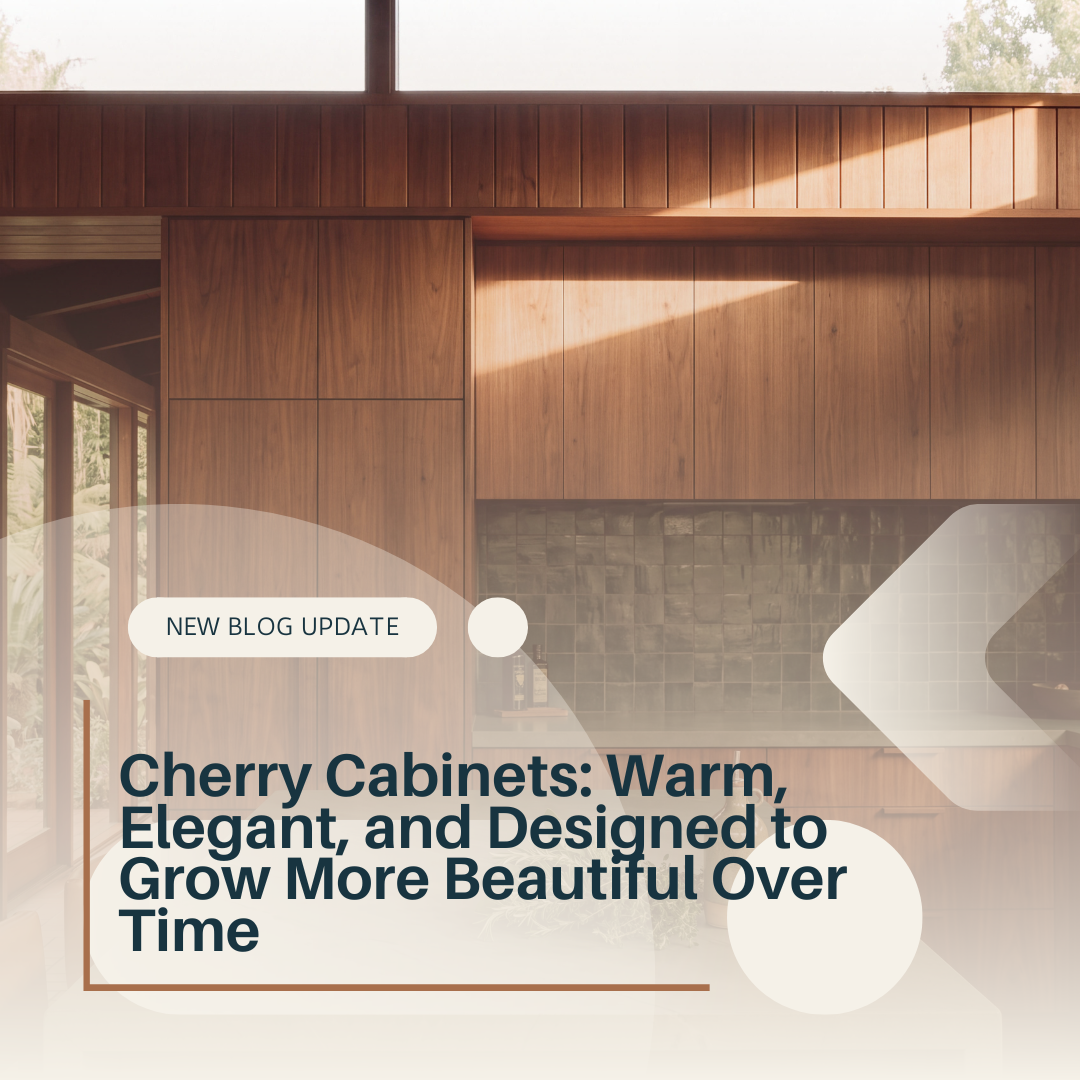
We did a kitchen in Alamo about eight years ago. Cherry cabinets, simple shaker doors, light stone countertops. The client called us a few months ago just to say: "I want you to know this kitchen is the best decision we made. It looks better now than when you installed it."
That's the cherry story. It's a long game, and it rewards the people who understand that going in.
Wood Species Series
- Wood Species 101: Start Here
- Oak Cabinets
- Maple Cabinets
- Walnut Cabinets
- Cherry Cabinets (this post)
- Alder Cabinets
- Hickory Cabinets
- Birch Cabinets
- Ash Cabinets
- Pine Cabinets
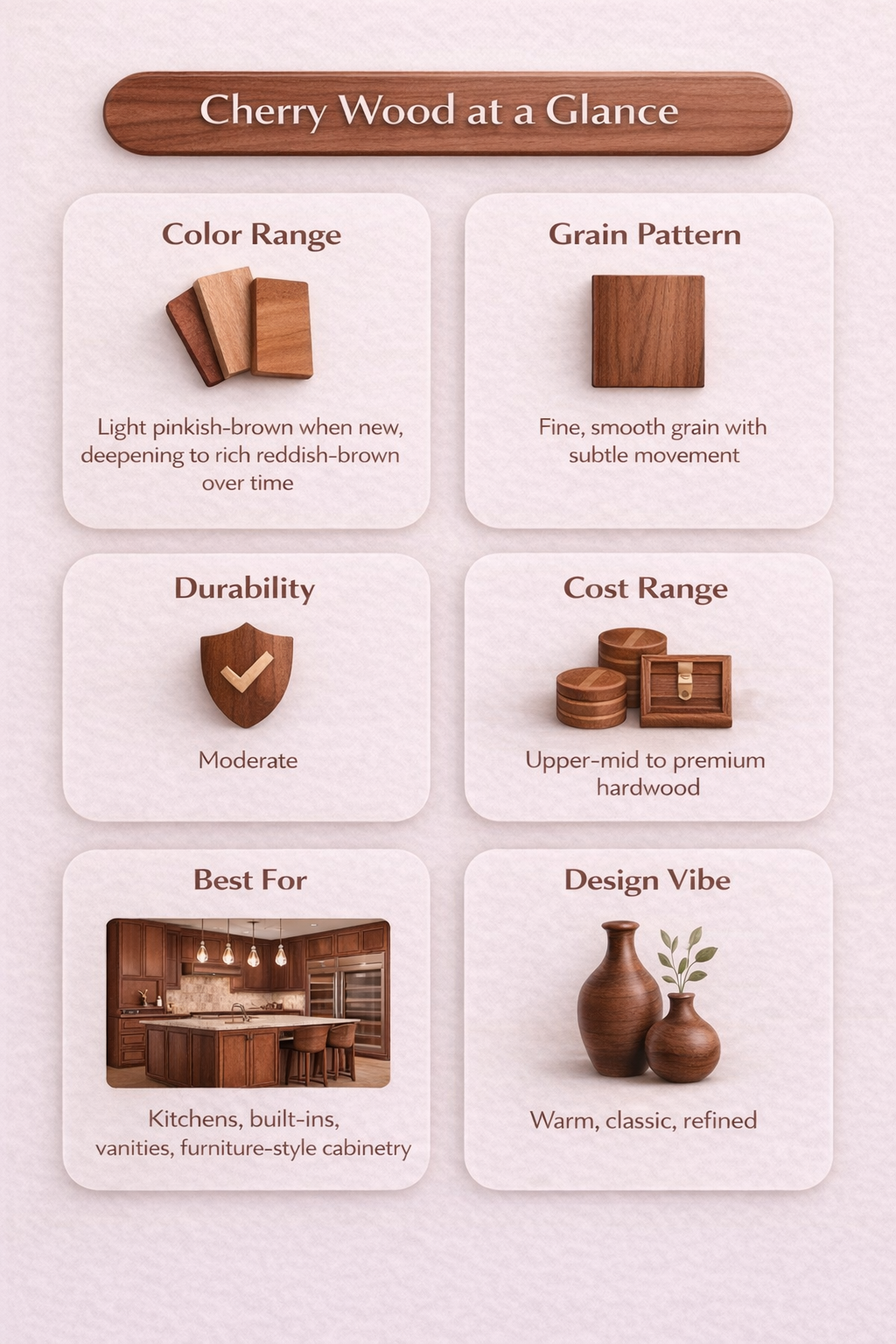 Infographic highlighting cherry wood characteristics including color evolution, grain pattern, durability, cost range, and ideal uses for cabinetry.
The Thing Most People Get Wrong About Cherry
Cherry has a reputation problem. When people picture it, they imagine very traditional kitchens — heavy, formal, ornate. Cathedral doors, dark stain, brass hardware, the whole 1990s package. And for a long time, that's exactly how it was used. But cherry itself isn't traditional. The applications were.
Modern cherry cabinetry uses simple door styles, lighter finishes, and cleaner hardware. The result is a wood that feels warm and sophisticated without being dated. The grain is fine and smooth — almost furniture-like in quality. When paired thoughtfully, cherry reads as timeless rather than as a specific style era. Think less formal dining room, more considered family kitchen that still feels polished on a Tuesday evening.
"Cherry doesn't stay frozen in time. It evolves — and that's exactly why the right homeowner loves it."
Cherry Changes — That's the Whole Point
When first installed, cherry is often lighter than people expect. Slightly pink or golden, almost soft. Then it deepens — steadily, over months and years, into that rich reddish-brown tone you see in the photos of mature installations. Sunlight accelerates the process, which means if your kitchen has uneven light exposure — one window on the south wall, say, and upper cabinets in shade — early on you might see some variation in color between doors. It evens out. The process is natural and unavoidable, and understanding it upfront is the difference between being delighted by it and being startled by it.
Jargon Card
Patina
The surface change that wood undergoes over time as it's exposed to light, air, and use. Cherry develops one of the most dramatic and beautiful patinas of any cabinet wood — deepening from a pale pinkish-gold to a rich reddish-brown over the first few years. This isn't a defect or a failure of the finish. It's the feature that makes cherry owners the happiest clients we know at year eight.
If you want cabinets that look exactly the same at year one as year fifteen, cherry will frustrate you. If you love materials that feel alive and improve with age — if you find yourself admiring old leather, well-worn hardwood floors, and rooms that look like they've earned their character — cherry is an extraordinarily rewarding wood to live with.
Managing the Color Change: What to Know Before You Install
The most common cherry surprise isn't that it changes — it's how quickly the first phase happens. In kitchens with good natural light, you'll notice the deepening within the first six months. The transition from pale gold to richer brown moves faster than most people anticipate, and then it levels off and continues slowly for years.
A few practical things worth knowing:
- Cabinet doors left open block light from the interior of the frame. When you first install, try to rotate how you use your cabinets, or keep doors consistently open or closed during the first few months. This minimizes the contrast between the door face and the interior frame as they're both adjusting.
- Avoid placing objects that block light in the same spot for the first year. A cutting board leaning against one door while the adjacent doors are exposed will create visible variation you'll need to wait out.
- The variation evens out. This is the most important thing. Every cherry installation we've done that initially had some uneven color has smoothed out within one to two years. Cherry's aging process is self-correcting in the long run.
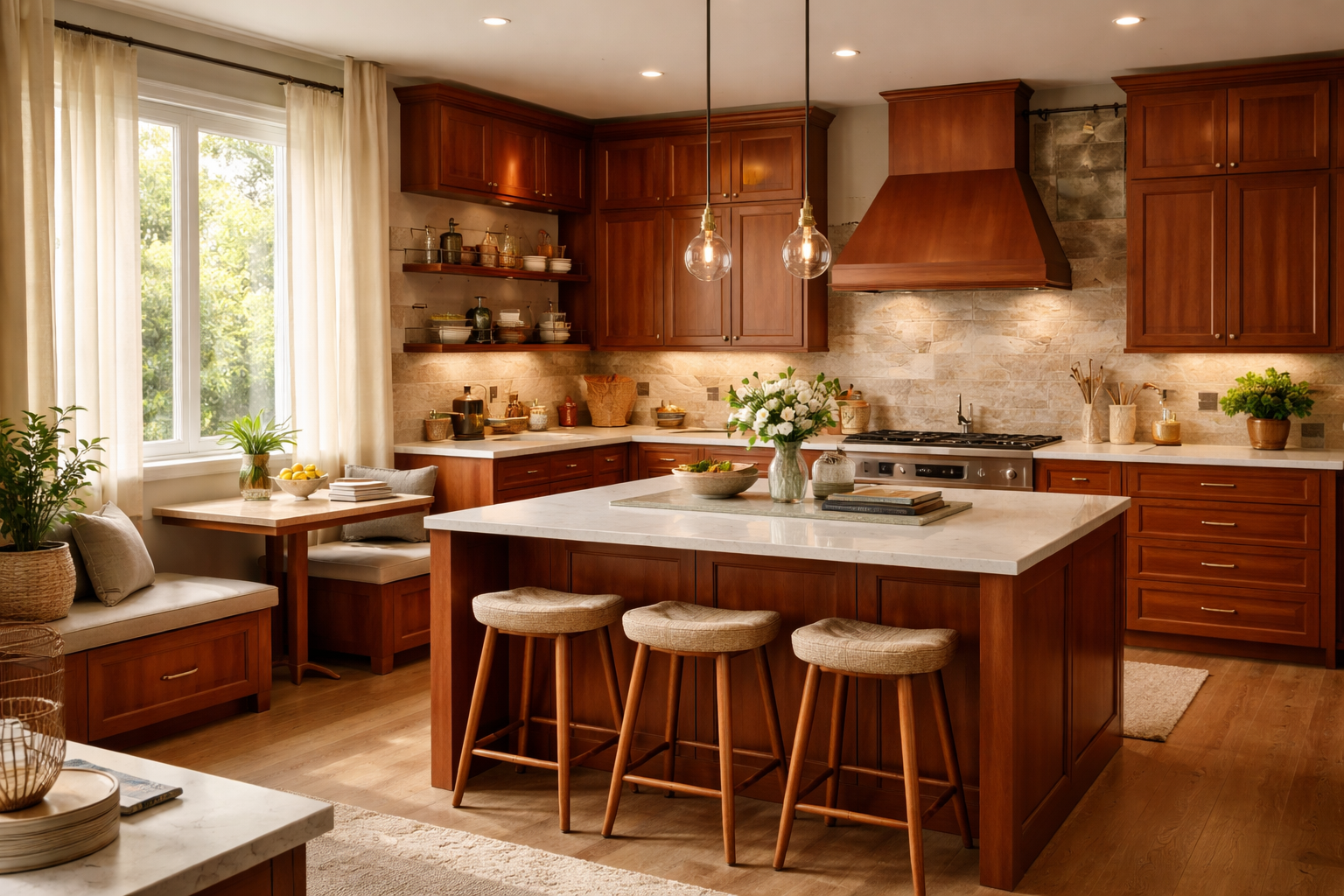 Traditional kitchen featuring cherry wood cabinets with deep warm tones, paired with a large island, natural lighting, and classic finishes.
Door Styles That Suit Cherry
Cherry's fine grain and warm tone give it flexibility across door styles — but the wrong choice will lock it into a specific era.
| Door Style | Works With Cherry? | Why |
|---|---|---|
| Simple shaker | Excellent | Clean lines let the grain and patina be the feature |
| Flat-panel (slab) | Very good | Modern, shows grain beautifully, keeps cherry feeling current |
| Raised panel (simple) | Good | Elegant in traditional kitchens — keep the profile clean |
| Cathedral arch | Proceed carefully | Very traditional — can work in formal spaces, risky elsewhere |
| Heavy ornate profiles | Avoid | Reinforces the dated formal look cherry is trying to move past |
| Inset doors | Excellent | Furniture-quality aesthetic suits cherry's fine grain perfectly |
The Alamo kitchen I mentioned at the top used simple shaker doors — and that's not a coincidence. It's the choice that lets cherry be itself in 2024 without looking like a cabinet catalog from 1998.
What Cherry Actually Costs
Cherry sits in the upper-mid to premium tier of domestic hardwoods — more expensive than oak, maple, or alder, roughly comparable to walnut depending on the market. The higher cost reflects both the quality of the wood and its relative scarcity — cherry grows more slowly and is harvested less broadly than oak or maple.
For homeowners who plan to stay in a home for ten or more years, cherry's cost-per-year value proposition is genuinely compelling. A cherry kitchen that deepens beautifully over a decade is a very different experience from a trendy finish that feels dated by year five. The long-game math often works in cherry's favor for the right buyer and the right home.
Pros and Cons
What Works
- Ages beautifully — deepens into a rich, sophisticated reddish-brown
- Smooth, fine grain — furniture-like quality in the surface
- Timeless appeal that never reads as trendy or seasonal
- Works in classic, transitional, and refined modern spaces
- Long-term investment — looks better at year ten than year one
What to Watch For
- Color change surprises unprepared homeowners — go in informed
- Softer than oak or maple — not ideal for very high-impact daily use
- Higher cost than most domestic hardwoods
- Uneven early light exposure creates temporary variation
- Not the right call if you want a light, bright kitchen long-term
Rossmoor Homeowners
Cherry is less common in Rossmoor primary kitchens — the compact footprints and resale considerations tend to push us toward white oak or maple in those spaces. But cherry is a beautiful choice for Rossmoor bathroom vanities in primary suites — smaller scale, more controlled light, and lower daily wear. A cherry vanity with a simple shaker profile and brushed bronze hardware in a Rossmoor bathroom is one of the more elegant outcomes we've been part of. The patina development in that setting is exactly what you want it to be.
Design Pairings for Cherry
Cherry needs light balance around it — the deepening color asks for counterweights that keep the overall room from feeling heavy or closed.
Countertops: Light quartz or honed marble keeps cherry from feeling too dark as it deepens over time. Soapstone creates classic, moody contrast — dramatic but intentional. Avoid very warm or dark countertops; as cherry deepens, a warm stone can tip the whole room into a register that feels heavy rather than rich.
Hardware: Antique brass or oil-rubbed bronze complement cherry's warmth beautifully and age alongside it naturally. Brushed bronze is a slightly more refined version of the same instinct. Polished nickel or matte black creates contrast — both work, but they're a different direction aesthetically. Avoid heavy ornate hardware profiles that reinforce the traditional look.
Wall colors: Creamy whites, warm neutrals, and muted greens and blues are strong partners. As cherry deepens, cool-toned walls provide welcome relief. Avoid pairing cherry with warm reds or yellows — you'll tip into territory that reads as busy and overwhelming rather than rich and intentional.
Backsplash: Simple, calm choices work best. Plain subway tile in a warm white, large-format matte stone, or a slab extension of the countertop. Cherry is providing color, warmth, and texture. The backsplash should be quiet.
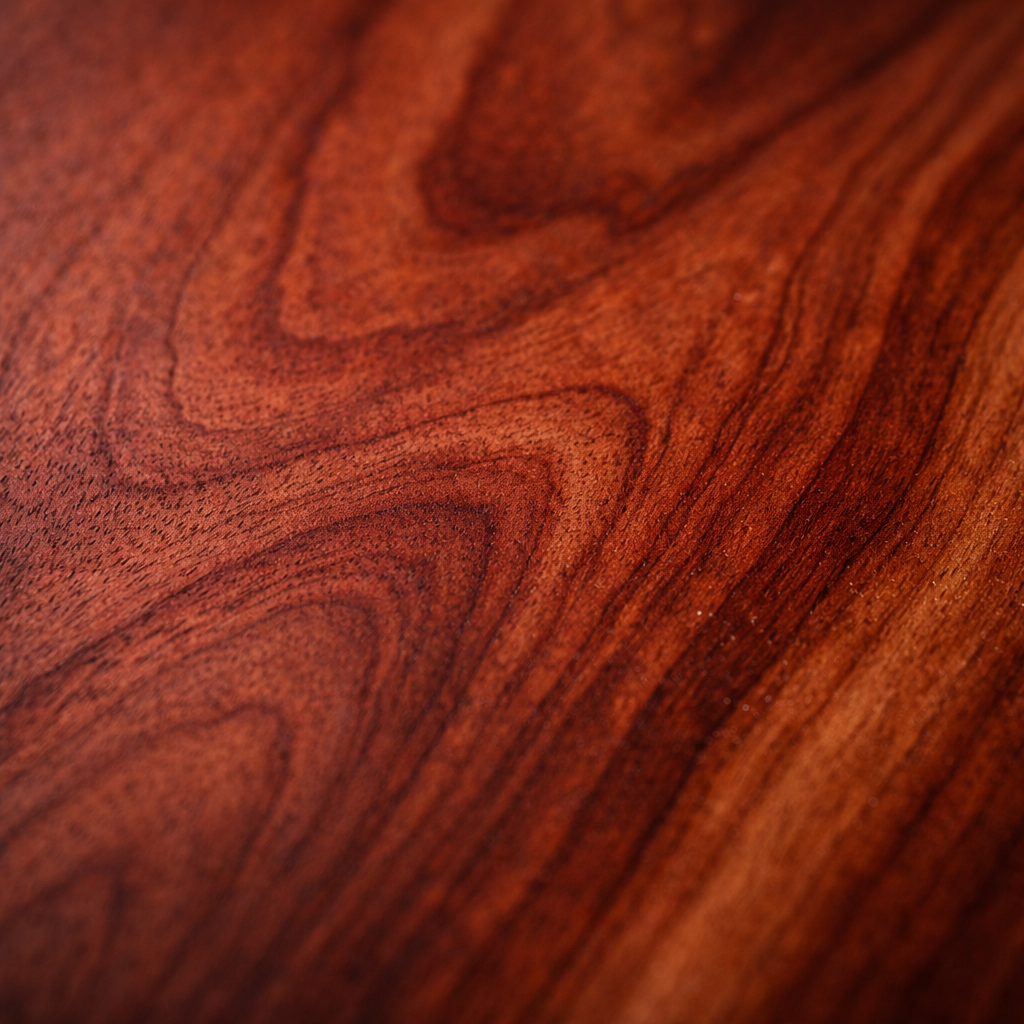 Infographic highlighting cherry wood characteristics including color evolution, grain pattern, durability, cost range, and ideal uses for cabinetry.
Is Cherry Right for You?
Cherry is worth serious consideration if you value warmth and elegance, appreciate natural materials that improve with age, want a timeless wood with a furniture-quality feel, and plan to be in your home long enough to watch it evolve. The clients who choose cherry and love it most are the ones who went in with eyes open — who understood the color change was coming and were genuinely excited about it rather than bracing for it.
Think carefully before choosing cherry if you want a light, bright kitchen that stays that way, prefer perfectly uniform color across all your surfaces, don't plan to be in the home for at least five years, or want maximum durability for a very active household. For durability without the color evolution, oak is the more practical answer. For warmth and elegance in a darker, richer palette without the patina dynamic, walnut is worth comparing side by side. For cherry's warmth at a lower price point with more even staining, alder with a medium stain is a genuinely viable alternative.
But if you want a kitchen that still feels exactly right eight years from now — richer, more settled, more beautiful — cherry is one of very few woods that can promise that.
From Candi
Cherry is the wood I recommend to clients who say they want something that'll still feel right in twenty years. Oak ages well. Walnut ages beautifully. But cherry transforms — and the transformation is part of the reward. That Alamo client called eight years later just to tell us. That doesn't happen with a lot of materials. If you're planning a kitchen remodel and want to see examples, our portfolio is a good place to get oriented.
Curious About Cherry?
Let's talk through whether cherry is the right fit for your home, your habits, and how long you plan to be there. Honest answers, no pressure.
Start a Conversation →
Toupin Construction
Ready to start your remodel?
Whether you're dreaming of a new kitchen, a spa-worthy bathroom, or a whole-home transformation — we’d love to hear about your project. Reach out and let's talk.
‹ Back
Comments