

By using our website, you agree to the use of cookies as described in our Cookie Policy
Blog
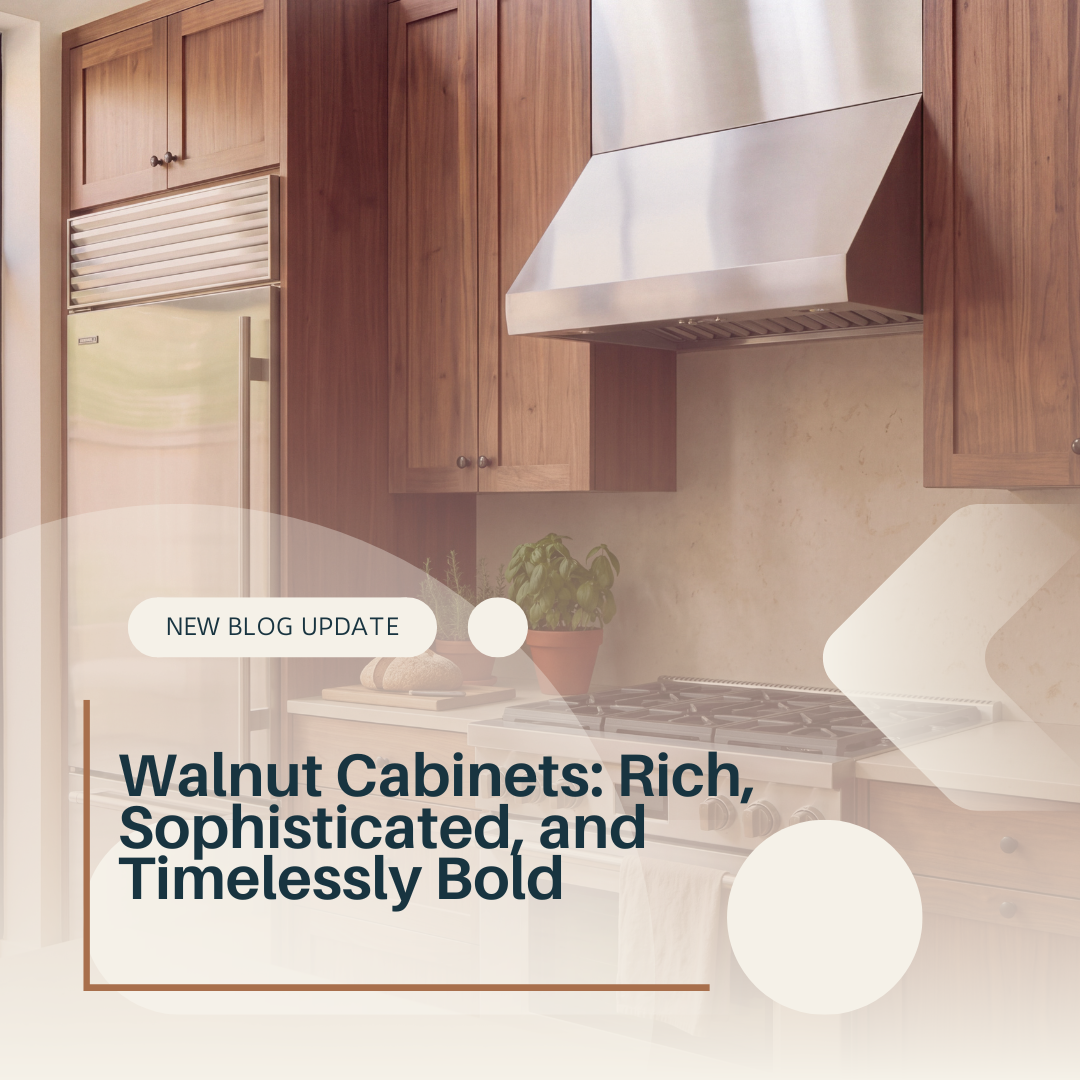
Walnut Cabinets: Rich, Sophisticated, and Timelessly Bold
Walnut doesn't whisper. It doesn't blend in. And it definitely doesn't try to look like anything else.
A client in Danville came to us after two years of saving a specific kitchen photo — walnut island, light upper cabinets, white quartz. She'd been watching prices, watching her savings, watching her kitchen feel smaller and more tired every year. When she finally committed, she said: "I don't want to wonder what it would have looked like. I want to know."
We built it. She texted me a photo six months later. It still looked exactly right. That's walnut.
Wood Species Series
- Wood Species 101: Start Here
- Oak Cabinets
- Maple Cabinets
- ★ Walnut Cabinets (this post)
- Cherry Cabinets
- Alder Cabinets
- Hickory Cabinets
- Birch Cabinets
- Ash Cabinets
- Pine Cabinets
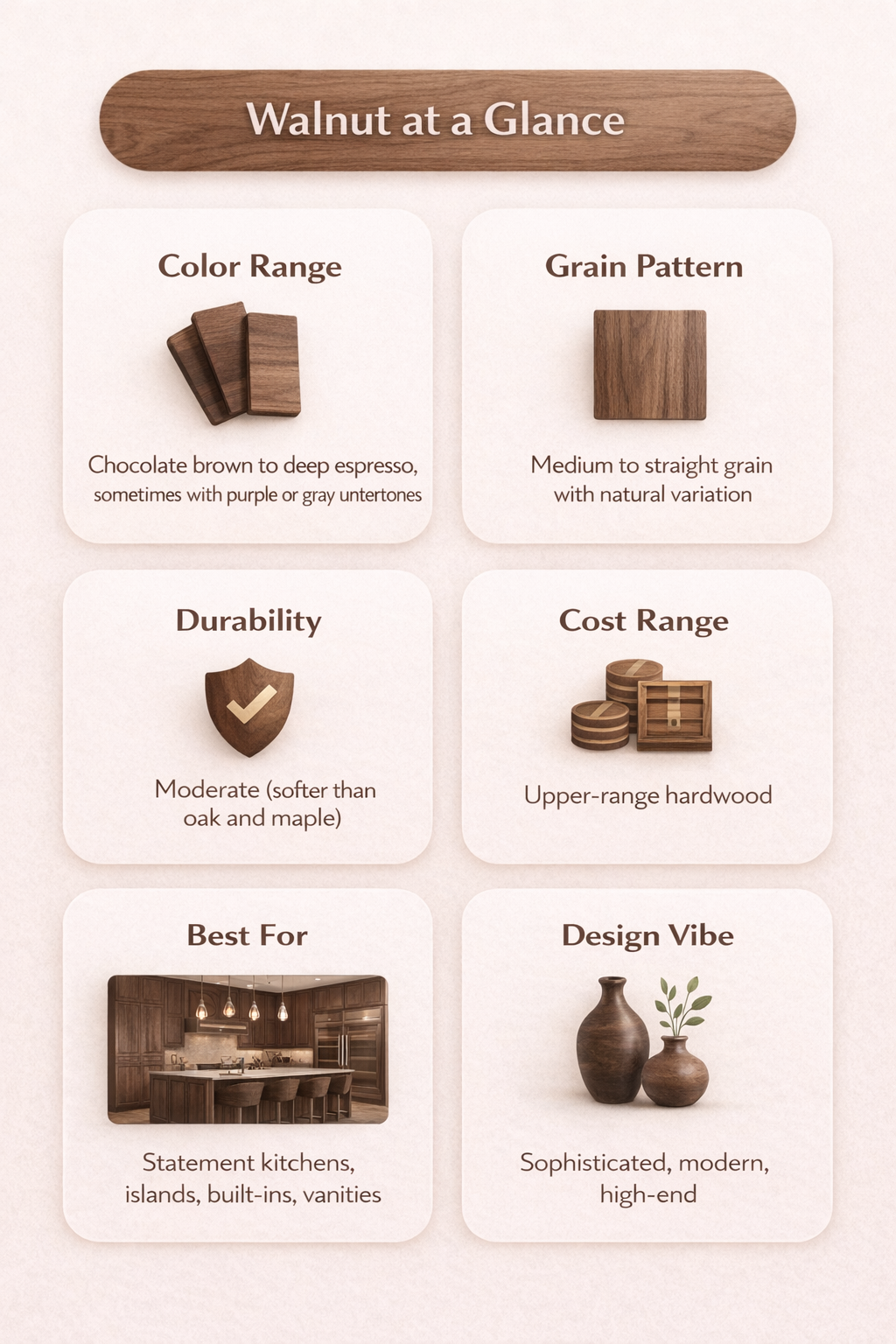 This walnut wood overview infographic highlights key characteristics including rich brown color variation, natural grain pattern, moderate durability, and its use in high-end cabinetry, kitchen islands, and built-ins.
Why Walnut Feels Like a Decision
Most woods are chosen for utility first and beauty second. Walnut is usually chosen in the opposite order — and that's not a bad thing. It's darker than most domestic hardwoods, which gives it immediate depth and richness. Unlike painted dark cabinets that can feel flat and heavy, walnut has grain, color variation, and a natural sheen that shifts throughout the day as light changes. It looks designed, not default.
"In a world full of white kitchens and neutral finishes, walnut stands apart."
The Honest Truth About Durability
This is the part I don't want you to miss. Walnut is softer than oak and maple. That means it can dent more easily, and sharp impacts will leave marks. If you have a very active household with kids throwing things around the kitchen, that's a real consideration.
Jargon Card
Figure
The natural pattern created by the grain structure of the wood — swirls, ripples, and varied color streaks. Walnut has beautiful figure, which is part of why it looks so rich. It also means wear tends to blend into that visual complexity rather than showing up as obvious damage.
The tradeoff is that walnut ages in a way that reads as character, not damage. Minor dents settle into the grain. The surface develops a patina that makes the whole kitchen feel more lived-in and more beautiful at the same time. For homeowners who appreciate natural aging — who want materials that tell a story — walnut delivers on that promise in a way very few woods can.
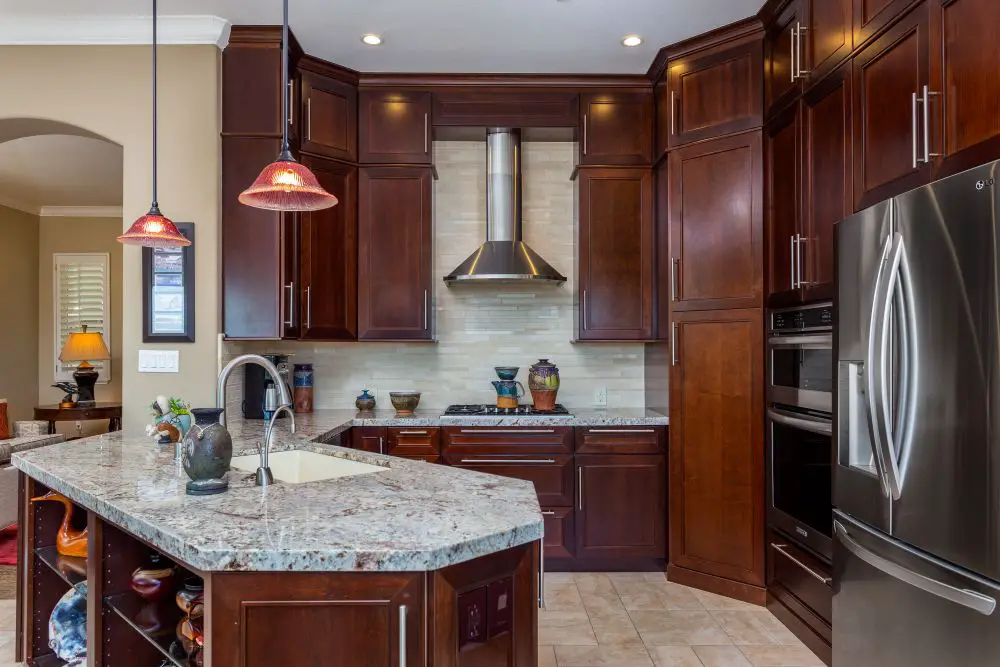 Warm walnut cabinetry anchors this Rossmoor kitchen remodel in Walnut Creek, featuring raised panel cabinet doors, full-height upper cabinets, a custom range hood, and natural stone countertops that add movement and contrast.
Walnut Cabinet Styles That Work
Walnut shines when the door style doesn't compete with the wood. The grain is doing significant visual work on its own — your job is to not get in the way of it. Here's how common door styles play with walnut:
| Door Style | Works With Walnut? | Why |
|---|---|---|
| Flat-panel (slab) | Excellent | The grain becomes the whole face — nothing to distract from it |
| Simple shaker | Great | Clean frame, grain center — timeless and current |
| Thin-rail shaker | Very good | Modern proportions, lets walnut feel architectural |
| Handle-less / integrated pulls | Excellent | Keeps the surface uninterrupted and design-forward |
| Cathedral arch / raised panel | Avoid | Too heavy — dates the wood and fights its natural elegance |
| Ornate routed profiles | Avoid | Overwhelms the grain, pushes walnut back toward the 1990s |
The pattern is simple: the more minimal the door profile, the better walnut looks. When in doubt, go flatter.
Pros & Cons of Walnut Cabinets
✓ Pros
- Rich, natural color — no stain required
- Immediately elevates any space visually
- Ages and develops patina gracefully
- Design-forward, feels intentional and custom
- Versatile as island accent or full-kitchen statement
✗ Cons
- Higher cost — firmly in the premium tier
- Softer than oak or maple — more prone to dents
- Darker tones may not suit smaller or north-facing kitchens
- Not a resale-neutral choice for every buyer
Rossmoor Homeowners
Walnut is less common in Rossmoor kitchens primarily because of the compact footprints — a full walnut kitchen in a smaller co-op unit can feel visually heavy. But a walnut island paired with lighter perimeter cabinets? That's a combination we've done beautifully in several units. It gives you the richness without committing the whole room to darkness.
Design Pairings That Let Walnut Breathe
Walnut needs balance more than almost any other wood species. It's doing a lot — deep color, visible grain, natural sheen. Everything around it should calm down and support it, not compete with it.
Countertops: Light quartz or honed marble creates beautiful contrast — the pale countertop makes the walnut pop without overwhelming the space. Matte porcelain slabs work well in more modern kitchens. What to avoid: busy, heavily veined stone. The wood already has movement. Two high-contrast patterns in the same space fight each other.
Hardware: Matte black gives drama and definition against walnut's warmth. Brushed brass adds richness and plays off the natural gold tones in the grain. Integrated or edge pulls keep the look clean and architectural — our most common recommendation for full walnut kitchens. Skip polished chrome or nickel, which can feel cold against walnut's warmth.
Paint colors: Soft warm whites, muted stone tones, greige, pale creamy neutrals. Walnut needs air around it. Cool-toned whites or bright walls make it feel heavier than it is. If you're going for a dark-and-moody look, a deep sage or charcoal wall can be stunning — but that's a committed design direction, not a safe one.
Backsplash: Simple shapes, calm materials. Zellige tile in a warm white, large-format matte ceramic, or a full slab backsplash that extends the countertop material. The backsplash should be a quiet backdrop, not another texture competing for attention.
What Walnut Actually Costs (And Why)
Walnut sits firmly in the upper tier of domestic hardwoods — more expensive than oak, maple, alder, or birch, and roughly comparable to cherry depending on your cabinet maker and region. There are a few reasons for this.
First, walnut grows more slowly than many other hardwoods. Slower growth means denser wood and more limited supply, which drives up the raw material cost. Second, the figure and color variation that make walnut beautiful also make it harder to work with — cabinet makers have to be more intentional about how they match grain across doors and panels, which takes more time. Third, walnut typically doesn't need stain, but it does need high-quality finishing to protect the natural color and keep it from fading or graying unevenly.
That said, walnut's cost has a ceiling. A walnut island with painted or lighter perimeter cabinets is one of the most popular approaches we recommend — it gives you the drama and the design moment without making the entire cabinet budget premium-tier. If walnut everywhere feels out of reach, walnut somewhere strategic almost always works.
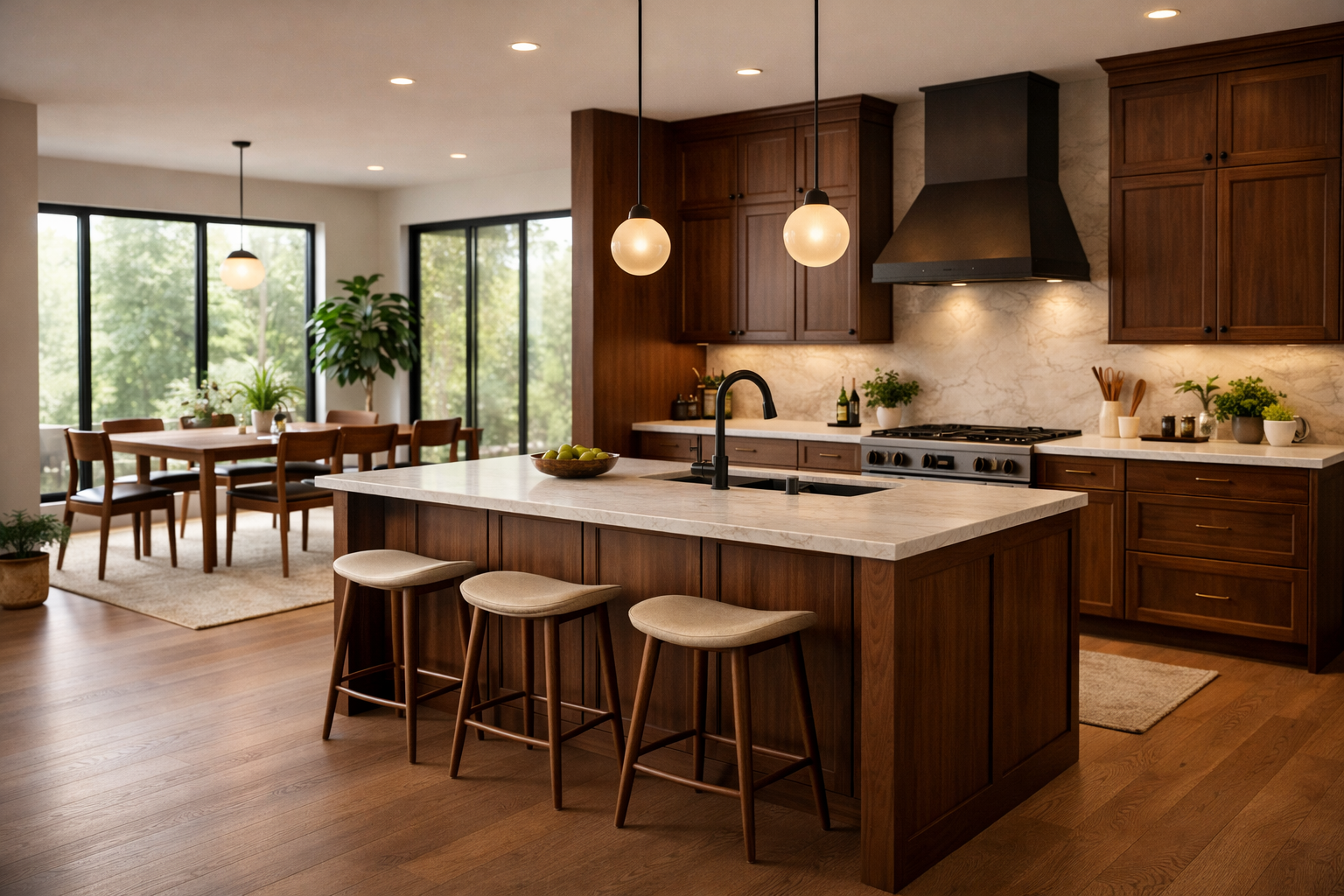 A warm and modern kitchen featuring walnut cabinetry, a large island with seating, and light stone countertops. The space blends natural wood tones with soft lighting and an open layout, creating a sophisticated yet inviting design.
Caring for Walnut Cabinets
Walnut doesn't require a complicated maintenance routine — but it does reward a little attention. A few things that matter:
Cleaning: Mild soap and a damp cloth. Never abrasive cleaners, never anything with bleach. Dry the surface after wiping — standing water will eventually raise the grain or dull the finish.
Sunlight: Walnut can lighten and shift in color with prolonged UV exposure — this is especially relevant in East Bay kitchens with south- or west-facing windows. Window films or thoughtful shade placement can slow this significantly. Some homeowners actually love how walnut's color evolves in sunlight; others want to preserve the original deep tone. Worth thinking about before installation.
Dents and scratches: Minor ones blend into the grain over time — this is one of walnut's genuine advantages. Deeper damage can usually be addressed by a professional refinisher without replacing the whole cabinet. We've had clients refresh walnut kitchens that were fifteen years old and have them look nearly new after a light sand and recoat.
Refinishing: Walnut takes refinishing very well. This is part of the long-term value proposition — a walnut kitchen maintained properly can last decades and look better at year twenty than it did at year two.
Is Walnut Right for You?
Walnut is the right call if you want depth, drama, and a kitchen that feels intentional from the moment someone walks in. If you see your cabinets as a design feature — not just storage — and you're drawn to rich, natural materials that tell a story over time, walnut will reward you. The clients who choose it almost never second-guess it.
It's not the right call if you want painted cabinets (walnut is never painted — it would be a crime against the wood), if you need your kitchen to appeal to the broadest possible resale audience, or if a very busy household means durability trumps beauty as your primary concern. For durability-first households, oak or hickory are a better fit. For budget-conscious homeowners who still want warmth and character, alder is worth a close look.
The homeowners walnut is made for: people who have a clear vision, aren't chasing resale neutrality, and want to live in a kitchen that feels like a considered choice every single day.
From Candi
Walnut is one of my favorite installs to see when it all comes together. The right kitchen, the right light, the right pairing — and it just looks like exactly what it should be. If you want to talk through whether walnut makes sense for your space, we are very happy to have that conversation. See our kitchen remodeling page or portfolio for context.
Considering Walnut?
Let's figure out if it's the right fit for your kitchen, your lifestyle, and your budget. Honest answers, no pitch.
Get a Free Consultation →
Toupin Construction
Ready to start your remodel?
Whether you're dreaming of a new kitchen, a spa-worthy bathroom, or a whole-home transformation — we’d love to hear about your project. Reach out and let's talk.
‹ Back
Comments