

By using our website, you agree to the use of cookies as described in our Cookie Policy
Blog
How High Should Your Backsplash Go?
Tile & Design · Kitchen & Bath
A while back, my dad Tim was finishing up a kitchen in Alamo — gorgeous quartzite countertops, new custom cabinetry, the works. The homeowner had been completely decisive through the entire project. Then we got to the backsplash and she just… froze. "I don't know how high it should go." She'd spent months picking everything else, and this four-inch decision was the one that stopped her cold.
I get it. Backsplash height sounds like a simple detail until you're staring at an empty wall wondering whether you're about to make an expensive mistake. But here's the thing — there's no wrong answer if you understand what each option actually does to your space.
Tile is my favorite part of a remodel. I spent years working alongside Adan, our tile lead, learning how installation choices affect the final look as much as the material itself. So let's actually walk through this decision like the adults we are.
"Backsplash height is the detail that quietly controls whether a kitchen feels like a rental or a renovation."
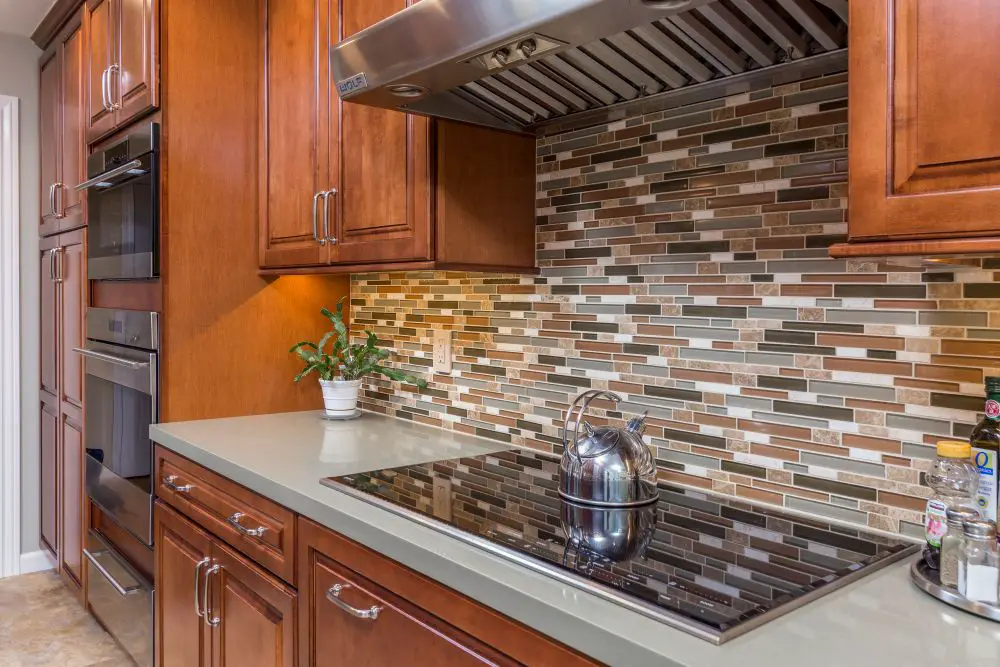 Walnut Creek kitchen featuring a glass mosaic backsplash with a linear tile pattern, adding texture, color variation, and easy-to-clean durability behind the cooktop.
The Four Heights
There are four common backsplash height approaches, each with a different visual impact, price point, and maintenance tradeoff. Here's the honest breakdown.
Option 01
Standard Height
4–6 inches above the countertop. The classic choice — just enough tile to protect the wall behind the sink or cooktop from water and splatter.
Clean, minimal, cost-effective. Leaves most of the wall as painted surface, which means it works especially well when you have a bold wall color or want to keep things simple.
Budget-FriendlyTimelessEasy to Clean
Option 02
Half-Height
10–18 inches above the counter — typically running up to the bottom of upper cabinets. Adds visual punch and more splash protection without committing to a full feature wall.
This is the sweet spot for kitchens with upper cabinets. It gives you design presence without a dramatic budget bump.
More CoverageUnder CabinetsMid-Range Cost
Option 03
Full-Height
Counter to ceiling. A full-height backsplash is a statement — framing your range, hood, or sink wall in one uninterrupted surface. Zero painted wall visible behind your counters.
Bold, modern, and genuinely easier to clean than you'd expect. The look is dramatic. The maintenance? Actually great — no painted wall to scrub.
Designer LookHigh ImpactHigher Cost
Option 04
Custom Height
Built around your specific layout. Windows, floating shelves, a coffee bar alcove, open shelving — these all call for a height that doesn't fit neatly into the first three categories.
Custom heights require precise planning and careful grout line alignment, but the result is a kitchen that looks like it was designed, not assembled.
Unique LayoutsWindows & ShelvesPrecision Required
Trade Term: Bullnose Tile
Bullnose is a tile with one finished, rounded edge — used wherever tile ends and wall begins. At standard or half-height backsplashes, a bullnose tile creates a clean visual "cap" so the tile edge doesn't look raw or unfinished. If your tile manufacturer doesn't make a matching bullnose, a Schluter strip (a thin metal edge profile) is the pro alternative.
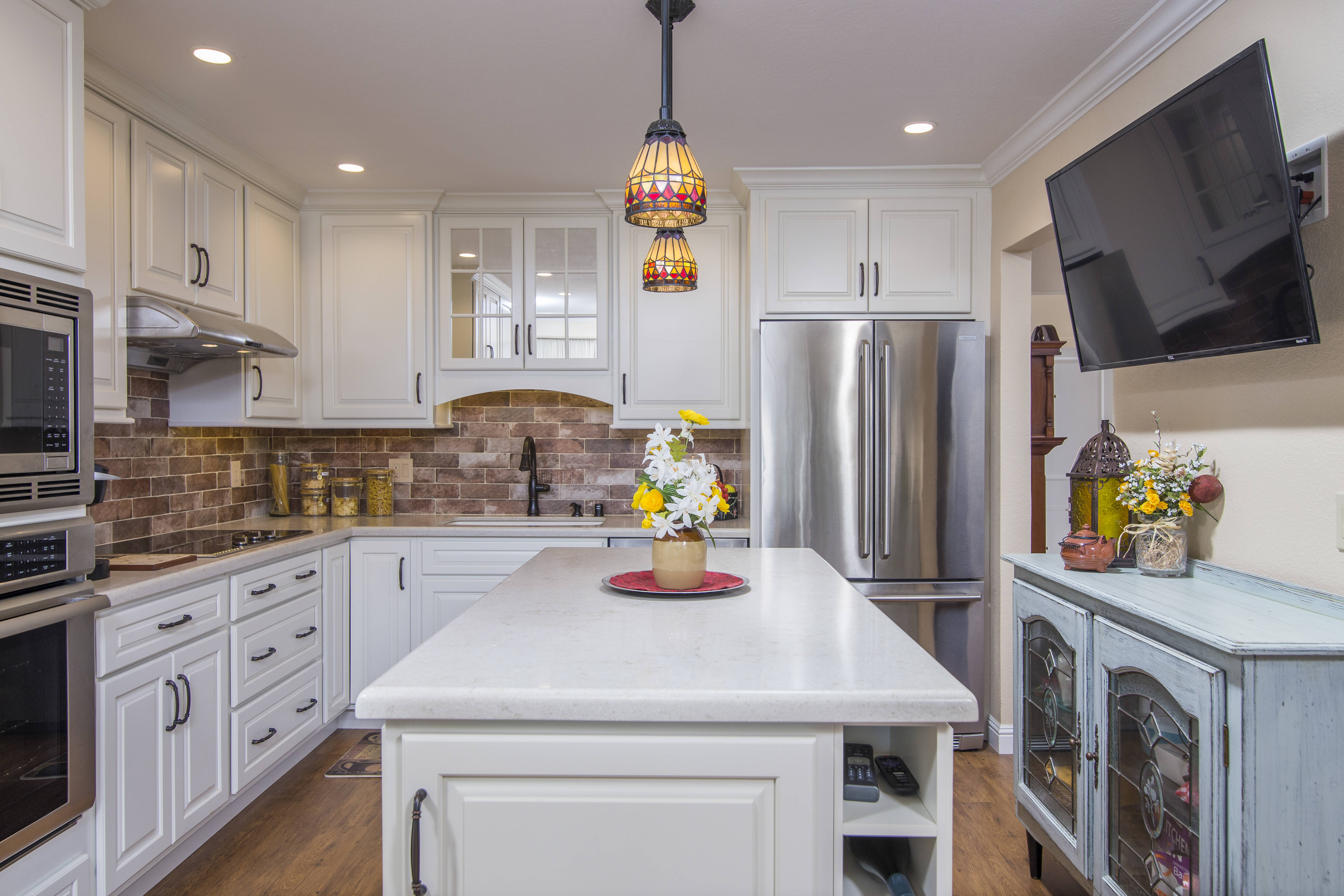 East Bay kitchen with brick-style tile backsplash in warm neutral tones paired with white cabinetry, creating depth and contrast while maintaining a timeless feel.
Material + Height: They're a Package Deal
Your tile choice and your height choice aren't independent decisions — they affect each other. Here's how to think about the pairing.
| Material | Standard | Half | Full | Custom |
|---|---|---|---|---|
| Ceramic / Porcelain | ✔ Great | ✔ Great | ✔ Great | ✔ Great |
| Glass Tile | ◐ Works | ✔ Shines | ✔ Dramatic | ◐ Works |
| Natural Stone (Marble, Travertine) | ◐ Overkill | ✔ Balanced | ✔ Luxurious | ✔ Beautiful |
| Quartz or Porcelain Slab | ✗ Wasteful | ◐ Depends | ✔ Seamless | ✔ Stunning |
| Handmade / Zellige | ◐ Works | ✔ Artisanal | ✔ Statement | ◐ Works |
Trade Term: Zellige Tile
Zellige (say it: zel-EEJ) is a hand-cut Moroccan clay tile with a slightly irregular surface and a glossy, imperfect glaze. No two tiles are identical. The variation is the point — it gives walls a handcrafted, jewel-like quality that machine-made tile can't replicate. Increasingly popular in East Bay kitchens as a backsplash focal point. Costs more, requires a skilled installer, and worth every penny when done right.
Rossmoor Homeowners — Read This First
Rossmoor's co-op condominiums have specific approval processes before any tile work touches shared walls or wet areas. Mutual board approval is typically required before a backsplash project begins — and some Mutuals restrict certain adhesives or require waterproofing documentation. We've handled dozens of Rossmoor tile projects and know the approval process well. Call us before you buy a single tile: (925) 937-4200.
How to Actually Decide
Enough options. Here's a practical decision framework — the same questions we walk through with clients before any tile goes on the wall.
Your Backsplash Height Decision Checklist
- Where's your hood or range vent? If it's a wall-mount chimney hood, full-height tile behind it looks intentional. If it's recessed into the cabinet, standard or half-height is easier to terminate cleanly.
- Do you have upper cabinets? Half-height tile (running to the bottom of uppers) is the natural choice here. Full-height doesn't work unless the tile extends above the cabinets too — which is actually beautiful in the right kitchen.
- Are there windows above the counter? A window interrupts any height above standard. Custom tiling around it (sill returns, window trim tile) is a great solution but requires planning.
- What's your wall doing otherwise? Bold wallpaper, a saturated paint color, or floating shelves all compete with full-height tile. Standard height lets the wall breathe. Full height works best with neutral walls or in open layouts.
- What's your maintenance tolerance? More tile = less painted wall = actually easier to wipe down. If you cook seriously or have kids, full height is the low-maintenance choice, not just the pretty one.
- What's the budget? Full-height tile adds both material and labor costs. For a standard East Bay kitchen, budget roughly 2–3x the material cost for a full-height vs. standard installation due to additional square footage and edge detailing.
The Finish Line: Edge Details Matter
Here's the part most homeowners don't think about until it's too late: how the tile ends is just as important as how high it goes. A sloppy edge finish makes expensive tile look cheap. A clean edge makes a modest tile look custom.
Your Edge Finishing Options
Trade Term: Schluter Strip
Schluter is a brand name that's become the industry term for metal tile edge trim — the same way "Kleenex" means tissue. It comes in aluminum, brushed nickel, matte black, brass, and more. A Schluter strip is installed at the edge of your tile to cap it cleanly, protect the edge from chipping, and create a finished transition to paint or drywall. It's the most common edge solution when a matching bullnose tile isn't available — which is increasingly often, especially with large-format tile.
A few things we always check before calling an edge "done":
- →Outlets and switch plates — tile should be cut cleanly around them, not just up to them
- →Inside corners — caulk, not grout (grout cracks; caulk flexes)
- →Grout joint alignment — if the tile is full-height, grout lines should be level all the way up
- →Counter-to-tile gap — a thin bead of color-matched caulk where tile meets countertop, not grout
- →Sealing — natural stone and some handmade tiles need sealing before the first use
"The grout you choose and the edge you finish with will be more visible than the tile itself. Don't underestimate either."
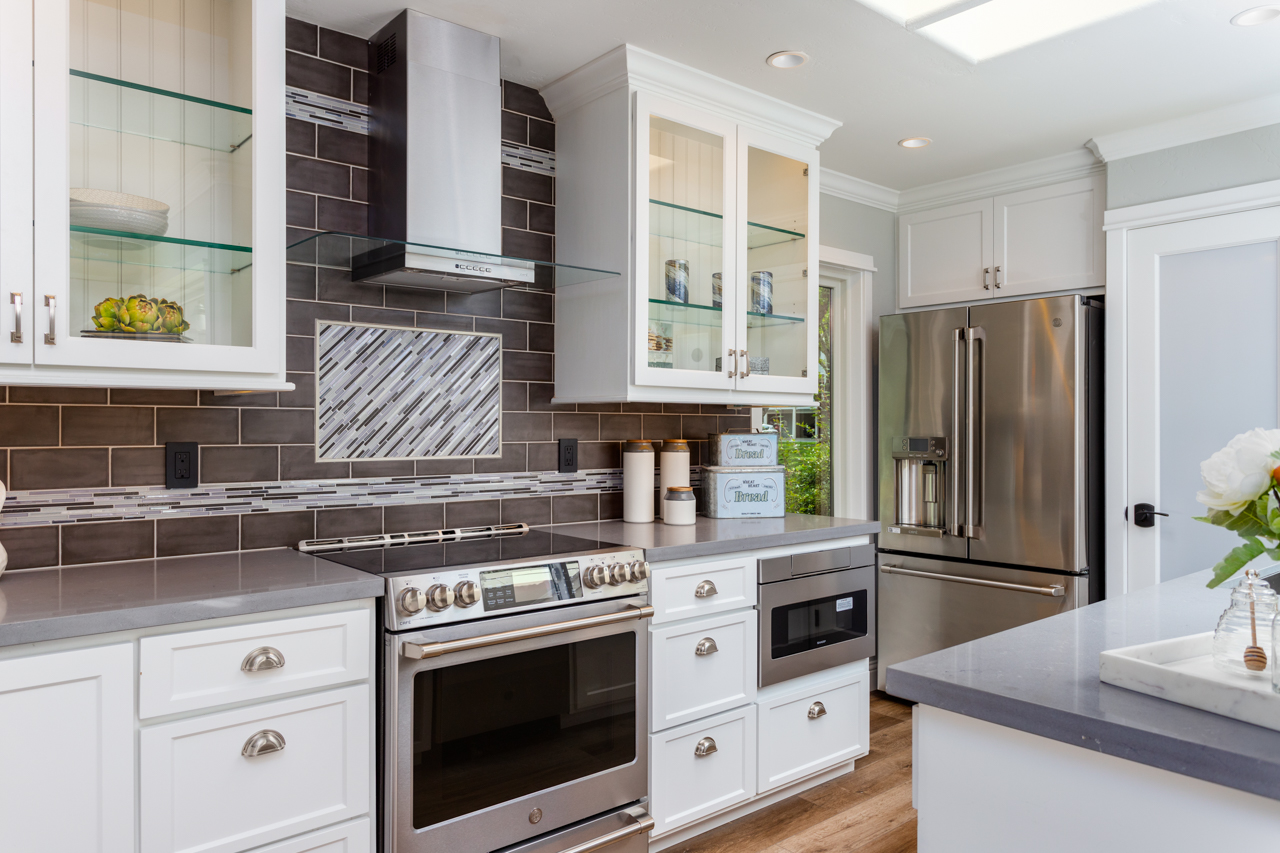 Rossmoor kitchen featuring a subway tile backsplash with a decorative accent insert behind the range, combining classic style with a focal design element.
Common Questions
What is the standard backsplash height in a kitchen?
Standard is 4–6 inches above the countertop — enough to protect the wall from splashing at the sink and cooktop while keeping things minimal. It's the most common choice in traditional and transitional kitchens.
Does full-height backsplash make a kitchen look bigger?
Yes, when done thoughtfully. Vertical tile draws the eye upward, which makes ceilings feel taller. This is especially valuable in East Bay kitchens with standard 8-foot ceilings — the right full-height tile can make a room feel significantly more open.
What if I have a window above my counter?
Windows are the most common reason people choose custom heights. Your tile installer should plan the layout so grout lines align around the window frame, and tile returns (thin strips wrapping the inside of the window sill) finish the look cleanly. It takes planning — but it's one of our favorite details to execute.
Is full-height backsplash more expensive?
Yes — more tile, more labor, and more edge detailing all add up. How much more depends on the tile you choose and your kitchen's footprint. A high-end stone slab floor-to-ceiling will cost significantly more than 4 inches of ceramic. But even modest tile at full height reads as an upgrade — it's one of the higher-return moves in a kitchen remodel.
Can I do full-height tile in a Rossmoor condo?
Often yes, but Mutual approval is required before work begins. Some buildings have waterproofing and adhesive requirements that affect how the tile is installed. We've navigated this process many times — give us a call before you finalize any plans.
Keep Reading
Backsplash height is one piece of the puzzle. These posts connect the dots:
Ready to tile? Let's talk height.
We've been setting tile across Walnut Creek, Rossmoor, Alamo, Danville, and Lafayette for over 40 years. From standard to ceiling-height custom installs — we'll help you figure out what actually makes sense for your space.
Schedule a Consultation View Our Tile Work
Toupin Construction
Ready to start your remodel?
Whether you're dreaming of a new kitchen, a spa-worthy bathroom, or a whole-home transformation — we’d love to hear about your project. Reach out and let's talk.
‹ Back
Comments