

By using our website, you agree to the use of cookies as described in our Cookie Policy
Blog
Italian Cabinets: The Art of Timeless Craftsmanship
Cabinet Design Series — Global Perspectives
Global Design · Cabinetry
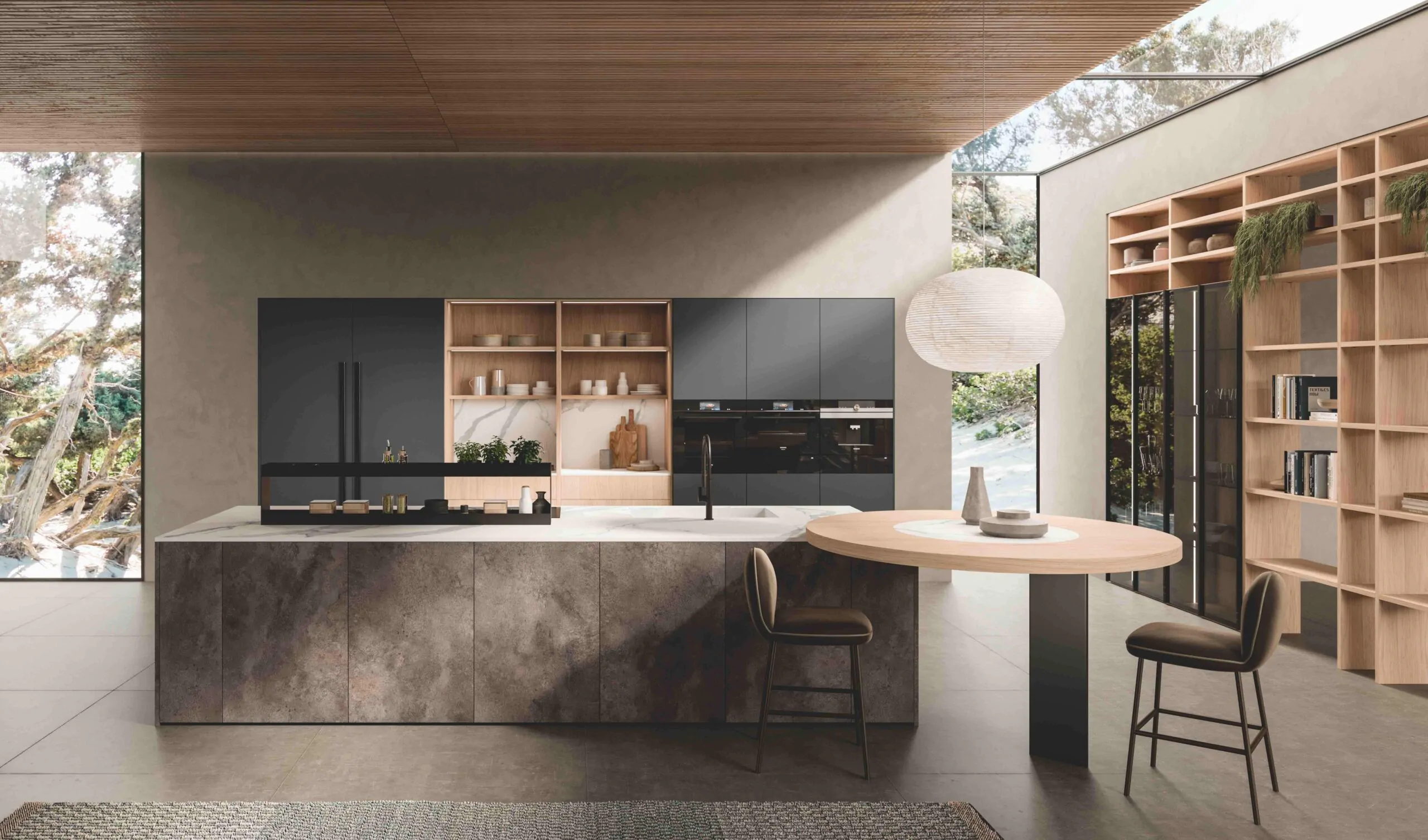 Visit https://rastelli.com/portfolio/r-1/ to learn more about this cabinet line
 There's a Scavolini showroom in San Francisco I walked through a few years ago with my dad. We were doing research for a client in Lafayette who had strong feelings about Italian design — she'd grown up spending summers in Florence and had opinions. Tim walked through that showroom quietly, touching door edges, opening drawers, tilting finishes toward the light. He turned to me at one point and said, "This isn't furniture. This is architecture."
He was right. Italian cabinetry doesn't compete with German precision or Scandinavian calm. It exists in its own category — one where design is a cultural value, where the craft tradition is centuries old, and where a cabinet door can genuinely be considered a piece of art.
That's either exactly what you're looking for, or completely irrelevant to your remodel. Let me help you figure out which.
Why Italy Became the World's Cabinet Artisan
Italy's design reputation wasn't built overnight, and it wasn't built by accident. The country has spent centuries developing regional craft traditions — Tuscany's woodworking, Venice's decorative arts, Milan's fashion-forward design culture. That layered heritage is what makes Italian cabinetry different from just about anywhere else.
Many Italian cabinet companies are still family-owned, some for multiple generations. That matters because craft traditions get passed down differently when the people teaching them have a personal stake in the outcome.
Trade Term Explained
Lacquer finish: A coating applied to cabinet doors and surfaces that creates a smooth, often high-gloss appearance. Italian cabinet lacquers are typically sprayed in multiple coats and hand-buffed between applications — which is part of why they look so different from a factory-sprayed American cabinet. The depth of color you see in an Italian kitchen is usually the result of 5–8 coats of lacquer, not one.
Modern Italian brands also bring serious design intelligence. The Milan Furniture Fair (Salone del Mobile) sets global design trends every April, and Italian cabinet brands are always major players. They're not following where design goes — they're often driving it.
What Italian Cabinets Look Like (And What Sets Them Apart)
There's a range within Italian design, which is important to understand. Not all Italian cabinets are ornate. Contemporary Italian cabinet brands are often just as clean-lined as German ones — they just bring a different quality of finish and detail.
What you'll consistently find in Italian cabinetry:
- Exceptional finish quality — lacquers with visible depth, natural wood veneers that are matched for grain and color, matte textures that don't look like matte spray paint
- Seamless appliance integration — hiding refrigerators, ovens, and dishwashers behind matching panels is an Italian specialty
- Design range from bold to minimal — Snaidero does curves and sculptural forms; Scavolini does clean and modern; Pedini pushes architectural concepts
- Attention to proportion — Italian designers obsess over the visual relationship between cabinet height, door width, hardware placement. It shows.
Italian cabinets are what happens when fashion design and architecture have a very talented child.
Italian Cabinet Brands Worth Knowing
Scavolini
Est. 1961 · Mid-to-premium · Wide range
Probably the most accessible Italian brand that still feels genuinely Italian. Good range from contemporary to warm traditional. Strong for Bay Area homeowners who want the aesthetic without full custom investment.
Snaidero
Premium · Design-forward · Sculptural
Their collaboration with Pininfarina (the studio behind Ferrari's body design) tells you everything. If you want a kitchen that makes people stop and stare, Snaidero is on the short list.
Pedini
Premium · Architectural · Contemporary
Known for curved cabinet lines and bold material choices. Strong for modern homes where the kitchen is meant to be a design statement. More architectural than decorative.
Veneta Cucine
Mid-premium · Modular · Urban-friendly
Excellent modular systems for condos and urban spaces — popular for Bay Area remodels where customization matters. More accessible price point than Snaidero or Pedini.
Aran Cucine
Mid-range · Full range of styles
One of Italy's largest manufacturers, which means the most range from traditional to contemporary. Good entry point for clients who want Italian quality without the flagship price.
Rastelli
Artisan · Custom · Bespoke
For truly custom work — bespoke cabinetry designed and built for the specific project. The kind of thing you commission, not shop for. If budget is no constraint and you want something singular, this is where you go.
Italian vs. German: An Honest Comparison
I get this question a lot: "Should I go Italian or German?" Here's my actual answer.
| Factor | German | Italian |
|---|---|---|
| Design philosophy | Engineering first; form follows function | Artistry first; beauty and function together |
| Storage innovation | Industry-leading — this is their superpower | Good, but not the primary focus |
| Finish quality | Excellent — precise and durable | Exceptional — layered, deep, distinctive |
| Style range | Modern/contemporary — minimal traditional options | Wide range from bold contemporary to classic |
| Price range | Mid-premium to ultra-premium | Mid-range to ultra-premium (wider range) |
| Best fit | Maximizing function in a smaller space | Making a design statement in any space |
Candi's Honest Take
I've watched my dad walk through both Italian and German showrooms, and his reaction tells the story. German cabinets get a nod of professional respect — the engineering impresses him. Italian cabinets stop him. He looks at them differently — the way he looks at a really beautiful piece of trim work or a hand-set tile pattern. It's not about one being better. It's about what matters more to you in your kitchen. Both require skilled installation to look the way they're supposed to, and both will outlast the American semi-custom alternative. The question is whether your remodel is about solving a storage problem beautifully, or making a space that genuinely moves you.
Italian Cabinets in East Bay Homes
I want to be specific here, because "this looks great in Bay Area homes" is not useful advice.
Italian cabinetry lands well in a few specific contexts we see regularly:
- Lafayette and Alamo kitchens with higher ceilings and larger footprints — the architectural scale of Italian cabinetry needs some room to breathe. In a 120-square-foot kitchen, a lot of the visual drama gets lost.
- Rossmoor condos where the homeowner wants the kitchen to be the star — when structural remodeling is limited by Mutual board approval, exceptional cabinetry becomes the whole design story. An Italian finish in a Rossmoor kitchen has genuine wow factor.
- Whole-home remodels where design coherence matters — if the rest of the home has a considered aesthetic, Italian cabinetry supports that investment.
Where it doesn't work as well: smaller kitchens where the priority is pure storage efficiency, or traditional-style homes where the Italian contemporary aesthetic creates a mismatch. If you love the Italian quality but have a more traditional home, look at Aran Cucine's traditional lines — they do it well.
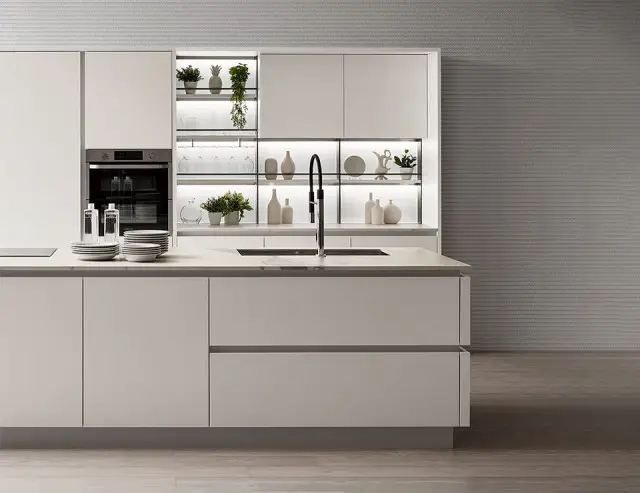 Check out https://www.scavolini.com/ww/ for more information on this brand
 Love the Italian Aesthetic?
We can help you figure out whether it's the right fit for your specific space — and if the budget doesn't stretch to imported Italian, we know how to get you that quality of finish with the right specifications. Let's talk.
Start the Conversation → 925-937-4200
Toupin Construction
Ready to start your remodel?
Whether you're dreaming of a new kitchen, a spa-worthy bathroom, or a whole-home transformation — we’d love to hear about your project. Reach out and let's talk.
‹ Back