

By using our website, you agree to the use of cookies as described in our Cookie Policy
Blog
The Kitchen Remodel Budget Game Plan: How to Land on a Number That Actually Works
QUICK ANSWER
Most East Bay kitchen remodels run $40,000–$120,000, or roughly 5–15% of your home's value depending on scope.
Keep reading for the step-by-step game plan we walk clients through to land on a number that actually fits their project — and their life.
In This Post
The Kitchen Remodel Budget Game Plan: How to Land on a Number That Actually Works
By Candi · Toupin Construction, Walnut Creek
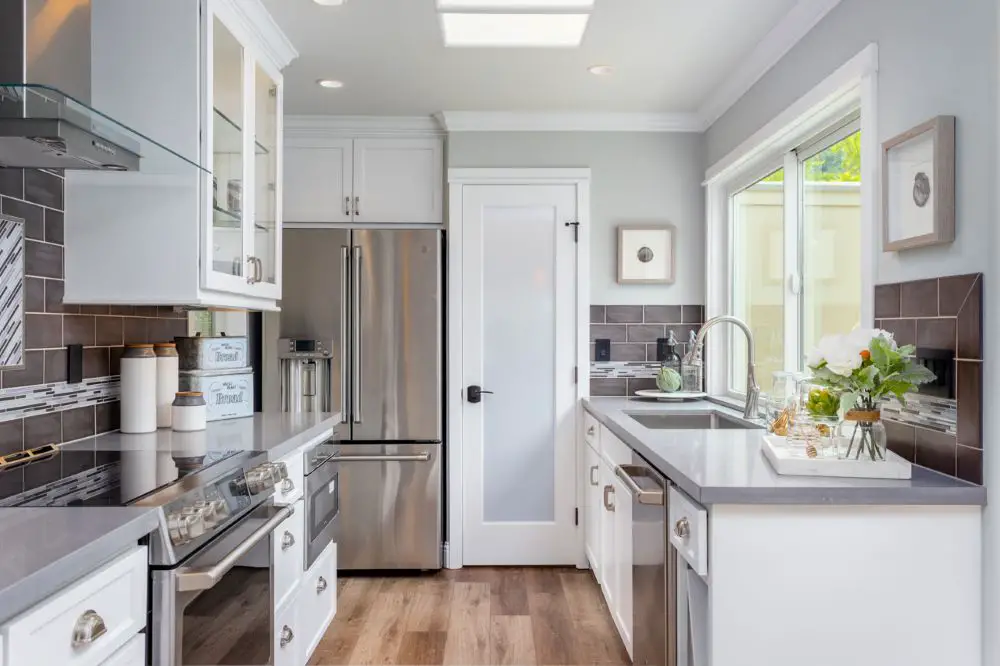
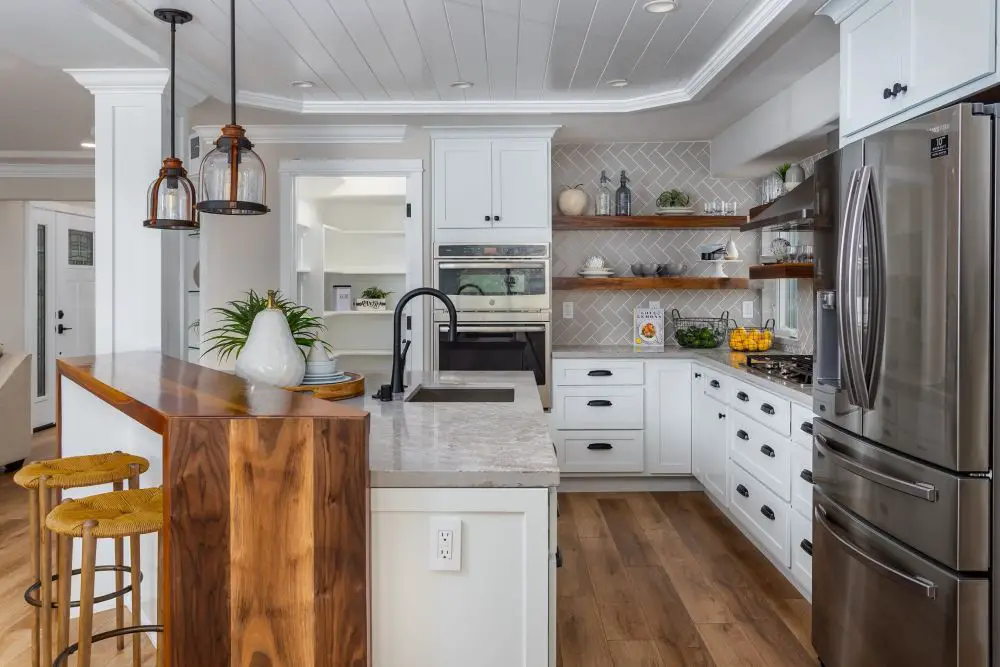
This remodeled galley kitchen features crisp white shaker cabinetry, quartz countertops, a gray subway tile backsplash with accent mosaic trim, stainless steel appliances, and a skylight that fills the space with natural light.
Where Most Budgets Go Wrong
A couple in Walnut Creek called us a few years back with a number in mind: $35,000. They'd seen a kitchen online that looked just like what they wanted, and that's what the article said it cost. We went out, looked at their 1970s layout, and had to have the conversation nobody likes — that number wasn't going to get them what they pictured. Not because we were going to overcharge them, but because their kitchen needed an electrical panel upgrade, the wall they wanted gone was load-bearing, and the cabinets in that photo were semi-custom, not stock.
Here's the thing: they weren't wrong to start with a number. They just started with the wrong kind of number — a finished price from someone else's kitchen, with none of the categories underneath it.
This isn't a list of price ranges to skim and forget. It's the actual sequence we walk clients through before a single wall comes down — the same one that would've saved that Walnut Creek couple a lot of frustration.
Step 1: Decide Your Total Budget
Start with your home's value, not your dream kitchen. Most pros — us included — use a rule of thumb of about 5–15% of your home's value for a kitchen remodel, depending on how much you're changing.
If your home is worth $800,000, that's roughly $40,000 to $120,000. A cosmetic refresh (new countertops, paint, hardware, maybe a backsplash) sits at the low end. A full remodel with custom cabinets, a layout change, and new flooring tends to land at 10–15%.
Toupin Tip
Before you fall in love with a number, ask yourself how long you're staying. If you're remodeling to sell in two years, you don't need the same kitchen as someone who's going to cook 1,000 dinners in it. We've talked clients down from a bigger budget more than once — it's not always about spending more.
Step 2: List the Real Scope
Once you have a ballpark number, write down everything you actually plan to touch. This is the step people skip, and it's the one that protects your budget the most. A scope list isn't a wish list — it's the backbone of your line-item spreadsheet.
Break it into these buckets:
-
Structural/layout — moving walls, opening to the dining room, new windows or doors
-
Systems — electrical upgrades, plumbing changes, HVAC, venting a hood to the exterior
-
Surfaces — cabinets, countertops, backsplash, flooring, paint, trim
-
Fixtures & appliances — sink, faucet, lighting, range hood, fridge, range, dishwasher, microwave
-
Design & permits — designer fees, engineering if needed, permit fees, inspections, HOA fees
Know the Lingo: "Scope"
When we say scope, we just mean the full list of work included in the project — everything you're paying for, written down in plain language. A budget without a scope is just a wish. A budget with a scope is a plan.
Step 3: Break the Budget Into Categories
Now take your total number and split it across categories. This table is a starting template — not a rule. Every kitchen shifts these percentages around depending on what you're prioritizing.
|
Category |
Typical Share of Budget |
Example on a $60,000 Budget |
|
Cabinets |
29–35% |
$17,400–$21,000 |
|
Labor |
15–20% |
$9,000–$12,000 |
|
Appliances |
10–15% |
$6,000–$9,000 |
|
Countertops |
10–15% |
$6,000–$9,000 |
|
Flooring |
5–10% |
$3,000–$6,000 |
|
Lighting & electrical |
5–10% |
$3,000–$6,000 |
|
Plumbing & fixtures |
4–8% |
$2,400–$4,800 |
|
Design |
4–8% |
$2,400–$4,800 |
|
Misc. (backsplash, paint, hardware) |
1–5% |
$600–$3,000 |
|
Contingency |
15–20% |
$9,000–$12,000 |
Notice cabinets and labor together are usually half your budget. That's normal — and it's also where most "we went over budget" stories start, because people price the fun stuff (tile! fixtures!) before they price the boring stuff (labor, electrical).
Step 4: Get Real East Bay Numbers
Percentages are a planning tool, not a price. Once you have your categories, it's time to swap those percentages for actual quotes from people who work in Walnut Creek, Lafayette, Danville, Orinda, and the rest of the East Bay.
A few things worth pricing separately rather than guessing:
-
Cabinets — get pricing across tiers: stock from a big-box store, semi-custom, and a local custom shop. Ask what's included (delivery, install, crown molding, end panels, hardware) because "cabinet price" alone can be misleading.
-
Countertops — quartz, natural stone, and laminate can vary wildly per square foot. Get the same quote format from each so you're comparing apples to apples.
-
Appliances — price as a package. Big-box stores and local showrooms often bundle a fridge, range, dishwasher, and microwave for less than buying each separately.
-
Trade work — get multiple quotes for demo, electrical, plumbing, drywall, flooring, and finish carpentry, even if you're hiring a general contractor for the whole job. It helps you sanity-check the GC's numbers.
Toupin Tip
We see a lot of Rossmoor kitchens where the cabinet layout looks simple — but the concrete slab construction and aluminum wiring common in those units mean the "boring" categories (electrical, in particular) end up costing more than the finishes. If you're in a Rossmoor unit, don't shortchange that line item before you've had someone look at your panel and wiring.
Step 5: Build in a Real Contingency
Every kitchen has surprises once the walls open up — especially in East Bay homes from the '60s and '70s, where past owners' DIY decisions are still hiding behind the drywall. We've found layers of flooring that told the whole history of a house, and wiring that hadn't been touched since the Carter administration.
Plan to set aside 15–20% of your total budget as a contingency — not a "nice to have," but money you genuinely expect to spend. Then split your wish list in two:
-
Must-haves — functional fixes, safety issues, layout changes that solve a real problem
-
Nice-to-haves — higher-end appliances, special tile, custom inserts, the extras
If the contingency goes unused (it happens more than you'd think), that money rolls straight into your nice-to-have list at the end — better hardware, under-cabinet lighting, the little things that make a kitchen feel finished.
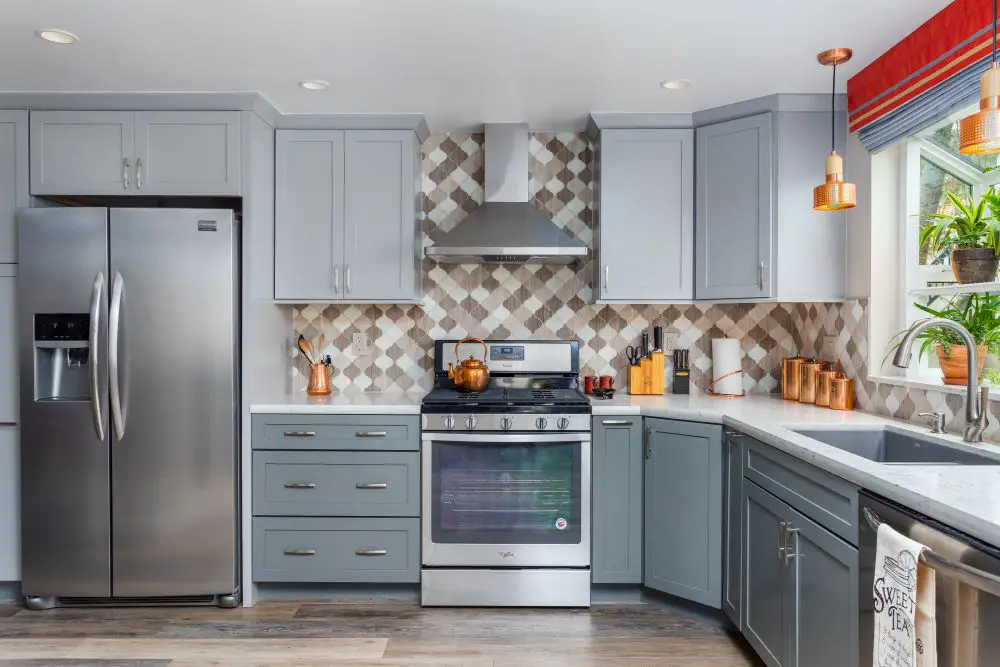
A stylish kitchen remodel showcasing soft gray shaker cabinets, a decorative geometric tile backsplash, stainless steel appliances, quartz countertops, and copper accents that add warmth and character.
Step 6: Decide What You'll DIY
Labor is one of the biggest levers in your whole budget, so it's worth being honest with yourself here.
|
Usually Fine to DIY |
Hire It Out |
|
Painting |
Electrical |
|
Hardware installation |
Plumbing |
|
Simple backsplash |
Structural work |
|
Demo (with proper precautions) |
Gas line work |
|
Some flooring, if you're comfortable |
Complex tile or finish carpentry |
If you act as your own general contractor — managing the trades yourself instead of hiring a GC — you can save the markup, but you take on the scheduling, the problem-solving, and the risk when something doesn't line up. We've stepped in to finish more than one "we'll just manage it ourselves" project, and it's almost never about the work itself. It's about the hours nobody budgeted for.
Step 7: Pick a Funding Plan & Track It
How you pay for the remodel should fit your broader financial picture, not just this project. Common options include cash savings, a HELOC, a cash-out refinance, or a personal loan — each with different rates and fees worth comparing before you commit.
However you fund it, build a simple spreadsheet with three columns: Budgeted, Quoted, and Actual. Revisit it at every major decision point — when you order appliances, order cabinets, pick countertops — so you catch the slow creep before it becomes a problem at the finish line.
Know the Lingo: "Death by a Thousand Upgrades"
This is what we call it when nothing on its own blows the budget — just a slightly nicer faucet here, an upgraded hood there — but by the time you're done, you're 20% over and can't point to one decision that caused it. Tracking budgeted vs. actual as you go is the cure.
Real Project: Rossmoor Galley Kitchen
A Rossmoor homeowner came to us wanting to update a tight galley kitchen — original cabinets, laminate counters, and a layout that hadn't changed since the building went up. Their starting budget was $45,000, based on a number a friend in a different mutual had mentioned.
Once we got into the scope, two things shifted the number. First, the aluminum wiring in the unit needed to be addressed as part of any electrical work — not optional, and not something the friend's unit had needed. Second, because it's concrete slab construction, relocating the sink meant core drilling rather than a simple pipe move, which changed the plumbing line item.
The final number landed closer to $58,000. The cabinets stayed mostly the same layout (Mutual approval is much easier when you're not moving plumbing walls), but we used the savings from keeping the footprint to upgrade to a quieter ventilation fan — a real consideration in Rossmoor's quiet-hours culture.
Spec breakdown:
-
Semi-custom KraftMaid cabinets, existing layout retained
-
Quartz countertops
-
Electrical panel and wiring updated to current code
-
Quiet-rated range hood ventilation
-
New LVP flooring throughout
The Whole-Budget Checklist
-
Set a total budget using 5–15% of your home's value as a starting point
-
Write out your full scope — structure, systems, surfaces, fixtures, design/permits
-
Split your budget into categories using the percentage table as a starting point
-
Get real local quotes for cabinets, countertops, appliances, and trade labor
-
Set aside 15–20% as a genuine contingency, not a maybe
-
Decide what you'll DIY and what gets hired out — be honest about your time
-
Pick a funding plan and track budgeted vs. quoted vs. actual the whole way through
Frequently Asked Questions
How much does a kitchen remodel cost per square foot in the East Bay?
Most East Bay kitchen remodels run somewhere between $150 and $400 per square foot, depending on the level of finishes and whether the layout is changing. A cosmetic update sits at the lower end; a full remodel with structural changes and custom cabinetry sits at the higher end.
What percentage of a kitchen remodel budget should go to cabinets?
Cabinets typically take up 29–35% of a kitchen remodel budget — usually the single largest category, often close to the size of the labor and appliance budgets combined.
How much contingency should I budget for a kitchen remodel?
We recommend 15–20% of your total budget as a contingency, especially in older East Bay homes where electrical, plumbing, or structural surprises are common once walls open up.
Is it cheaper to keep my kitchen's current layout?
Generally yes. Keeping plumbing and electrical in their existing locations avoids the cost of rerouting lines — especially significant in slab-construction homes like those in Rossmoor, where moving a sink can mean core drilling concrete.
Ready to turn your number into a real plan?
Every kitchen is different, and so is every budget. If you want to walk through your space and get honest numbers for your specific home, give us a call at 925-937-4200 — no pressure, just an honest conversation about what your kitchen actually needs.

Toupin Construction
Ready to start your remodel?
Whether you're dreaming of a new kitchen, a spa-worthy bathroom, or a whole-home transformation — we’d love to hear about your project. Reach out and let's talk.
‹ Back
Comments