


By using our website, you agree to the use of cookies as described in our Cookie Policy
Blog
What Plumbers Do in a Remodel
Series: What the Trades Actually Do · Post 5 of 8
Everything in a bathroom remodel works around where the water goes. Everything.
By Candi Toupin ·Toupin Construction · Walnut Creek, CA·CA Lic #626819·Behind the Scenes Plumbing & Fixtures East Bay
We were demoing a bathroom in Orinda a couple of years back — a full gut, everything out — and one of the first conversations Tim had with the homeowner was about the toilet location. She wanted to move it. Just eighteen inches to the right, to open up the layout. Simple enough, right?
Not simple. Moving a toilet means moving the drain. Moving the drain means cutting into the slab or the subfloor, repositioning the flange, rerouting the pipe, and making sure the new drain still has the right slope to move waste by gravity. That eighteen-inch shift added meaningful cost and a full extra day of plumbing work to the project.
She made the call to do it anyway — and it was the right call for the layout. But understanding why it cost what it did made the conversation a lot easier. That's what this post is about.
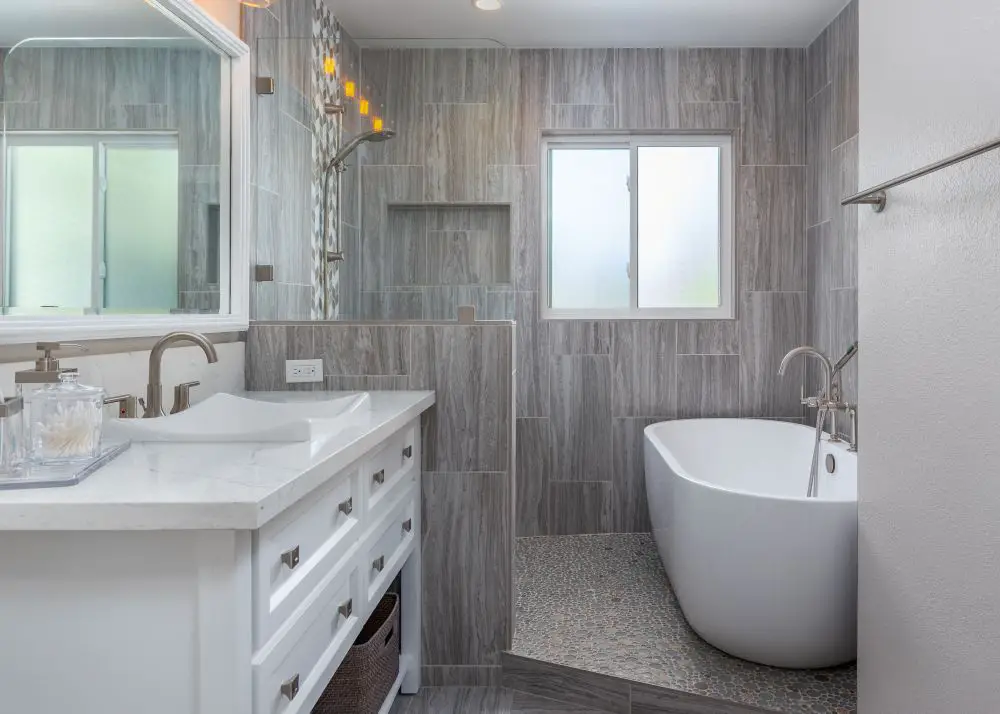 A modern bathroom remodel featuring a freestanding soaking tub, gray wood-look porcelain tile, a walk-in shower with a built-in niche, a floating glass partition, white shaker vanity, quartz countertops, and pebble tile flooring. Designed and remodeled by Toupin Construction in the East Bay.
The Two Phases of Plumbing in a Remodel
Like electrical work, plumbing in a remodel happens in two distinct phases separated by walls closing and other trades doing their work. Understanding the phases helps you understand the timeline — and why the plumber can't always just "come back later."
Rough-In Plumbing
Rough-in is everything that goes inside the walls, floors, and ceilings before they're closed up. Supply lines — the pipes that bring hot and cold water to each fixture — get run and stubbed out at the right locations. Drain lines get set and sloped. The shower valve body gets installed in the wall before tile. The tub drain gets set before the tub goes in. All of this has to happen and be inspected before anything closes around it. This is also the phase where most of the expensive decisions live — because changing anything after the walls close means opening them back up.
Finish Plumbing (Trim-Out)
After everything else is done — drywall, tile, cabinets, paint — the plumber comes back to set the fixtures. Faucets, shower heads, toilets, sinks, garbage disposals, water heater connections. This is called the trim-out, and it's what makes the room functional. It's also when you actually see the hardware choices you made during design, which is either very satisfying or the moment you realize you wished you'd picked a different finish.
Trade Term Explained
Drain Slope (Fall)
Drain pipes can't be level — water doesn't move on its own without gravity. Code requires drain pipes to slope a minimum of ¼ inch per foot toward the main drain. This sounds small, but over a long run it adds up, and in a slab foundation or a tight crawlspace, there's not always room to achieve the right slope without significant work. This is exactly why moving a drain — even a short distance — can be a big job.
Why Moving Anything Is Expensive
The most common budget surprise in a bathroom remodel is discovering that the layout change a homeowner wants involves moving plumbing. Here's why it costs what it costs:
-
Slab foundations: Many East Bay homes sit on a concrete slab. Drains in a slab have to be chipped out and repositioned — which means a jackhammer, debris removal, new concrete patch, and drying time before anyone can work over it.
-
Crawlspace access: Homes with a raised foundation are a bit easier — a plumber can sometimes access the drain from below. But crawlspaces in older East Bay homes are often tight, dirty, and full of original cast iron pipe that needs to be cut and replaced in sections.
-
Code compliance: Any time plumbing is moved, it has to be brought up to current code — even if the rest of the system isn't being touched. That can mean upgrading pipe materials, adding cleanouts, or rerouting venting.
-
Inspections: Plumbing that's moved or added requires a rough-in inspection before walls close. If the inspector finds something that needs correction, the timeline shifts.
What the Plumber Does in a Kitchen Remodel
Kitchen plumbing is usually less complex than bathroom plumbing — there's no shower drain or tub to deal with — but it's still a real piece of the project. In a typical kitchen remodel, the plumber handles:
-
Disconnect and reconnect of the sink, faucet, and garbage disposal
-
Supply line upgrades — replacing old galvanized or flex lines with braided stainless
-
Dishwasher supply and drain connections
-
Pot filler installation (if the client wants one — this requires a supply line run to a point above the range, which means opening the wall)
-
Water filter or reverse osmosis system installation
-
Any leak repairs discovered during demo — and in East Bay homes of a certain age, there are often surprises behind the cabinet under the sink
-
-
-
-
"In forty years, I don't think we've opened a wall in a Rossmoor bathroom that didn't have at least one plumbing surprise. Old galvanized pipe, an unexpected valve, a drain that wasn't where the drawings said. The plumber earns their day rate every single time."
A Note for Rossmoor Homeowners
Plumbing in Rossmoor co-ops and condos carries extra considerations. Because units share walls and floors with neighbors, any work involving drains or supply lines typically requires Mutual board approval and must be done by a licensed plumber — not just for code reasons, but because a plumbing failure in a shared building affects more than one household.
The original plumbing in Rossmoor units is mostly from the 1960s and '70s. We frequently find galvanized supply lines that have corroded inside, reducing flow, or cast iron drain lines that are in various states of decline. A bathroom remodel is often the right time to replace these — while the walls are already open — rather than waiting for a failure.
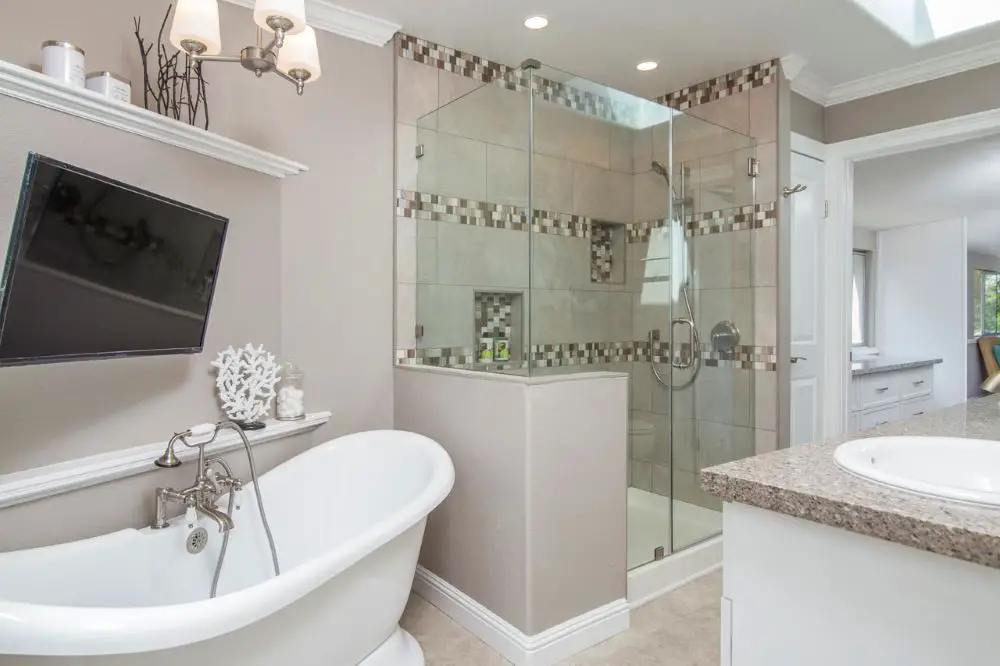 An elegant primary bathroom remodel with a freestanding bathtub, frameless glass walk-in shower, decorative mosaic tile accent bands, granite vanity countertop, and soft neutral finishes. This custom East Bay remodel blends luxury with everyday functionality.
Fixture Selection: The Plumber's Perspective
One thing homeowners don't always realize: fixture selection affects plumbing cost. A freestanding tub requires a floor-mounted filler — which means supply lines run through the floor instead of the wall. A wall-mounted faucet requires the valve body to be inside the wall, with precise placement, before tile goes up. A rain shower head in the ceiling means a supply line has to get there.
None of this is a reason not to choose what you love. It's just worth knowing before the fixtures are ordered so the plumber can plan accordingly — and so there are no surprises when the rough-in starts.
We always encourage our clients to have their fixtures selected before the plumber begins rough-in work. It's one of the things that keeps a remodel on schedule.
What the Trades Actually Do · Full Series
8 posts. 8 trades. Real respect for real work.
-
What a Real Carpenter Does (Not a Handyman)
-
What a Finish Carpenter Is
-
What a Painter Actually Does
Planning a Bathroom or Kitchen Remodel?
Plumbing questions are some of the most common ones we get — and some of the most important to answer before work starts. Let's talk through your project honestly.
Toupin Construction · Walnut Creek, CA · CA Lic #626819
Serving Walnut Creek, Rossmoor, Lafayette, Orinda, Danville & the East Bay

Toupin Construction
Ready to start your remodel?
Whether you're dreaming of a new kitchen, a spa-worthy bathroom, or a whole-home transformation — we’d love to hear about your project. Reach out and let's talk.
‹ Back
Comments