


By using our website, you agree to the use of cookies as described in our Cookie Policy
Blog
The Truth About "The First Number"

Remodeling Tips
The Truth About "The First Number"
Why your remodel quote and your final bill aren't the same document — and why that's not a red flag
Reviewing a remodel quote line by line — Walnut Creek, CA
We've had this conversation more times than we can count. A homeowner calls us, sometimes mid-project with another contractor, sometimes after one, and the question is always some version of the same thing: "How did this go from $45,000 to $58,000? Nobody told me it could do that."
Here's the honest answer, and it's not the answer most people want: in a lot of cases, nobody was hiding anything. The first number was never meant to be the only number. It was a snapshot — based on what was visible, what was decided at that point, and a reasonable guess at everything else. The final number is what happens when the walls come down and reality gets a vote.
We'd rather you know this before your project starts than discover it halfway through demo. So let's walk through where that gap actually comes from, and what you can do to keep it from blindsiding you.
In this post
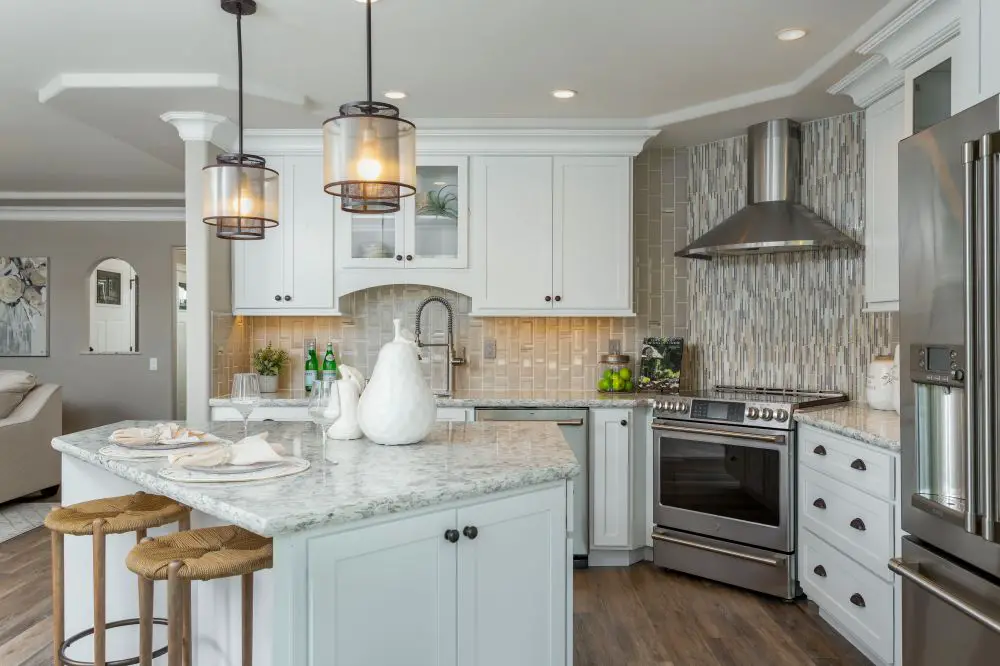
Bright transitional kitchen remodel featuring white shaker cabinets, a large quartz island, stainless steel appliances, pendant lighting, and a decorative mosaic tile backsplash behind the range.
What the "First Number" Actually Represents
Most quotes are built on what a contractor can see during a walkthrough, combined with whatever decisions you've made together up to that point. That means existing finishes, basic measurements, photos, and — for everything still hidden behind drywall, under flooring, or beneath the slab — an experienced, educated guess.
That guess is usually pretty good. After 40 years of opening up East Bay homes, we've got a strong sense of what's likely behind a 1960s Walnut Creek wall versus a 1985 Danville addition. But "strong sense" isn't the same as "confirmed." And if your home is older, has been remodeled before, or shows any signs of water damage or settling, there's a real chance the first number doesn't yet include everything it would take to bring that space up to current code and safety standards — because nobody could see it yet.
When those issues surface mid-project, the cost has to rise to match the real scope of work. Not because the number was wrong on purpose. Because the number was honest about what was knowable at the time, and the project just got more knowable.
Let's explain: "Allowance"
An allowance is a placeholder dollar amount built into your quote for an item you haven't picked out yet — like "$15 per square foot for tile" before you've chosen the actual tile. If you pick something that costs more than the allowance, the difference gets added to your total. Allowances aren't a trick — they're how a contractor can give you a number before every single selection is finalized. The key is knowing which line items are allowances so they don't surprise you later.
Hidden Conditions You Can't See at the Walkthrough
Once demolition starts, we open up things nobody could fully confirm from a walkthrough — and in older East Bay homes, we open up something on almost every job. Old wiring that was "fine" until you could actually see it. Plumbing that's undersized, corroded, or both. Rot behind a shower wall that never showed a single sign on the surface. Sometimes mold. Sometimes termite damage. And more often than we'd like to admit, prior work from a previous owner — or a previous contractor — that simply doesn't meet code.
Here's the part that surprises people most: bringing those systems up to code isn't optional, and it's not up to us to decide whether to mention it. If we find unsafe wiring or structural damage during a remodel, we're required to address it. That work is outside the original quote because it wasn't in the original quote — it was invisible until the walls came down.
This is one of the biggest reasons subfloor condition matters so much before any new flooring goes in — we've written more about that in Why Your Subfloor Matters More Than Your Floor. And if you're curious what tends to drive electrical surprises specifically, especially in homes with older panels or aluminum wiring, take a look at What Really Drives Electrical Costs in a Remodel.
A note for our Rossmoor neighbors
Rossmoor units come with their own version of this conversation. Aluminum wiring is common in units built during the era most Rossmoor homes went up, and it's the kind of thing that often can't be fully assessed until an electrician is actually inside a wall. Concrete slab construction means plumbing and electrical changes sometimes have to be rerouted through walls or ceilings rather than under a floor, which can change both the scope and the cost once we're in there. And because most lighting, plumbing, or layout changes require Mutual approval before work starts, any mid-project change can also mean a pause while paperwork catches up — so building extra time, not just extra budget, into a Rossmoor remodel is smart.
"The number one driver of cost overruns in a remodel often isn't the contractor — it's scope creep."
Scope Creep: When the Project Quietly Grows
If hidden conditions are the surprise nobody saw coming, scope creep is the surprise everybody saw coming — it just didn't feel like a big deal at the time.
Scope creep happens when you decide, partway through the project, to upgrade a finish, move a wall or a plumbing line, make the island a little bigger, add built-ins you hadn't planned on, or tack on a "while you're here" project — a powder room refresh, say, since the plumber's already on site anyway.
Every one of those decisions feels small in isolation. But each one has a ripple effect. A different tile choice might require new trim details. A bigger range often needs upgraded ventilation to match. Reworking a layout, even slightly, can mean electrical and drywall work that was never part of the original plan. None of those extras were priced into your quote — because none of them existed when the quote was written. The final bill simply grows to reflect the new wish list, item by item, decision by decision.
We're not saying don't make those changes. Some of the best parts of a finished remodel come from a "while we're in here" decision. We're saying: know that it's happening, and know roughly what it costs, before you say yes. If you're still in the bidding phase and want to understand how contractors structure these numbers in the first place, our post on What to Ask For When You're Getting Contractor Bids is a good place to start.
Materials, Permits, and the "Small" Line Items
Your quote is built on material costs at the time it's written — but prices for lumber, tile, stone, and fixtures move, sometimes more than people expect, especially for special orders or imported products. If you change a selection after it's already been ordered, you might be looking at restocking fees, rush shipping charges, or extra labor if the new material is more complex to install than the original.
Then there's the category we'd call the "small stuff that isn't actually small": permits, inspections, dumpster and disposal fees. If you're in the East Bay, permit costs vary quite a bit by city and project type, and they're worth understanding up front rather than as a line item that appears later — we break that down in What Permits Actually Cost in the Bay Area.
And don't forget the costs that live outside the contract entirely. If your kitchen is out of commission for eight weeks, that's eight weeks of eating out more, or eating differently, or — for bigger projects — possibly a short-term living adjustment. None of that shows up on a contractor's invoice, but it's very real money, and it quietly pushes the "real" cost of a remodel above whatever the quote ever reflected.
Let's explain: "Change order"
A change order is a written update to your contract — it documents a change in scope, cost, or timeline after the original agreement is signed. If you decide to upgrade a faucet, move an outlet, or add a closet, a change order is what turns that decision into something both you and your contractor have agreed to in writing, including the price. A good change order process is one of the best tools you have for keeping a remodel's budget honest.

Elegant bedroom design with soft gray walls, mirrored closet doors, layered bedding, decorative lighting, and neutral furnishings that create a calm and inviting retreat.
How to Protect Your Budget (and Your Sanity)
You can't eliminate surprises in a remodel — anyone who promises you a fixed number with zero chance of change either hasn't opened up enough walls, or isn't planning to tell you when they do. But you can plan for the surprises, and that planning is what separates a stressful remodel from one that's just... a remodel.
|
Cost Driver |
Why It Happens |
How to Plan For It |
|
Hidden conditions |
Old wiring, plumbing, rot, mold, or non-code prior work found after demo |
Build in a contingency fund; ask how unexpected findings get communicated |
|
Scope creep |
Mid-project upgrades, layout changes, or "while you're here" add-ons |
Track changes with written change orders; pause before saying yes |
|
Material price shifts |
Lumber, tile, stone, and fixture costs fluctuate, especially special orders |
Order early when possible; avoid changing selections after ordering |
|
Permits & fees |
Permit, inspection, and disposal costs vary by city and project |
Ask for these as separate line items up front, not estimates buried in the total |
|
Living adjustments |
Eating out more, temporary housing during major renovations |
Factor an out-of-pocket monthly estimate into your overall budget |
Budgeting Tip
Most experienced pros recommend setting aside 10–20% of your total project budget as a contingency fund — specifically earmarked for hidden issues or for changes you decide to make along the way. Think of it less as "extra money you might not need" and more as "the part of the project that hasn't been priced yet, because it can't be."
Before you sign anything, ask your contractor a few direct questions: What's included in this number, specifically? Which line items are allowances, and what happens if I go over them? How are change orders handled — verbally, or in writing, with a price attached before work continues? And if you find something unexpected behind a wall, how and when will you tell me?
A transparent, detailed contract paired with a realistic contingency cushion won't make your remodel immune to surprises. But it makes those surprises a lot less shocking — because you built room for them into the plan from day one. If you want to read about the kinds of decisions that tend to cause the most regret after the fact, our post on The Most Common Remodel Regrets (And How to Avoid Them) covers a lot of the same ground from a different angle.
Frequently Asked Questions
Why did my remodel cost more than the original quote?
Usually it's some combination of three things: hidden conditions discovered after demolition (like old wiring or rot), scope creep from mid-project changes, and shifts in material or permit costs. None of these mean the original quote was wrong — it reflected what was knowable at the time it was written.
How much should I budget as a contingency for a remodel?
Most professionals recommend setting aside 10–20% of your total project budget specifically for unexpected issues or mid-project changes. The more uncertainty there is about what's behind your walls — older homes, prior remodels, signs of water damage — the closer you should plan toward the higher end of that range.
What's the difference between a quote and a final cost?
A quote is based on visible conditions, agreed-upon decisions, and reasonable allowances for items not yet selected. The final cost reflects everything that was discovered or decided along the way — including hidden conditions, change orders, and any selections that came in above their allowance.
Can a contractor just skip code-required repairs to keep costs down?
No. If a licensed contractor finds unsafe wiring, structural damage, or other code violations during a remodel, they're required to address it. This work falls outside the original quote because it wasn't visible or confirmable when the quote was written — but it isn't optional once it's found.
How can I avoid scope creep during my remodel?
Make as many decisions as possible before work begins, and treat every mid-project change — even small ones — as a written change order with a price attached before work continues. It's much easier to say no to a small upgrade in the moment than to absorb a much larger bill at the end.
Want a Quote That Tells You the Whole Story?
We believe in walking through exactly what's included, what's an allowance, and how we'll handle anything we find once the walls come down. If you're planning a remodel in Walnut Creek, Danville, Lafayette, Orinda, Alamo, or Rossmoor, let's have that conversation early — no obligation, just an honest one.
Or give us a call: 925-937-4200 · CA Lic #626819

Toupin Construction
Ready to start your remodel?
Whether you're dreaming of a new kitchen, a spa-worthy bathroom, or a whole-home transformation — we’d love to hear about your project. Reach out and let's talk.
‹ Back
Comments