

By using our website, you agree to the use of cookies as described in our Cookie Policy
Blog
7 Remodeling Trends We're Actually Seeing in 2025
Remodeling Tips · Design Trends
7 Remodeling Trends We're Actually Seeing in 2025
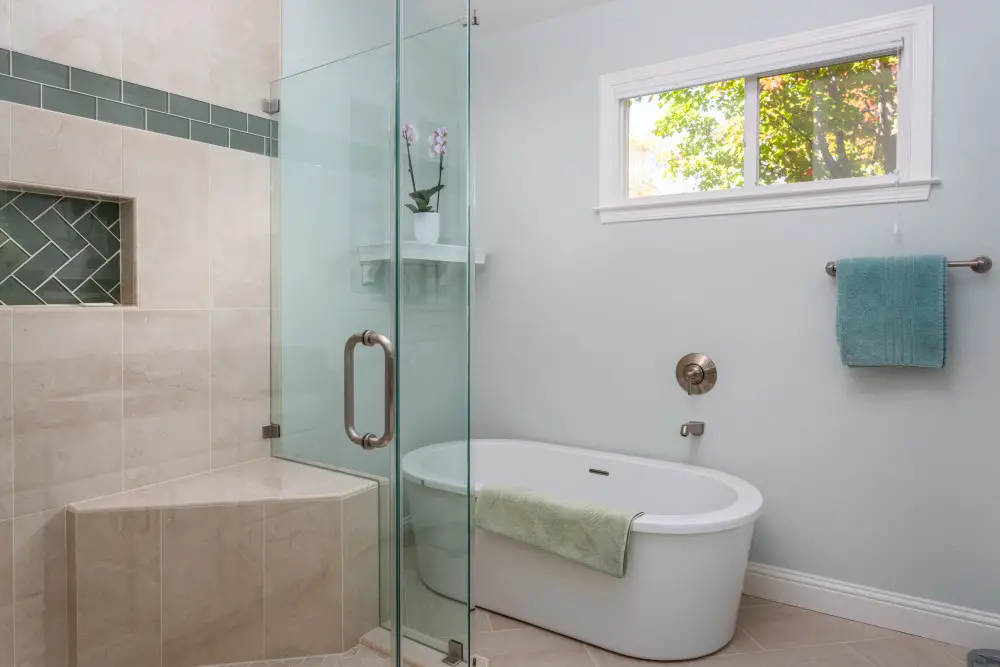
A bright bathroom featuring a freestanding tub, glass-enclosed shower, and natural light from a window, creating a clean and calming space.
Every January, the design world publishes its trend forecasts. Most of them are beautiful and completely disconnected from what homeowners in Walnut Creek and Rossmoor are actually asking us to build. So here's our version — not predictions, but patterns. What I'm seeing on the jobsite, in the design meetings, and in the calls we're getting heading into 2025.
I want to be clear about one thing upfront: a trend is only worth your time if it solves a real problem or makes your home better to live in. Some of what's showing up on Instagram right now is genuinely useful. Some of it is going to look dated by 2027. I'll tell you which is which.
1
Sustainability That Actually Makes Sense (Not Just Sounds Good)
Eco-friendly design has been "trending" for fifteen years, which means it's not really a trend anymore — it's just the direction things are going. What's different in 2025 is that the options are better and the costs have come down enough that choosing sustainable materials doesn't automatically mean paying a premium.
We're seeing more clients ask about low-VOC paints, reclaimed wood accents, and energy-efficient appliances as baseline requirements — not nice-to-haves. The conversation has shifted from "can we do sustainable?" to "what's the most durable sustainable option here?"
Trade Term Explained"Low-VOC" means low volatile organic compounds — the gases that off-gas from conventional paints, adhesives, and finishes after they're applied. High-VOC products are the reason a freshly painted room smells so strongly. Low-VOC versions have improved dramatically in quality and durability, and they're worth the switch whether you care about the environment or just want to move back into your kitchen faster.
What We're SeeingClients requesting low-VOC paint as standard, interest in reclaimed wood floating shelves, and more appliance conversations centered on energy ratings alongside style.
Worth Doing If…You're already repainting or replacing appliances. The incremental cost of going low-VOC or Energy Star is usually small — and the long-term utility savings are real.
2
Smart Home Features — The Ones That Are Actually Worth It
Smart home technology has a reputation problem: it's either underwhelming (a light switch that needs a firmware update) or overwhelming (a system that requires a consultant to operate). But there's a middle tier that's genuinely useful, and that's what people are actually installing in 2025.
The things we're seeing clients integrate most often: smart thermostats, under-cabinet lighting on app-controlled dimmers, and — especially in Rossmoor — video doorbells and keypad entry systems that simplify access for family members or caregivers.
What We're SeeingSmart thermostats and lighting controls are the most popular entry points. Video doorbells are nearly universal in new remodels. Full whole-home automation is still a small fraction of projects.
Worth Doing If…You're already opening walls for electrical work. That's the time to add smart switches and dimmers — the marginal cost is low when the walls are already open.
Rossmoor-Specific NoteFor condo units in Rossmoor, any electrical work beyond direct replacement requires Mutual board approval and typically City of Walnut Creek permits. We handle that coordination — but it's worth knowing going in so the timeline expectations are realistic.
3
Kitchens That Do More Than Cook
The "kitchen as command center" idea isn't new, but the way it's showing up in remodel requests has gotten more specific. We're not talking about a peninsula with bar stools — we're talking about intentional zones: a dedicated homework or laptop spot, a coffee station with its own outlet cluster, a charging drawer built into the island.
The driving question is: how many things actually happen in this kitchen every day, and is the layout built for all of them? Most kitchens built before 2000 were designed around one activity. Modern family life doesn't work that way.
What We're SeeingIslands with USB-C outlets and drawer charging stations. Dedicated coffee zones with their own circuit. Pantry walls that include desk nooks for work-from-home days.
Worth Doing If…You're planning a layout change anyway. Adding outlet clusters and purpose-built zones is much easier (and cheaper) when the walls are already open. Retrofitting later is possible but messier.
We wrote a full post on this if you want to go deeper: Understanding Kitchen Zones: A Guide to an Efficient Cooking Space.
4
Color Is Back — and It's Staying
The all-white kitchen had a good run. Fifteen years, roughly. But the era of greige and white oak and "agreeable gray" is giving way to something with more conviction. Deep navy cabinet lowers. Olive green islands. Warm terracotta on a feature wall. Clients who would have chosen white three years ago are now asking, "what if we did something with color?"
The key shift is where the color is landing. People aren't painting every surface — they're choosing one or two elements to make a statement and keeping everything else quieter. That's actually smart design, and it works especially well in smaller kitchens where you want visual interest without things feeling heavy.
"The clients who tell me they're scared of color almost always end up choosing something bold — they just need to see it mocked up first. Color fear is usually just unfamiliarity."
What We're SeeingDeep greens and navies on lower cabinets with white or light uppers. Warm-toned kitchen islands as accent pieces. Painted interior niches and alcoves in bathrooms.
Worth Doing If…You're already painting cabinets as part of a reface or replacement. The cost difference between white and a custom color is usually minimal — the commitment is psychological, not financial.
If you're weighing color vs. neutral on backsplash specifically, we covered that directly here: Bold Backsplashes vs. Timeless Neutrals: How Do You Choose?
5
The Spa Bathroom — But Make It Practical
Bathroom remodels have always been popular, but the intent behind them has shifted. People aren't just asking for a cosmetic update — they're asking for a bathroom that feels restorative. Walk-in showers with bench seating. Rain-style showerheads. Warm lighting on dimmers. Natural stone or stone-look tile instead of bright white ceramic.
What I appreciate about this trend is that most of it is achievable without a gut renovation. Swapping a showerhead, adding a dimmer switch, and retiling the shower surround can transform how a bathroom feels to use every morning.
Trade Term Explained"Rain showerhead" refers to a wide, ceiling-mounted or high-wall fixture that delivers water in a broad, gentle downpour — mimicking rain rather than a concentrated stream. California caps shower flow at 1.8 gallons per minute for new fixtures, but rain-style heads are designed to deliver a good experience within that limit. Don't let the GPM spec scare you off — the newer fixtures are genuinely good.
What We're SeeingLarge-format tile in warm grays and natural stone tones. Walk-in showers replacing tub-shower combos (especially in second bathrooms). Dimmers and layered lighting replacing single overhead fixtures.
Worth Doing If…Your current bathroom works functionally but doesn't feel good to be in. Sometimes the gap between "functional" and "restorative" is a showerhead, a dimmer, and the right tile — not a full gut.
Rossmoor-Specific NoteRossmoor condos built in the 1960s–70s often have smaller bathroom footprints. We've found that large-format tile (12x24 or bigger) can actually make a compact bathroom feel more spacious by reducing the number of grout lines your eye has to process. It's one of those cases where the "spa" choice is also the practical one.
6
Dark Wood Is Back — and It's Earned It
For a decade, the default was light. Blonde oak. White maple. Whitewashed everything. That era isn't over, but there's a countermovement happening: rich, dark wood finishes in walnut and mahogany tones showing up in cabinets, floating shelves, and furniture-style kitchen islands.
The reason it works now is context. Paired with lighter walls, quartz counters, or white subway tile, dark wood reads warm and grounded instead of heavy and dated. The 1970s dark kitchen was dark everywhere. The 2025 version is strategic.
What We're SeeingWalnut-toned cabinet doors with white or light gray uppers. Dark wood floating shelves against lighter tile backsplashes. Furniture-style kitchen islands in warm, deep stains.
Worth Doing If…Your kitchen already gets good natural light. Dark wood in a low-light kitchen can still feel heavy — natural light is what makes the contrast sing.
If you're choosing between wood tones and countertop materials at the same time, this post breaks it down: The Ultimate Guide to Countertop Materials: Pros, Cons, and Costs.
7
Layered Lighting — The One Upgrade That Changes Everything
I'll say it plainly: lighting is the most underinvested part of most remodels, and it's also the one that has the biggest impact on how a finished space feels. A beautiful kitchen with bad lighting still feels off. A modest kitchen with thoughtful lighting feels like home.
Layered lighting means three types working together: ambient (the overhead general light), task (under-cabinet LEDs, island pendants over the prep zone), and accent (inside glass-front cabinets, above upper cabinets, inside niches). You don't need all three in every space, but you do need to think about them intentionally.
Trade Term Explained"Kelvin temperature" is how lightbulbs are measured for warmth vs. coolness. Lower Kelvin (2700–3000K) is warm and amber — that's what makes a space feel cozy and residential. Higher Kelvin (4000K+) is cool and white — closer to daylight, better for task work but harder to relax under. Most kitchen remodels work best with 2700–3000K for ambient and task lighting. We almost always recommend dimmers so you can adjust.
What We're SeeingDimmer switches on nearly every circuit in new remodels. Under-cabinet LED tape lighting as standard. Pendant lights over islands sized more intentionally — taller, more architectural, fewer but bigger.
Worth Doing If…You're doing any electrical work at all. Adding a dimmer and rethinking your fixture placement while the walls are open is one of the highest-ROI moves in a remodel.
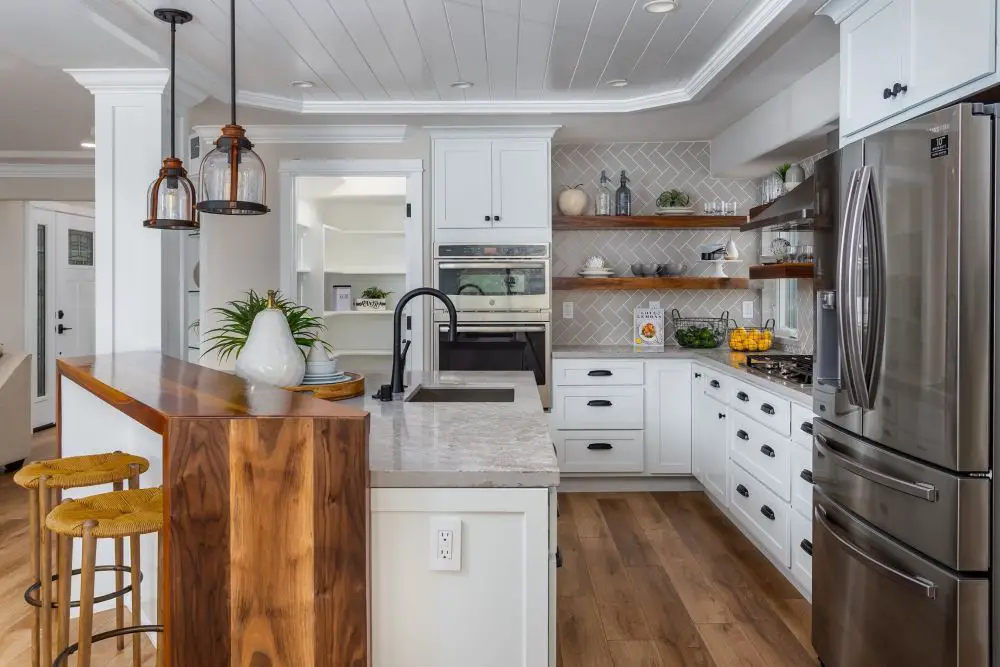
A modern kitchen with white cabinetry, a wood-accent island, and open shelving, blending warmth and functionality in an open layout.
Quick Reference: 2025 Trends Worth Your Attention
Frequently Asked Questions
Which 2025 trend gives the best return on investment?
Lighting, consistently. It's the most underbudgeted line item in most remodels and the one that changes how every other decision looks. After that: kitchen and bathroom updates have the strongest resale returns of any remodeling category, especially in the East Bay market.
I'm in a Rossmoor condo — which of these trends actually apply to me?
Most of them, with some adjustments for scale. Spa-style bathroom updates, layered lighting, and bold cabinet colors translate perfectly to condo bathrooms and kitchens. Smart home features require permit coordination, so factor that into your timeline. Outdoor living (which we intentionally left off this list) is not relevant to most Rossmoor units.
Are dark cabinets hard to keep clean?
They show fingerprints and water spots more readily than white — that's just true. The practical fix is a matte or satin finish rather than high-gloss, which diffuses light and hides smudges better. Most clients who go dark don't regret it; they just wipe their cabinets down more consciously.
What's the best place to start if I want to incorporate some of these trends without doing a full remodel?
Paint and lighting. You can repaint cabinets, swap fixtures, and add dimmers without touching a single wall. That combination — new cabinet color, updated hardware, better lighting — is what makes a kitchen look remodeled even when the bones haven't changed. We've seen it genuinely transform spaces for a fraction of a full renovation cost.
Ready to Talk About Your Project?
Whether you're planning a full remodel or trying to figure out where to start, we're happy to walk through it with you — no pressure, no pitch. Just an honest conversation about what makes sense for your home. Call us at 925-937-4200 or request a free consultation below.
Request a Free Consultation See Our Work
Toupin Construction
Ready to start your remodel?
Whether you're dreaming of a new kitchen, a spa-worthy bathroom, or a whole-home transformation — we’d love to hear about your project. Reach out and let's talk.
‹ Back
Comments