

By using our website, you agree to the use of cookies as described in our Cookie Policy
Blog
Kitchen Zones: How to Organize Your Kitchen So It Actually Works
Kitchen Remodeling · Deep Dive
Kitchen Zones: How to Organize Your Kitchen So It Actually Works
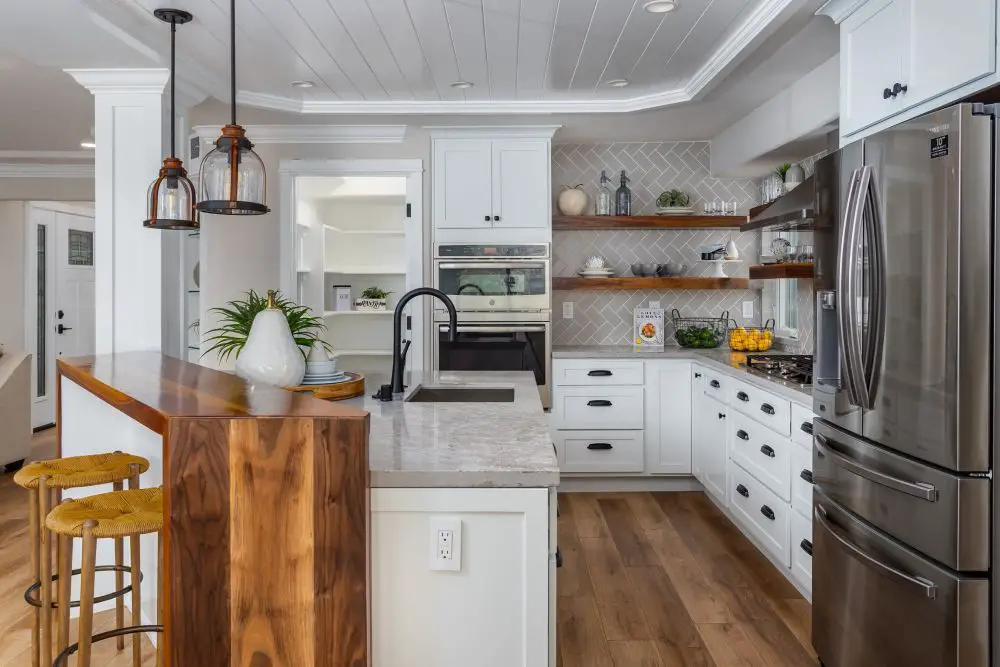
This image presents a bright and airy kitchen with white cabinetry, a contrasting wooden island, and stainless steel appliances. Open shelving, decorative elements, and natural light create a welcoming and functional space, perfect for modern living.
Key Takeaways
- Kitchen zones are task-based areas — prep, cooking, cleaning — that eliminate wasted steps and kitchen chaos.
- The classic layout puts prep between the fridge and sink, cooking near the stove, and cleaning around the dishwasher.
- Specialty zones like a baking station, coffee bar, or kid-friendly drawer make a huge real-life difference.
- You don't need a full remodel to start zoning — but if you're remodeling, zone planning is non-negotiable.
- Good zoning is the reason some kitchens feel effortless and others feel like an obstacle course.
We were redesigning a kitchen in Rossmoor last year — solid bones, decent layout, but the homeowner kept describing the same problem: "I don't know why, but cooking dinner feels exhausting." We walked through it with her and figured it out in about three minutes. Her prep area was across the kitchen from her sink. Her spices were in a cabinet behind the stove. Her trash can was tucked into a corner that required a full pivot mid-cook. Nothing was wrong with her kitchen — everything was just in the wrong place.
That's what kitchen zoning fixes. It's not a design trend. It's just logic: put things where you actually use them, group tasks together, and stop treating your kitchen like a storage room with an oven in it.
What Is Kitchen Zoning?
Kitchen zoning means dividing your kitchen into dedicated areas based on what you do there — not just what fits where. Instead of organizing by cabinet type or drawer size, you're organizing by task. Prep work happens in one spot. Cooking happens in another. Cleanup lives in its own world.
Jargon Explained
Work triangle — the old-school design rule that says your fridge, stove, and sink should form a triangle to minimize steps. It's a fine starting point, but modern families with multiple cooks (or a 10-year-old who makes his own lunch) need something more flexible. That's where zones come in. Think of zones as the evolved version of the work triangle.
When your kitchen is organized by zone, it becomes more intuitive to navigate — even for people who don't cook in it every day. Guests know where things live. Kids can help without getting underfoot. Two people can cook at the same time without doing the kitchen shuffle. It's one of those things that sounds minor until you experience it and realize it's actually a big deal.
The Core Three Zones
Every kitchen — no matter the size or layout — should have these three. If even one of them is missing or placed poorly, you'll feel it every single time you cook.
Zone 1
The Prep Zone
Where you wash, cut, chop, mix, and measure before anything hits the heat.
Lives between sink & fridge
Zone 2
The Cooking Zone
Everything that happens around the stove, oven, and microwave.
Centered on the cooktop
Zone 3
The Cleaning Zone
The rinse, scrub, and put-away world that lives around your sink and dishwasher.
Sink + dishwasher area
Zone 1: The Prep Zone
This is where cooking actually starts — before the burner ever gets turned on. You're rinsing vegetables, breaking down proteins, measuring spices, and doing all the mise en place (fancy French for "having your act together before you cook") that separates a smooth dinner from a chaotic one.
Where it should live: Between the refrigerator and the sink. You pull food from the fridge, move it to the prep surface, and rinse it over the sink — that's the natural sequence, and your layout should respect it.
What it needs: A prep surface of at least 30–36 inches, with cutting boards, knives, mixing bowls, and measuring tools within arm's reach. A trash pull-out or compost bin right there — not on the other side of the kitchen — makes a massive difference. Keep a paper towel holder mounted nearby and you've just eliminated half the mid-prep chaos.
Tip
Magnetic knife strips (mounted to the wall or inside a cabinet door) are one of my favorite prep zone upgrades. They keep your knives accessible, protect the blades better than a knife block, and free up counter space. Easy swap during any remodel — or even without one.
Zone 2: The Cooking Zone
This zone belongs to the heat — everything that requires a burner, an oven rack, or a microwave timer. It should be set up so you never have to cross the kitchen mid-cook to grab something you need.
Where it should live: Centered on your cooktop and oven, with the microwave in the same general area if it's used regularly for cooking (not just reheating leftovers).
What it needs: Pots, pans, and lids stored as close to the cooktop as possible — a deep drawer right next to the stove is the gold standard for this. Spices, oils, and salts within 24 inches of where you're cooking. Spatulas, tongs, and wooden spoons upright in a crock next to the range — not in a drawer you have to dig through. And good ventilation overhead, which isn't a storage consideration but absolutely affects whether this zone is functional or miserable.
Placement note: This zone should not double as a landing pad for mail, backpacks, or charging cables. I know every family does it. I'm telling you not to. The cooktop area needs to stay clear to be safe and actually work as a cooking zone.
Zone 3: The Cleaning Zone
This zone wraps around your sink and dishwasher — and it's often the most neglected in terms of planning. People design beautiful prep and cooking areas and then treat the sink as an afterthought. Don't do that.
Where it should live: Between your cooking and prep zones — the middle of the action, where dirty dishes can move from the stove, to the sink, to the dishwasher in a straight line.
What it needs: Dish soap and scrubbers in a caddy or pull-out under the sink. Dishwasher pods in a drawer adjacent to the dishwasher — not under the sink on the other side. A designated drying rack or drying drawer (yes, those exist and are worth looking into). Trash and recycling accessible, not buried. Hand towels within easy reach of the faucet.
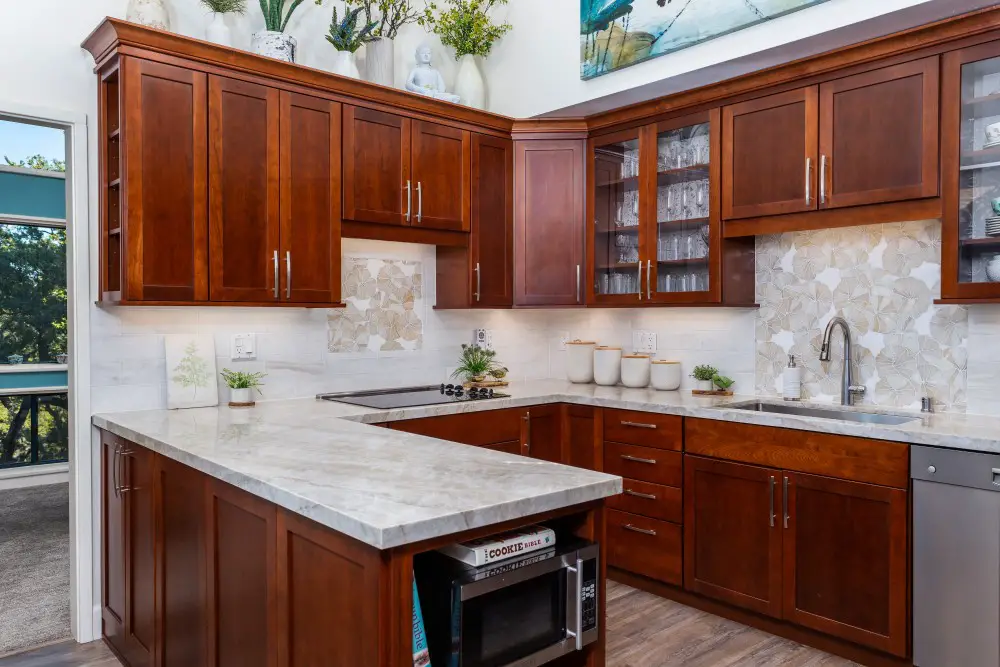
This image shows a contemporary L-shaped kitchen featuring rich dark wood cabinetry paired with light marble countertops. The space includes a built-in microwave, upper cabinets with glass panels, and a clean backsplash design. Decorative plants and neutral accents give the kitchen a warm, organized, and functional appearance.
Jargon Explained
Soft-close drawer guides — the hardware mechanism that makes drawers close slowly and silently instead of slamming. Worth every penny in the cleaning zone especially, since you're often closing them with wet hands and a full load of dishes in the other arm. They're a standard upgrade in any Toupin remodel.
Specialty Zones for Real Families
Once you've nailed the core three, you can think about what your specific family actually does in the kitchen — and build for it. These aren't luxury add-ons. They're the difference between a kitchen that was designed for "a family" and one that was designed for your family.
The Baking Station
If someone in your house bakes more than occasionally, this pays for itself in sanity. A dedicated baking zone keeps all that stuff out of the main prep area — which means the person baking isn't in the way of the person making dinner at the same time.
- A counter surface with at least 24 inches of clear space — marble or quartz works best because it stays cool for pastry work
- Pull-out bins for flour, sugar, and other dry goods (way better than fighting with 5-pound bags in a cabinet)
- Deep drawers for cake pans, loaf pans, and sheet trays
- A "mixer garage" — a cabinet with a lift mechanism that raises your stand mixer to counter height when needed, then stores it out of sight
Pro TipWe designed a baking hutch for a Lafayette client whose daughter bakes every weekend. Her stand mixer, all her pans, and her sprinkle collection (extensive) each found a home. Now Sunday mornings don't involve three people excavating the same cabinet.
The Coffee & Tea Bar
This is the most popular specialty zone we see in East Bay remodels right now, and it makes sense — people are home more, mornings are busy, and nobody wants to fight for counter space near the coffeemaker while trying to make school lunches.
- A dedicated counter area near an outlet and within reach of the sink (or with a small bar sink of its own)
- Open shelving or glass-front cabinet for mugs
- Containers for beans, loose leaf, sugar — on a small tray so it stays organized
- A drawer for filters, stirrers, and the random accessories that accumulate
Pro TipPosition this zone away from the main cooking zone if at all possible. The morning coffee rush and the dinner prep rush should not compete for the same two feet of counter.
The Kid Zone
This one's underrated. Giving kids their own functional zone in the kitchen actually makes your kitchen more efficient — because it means they can get what they need without interrupting what you're doing.
- Bottom drawers or a lower cabinet section with snacks, cups, and kid-safe dishes
- Plates, bowls, and utensils at a height they can reach — roughly 18–24 inches from the floor
- A step stool that tucks away nearby
- Their spot should be away from the cooking zone for safety
Pro TipIf you're remodeling and have young kids, talk to your designer about this. It doesn't add cost — it just requires intentional placement during the planning phase.
Why Zones Make Such a Big Difference
I'll be honest — when Tim and Pam first started talking about zoning in client consultations years ago, I thought it seemed obvious. Of course you put the knives near the cutting board. Of course the pots go next to the stove. And then I started seeing how many kitchens we walked into where that basic logic had never been applied — and how much the homeowners had just adapted to the friction without ever naming it.
EfficiencyFewer steps between what you need and where you are. This adds up fast when you're cooking every night.
SafetyLess clutter in the cooking zone means fewer spills, fewer accidents, and less chaos when it matters most.
Shared UseMultiple people can be in the kitchen at the same time without constantly getting in each other's way.
Resale ValueBuyers notice when a kitchen feels functional. A well-zoned layout is a selling point, especially in the East Bay market.
"The Rossmoor homeowner we mentioned at the top? She cried a little when we showed her the new layout. Not because it was beautiful — it was — but because she said she didn't realize how much the old one had been wearing her down."
How to Set Up Your Kitchen Zones
Whether you're working with what you have or planning a full kitchen remodel, the process is the same. Start here:
-
Observe how you actually cook
Spend a few days paying attention to what feels awkward. Where do you keep walking back and forth? What do you grab from the wrong spot? Where do things pile up? Don't fix anything yet — just watch.
-
Group items by task, not by type
Take everything out of your cabinets and drawers and sort it into piles: prep tools, cooking tools, cleanup supplies. Realize you have seven spatulas. Donate four. Then think about where each pile should live.
-
Map your core zones to your layout
Prep near the sink, cooking near the stove, cleaning near the dishwasher. If your layout makes this physically impossible, that's important information — and it might be the conversation you need to have with a remodeling contractor.
-
Reorganize drawers and shelves accordingly
Put frequently used items at arm's reach and eye height. Put the things you use twice a year on the high shelf. Anything you haven't touched in 12 months — donate it or store it outside the kitchen.
-
Live with it, then refine
Zoning isn't set in stone. Cook in your newly organized kitchen for a few weeks and notice what's still off. Adjust. Good kitchens — like good remodels — are always a little bit in progress.
If you're planning a remodel, our team walks through zone planning as part of every design consultation. It's where layouts get built from — not where they get adjusted at the end.
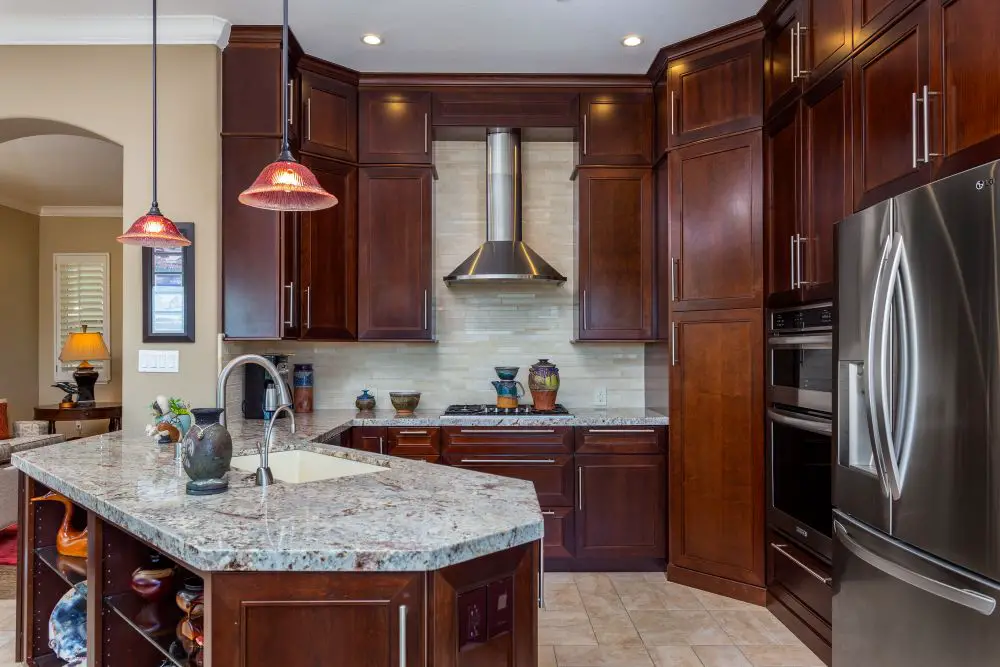
This kitchen features a luxurious design with dark wood cabinetry, stainless steel appliances including a double oven and refrigerator, and a central island with a sink. Warm pendant lighting and tiled flooring enhance the cozy yet upscale ambiance, making it ideal for both cooking and entertaining.
Quick Reference: Zone Cheat Sheet
| Zone | Where It Lives | Must-Haves |
|---|---|---|
| Prep | Between fridge & sink | Cutting boards, knives, mixing bowls, measuring tools, trash pull-out nearby |
| Cooking | Around cooktop & oven | Pots, pans, spatulas, spices, oils within 24 inches, good ventilation overhead |
| Cleaning | Sink + dishwasher area | Soap, scrubbers, drying surface, dish pods, trash & recycling accessible |
| Baking Station | Counter or hutch away from main zones | Mixer, baking pans, pull-out dry goods bins, cool counter surface |
| Coffee & Tea Bar | Near outlet & sink, away from stove | Mugs, coffee maker or kettle, beans/tea, drawer for accessories |
| Kid Zone | Lower drawers, away from cooking zone | Kid-safe dishes, snacks, cups at reachable height, step stool nearby |
FAQ
What exactly is a kitchen zone?
A kitchen zone is a dedicated area of your kitchen organized around a specific task — like prepping, cooking, or cleaning. Instead of organizing by cabinet type, you're organizing by what you actually do there. It sounds simple because it is — and it makes a real, felt difference.
Can I zone a small kitchen?
Absolutely. Even a galley kitchen — the long, narrow layout common in older East Bay condominiums and Rossmoor units — benefits from zoning. You might not get physical separation between zones, but even grouping your tools and supplies by task will reduce friction and wasted motion significantly.
Do I need to remodel to set up kitchen zones?
Not necessarily. You can reorganize drawers and cabinets without changing the layout at all — that's step one. But if your current layout makes logical zoning physically impossible (for example, your fridge is across the kitchen from your sink), that's a sign the bones of the kitchen are working against you. A remodel fixes it permanently.
What about the "work triangle" — is that the same thing?
Not exactly. The work triangle is the old design rule that says your fridge, stove, and sink should form a triangle to minimize steps. Zoning goes further — it accounts for everything from where your spices live to whether your kids can get their own snacks without bumping into the cook. Think of zoning as the work triangle grown up and adapted to how real families actually use a kitchen.
How does Toupin Construction approach kitchen zoning during a remodel?
We walk through zone planning with every client before any design decisions get made — cabinet styles, countertops, appliances — all of that comes after we understand how you actually cook. It's the first conversation, not the last one. If you want to see how that process works, you can read about our process here.
Ready to Get Started?
Let's Design a Kitchen That Works for Your Family
We've been remodeling kitchens in Walnut Creek and the East Bay for over 40 years. We know the homes, the layouts, and we'll start with how you actually cook — not what looks good in a catalog.
Serving Walnut Creek · Rossmoor · Lafayette · Danville · Alamo · Orinda | CA Lic #626819

Toupin Construction
Ready to start your remodel?
Whether you're dreaming of a new kitchen, a spa-worthy bathroom, or a whole-home transformation — we’d love to hear about your project. Reach out and let's talk.
‹ Back
Comments