


By using our website, you agree to the use of cookies as described in our Cookie Policy
Blog
What Tile Setters Actually Do

Series: What the Trades Actually Do · Post 1 of 8
It's not gluing squares to a wall. Not even close.
By Candi Toupin· Toupin Construction · Walnut Creek, CA·CA Lic #626819·Behind the Scenes Tile & Design East Bay
I've watched tile setters work my whole life, and I still find it genuinely fascinating to see someone set up a room. There's this moment — usually early in the morning, before a single tile has gone up — where the setter is just standing in an empty space with a tape measure and a pencil, staring at the walls. Doing math in their head. Planning the whole thing before touching a single piece of tile.
Most people walk past that moment without thinking about it. I get it. But that moment is actually the job.
This is Post 1 in our new series: What the Trades Actually Do. We work alongside skilled tradespeople every single day, and I want to give them credit where it's due. So let's start with the trade most people think they understand — and almost nobody really does.
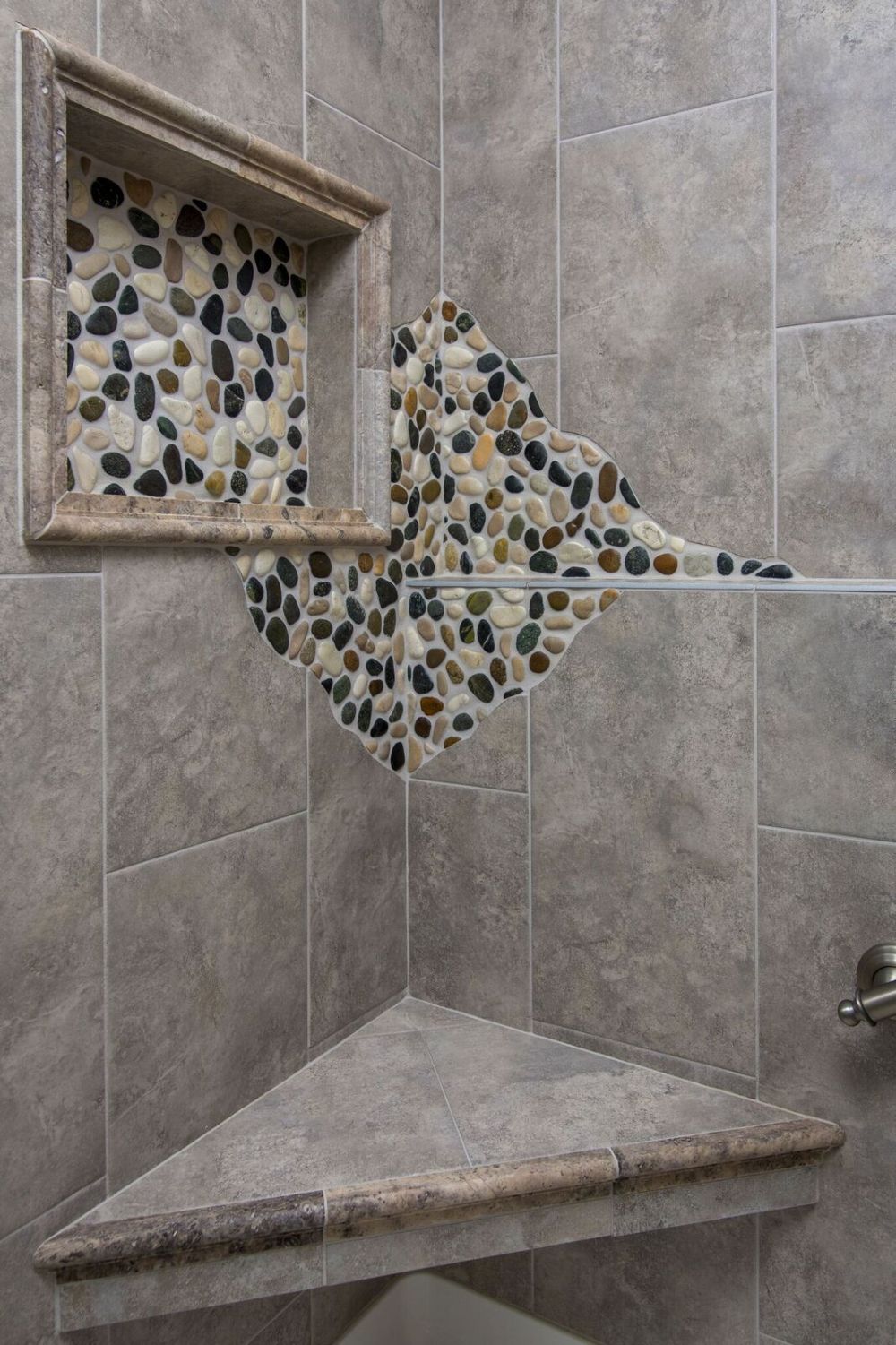 A custom tiled shower features large gray porcelain wall tiles with a decorative river rock accent flowing through the shower wall and into a recessed shampoo niche. A matching corner bench with stone trim completes the spa-inspired design, adding both function and visual interest.
Why People Underestimate Tile Setting
Here's what people picture when they hear "tile setter": someone spreading glue on a wall and pressing squares into it. Maybe some cutting. Maybe some grout at the end. How hard could it be?
Hard. Very hard. Let me explain why.
A bad tile job doesn't just look bad — it fails. Grout cracks. Tiles pop. Water gets behind the wall where it has no business being. In a bathroom, that means mold, rot, structural damage, and a full tear-out. The thing about tile setting is that the mistakes are hidden for months, sometimes years, before they surface. By then, the budget damage is real.
A good tile setter prevents all of that. And good tile setting starts long before the tile comes out of the box.
Trade Term Explained
Substrate
The surface that tile gets installed on. In a bathroom, this might be cement board, a mortar bed, or a waterproofed drywall system. If the substrate isn't flat, solid, and properly prepared, the tile above it will eventually fail — no matter how beautiful it is on the surface.
Step by Step: What a Tile Setter Actually Does
Walk through it with me. Here's what happens on a real tile job from start to finish.
Assess and Prepare the Substrate
Before anything else, the setter evaluates what they're working with. Is the floor level? Is the wall plumb — meaning straight up and down? Is the surface solid, or does it flex when you push on it? Tile doesn't forgive movement. A floor that flexes will crack grout lines within months. If the substrate isn't right, the setter fixes it first. That might mean floating a new mortar bed, adding cement board, or leveling a floor with a self-leveling compound.
Install Waterproofing In wet areas — showers, tub surrounds, wet room floors — a waterproofing membrane goes in before a single tile. This is a flexible barrier that bonds to the substrate and keeps water from migrating into the wall assembly or subfloor. Skipping or skimping on this step is how showers rot from the inside out. Good setters take waterproofing seriously. Great setters treat it like the most important part of the job, because it is.
Lay Out the Field This is that early-morning moment I described. The setter plans the entire tile layout before mixing any mortar. They find the center of the room, establish layout lines, and work out where cuts will fall. The goal is for the tile to look intentional — balanced, symmetrical where it needs to be, with cut tiles in the least visible spots. This takes spatial reasoning and math. A wrong layout decision made here can't be fixed once the tile is set.
Mix and Apply Thinset Mortar Thinset is the adhesive mortar that bonds tile to substrate. It comes as a powder that gets mixed with water to a specific consistency — not too wet, not too stiff. The setter uses a notched trowel to spread it in ridges, then back-butters larger tiles (meaning they also apply thinset to the back of the tile itself) to ensure full coverage. Air pockets under a tile mean future cracking. Coverage matters.
Set the Tile Each tile gets pressed into the mortar and twisted slightly to collapse the ridges and ensure a solid bond. Spacers or wedge systems keep grout joints consistent. Large format tiles — the 24x48" slabs that are everywhere right now — require additional skill because they're heavy, they telegraph any imperfection in the substrate, and they need to be exactly lippage-free (meaning no tile edge can be higher than the one next to it). A lippage problem on a large-format floor is both ugly and a tripping hazard.
Cut Tile Field tiles are the full, uncut tiles. But every room has edges, corners, outlets, drains, and obstacles that require precision cuts. A tile setter uses wet saws, angle grinders, and nippers to cut curves, notches, and angles. A tile cut for a toilet flange has to be exact. A tile cut around a recessed niche has to be clean. This takes skill and patience — especially with natural stone, which can crack unpredictably.
Allow Cure Time, Then Grout Once the tile is set, it cures — typically 24 hours minimum before foot traffic, longer for larger tiles. Then grout goes in. Grout fills the joints between tiles, locks them in place, and makes the surface cleanable and watertight. The setter mixes grout to the right consistency, works it into the joints with a rubber float, cleans the haze off the tile surface, and seals the grout on porous or natural materials. The color and width of grout joints has a massive impact on the final look of the room.
The Math Nobody Talks About
A tile setter is, among other things, a working mathematician. They calculate square footage, account for waste (usually 10–15% for cuts and breakage), figure pattern repeats for things like herringbone or offset layouts, and work out diagonal patterns where cuts happen on every single edge tile.
In Rossmoor specifically — where we work a lot — the condos and co-ops present their own set of challenges. Compact footprints, original 1960s subfloors that may not be level, and building rules around what can be modified all factor into how a setter approaches the job. You can't always float a thick mortar bed in a condo without raising the floor height and creating a transition problem with adjacent rooms. Good setters adapt.
"A bad tile setter is expensive. A great one is invisible — because when the job is done right, all you see is the tile."
Pattern Work: Where It Gets Really Interesting
Not all tile jobs are a simple grid layout. Pattern work — herringbone, basketweave, Moroccan fish scale, Versailles, diagonal offset — requires a completely different level of planning. Every pattern has a starting point that has to be figured out before the first tile is set. A herringbone pattern that starts in the wrong spot will look increasingly chaotic as it reaches the walls. The setter has to visualize the finished room, work backward to the starting point, and execute it consistently for the entire surface.
I've watched our tile setters pencil out herringbone layouts on graph paper before they start. I've seen them build dry-lay mockups — setting tile without any mortar first — just to confirm the layout looks right before committing. That's not overthinking. That's professionalism.
Trade Term Explained
Dry Lay
Setting tile out on the floor or surface without any mortar, just to plan the layout and verify that cuts and patterns will work before anything is permanent. It takes extra time, but it's how good setters catch problems before they become expensive ones.
Large Format Tile: The New Challenge
Ten years ago, 12x12 tiles were the standard. Now we're regularly installing 24x48, 36x36, and even larger slabs in both kitchens and bathrooms. Large format tile looks stunning — cleaner lines, fewer grout joints, a more expansive feel. But it's also unforgiving.
Large tiles expose any unevenness in the substrate. They require a flatter surface. They're heavier and more prone to cracking during handling. And because there are fewer grout joints to absorb natural movement in a house, the substrate prep has to be dialed in. We've seen setters spend an entire day on substrate work before a single tile goes up on a large-format job. That day is worth every minute.
What Makes a Great Tile Setter
We've worked with a lot of tile setters over 40 years. The difference between a good one and a great one isn't just speed or neatness. It's problem-solving.
The great ones anticipate. They catch a substrate issue before it becomes a callback. They flag a layout problem before the tile is ordered. They speak up when a client's tile choice won't work in the space they're imagining. They're not just installers — they're partners in getting the job right.
That's who we hire. And that's who shows up to your home.
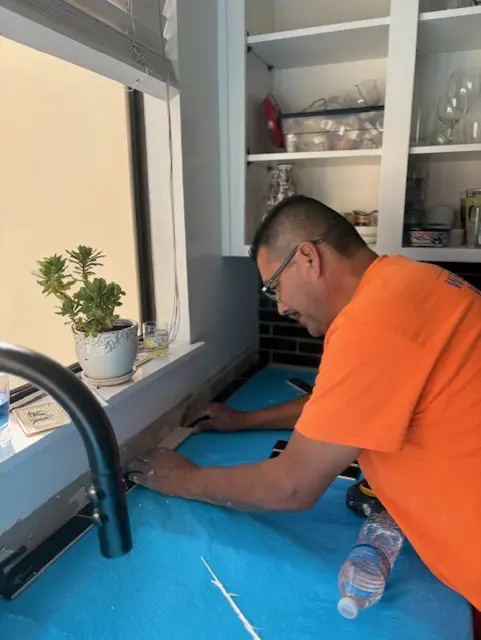 Adan carefully measures and sets black subway tile for a kitchen backsplash during a home remodeling project. Protective countertop covering is in place as he aligns each tile beneath white shaker cabinets and next to a large kitchen window, ensuring a precise and professional installation.
What the Trades Actually Do · Full Series
8 posts. 8 trades. Real respect for real work.
-
What Tile Setters Actually Do — You're reading it
-
What a Project Manager Does
-
Drywallers: The Real Heroes
-
Electricians 101
-
What Plumbers Do in a Remodel
-
What a Real Carpenter Does (Not a Handyman)
-
What a Finish Carpenter Is
-
What a Painter Actually Does
Thinking About a Tile Project?
Whether it's a bathroom floor, a shower surround, or a kitchen backsplash — we'd love to walk you through what's possible. No pressure, just an honest conversation from people who've been doing this for over 40 years.
Toupin Construction · Walnut Creek, CA · CA Lic #626819
Serving Walnut Creek, Rossmoor, Lafayette, Orinda, Danville & the East Bay

Toupin Construction
Ready to start your remodel?
Whether you're dreaming of a new kitchen, a spa-worthy bathroom, or a whole-home transformation — we’d love to hear about your project. Reach out and let's talk.
‹ Back
Comments