


By using our website, you agree to the use of cookies as described in our Cookie Policy
Blog
Why Electrical Work Adds Up So Fast
Deep Dive· Electrical· East Bay
It happens on almost every remodel. The homeowner has budgeted carefully for cabinets, countertops, tile, and fixtures. The project is going well. And then the electrician walks through and says something that starts with "the thing is..." and ends with a number that wasn't in the plan.
Electrical work is the budget line that surprises people most consistently — not because contractors are padding it, but because the work is genuinely more complex, more regulated, and more labor-intensive than it looks from the outside. When you add an outlet, you're not just adding an outlet. When you upgrade a panel, you're not just swapping a box. There's a chain of decisions and dependencies behind every electrical line item that the finished wall completely hides.
Here's the honest explanation of why the number is what it is.
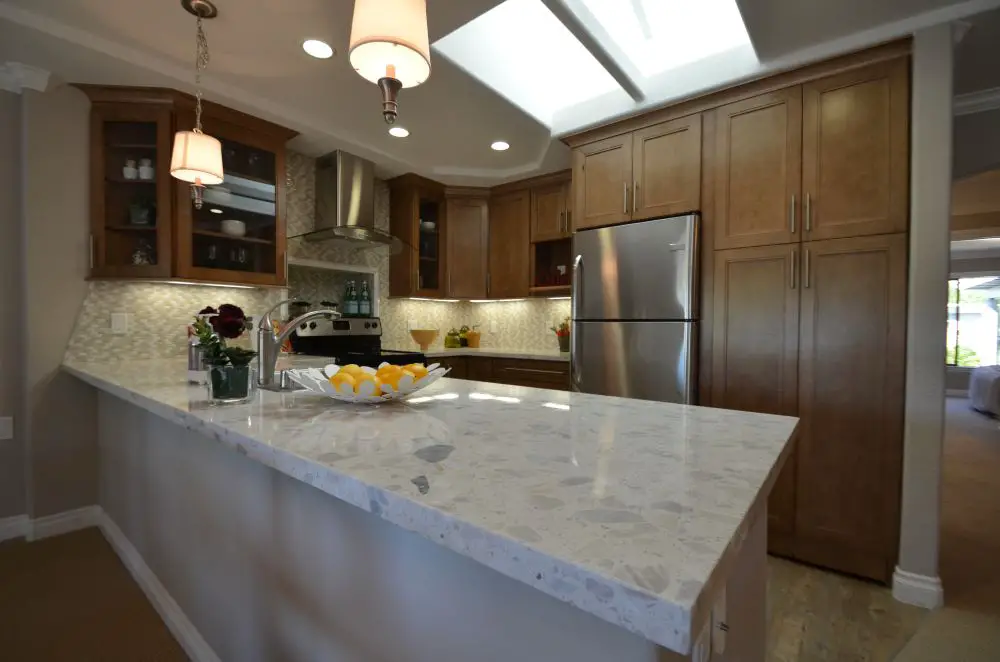 The finishing touches make all the difference. This beautifully remodeled kitchen features warm wood cabinetry, elegant quartz countertops, a mosaic tile backsplash, and thoughtfully designed lighting that creates a bright, welcoming space for everyday living and entertaining.
The Six Reasons Electrical Costs What It Does
1
Electricians are licensed, bonded, insured specialists — and that's the point
In California, electrical work on a permitted project has to be performed by a licensed electrician — either a C-10 electrical contractor or a journeyman working under one. That license requires years of apprenticeship, examination, and ongoing continuing education. It's not a formality. Electrical mistakes kill people. The licensing system exists because the consequences of getting it wrong are catastrophic in a way that a bad tile job simply is not.
Licensed electricians in the Bay Area earn $90–$130+ per hour for journeyman labor. When you add the contractor's overhead, insurance, licensing costs, and the markup required to run a sustainable business, you're looking at billing rates of $150–$250 per hour for electrical work on a residential remodel. That rate is what competent, licensed, insured electrical work actually costs in this market. A quote that's meaningfully lower is worth asking questions about.
2
The panel is often the hidden constraint that changes everything
Every electrical improvement in your home has to be supported by the main panel — the gray box in your garage or utility room that distributes power from the utility service to the circuits throughout your house. Older panels have a finite number of circuit slots and a maximum amperage capacity. When that capacity is reached, adding new circuits isn't just a matter of running wire. It means upgrading the panel first.
Panel upgrades are significant work. A 100-amp to 200-amp service upgrade in the East Bay typically runs $3,500–$7,000 by the time you account for the new panel, the permit, the PG&E coordination for the utility-side work, and the inspection. If the upgrade also requires the service entrance — the conduit and wiring from the street to the panel — to be rerouted or replaced, costs climb further. None of this is visible until an electrician opens the panel and assesses what's there.
Trade Term Explained
Service Entrance & Amperage
The service entrance is the point where PG&E's power delivery meets your home's electrical system — the meter, the service cable running from the street or overhead lines, and the main disconnect. Amperage is the capacity of that connection: 100 amps was standard for homes built before the 1970s; 200 amps is current standard and what most modern appliance loads require. A kitchen remodel with an induction range, a dishwasher, a refrigerator, a microwave, and countertop appliances on dedicated circuits can easily expose a 100-amp panel as inadequate. You don't find this out until you're already planning the remodel — which is exactly why we talk about the panel early in every electrical conversation.
3
Running wire through finished walls is slow, skilled work
In new construction, an electrician can run wire in hours because the walls are open framing. On a remodel in a finished home, every wire run is a puzzle. The electrician has to get from the panel to the new outlet or fixture location through walls, floors, and ceilings that are drywalled, insulated, and sometimes filled with unexpected obstacles — old blocking, fire stops, ductwork, plumbing that shouldn't be where it is.
The process involves drilling through top plates and bottom plates, fishing wire through cavities with minimal access, cutting access holes that then need to be patched, and threading through fire-rated assemblies without compromising them. A wire run that would take 20 minutes in new construction can take two hours in a finished wall. Multiply that across a kitchen remodel with 8–10 new circuits and you start to understand why the labor hours add up fast.
4
Code compliance in California is more demanding than most people realize
California follows the National Electrical Code but adds its own amendments — and the Bay Area's local jurisdictions sometimes add requirements on top of that. What this means in practice: a kitchen remodel isn't just adding outlets wherever it's convenient. Code dictates how many circuits are required, where they have to be, what they have to be dedicated to, and what protection they need.
A code-compliant modern kitchen requires: at least two 20-amp small appliance circuits for countertop outlets, a dedicated circuit for the refrigerator, a dedicated circuit for the dishwasher, a dedicated circuit for the garbage disposal, a dedicated circuit for the microwave (if built-in), GFCI protection on all outlets within 6 feet of a water source, and arc-fault circuit interrupter (AFCI) protection on most bedroom circuits throughout the home. That's a lot of dedicated circuits — and each one runs back to the panel independently, which is both labor and materials.
Trade Term Explained
GFCI vs. AFCI Protection
GFCI stands for ground fault circuit interrupter — the outlet with the "Test" and "Reset" buttons you see in bathrooms and kitchens. It detects when current is leaking to ground (like through a person) and shuts off in milliseconds. AFCI stands for arc fault circuit interrupter — a newer protection device, usually installed at the breaker, that detects the electrical signature of an arc fault, which is the type of wiring malfunction that causes house fires. California now requires AFCI protection on most new and remodeled circuits throughout the home, not just in specific areas. When an electrician tells you they need to install AFCI breakers as part of your kitchen remodel, they're not upselling you — they're meeting current code requirements that apply to the whole project.
5
The permit and inspection process adds real time and cost
Every electrical project above a certain threshold requires an electrical permit. The permit requires an inspection — usually at rough-in (before walls close) and again at final. That means the electrician has to schedule around the inspector's availability, which in busy jurisdictions like Walnut Creek and Danville can mean a day or two of wait time between rough-in and the point where drywall can go back up.
That wait has a cost. It affects the overall project schedule, sometimes means the electrician has to make two trips instead of one continuous run, and requires everything to remain accessible and inspectable between visits. The permit itself costs money — electrical permits in Contra Costa County run $200–$500 for typical remodel scope. This isn't padding. It's the legitimate cost of doing the work correctly.
6
Materials cost more than people expect — and have gotten more expensive
Copper wire, circuit breakers, outlets, boxes, conduit, panel equipment — none of this is cheap, and supply chain pressures since 2020 have kept electrical materials elevated above where they were a decade ago. A 200-amp panel and breakers alone can run $800–$1,500 in materials before a single hour of labor. Copper wire pricing fluctuates with commodity markets. A remodel that requires a lot of new wiring runs — a full kitchen rewire, for instance — will have a materials cost that surprises homeowners who assumed the bill was mostly labor.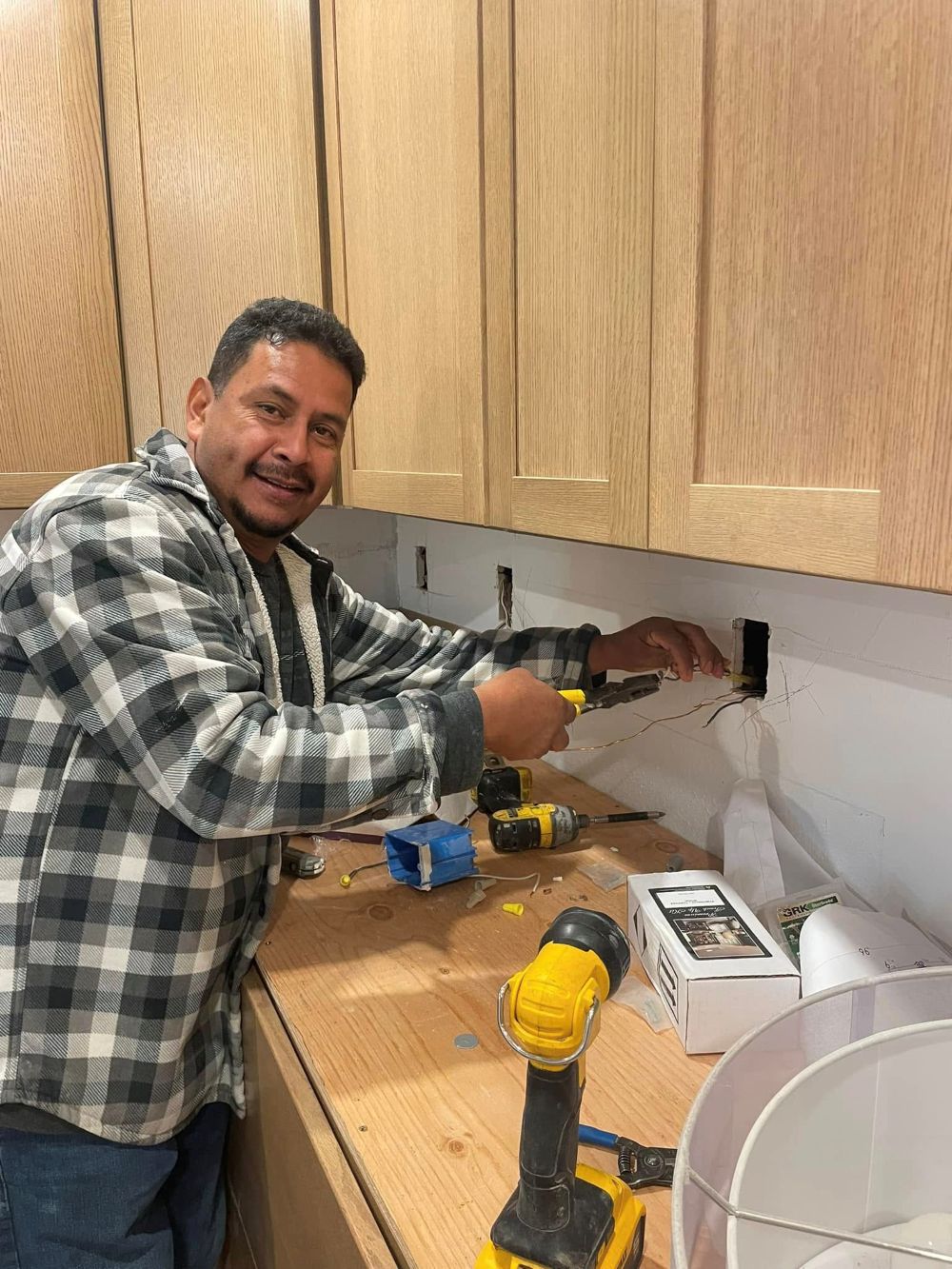 Ernesto bringing a kitchen remodel to life by installing electrical components during a residential renovation project. From wiring to finishing details, our skilled team handles every step with precision and care to create beautiful, functional spaces for East Bay homeowners.
What Age of Home You Have Changes the Conversation
East Bay homes span nearly a century of electrical practice, and the era your home was built in tells us a lot about what we're going to find when the walls open. Here's the honest breakdown by decade:
Pre-1950s Homes
Knob-and-Tube Era
Watch Out
Knob-and-tube wiring — an early system using separate hot and neutral wires strung through porcelain insulators — was the standard in homes built before WWII. It's ungrounded, it has no ground wire at all, and most insurance companies won't insure a home with active knob-and-tube without a premium surcharge or full rewire requirement. If you're remodeling a pre-1950 home and hitting knob-and-tube, the electrical conversation gets bigger.
1950s–1960s Homes
Early Grounded Wiring
Worth Assessing
These homes typically have grounded wiring but with 100-amp panels that are undersized for modern loads. The wiring itself may be in good condition, but the panel capacity is the usual constraint. Many also have Federal Pacific or Zinsco panels — brands with documented safety histories that most electricians will recommend replacing regardless of the remodel scope.
1970s–1980s Homes
Aluminum Wiring Era
Needs Attention
Some homes built in the late 1960s and 1970s used aluminum branch circuit wiring as a cost measure during a period of high copper prices. Aluminum wiring requires specific outlets, connections, and periodic maintenance — and connections that were made with standard copper-rated devices can loosen and arc over time. If you have aluminum wiring, disclose it to any contractor doing electrical work. It changes the scope of what connections need to happen.
1990s–Present Homes
Modern Copper Wiring
Generally Sound
Homes built after 1990 typically have copper branch circuit wiring, grounded outlets, and 200-amp panels. The electrical system is generally in good shape and remodel additions are straightforward — the main question is whether the existing panel has capacity for new circuits, and whether the existing wiring requires AFCI upgrades as part of the permitted work.
A Word About Federal Pacific & Zinsco Panels
If your home has either of these, know what you have.
Federal Pacific Electric Stab-Lok panels and Zinsco (also sold as Sylvania) panels are found in a significant number of East Bay homes built between the 1950s and 1980s. Both have documented histories of breakers failing to trip under overload conditions — which means the safety mechanism that prevents overheating and fire may not work as intended.
We're not here to alarm you — many of these panels have been in service for decades without incident. But if you have one and you're already opening up a wall for a remodel, the conversation about replacing it is worth having. The cost of a panel replacement during a remodel — when the walls are already open and the electrician is already on site — is meaningfully lower than a standalone panel replacement later. And it replaces a known variable with a known quantity.
You can often identify these panels by their labels inside the door. If you're not sure, ask your electrician at the walkthrough.
The East Bay Cost Reality
Here's what electrical work actually costs in our market. These are real numbers from real jobs in Walnut Creek, Danville, Lafayette, Alamo, and Orinda:
East Bay Electrical Cost Estimates (Labor + Materials + Permit)
Single new outlet added to existing circuit$250–$500
New dedicated 20-amp circuit from panel$400–$900
Kitchen electrical package — 8–10 new/updated circuits$4,000–$9,000
Panel upgrade, 100A to 200A, standard$3,500–$6,000
Panel upgrade with service entrance replacement$6,000–$10,000+
Federal Pacific / Zinsco panel replacement$3,000–$5,500
EV charger circuit (NEMA 14-50 or Level 2 EVSE)$800–$2,000
Whole-home rewire (older home, full replacement)$15,000–$35,000+
These ranges reflect 2025–2026 East Bay market rates. Actual costs vary with panel location, wall accessibility, permit jurisdiction, and what's found once walls open. Always ask your electrician to break down labor, materials, and permit cost separately so you understand what's driving the number.
Rossmoor: The Electrical Picture Is Different
Rossmoor's construction era — most units built between the mid-1960s and early 1980s — means the electrical systems are in that middle ground: grounded wiring, but original panels that are now 50 to 60 years old and sized for an era of far fewer electrical loads.
Rossmoor Electrical Specifics
Original panels are often at capacity. A 100-amp panel in a Rossmoor condo that was adequate in 1972 is often at or near its practical limit today — microwave, dishwasher, induction cooktop, washer/dryer, two televisions, charging stations, and the building's shared electrical infrastructure all drawing from the same service. If you're planning a kitchen remodel and want to add circuits, the panel conversation happens first.
Panel work in Rossmoor involves the Mutual. Electrical upgrades that affect the unit's service panel may require Mutual coordination, particularly if the service entrance runs through common areas or shared utility spaces. This is another reason to start the Mutual conversation before committing to electrical scope — what looks like a straightforward panel upgrade in a freestanding home becomes a coordination project in a shared building.
Aluminum wiring is common. Rossmoor units from the late 1960s and 1970s frequently have aluminum branch circuit wiring. Any electrician working in these units needs to know this before they start — it affects how every connection gets made and what devices are used.
How to Make Smart Electrical Decisions During a Remodel
The time to think about electrical isn't when the walls are already closed. Here's how to approach it so you're not paying the expensive version of every lesson:
Making the Most of the Electrical Budget
Get the panel assessed before you plan anything else. An electrician looking at your panel for 30 minutes at the start of a project is the cheapest information you'll buy. It tells you what capacity you have, what era your wiring is from, and whether there are any safety concerns that should drive the project scope — rather than discovering all of this mid-remodel.
Do everything while the walls are open. The most expensive electrical work is done in finished walls. If you're already opening walls for a kitchen or bathroom remodel, that's the moment to add the circuits, the lighting runs, the switch legs, and the panel upgrades. The marginal cost of adding work while walls are open is a fraction of what it costs to come back later.
Run conduit or chase tubes to future-proof. If you're not ready to spend on a full panel upgrade today but you can see it coming, ask your electrician to install empty conduit — a plastic tube — from the panel to key locations. Pulling wire through existing conduit is far cheaper than fishing wire through finished walls later.
Budget the panel upgrade before you budget the kitchen. If your panel assessment reveals a necessary upgrade, that number needs to be in the project budget from day one — not discovered as a surprise line item after cabinets are ordered. A $5,000 panel upgrade changes what's possible in the kitchen budget.
Add more outlets than you think you need. We said it in the remodel regrets post and we'll say it again here: the incremental cost of an additional outlet during rough-in is minimal. The cost of adding one after the walls close is not. Generosity with outlets during rough-in is almost always money well spent.
Don't shop on rate alone. An unlicensed electrician who's $40/hour cheaper is not saving you money if the work doesn't pass inspection, if the connections fail, or if a claim arises that your insurer traces to unpermitted electrical work. Licensed, insured, permitted electrical work costs what it costs in this market.
The Invisible Infrastructure That Makes Everything Else Work
Here's the thing about electrical work that's easy to forget when you're staring at an invoice: every single beautiful thing in your remodel depends on it. The under-cabinet lighting that makes the kitchen feel like a magazine. The outlets that are actually where you need them. The panel that can handle your family's real life without tripping breakers. The circuits that power the appliances you actually own, not the ones that existed in 1975 when your panel was installed.
The wiring gets covered up. You'll never see it again. But you'll interact with what it enables every single day — when the lights come on, when the dishwasher runs without flipping a breaker, when you plug in the coffee maker and the toaster at the same time and nothing happens except your coffee gets made.
That's what you're paying for. Not the wire. The life behind the walls that makes everything on the surface of them work the way it should.
Starting a Remodel? Let's Talk Electrical First.
The electrical conversation is the one that changes project budgets most often — and the one where starting early saves the most money. We'll walk through your panel, your existing wiring, and your project scope before anything gets planned around a constraint we haven't seen yet.
Get a Free Estimate Or call us directly: 925-937-4200 · CA Lic #626819
You Might Also Like
Why Permits Cost What They Cost in the Bay Area
The Most Common "I Wish We Had…" Remodel Regrets
Tankless vs. Tank Water Heaters: The East Bay Contractor's Take

Toupin Construction
Ready to start your remodel?
Whether you're dreaming of a new kitchen, a spa-worthy bathroom, or a whole-home transformation — we’d love to hear about your project. Reach out and let's talk.
‹ Back
Comments