

By using our website, you agree to the use of cookies as described in our Cookie Policy
Blog
Why Tile Installation Costs More Than the Tile
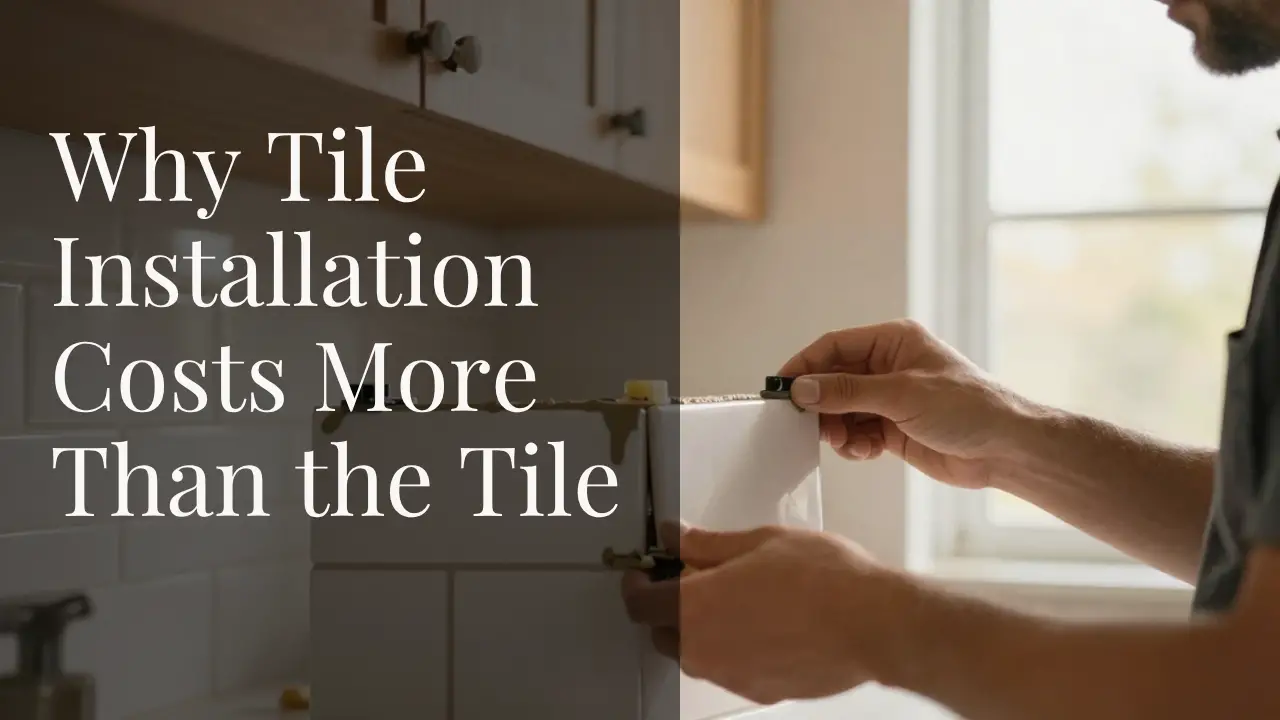
Why Tile Installation Costs More Than the Tile
You found your tile. It's the one — the right color, the right texture, the perfect size. You do the math: 80 square feet, $6 a square foot. That's $480. Easy. Then the quote comes back and it's $3,800, and suddenly you're staring at a number that doesn't make sense.
Here's the thing: the tile is almost never the expensive part. The expensive part is everything that has to happen so the tile actually stays on your wall and your floor doesn't crack in two years. Tile has always been my favorite aspect of a remodel. I am clearly biased because tile was the first trade I learned. Let me walk you through what you're actually paying for — because once you understand it, the quote stops feeling like a surprise and starts feeling like a deal.
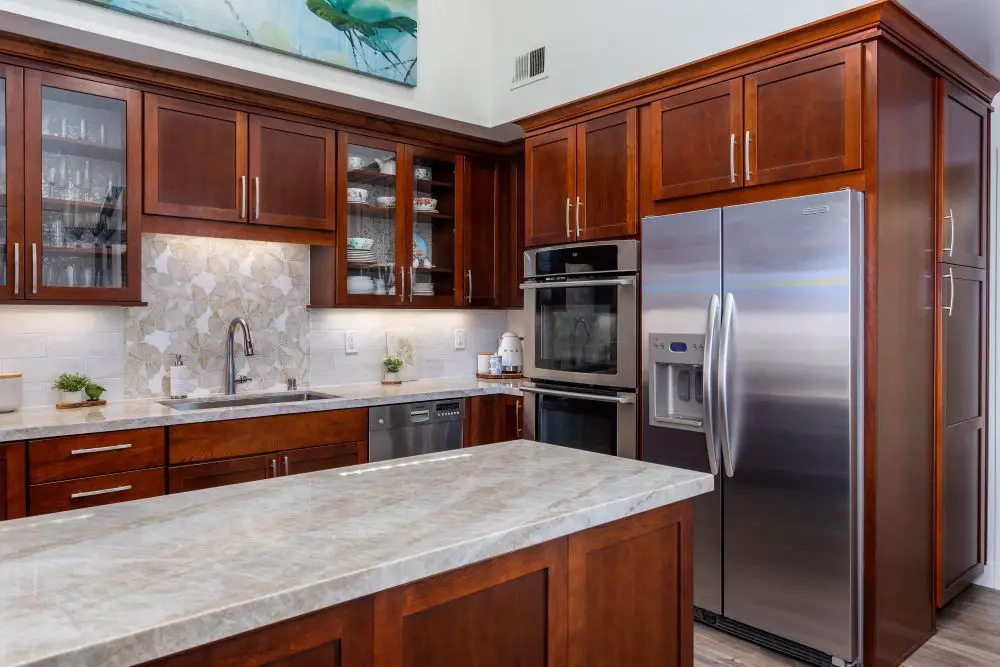
Warm transitional kitchen featuring rich cherry cabinetry, quartz countertops, and a decorative floral tile backsplash accent behind the sink.
Labor Is the Job
When a skilled tile setter shows up, they're not just gluing squares to a floor. They're laying a system — one that has to survive your home shifting, water trying to sneak in, and decades of daily use. Getting that right takes years to learn and hours to execute properly.
Think about it this way: a tile setter touches every single square foot of your project at least five times before the job is done. They prep the surface. They mix and spread the thinset. They set the tile and level each one individually. They come back to grout. They clean and seal. That's not one pass — that's a whole sequence, and each step has to be right for the next one to work.
Trade Term, Explained
Thinset Mortar
This is the adhesive that bonds your tile to the substrate beneath it. "Thin" is a little misleading — a good setter combs it on with a notched trowel to create ridges, then presses the tile in so the ridges compress and the bond is solid all the way across. Thin, uneven, or rushed thinset coverage is one of the top reasons tile fails years later.
Labor rates in the East Bay for tile installation typically run $15–$25 per square foot, depending on tile size, pattern complexity, and what's underneath. That range is not negotiable based on your charm — it's based on time and skill.
The Surface Has to Be Right First
This is the part nobody wants to pay for because you can't see it when it's done. But subfloor and substrate prep is where most tile failures begin, and it's where experienced contractors spend a lot of time before a single tile is placed.
Tile is rigid. Houses are not. A house in Walnut Creek or Lafayette — especially one built in the '60s or '70s — has settled, shifted, and done whatever it's going to do for the last 50-plus years. The floor might be slightly uneven. The wall behind your shower might have moisture in it. The old backer board might be compromised. None of that can be hidden under tile. It will find a way out, usually as a crack or a pop.
Trade Term, Explained
Backer Board
This is the layer that goes between your subfloor (or wall framing) and the tile. Regular drywall absorbs moisture and fails. Backer board — typically cement board or a foam-core waterproof panel — doesn't. In a shower or a bathroom floor, this layer is non-negotiable. Installing it takes time, screws, and tape, and it shows up as a line item on your quote for a reason.
In Rossmoor specifically, this comes up constantly. The co-op units were built in the early 1960s, and while they're solid, the slabs and subfloors in many of them have had decades of exposure to plumbing that wasn't always perfectly sealed. Before we tile anything in Rossmoor, we're assessing what's underneath — and sometimes what we find adds steps. That's not a contractor trying to run up the bill. That's a contractor making sure your tile is still there in 2040.
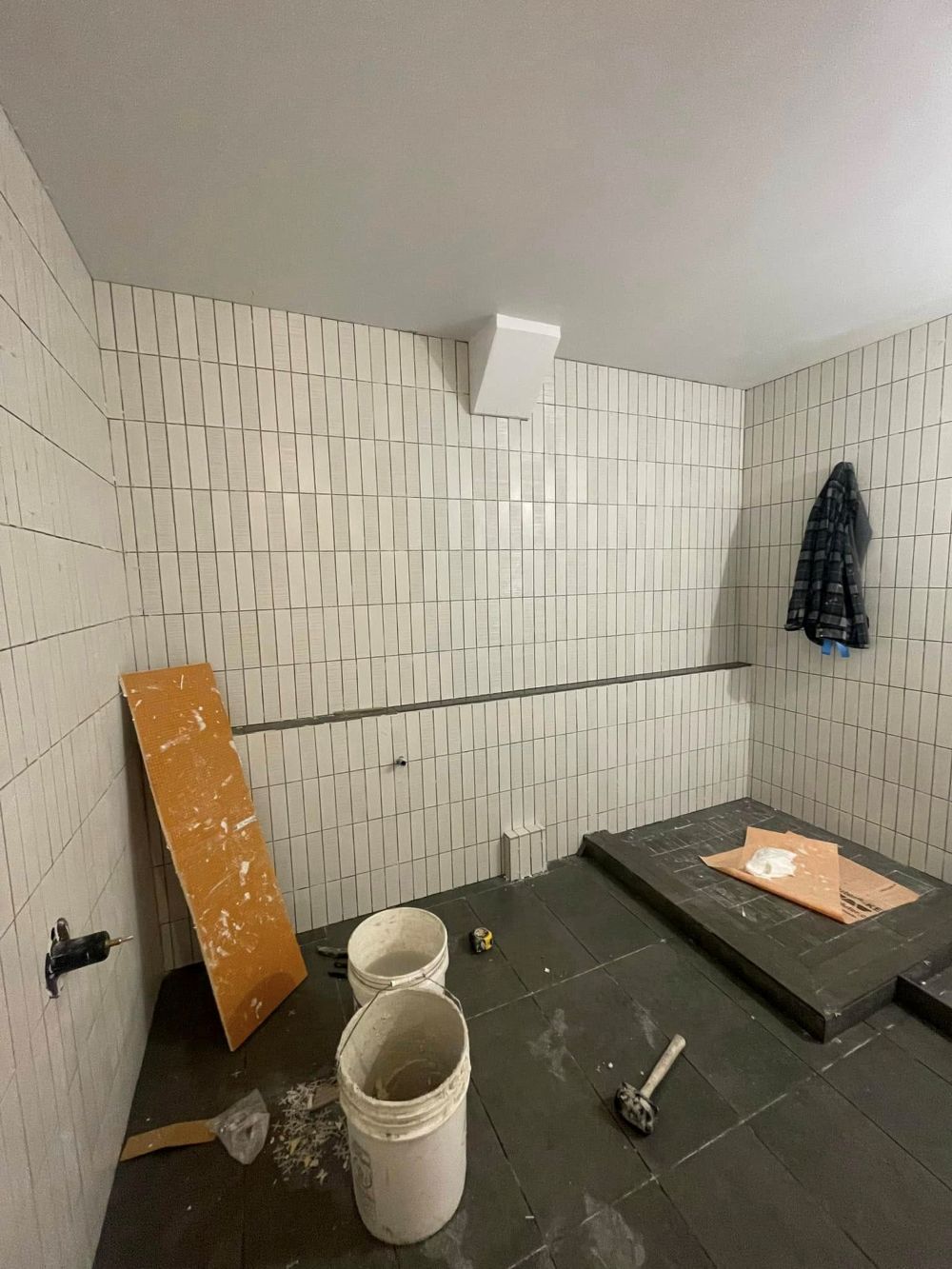
Large-format vertical wall tile installation underway in a bathroom, showcasing the precision and preparation required for a professional tile remodel.
The Materials Behind the Tile
The tile is the visible part. But there's a whole stack of materials that go into a proper installation, and none of them are free.
What You're Actually buying Beyond the Tile
|
Thinset mortar |
$1–$3 per sq ft. Higher-performance polymer-modified thinsets cost more and are required for certain tile types. |
|
Backer board / cement board |
$1–$3 per sq ft installed, plus screws and mesh tape at seams. |
|
Waterproofing membrane |
$2–$5 per sq ft in wet areas like showers. This is the flexible layer that keeps water from getting to your framing. |
|
Grout |
$0.50–$3 per sq ft. Epoxy grout — which we often recommend for showers — runs higher but is nearly impossible to stain and lasts significantly longer. |
|
Self-leveling compound |
$2–$5 per sq ft if your subfloor has dips or high spots that exceed industry flatness tolerances. |
|
Sealer |
Required for natural stone and unglazed tile. Protects against staining and moisture penetration. |
These are East Bay market estimates. Actual costs vary by project scope.
That's why the number you see on a tile quote isn't $6 a square foot. It's the tile plus all of this. A realistic all-in number for a full bathroom tile installation in the East Bay — labor, materials, and prep — typically runs $25–$50 per square foot depending on tile selection and what we find underneath.
"The tile is the face of the project. Everything underneath it is the structure. You can have a beautiful face on a shaky foundation — but not for long."
Tile Type Changes Everything
Not all tile installs are created equal — and a lot of what drives the labor cost is the tile you choose, not just where you're putting it.
Large-Format Tile
Anything with a side over 15 inches requires an exceptionally flat substrate, specialized leveling systems, and often two people to handle. More time, more precision, higher labor cost.
Mosaic Tile
Small tiles mean more grout lines, more alignment work, and more time per square foot. Don't let the size fool you — mosaics are labor-intensive by nature.
Natural Stone
Marble, travertine, slate — each piece varies in thickness. More leveling, more careful handling, often requires sealing. Beautiful, but you're paying for the care it demands.
Herringbone / Diagonal Patterns
Pattern layouts mean more cuts, more waste, and more time mapping the layout before the first tile goes down. Budget 10–15% more for patterned installs.
Standard 12×12 or 12×24 porcelain in a straight lay is the most efficient tile to install. That's not a reason to choose it — it's just useful to know when you're comparing quotes for different design options.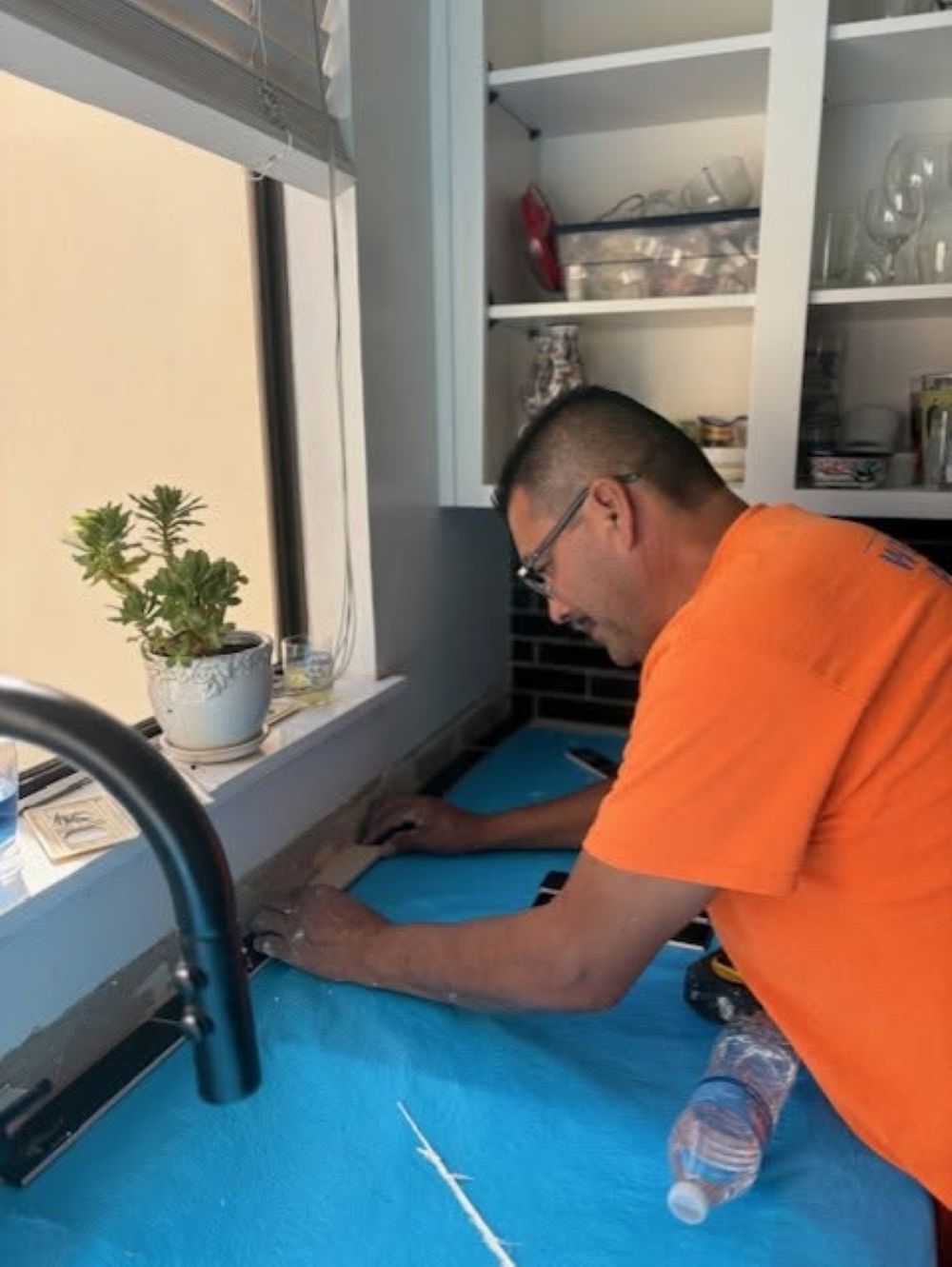 Adan, a skilled Toupin Construction tile installer, carefully measures and prepares backsplash tile during a kitchen remodeling project. What Happens When You Skimp on Installation
We've gotten calls from homeowners who went with a low bid and had tile popping off their shower walls inside eighteen months. Or cracked floor tile in a bathroom that a previous contractor had installed over a subfloor that was never properly prepped. Those fixes cost more than the original installation would have if it had been done right.
Tile work doesn't fail dramatically — it fails slowly. A hollow spot under a tile that you can hear when you walk on it. Grout that starts cracking along the same lines year after year. A hairline crack at the corner of your shower that you're pretty sure wasn't there before. These are symptoms of a system that wasn't installed correctly underneath.
Good tile work, done right, lasts decades. We have clients in Danville and Alamo who have original tile in their master baths that we installed fifteen years ago and it still looks like the day we grouted it. That's what you're buying when you pay for quality installation — not just a pretty floor, but a floor that stays pretty.
How to Read a Tile Quote
When you get a quote for tile work, here's what to look for:
Is subfloor or wall prep itemized separately? It should be. If a quote bundles everything into one per-square-foot number with no breakdown, ask what it includes. A reputable contractor will be able to tell you exactly what they're accounting for.
Is waterproofing included for wet areas? In a shower or a bathroom floor, the waterproofing membrane — the layer that actually keeps water from getting to your framing — should be a line item, not an afterthought.
What happens if they find something under the existing floor? Get clarity upfront on how surprises are handled. The honest answer is that costs can change if the subfloor is in worse shape than expected. A contractor who tells you otherwise isn't being straight with you.
Is demolition and disposal included? If you have existing tile being removed, that's labor and a dumpster. Make sure it's in the scope.
A detailed, itemized quote isn't a contractor trying to nickel-and-dime you. It's a contractor who knows their work and respects yours enough to be transparent about what it takes.
Getting a tile quote and want a second opinion on what you're seeing?
We're happy to walk through it with you — no pressure, just an honest conversation. We've been doing this for over 40 years in Walnut Creek and the East Bay, and we'd rather you go in informed than go in surprised.
925-937-4200Toupin Construction · CA Lic #626819

Toupin Construction
Ready to start your remodel?
Whether you're dreaming of a new kitchen, a spa-worthy bathroom, or a whole-home transformation — we’d love to hear about your project. Reach out and let's talk.
‹ Back
Comments