


By using our website, you agree to the use of cookies as described in our Cookie Policy
Blog
How to Choose the Right Bathtub

Bathroom Remodeling · Fixtures & Planning
How to Choose the Right Bathtub
Type, material, size, and what East Bay homes actually need to pull it off.
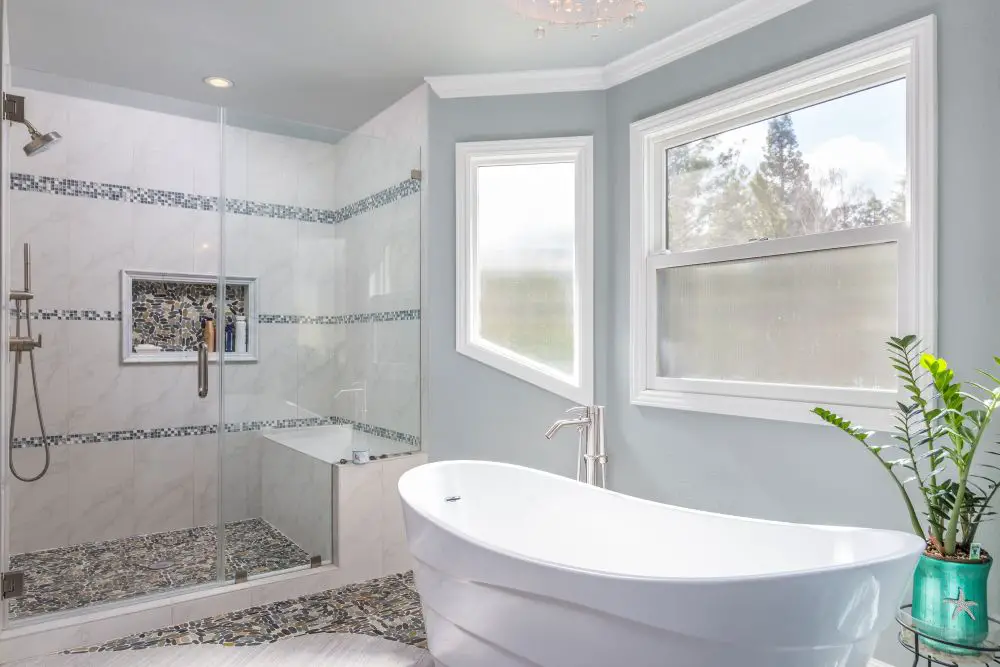
A bright, classic-style bathroom with a freestanding soaking tub, walk-in glass shower, and soft neutral finishes. Large windows bring in natural light, creating a calm and inviting space.
I'll be honest with you — for most of my life, I couldn't stand baths. The idea of sitting in a tub, soaking in what my brain generously described as "warm soup of myself," had zero appeal. I was a shower person. Efficient, in and out, done.
Then my son was diagnosed with ASD, and our house turned into a beautiful, exhausting, wonderfully noisy place where calm was genuinely hard to find. One evening — after a particularly long day involving three meltdowns, two barking dogs, and a very spirited debate about whether goldfish crackers count as dinner — I ran a bath mostly out of desperation.
I didn't know how to relax at first. That sounds absurd, but it's true. But I kept at it. I figured out what I actually needed from that space. And now? My bath time is sacred. It's the one corner of the house that belongs entirely to me for an hour a night.
All of which is to say: I take bathtub decisions seriously, both personally and professionally. Whether you're chasing that same quiet corner or just need a tub that fits the space and the budget, here's how to think through it properly.
"The right tub for your bathroom isn't the most beautiful one you find online. It's the one that fits the space, works with the plumbing, and gets used every single week."
Start Here: The Four Questions
Before you look at a single tub, answer these four questions. They'll cut your options in half before you ever set foot in a showroom.
The Four Questions That Narrow Everything
- What is this bathroom's primary user doing in this tub? Deep soaking solo? Bathing kids? Occasionally, mostly for resale value? The honest answer changes everything — a deep soaker tub in a kids' hall bath is money spent in the wrong direction.
- What are the real dimensions? Not the room dimensions — the tub alcove or the floor area where the tub will sit. Standard alcove tubs are 60"×30". Going to 60"×32" changes the whole framing rough-in. Freestanding tubs need clearance on all sides. Measure the actual space, including the delivery path to get it there.
- What is the floor structure under this bathroom? Cast iron and stone resin tubs can weigh 300–500 lbs filled with water and a person. Older East Bay homes — especially Rossmoor-era builds from the 1960s and 70s — may not have subfloor framing built for that load. This is a structural question, not a style one.
- Where is the drain currently roughed in? Tubs come with left-hand drain, right-hand drain, or center drain configurations. Moving a drain to accommodate a different tub is a plumbing job that adds real cost. Match the tub to the existing rough-in whenever possible.
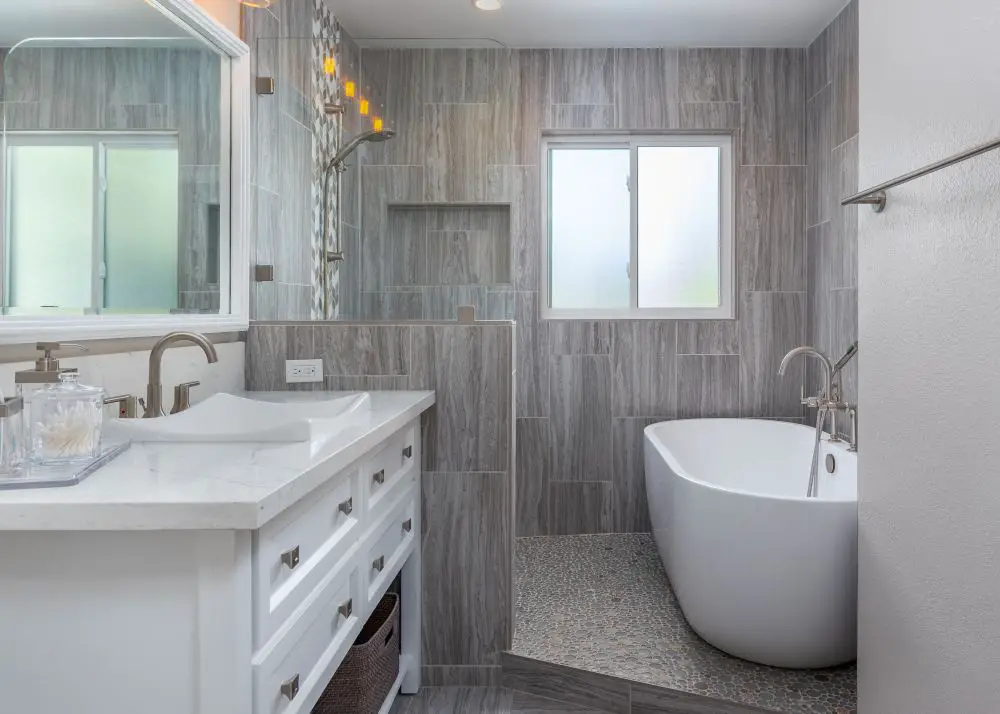
A modern-classic bathroom featuring a freestanding soaking tub, gray tile walls, and a clean white vanity. The design blends traditional layout with updated materials and finishes.
Tub Types: The Real Breakdown
There are five main tub configurations, each with a different footprint, installation requirement, and use case. Here's the contractor-honest version of each.
Type 01 · Most Common
Alcove Tub
Three walls, one open face. The alcove tub is the workhouse of East Bay bathrooms — practical, space-efficient, typically combined with a shower, and available in every price range. Most standard bathrooms are built around the 60"×30" alcove footprint.
This is the right call for hall baths, kids' bathrooms, and any bathroom where the tub also needs to function as a shower. It's not glamorous, but when someone asks us what tub gives the best value per square foot, this is the answer every time.
Type 02 · Statement Piece
Freestanding Tub
Floor-mounted, finished on all sides, positioned wherever the room allows. Freestanding tubs are the reason people tear out perfectly functional alcoves during primary bathroom remodels — they genuinely transform a bathroom from utilitarian to spa.
The design flexibility is real. You can center it under a window, float it in the middle of the room, or position it as the focal point opposite a walk-in shower. But "freestanding" doesn't mean "can go anywhere" — it means the plumbing supply and drain terminate through the floor rather than the wall, which requires planning the rough-in location before tile goes down.
Type 03 · Classic Character
Clawfoot Tub
The clawfoot is technically a subset of freestanding, but it deserves its own category because the considerations are different. These are heavy — cast iron clawfoot tubs run 300–400 lbs empty — and that weight has to go somewhere. Older Walnut Creek and Rossmoor homes often have the original wood-frame subfloor construction that needs assessment before a clawfoot lands on it.
Plumbing runs up through the floor and out through exposed supply lines to a deck-mount or freestanding faucet. That visible plumbing is part of the aesthetic — but it needs to be done cleanly, with quality chrome or brushed nickel fixtures, or the whole look falls apart.
Type 04 · Space-Specific
Corner Tub
Designed to fit into a corner with two finished sides and two tiled walls, corner tubs typically offer more interior soaking volume than alcove tubs — wider, deeper, sometimes large enough for two. They're popular in primary baths where the layout has an open corner that would otherwise be wasted.
The tradeoff: more water volume means a longer fill time and higher hot water demand. If your water heater is already undersized for the household, a corner tub may need a water heater upgrade to deliver a full, hot fill before the cold water catches up.
Type 05 · Luxury + Maintenance
Whirlpool & Air-Jet Tubs
Two distinct technologies get lumped under "jetted tub" and they're worth separating. Whirlpool jets recirculate bath water through the jets — powerful massage action, warm water maintained, but the internal plumbing needs monthly cleaning or it grows biofilm. Air-jet tubs push heated air through the jets instead of water — gentler sensation, no water sitting in the lines, easier to maintain.
Both require a dedicated 20-amp circuit and a GFCI-protected outlet. Neither should be installed without confirming the electrical panel has capacity for the additional circuit — something we always check during planning on our bathroom remodels.
???? Trade Term: Rough-In
The rough-in is the plumbing work done before walls and floors are finished — drain location, supply line positions, and the framed opening that the tub drops into. For alcove tubs, the rough-in must match the tub's drain location (left or right) and the framed alcove must match the tub's exact footprint. Changing the rough-in after tile is installed costs significantly more than getting it right before. This is why we always confirm the tub model before rough-in work starts — not after.
Material: What the Tub Is Made Of Matters More Than You Think
The material determines how heavy the tub is, how well it holds heat, how easy it is to clean, how it'll look in ten years, and what it actually costs to own. Here's the honest comparison.
| Material | Heat Retention | Weight | Durability | Cost Range |
|---|---|---|---|---|
| Acrylic | ◐ Moderate | ✔ Light (50–100 lbs) | ◐ Good — can scratch | $200–$1,500 |
| Fiberglass | ✗ Poor | ✔ Lightest (50–75 lbs) | ✗ Fades, chips over time | $150–$600 |
| Porcelain-Enamel Steel | ◐ Moderate | ◐ Medium (100–150 lbs) | ✔ Very durable surface | $400–$1,200 |
| Cast Iron | ✔ Excellent | ✗ Heavy (300–400 lbs) | ✔ Lasts generations | $800–$4,000+ |
| Stone Resin / Composite | ✔ Excellent | ◐ Medium-heavy (200–300 lbs) | ✔ Scratch-resistant, non-porous | $1,500–$6,000+ |
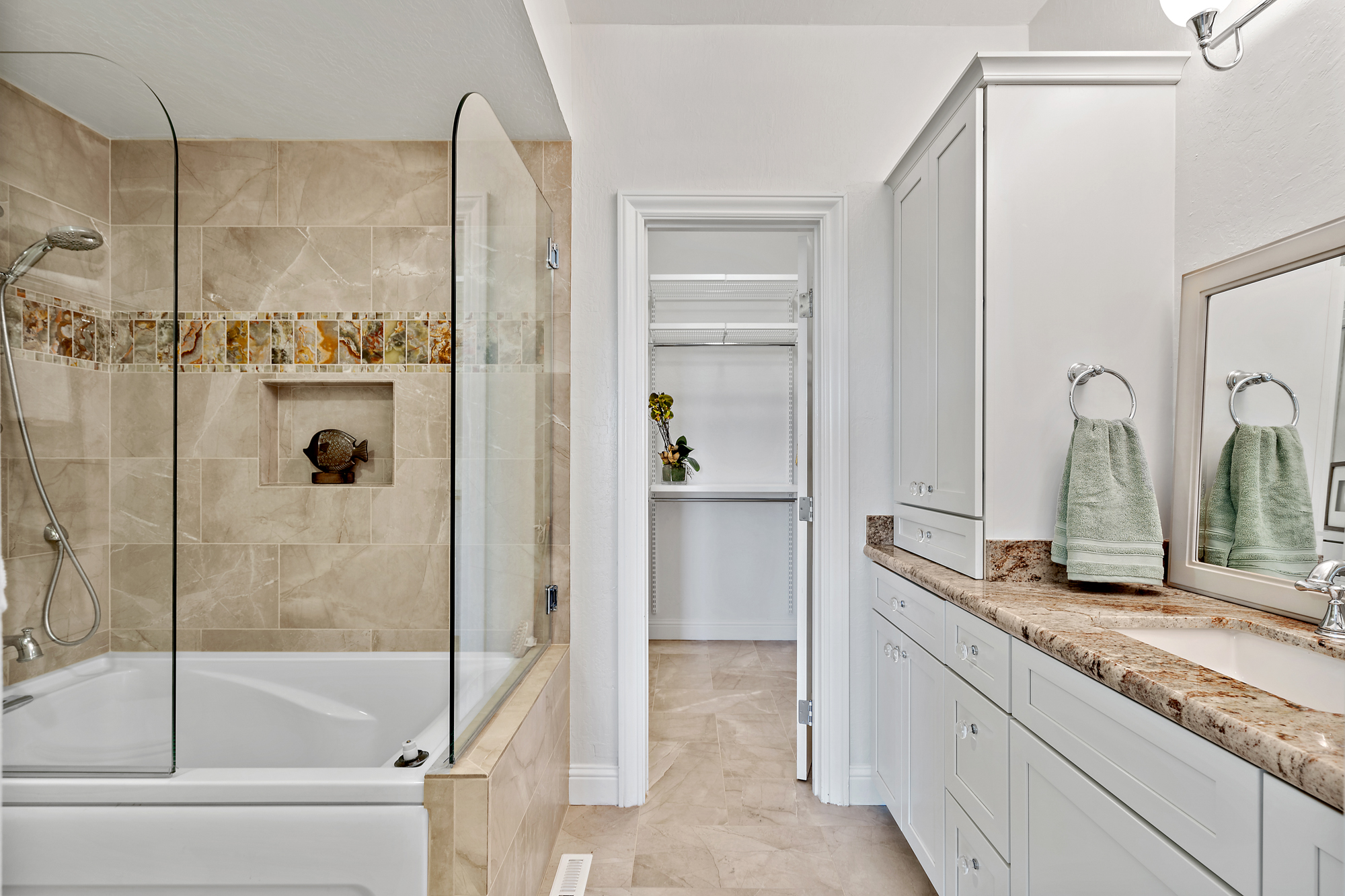
A traditional bathroom with a tub and shower combination, warm-toned tile surround, and a classic vanity with stone countertop. The layout offers practicality with timeless design details.
Trade Term: Stone Resin
Stone resin (also called composite or mineral cast) is a mix of natural stone powder — typically limestone or quartz — bonded with resin. The result is a material that looks and feels like natural stone, holds heat almost as well as cast iron, weighs significantly less, and is non-porous so it won't absorb stains. It's become the default premium material for freestanding tubs because it can be molded into sculptural shapes that cast iron can't match. If you like the cast iron heat-retention but not the 400-lb floor loading, stone resin is the practical alternative.
What I Actually Have (And Why)
When I replaced my own tub, I went with a freestanding stone resin soaker. Not because it was the cheapest option — it absolutely was not — but because I knew I was going to use it every day and I wanted something that would hold the heat through a full soak without me constantly adding hot water.
My honest advice: buy the tub for how you actually live, not for the Instagram photo. If you take baths three times a week and genuinely care about the experience, spend on the material. If you're primarily adding a tub for resale and will mostly shower, a quality acrylic alcove is completely respectable and nobody will know the difference once it's tiled in.
Sizing: The Numbers That Actually Matter
Standard alcove tub dimensions — 60"×30"×14" — exist because they were designed to fit in standard framing. Most East Bay homes built after the 1960s were framed around these dimensions. Go outside them and you're potentially reframing, re-tiling, or rerouting plumbing.
Size and Fit Checklist
- Measure the tub alcove opening, not just the room. Alcove tubs are sized to fit a specific framed opening. A 60"×32" tub will not fit a 60"×30" rough opening — the framing has to be rebuilt.
- Interior depth 14–16 inches for true soaking. Anything shallower is really a shower tub, not a soaking tub. Many budget acrylic tubs are 12–13 inches deep — check the spec sheet before ordering.
- Water capacity 40–80 gallons. Standard alcove tubs hold about 40–42 gallons. Deeper soakers and corner tubs hold 60–80. Confirm your water heater can deliver that volume at temperature — a 40-gallon heater filling a 70-gallon tub will run cold before it's full.
- Delivery path clearance. Freestanding tubs, especially cast iron and stone resin, may not fit through standard doorways or up narrow staircases. Measure every doorway and turn between the delivery point and the bathroom before you order. We've seen this discovery made on installation day. It's not fun.
- Floor structure for heavy tubs. Cast iron and stone resin tubs loaded with water can approach 800–1,000 lbs. If your home was built before 1980, have a contractor assess the subfloor framing before committing. Adding blocking or sister joists is manageable during a remodel — it's a problem after the tub is installed.
Rossmoor Homeowners — Tub Replacements
Rossmoor's co-op condominiums require Mutual board approval before tub replacement work begins — particularly for any project involving drain rerouting, subfloor work, or moving plumbing supply lines. Many Mutuals also have specific waterproofing requirements for wet areas and may require documentation of the installation method.
Cast iron and stone resin tubs require floor structure assessment before approval — Rossmoor's original concrete subfloor construction in many buildings handles weight differently than wood-frame homes. We've done enough Rossmoor bathroom remodels to know what each Mutual typically requires and how to prepare your submittal. Call us before you buy the tub: (925) 937-4200.
Safety and Accessibility Features Worth Planning In
If a tub remodel is on your horizon, it's also the right moment to think about features that make the space safer and more accessible — whether for current needs or future ones. It's exponentially cheaper to plan these in during a remodel than to retrofit them later.
Safety and Accessibility Considerations
- Anti-scald valve (thermostatic mixing valve). Limits the maximum water temperature at the fixture — critical for households with young children, elderly family members, or anyone with reduced sensation. Can be installed at the valve during rough-in for minimal added cost.
- Grab bar blocking in walls. Even if you're not installing grab bars today, adding solid blocking (a 2×6 or plywood panel between studs) during the remodel costs almost nothing and means you can add bars later without opening the wall. We do this on every bathroom remodel by default.
- Anti-slip surface or strips. Tub floors are slippery when wet. Textured tub surfaces are best. If your chosen tub has a smooth floor, plan for adhesive anti-slip strips — applied after installation, before first use.
- Step or threshold height. The higher the tub wall, the harder the step-over. Standard alcove tubs are 14–15" to the rim. For aging-in-place consideration, look at tubs with a lower threshold or plan for a built-in step if the bathroom layout allows it.
- Tub-to-shower conversion option. If this tub might eventually be replaced with a walk-in shower, consider how the plumbing rough-in and drain location would work for that conversion. A little planning now means a much simpler project later.
Real Cost Breakdown
Tub costs have two parts: the fixture itself and the installation — and they don't scale together. A $400 alcove tub and a $4,000 freestanding tub may have installation costs within $500 of each other if the rough-in doesn't need to move. Move the drain, reframe the alcove, or reinforce the floor, and that math changes fast.
| Tub Type | Fixture Cost | Typical Install | Key Variables |
|---|---|---|---|
| Alcove / Fiberglass | $200–$800 | $400–$900 | Drain side match; tile surround separate |
| Alcove / Acrylic | $400–$1,500 | $500–$1,000 | Step up in finish quality; same install complexity |
| Freestanding / Acrylic | $800–$2,500 | $800–$1,500 | Floor-mounted drain and supply; plumber time increases |
| Freestanding / Stone Resin | $1,500–$5,000+ | $1,000–$2,000 | Floor structure check; delivery and positioning |
| Clawfoot / Cast Iron | $1,500–$5,000+ | $1,200–$2,500 | Floor reinforcement often required; exposed plumbing quality matters |
| Jetted / Whirlpool | $1,000–$4,000 | $1,200–$2,500 | Dedicated 20-amp circuit required; electrical adds cost |
Add plumbing adjustments, tile surround work, water heater upgrades, and subfloor reinforcement as separate line items if they apply — don't assume they're included in contractor quotes unless you've asked explicitly.
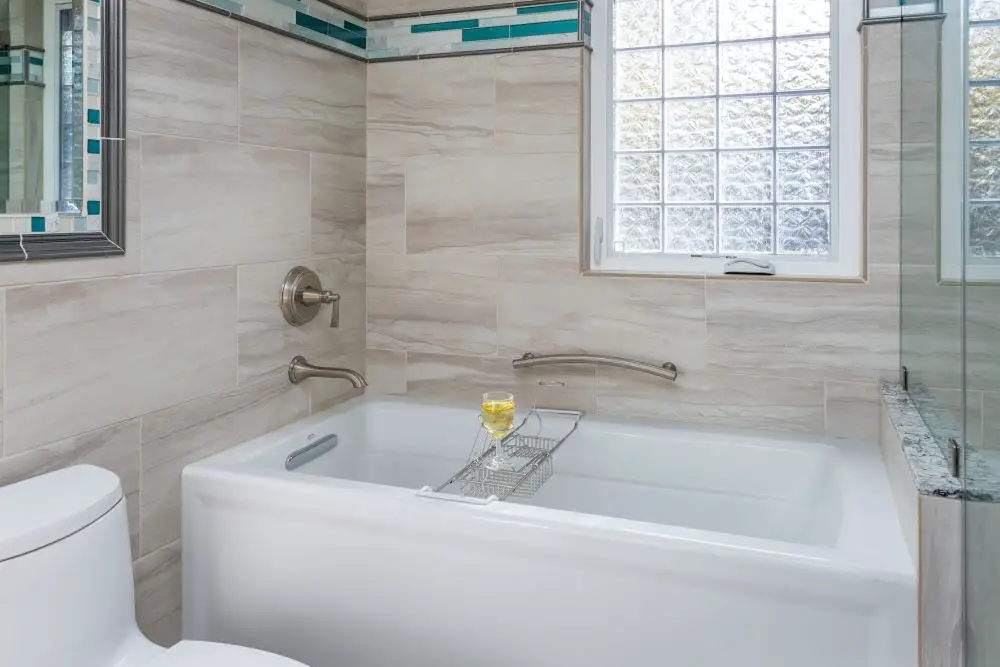
A modern-classic bathroom featuring a freestanding soaking tub, gray tile walls, and a clean white vanity. The design blends traditional layout with updated materials and finishes.
Common Questions
Can I replace my alcove tub with a freestanding tub in the same space?
Sometimes, but it requires replanning the rough-in. Alcove tubs drain through the wall or floor at one end. Freestanding tubs drain through the floor near the center. Moving the drain means opening the subfloor and rerouting the drain line — which is a real plumbing job, not just a swap. It's completely doable during a full bathroom remodel. It's expensive as a standalone project. If you're already tearing the room apart, absolutely consider it. If you're just trying to swap the tub without touching anything else, stick with an alcove replacement.
What's the difference between a soaking tub and a regular bathtub?
Depth and volume, primarily. A standard alcove tub is 12–14 inches deep and holds about 40 gallons — enough to cover your legs but not much else. A soaking tub is 14–20 inches deep and holds 60–80 gallons, designed to submerge the body up to the shoulders. "Soaking tub" is more of a marketing category than a technical specification — check the actual interior depth on the spec sheet, not just the label.
Are jetted tubs worth the maintenance?
Depends entirely on whether you'll actually maintain them. Whirlpool jets that aren't cleaned monthly develop biofilm in the internal plumbing lines — which means you're soaking in water that's circulating through contaminated pipes. Air-jet tubs don't have this problem because they only push air. If you genuinely want the hydrotherapy benefit and will run a cleaning cycle monthly, whirlpool jets are excellent. If that sounds like something you'll forget by February, go with an air-jet tub or a deep soaker without jets.
My bathroom floor is original 1960s construction. Can it handle a cast iron tub?
Possibly, but it needs to be assessed before you commit to the tub. Original construction from the 1960s used solid wood framing that is often in excellent condition — but joist spans and spacing vary, and a cast iron tub loaded with water can add 800+ lbs to a localized floor area. A contractor can assess the subfloor condition during demo and add blocking or sister joists if needed. This is a much cheaper conversation to have before the tub is ordered than after it's delivered.
Is it worth adding a tub if I mostly shower?
From a pure daily-use standpoint, no. From a resale standpoint, it depends on the market. In the East Bay, homes with no bathtub at all — even if it's a secondary bathroom — tend to raise questions for buyers with young children. If you're keeping one tub in the house and converting a secondary bath to walk-in shower only, that's a reasonable tradeoff. Removing the last tub in a home typically affects buyer pool. We're happy to walk through the resale math for your specific home during a consultation.
Keep Reading
Choosing a tub is the easy part. The planning is where it counts.
We've installed every tub type in this guide across Walnut Creek, Rossmoor, Alamo, Danville, and Lafayette. We'll help you figure out what fits your space, your budget, and your subfloor — before you fall in love with something that won't work.
Schedule a Consultation See Our Bathroom Work

Toupin Construction
Ready to start your remodel?
Whether you're dreaming of a new kitchen, a spa-worthy bathroom, or a whole-home transformation — we’d love to hear about your project. Reach out and let's talk.
‹ Back
Comments