


By using our website, you agree to the use of cookies as described in our Cookie Policy
Blog
Alder Cabinets: Soft, Warm, and Perfect for a Relaxed, Lived-In Home
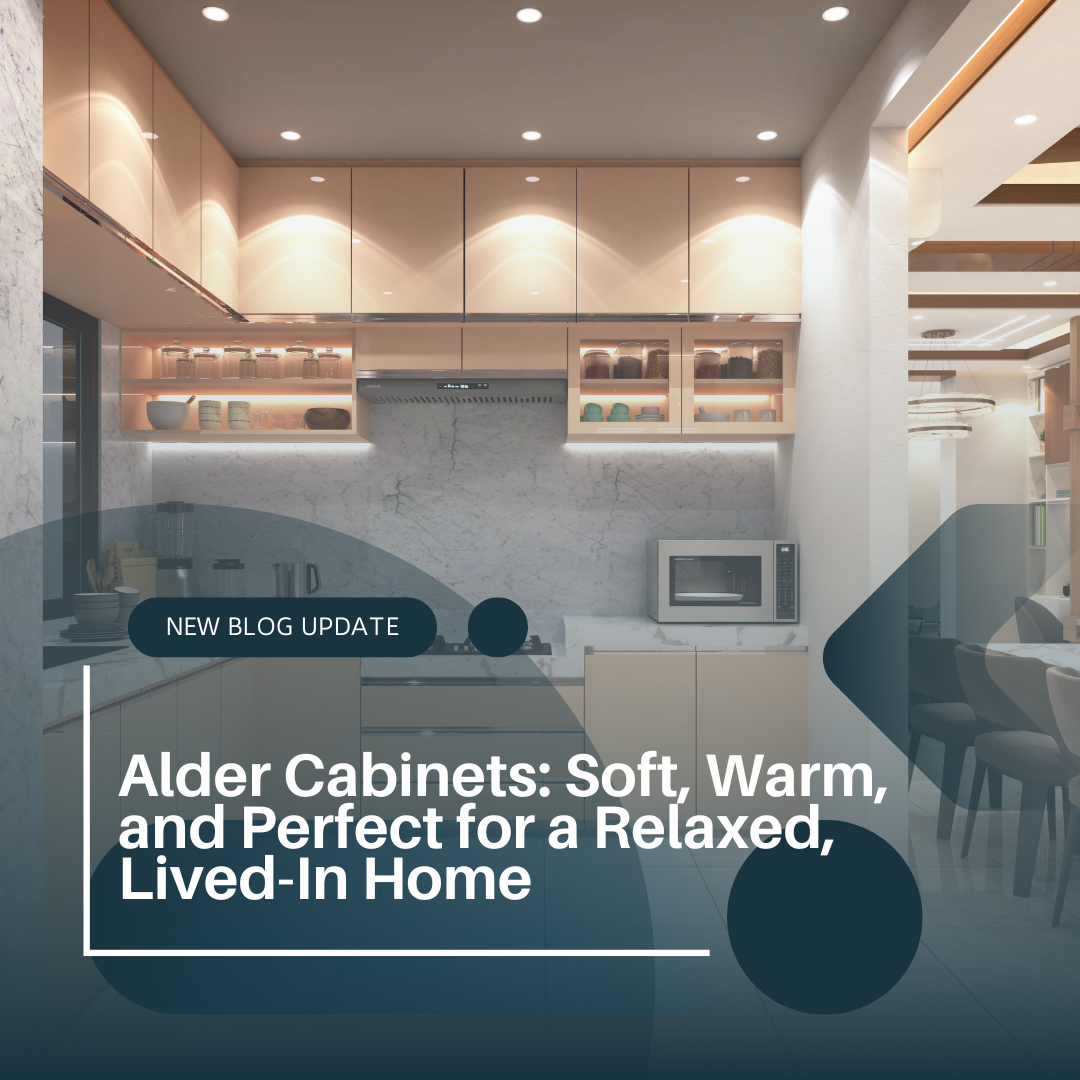
Alder is the wood that rarely gets hyped. It's not in every design magazine. It doesn't have the dramatic presence of walnut or the iconic status of oak. But almost every homeowner who ends up with alder says a version of the same thing: "I didn't think I wanted this — and now it's my favorite part of the house."
If you've ever walked into a kitchen and thought, "This feels cozy and welcoming, but not fancy or formal" — there's a good chance alder was involved.
Wood Species Series
- Wood Species 101: Start Here
- Oak Cabinets
- Maple Cabinets
- Walnut Cabinets
- Cherry Cabinets
- Alder Cabinets (this post)
- Hickory Cabinets
- Birch Cabinets
- Ash Cabinets
- Pine Cabinets
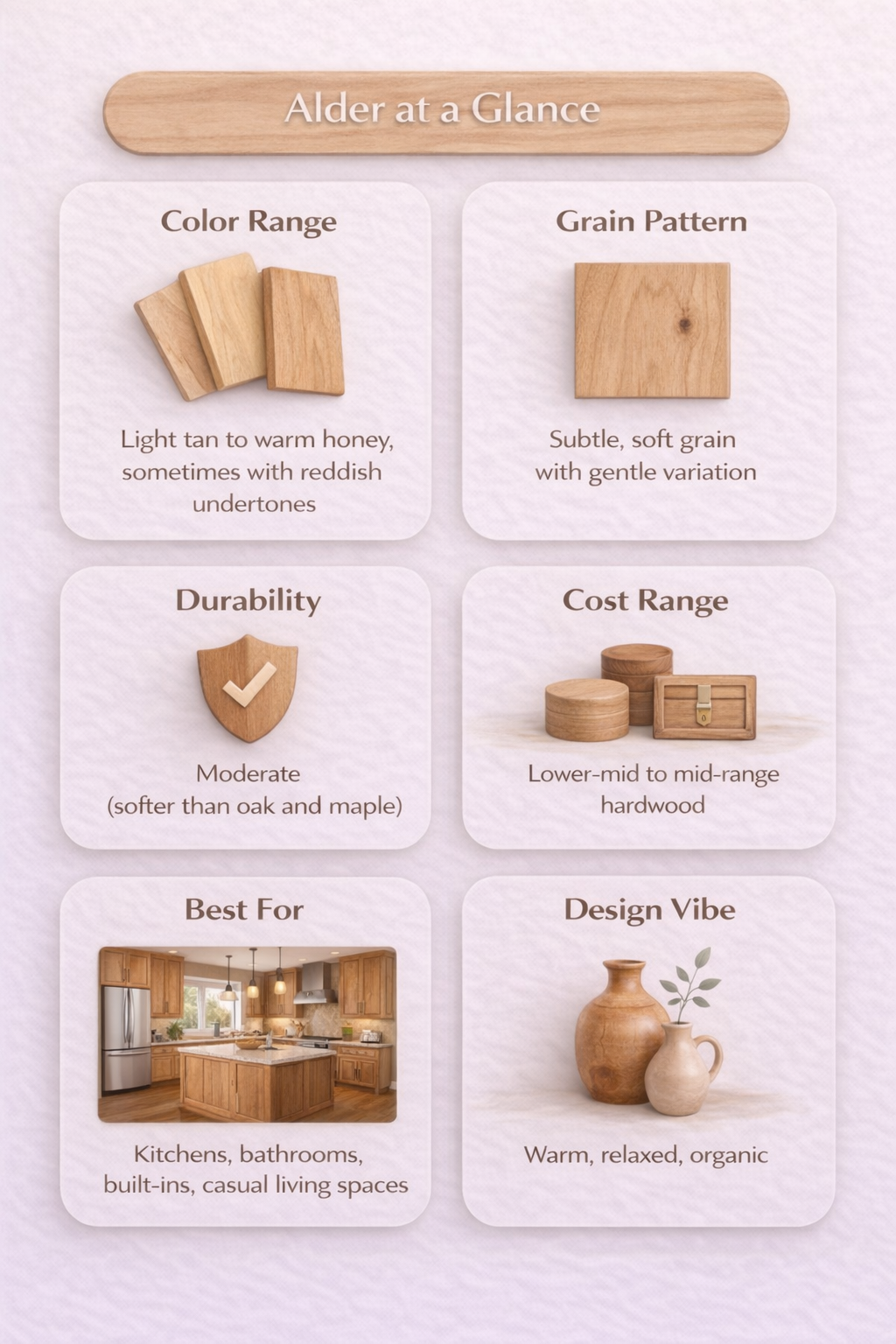 A visual guide to alder wood highlighting its light tan to warm honey tones, soft grain pattern, moderate durability, and mid-range cost. Alder is a popular choice for warm, relaxed cabinetry and casual living spaces.
Why Alder Is So Often Misunderstood
Alder doesn't photograph as boldly as other woods. On a sample board, it can look underwhelming — even plain. But alder isn't meant to stand alone as a statement piece. It's meant to work as part of the whole: cabinetry, counters, hardware, lighting, all coming together to create a space that feels genuinely livable.
It's a feeling wood more than a "look at me" wood. And for a lot of East Bay homeowners — especially families who want a kitchen that gets used, not just admired — that's exactly right.
"Almost every homeowner who ends up with alder says the same thing: 'I didn't think I wanted this — and now it's my favorite part of the house.'"
Jargon Card
Open vs. Closed Grain
Open-grain woods (like oak) have larger pores that are visible to the eye and absorb stain more dramatically. Closed-grain woods (like alder and maple) have smaller, tighter pores that absorb stain more evenly and create a smoother, more consistent finish. Alder's closed grain is part of why it stains so predictably — and why it can convincingly mimic more expensive woods with the right finish.
Because alder absorbs stain so evenly, it's often used to approximate the look of more expensive woods. A warm medium stain on alder can read very similarly to cherry at a meaningfully lower cost. That's not a compromise — it's a smart use of a genuinely good material.
The Honest Word on Durability
Alder is softer than oak and maple, and I want to be clear about what that means in practice. Heavy impacts will leave marks. Dents from normal use happen faster than they would with harder woods. If you're expecting showroom-condition cabinets at year ten, alder may frustrate you.
But here's what's true for most families: alder's softness tends to read as character. Dents and wear blend into the natural warmth of the wood rather than showing up as jarring damage. A kitchen that's been well-used with alder cabinets looks lived-in — which for a lot of homeowners is exactly the feeling they're after. It's a meaningful difference from a scratch on a painted maple cabinet, which reads as damage immediately.
Alder Grades: Clear vs. Knotty
One thing most homeowners don't know until they're mid-project: alder comes in different grades, and the grade changes the look significantly.
- Clear alder minimizes knots and shows the cleaner, softer grain. This is what we most often recommend for kitchens — it has warmth and character without the visual busyness of knots, and it photographs and stains beautifully.
- Knotty alder includes natural knots and more variation. It gives a more rustic, farmhouse feel — closer to pine in character, but with better durability and more even staining.
The grade you choose shapes the entire personality of the finished kitchen. Clear alder reads as polished and warm. Knotty alder reads as rustic and casual. Both are beautiful — but they're not interchangeable.
What Alder Actually Costs
Alder sits in the lower-mid to mid-range of hardwood pricing — less expensive than cherry or walnut, roughly comparable to birch, and slightly less than maple or oak depending on the region and supplier.
That pricing position is one of alder's genuine advantages. It delivers the warmth and visual character of a mid-tier hardwood at a cost that often leaves room in the budget for better countertops, hardware, or appliances. For homeowners who want a kitchen that feels rich and considered without spending at the walnut level, alder frequently hits the sweet spot.
Door Styles That Suit Alder
Alder is flexible across door styles in a way that more opinionated woods aren't. Its subtle grain doesn't demand a specific profile the way hickory or walnut do. That said, some styles bring out the best in it.
Shaker doors are the most common pairing — and for good reason. The clean lines frame alder's warmth without competing with it. Raised panel doors work well in more traditional kitchens where the softer grain reads as elegant rather than plain. Flat-panel doors are a solid choice in transitional or casual modern spaces.
What to avoid: very ornate or heavily detailed profiles. Alder doesn't have the visual authority to carry elaborate detailing — it ends up looking confused rather than elegant. Keep the door profile simple and let the stain color do the expressive work.
How Alder Ages
Alder ages quietly. The color warms and mellows over time — honey tones deepen slightly, the grain becomes a little more familiar, and the whole kitchen starts to feel settled and intentional. It doesn't undergo the dramatic transformation of cherry, which deepens significantly, or the bold patina development of walnut. It just gets more comfortable.
Wear tends to blend into the wood's natural warmth rather than creating jarring damage points. A ten-year-old alder kitchen that's been loved and used looks exactly right — not tired, just seasoned. For homeowners who want a home that feels earned rather than pristine, that quality is hard to put a price on.
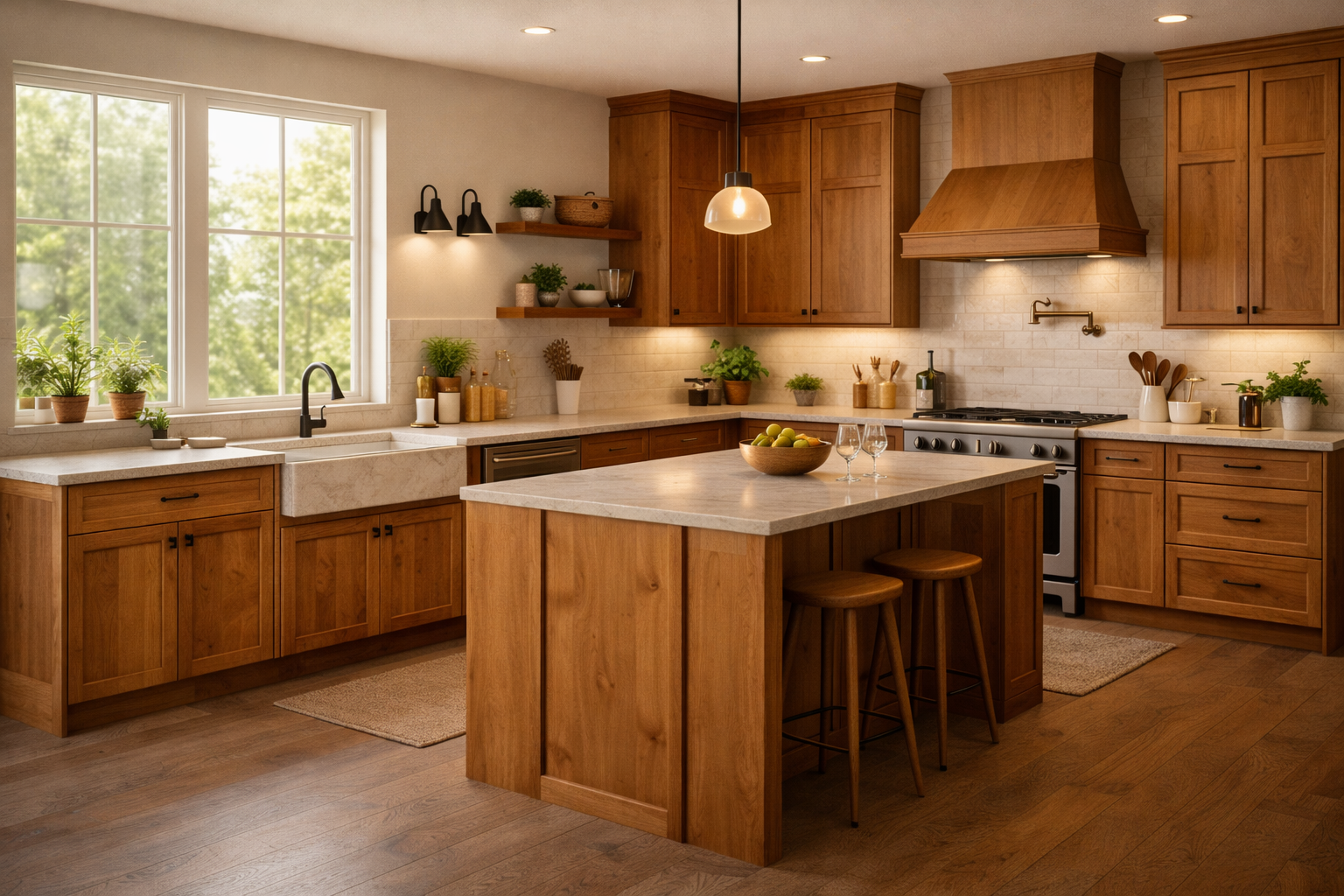 A welcoming kitchen with alder cabinetry, highlighting its warm color and gentle grain pattern. Alder cabinets create a relaxed, organic feel and are ideal for kitchens, bathrooms, and built-in storage.
Pros and Cons
What Works
- Warm, inviting appearance — feels cozy and genuinely approachable
- Absorbs stain evenly — great for consistent, predictable stained finishes
- More affordable than cherry or walnut
- Available in clear and knotty grades — flexibility for different aesthetics
- Relaxed, timeless feel that doesn't chase trends
What to Watch For
- Softer than oak and maple — more susceptible to dents in heavy-use kitchens
- Painted alder shows wear more easily than painted maple
- Not ideal for ultra-modern or very formal design aesthetics
- Less forgiving than harder species if your household is very active
Rossmoor Homeowners
For Rossmoor kitchens, we often recommend clear alder — the grade that minimizes knots and shows the cleaner, softer grain. Paired with a warm medium stain and simple hardware, it creates a relaxed but polished look that works well in co-op units without competing with smaller square footage. Alder in lighter stains also keeps spaces from feeling dark, which matters in units that don't get a lot of direct light. It's one of our most consistent recommendations for Rossmoor primary kitchen remodels — warm enough to feel like home, restrained enough to photograph well for resale.
Design Pairings for Alder
Alder pairs best with warm, natural materials. It needs warmth around it to feel intentional — cool or stark surroundings make it look pale rather than soft.
Countertops: Quartz with subtle veining, soapstone, honed stone surfaces, and warm-toned porcelain all complement alder beautifully. Avoid very cool-toned stones or bright white quartz — they fight the warmth of the wood and make the whole kitchen feel like two different rooms that got combined by accident.
Hardware: Brushed bronze, oil-rubbed bronze, soft brass, or matte black. Warm and organic. Polished nickel or chrome feels too cold against alder's natural tones. The hardware should whisper, not shout — alder's warmth is doing the work.
Wall colors: Creams, warm whites, muted sage greens, and earthy neutrals are all strong partners. Alder doesn't thrive next to cool grays or stark bright whites — it starts to look washed out rather than warm. If you want to go darker on the walls, warm clay tones or a deep terracotta can be stunning.
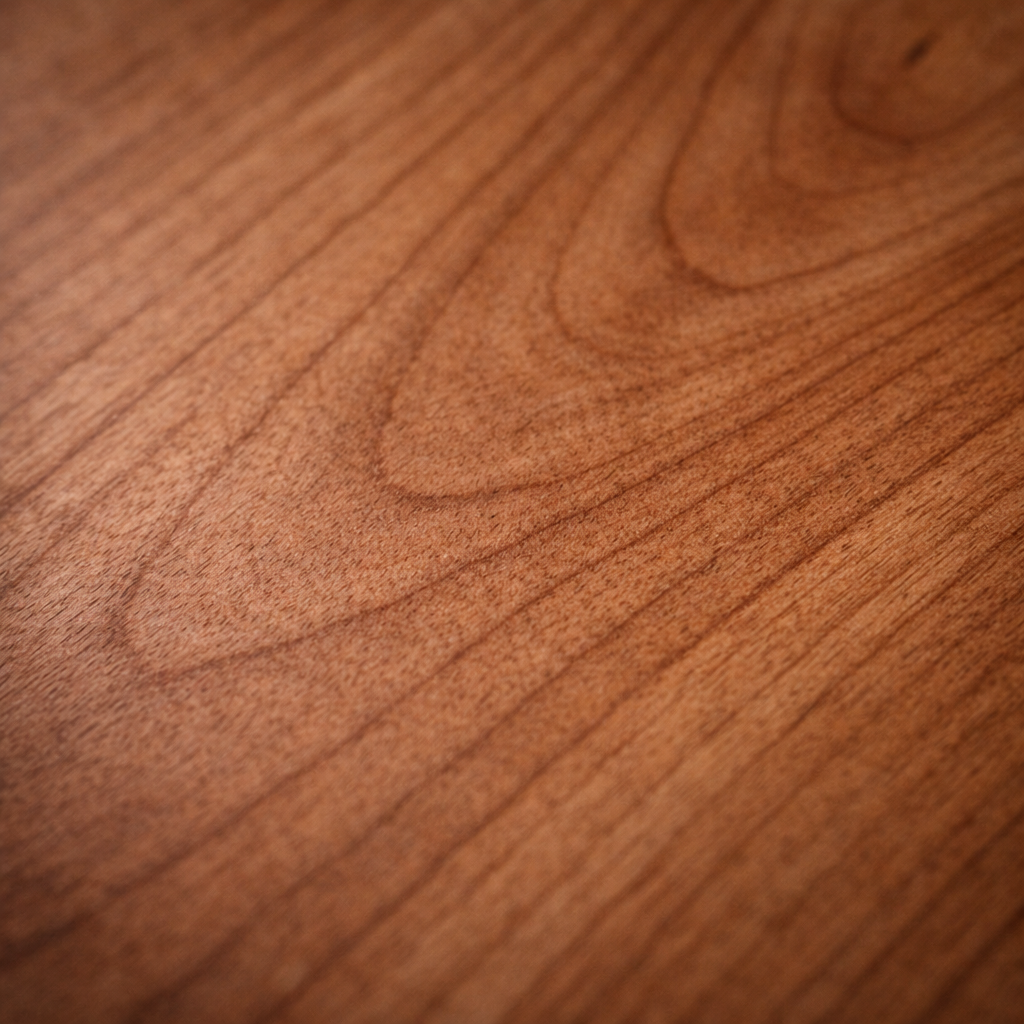 A detailed close-up of alder wood showcasing its soft, subtle grain and warm natural tones. Alder offers a smooth, understated look that works well in both traditional and modern cabinetry.
Is Alder Right for You?
Alder is a strong fit if you want a warm, relaxed space that feels genuinely lived-in, prefer subtle grain over dramatic contrast, like stained wood finishes, are comfortable with natural wear becoming part of the character, and want a wood that works with your budget without feeling like a compromise.
Think carefully before choosing alder if you want maximum durability — for heavy-use households, oak or hickory will hold up better. If you want a sleek modern aesthetic, ash or maple are better suited. If you want painted cabinets that stay smooth for years, maple is the right answer. And if you love the warmth of alder but want something that deepens dramatically over time, cherry is worth a close look.
But if you've ever described your ideal home as "cozy," "warm," or "like it's been there forever" — alder is probably one of your answers.
From Candi
Alder is the wood I recommend to people who want their home to feel like a home — not a showroom. When it's right, it's really right. The clients who choose it almost always come back and tell us it was their best decision of the whole project. If you're curious about how alder might work in your specific space, reach out through our contact page or browse our portfolio for examples.
Thinking About Alder?
We'll help you figure out if alder — or another species — is the right fit for your home and lifestyle. Honest conversation, no pressure.
Let's Talk →
Toupin Construction
Ready to start your remodel?
Whether you're dreaming of a new kitchen, a spa-worthy bathroom, or a whole-home transformation — we’d love to hear about your project. Reach out and let's talk.
‹ Back
Comments