


By using our website, you agree to the use of cookies as described in our Cookie Policy
Blog
Window Replacement: What East Bay Homeowners Actually Need to Know

Window Replacement: What East Bay Homeowners Actually Need to Know
A few years ago, Tim walked into a Rossmoor condo for an estimate on a bathroom. The homeowner wanted new tile. Tim looked around, nodded, then pointed at the bedroom window — an original 1965 aluminum single-pane sliding unit, frames sweating with condensation, sash so warped it took two hands and a prayer to open.
"How's your heating bill?" he asked. She laughed. "My thermostat basically runs the marathon every winter."
The tile got replaced. So did the windows. Her bills dropped. The bedroom stopped feeling like a cold storage unit. That's how it usually goes — windows are the thing people don't think about until they can't ignore them anymore.
If your windows are fighting you — drafty, foggy, stuck, sweating — this guide is for you. We're going to walk through everything: why windows fail, what your options are, what to look for on the label, and why this is not a weekend DIY adventure.
Why Do Windows Even Need to Be Replaced?
Windows aren't designed to last forever. Most residential windows have a functional lifespan of 20–30 years for vinyl, 30–50 for wood and fiberglass. Homes in Walnut Creek, Alamo, and especially Rossmoor are full of windows that have been quietly underperforming for a decade or more.
Signs It's Time to Replace
- Condensation or fog trapped between the panes (the seal has failed — that's not fixable with cleaning)
- Frames that are soft, rotted, or visibly warped
- Drafts you can feel with your hand on a winter evening
- Windows that stick, jam, or won't lock properly
- Energy bills that keep climbing even though nothing else has changed
- Glass that's cracked, single-pane, or original to a 1960s build
Beyond the obvious comfort problems, underperforming windows are a real cost. The Department of Energy estimates that heat loss and gain through windows accounts for a significant chunk of a home's HVAC load. In the East Bay's mild climate, that translates directly to your PG&E statement every month.
Types of Replacement Windows
Not all windows open the same way — and the operation style affects everything from airflow to cleaning ease to what makes sense for your specific rooms. Here's a quick breakdown:
| Type | How It Works | Best For | East Bay Note |
|---|---|---|---|
| Double-Hung | Both sashes slide up and down independently | Classic homes, bedrooms, street-facing walls | Easy to clean; works in most Walnut Creek and Rossmoor floor plans |
| Casement | Hinged on one side, swings outward with a crank | Side yards, spots where airflow matters | Outstanding seal when closed — great for energy efficiency |
| Sliding | One panel slides horizontally past a fixed panel | Modern homes, wide openings, patio-adjacent walls | Easy operation; common upgrade in East Bay condo remodels |
| Bay / Bow | Projects outward from the wall, adding depth and light | Living rooms, breakfast nooks, reading corners | Dramatic upgrade in homes with limited natural light |
| Picture | Fixed glass panel — doesn't open | Views, feature walls, stairwells | Best energy performance since there's no operable hardware to fail |
| Awning | Hinged at top, swings outward from the bottom | Bathrooms, spots that need ventilation even in light rain | Practical for East Bay's occasional wet winters |
The Terms You'll Actually Encounter
Window shopping (pun intended) gets confusing fast because there's a lot of technical language thrown around on spec sheets and at showrooms. Here are the terms worth knowing before you start getting quotes:
U-Factor
Measures how much heat escapes through the window. Think of it like a golf score — lower is better. A U-factor of 0.25 is significantly better than 0.50. Most California Title 24 compliant windows land around 0.30 or lower.
SHGC (Solar Heat Gain Coefficient)
Measures how much of the sun's heat comes through the glass. Scale of 0 to 1. In the East Bay, you generally want a lower SHGC (around 0.25) to keep summer afternoons cooler without blocking light entirely.
Low-E Coating
A nearly invisible metallic film applied to the glass surface. It reflects heat while letting visible light through — like sunscreen for your windows. All Title 24 compliant windows in California are required to have it.
IGU (Insulated Glass Unit)
The sealed glass assembly — the two or three panes bonded together with a spacer and gas fill. When your window goes "foggy," the IGU seal has failed and moisture has gotten between the panes. The IGU needs replacement, not just cleaning.
Argon Fill
A dense, inert gas pumped between the panes inside the IGU. It's a better insulator than plain air. Argon fill is standard on most quality replacement windows and adds meaningfully to energy performance.
Sash
The moving part of the window — the frame that holds the glass and slides, swings, or cranks open. When someone says their window sticks, they usually mean the sash is warped, painted shut, or has hardware that's given up.
Flashing
Metal or membrane material installed around the window frame to direct water away from the wall cavity. This is one of the most critical parts of window installation — improper flashing is how windows cause water damage and mold years later. It's invisible once the trim goes on, but it matters enormously.
Title 24
California's Building Energy Efficiency Standards. Any permitted window replacement in California has to meet these minimums. They specify maximum U-factor and SHGC values. Your installer and permit department will verify compliance — this is not optional and not something to try to skip.
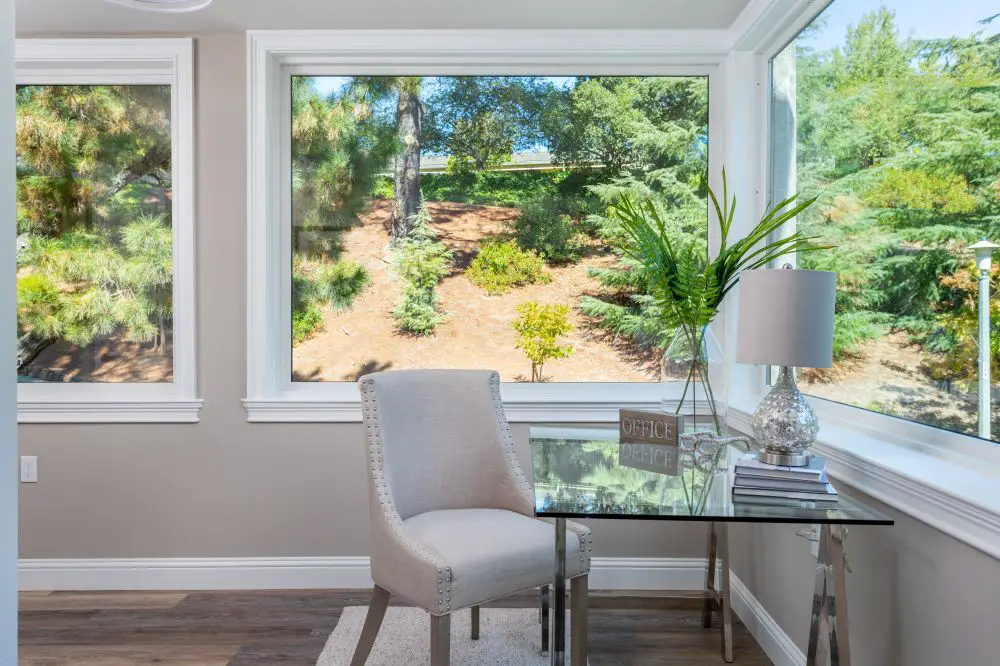
Expansive picture windows in an East Bay home bringing in natural light and showcasing hillside views, paired with a cozy seating vignette for a bright, relaxing space.
Choosing Your Frame Material
The frame material affects everything: how much maintenance you'll do over the next 30 years, how the window performs thermally, what it looks like, and what it costs. There's no universally right answer — but there are a few things worth knowing about how each plays out in the East Bay specifically.
| Material | Pros | Cons | Lifespan | Cost | East Bay Fit |
|---|---|---|---|---|---|
| Vinyl | Low maintenance, affordable, good insulation | Limited color options; can warp in extreme heat; not paintable | 20–30 yrs | $ | Excellent — mild climate doesn't stress vinyl the way desert heat does |
| Wood | Beautiful, excellent insulator, paintable in any color | Requires regular painting/sealing; can swell or rot if neglected | 30–50 yrs | $$ | Good — our mild, mostly dry climate is forgiving on wood, but don't skip maintenance |
| Fiberglass | Strongest frame, best thermal performance, paintable, very low maintenance | Higher upfront cost | 40–50 yrs | $$$ | Outstanding — genuinely the best performer; worth the premium if budget allows |
| Aluminum | Slim profiles, modern look, extremely durable structurally | Poor thermal performance unless thermally broken; conducts cold | 20–30 yrs | $$ | Fine for mild East Bay winters, but avoid in bedroom windows if you run cold |
| Composite | Wood interior, weather-resistant exterior; looks like wood, performs like fiberglass | Pricey; fewer profile options | 30–50 yrs | $$$ | Great for historic homes where wood look is required but low maintenance is wanted |
"In the East Bay, I steer most clients toward vinyl for a budget project and fiberglass when they want to install something once and forget about it. Wood is beautiful — but it requires a commitment. If you don't want to be repainting frames every few years, don't choose wood."
— Tim Toupin, Toupin ConstructionEnergy Performance: What to Look For on the Label
All windows sold for residential use in the U.S. are required to carry an NFRC label — the National Fenestration Rating Council certification. It's a standardized tag that gives you apples-to-apples performance comparisons between brands and models.
Look for the ENERGY STAR label as well. Windows carrying it meet minimum efficiency thresholds for your climate zone. California's Northern zone (which includes Walnut Creek) has specific requirements for both U-factor and SHGC — your contractor should be specifying windows that meet Title 24 for your permit to clear.
| Feature | What It Does | East Bay Recommendation |
|---|---|---|
| Low-E Coating | Reflects radiant heat, reduces UV fade on furniture | Non-negotiable — required for Title 24 |
| Double Pane (IGU) | Dramatically reduces heat transfer vs. single pane | Minimum standard; step up if budget allows |
| Triple Pane | Best insulation; heavier and pricier | Overkill for our mild climate unless you're near a freeway |
| Argon Gas Fill | Better insulation than air between panes | Standard on quality windows; ask if it's included |
| Warm Edge Spacers | Reduces condensation at the glass edge | Worth specifying; reduces thermal bridging at the frame |
| U-Factor ≤ 0.30 | Lower = less heat escape in winter | Title 24 target for most climate zones in our area |
| SHGC ≤ 0.25 | Lower = less solar heat gain in summer | Helps keep summer afternoons manageable without heavy blinds |
One more thing worth mentioning: California utility rebate programs. BayREN (Bay Area Regional Energy Network) periodically offers incentives for qualifying energy upgrades, including windows. Your contractor should be able to point you toward current programs — don't assume there's nothing available before you check.
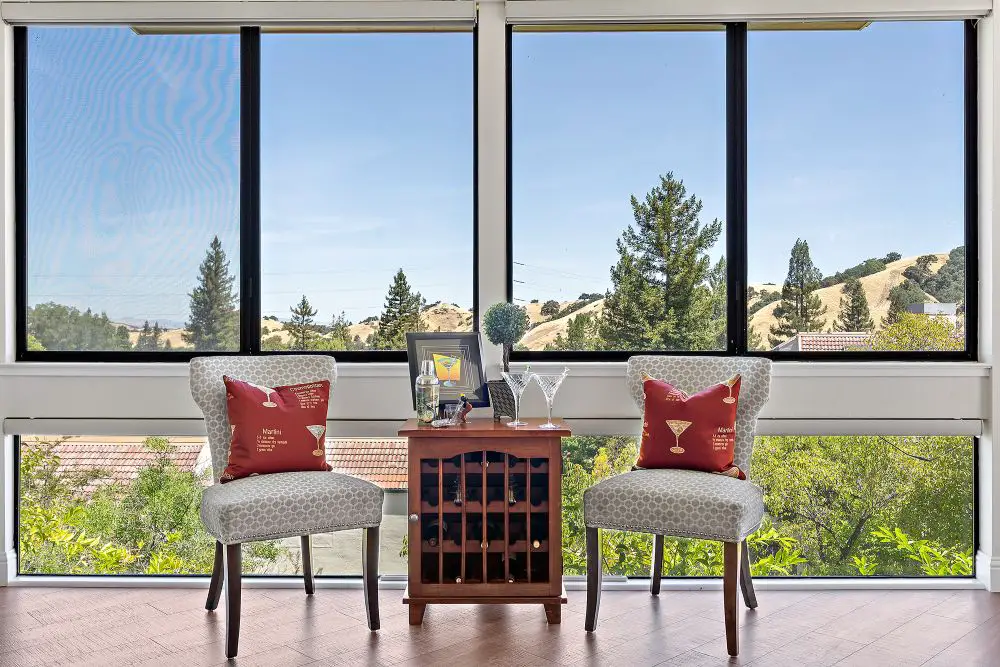
Expansive picture windows in an East Bay home bringing in natural light and showcasing hillside views, paired with a cozy seating vignette for a bright, relaxing space.
What the Installation Process Actually Looks Like
Window replacement sounds simple — pull the old one out, put the new one in. In practice, there are a few things that can go sideways if the work isn't done carefully. Here's what a professional installation involves, start to finish:
1
Measure & Assess
A contractor measures the existing rough opening and inspects the surrounding framing, sill, and wall cavity for any moisture damage, rot, or past improper installation. Surprises here are common in older homes — especially anything built in the '60s and '70s. Better to find them before the new window goes in than after.
2
Select & Order
You choose your window type, frame material, glass package, and hardware. Most replacement windows are manufactured to order for your specific rough opening dimensions — lead times vary by manufacturer, typically 2–6 weeks. Don't let anyone talk you into pulling out your existing windows before the new ones are on site.
3
Pull Permits
In most Walnut Creek and East Bay jurisdictions, window replacement requires a building permit if you're changing the size, type, or location of the opening. Rossmoor adds Mutual approval to the list. This is not bureaucratic busywork — permitted work is inspected work, and that protects your home's value and your warranty coverage.
4
Remove & Install
Old windows come out. Framing is inspected and repaired if needed. The new window is set, shimmed level and plumb, secured, and then — critically — flashed and sealed against water intrusion. Flashing done right is invisible once the trim goes on. Flashing done wrong is a water damage claim waiting to happen.
5
Trim & Finish
Interior and exterior trim is reinstalled, caulked, and painted. This is the step that separates a completed installation from one that looks like someone just did the job and left — the finish work is what you live with every day.
6
Inspection & Sign-Off
For permitted work, a city inspector will verify that the installation meets code. In Rossmoor, your Mutual may do a final visual check as well. Once everything clears, you're done — and everything is documented for future buyers if you ever sell.
Taking Care of New Windows
New windows are not maintenance-free — but the upkeep is genuinely minimal if you stay on top of a few basics. A twice-a-year check-in (spring and fall works well) covers most of it:
- Inspect caulking around the exterior frame and reseal any cracks before the rainy season
- Clean weep holes — the small drainage slots at the bottom of the frame — so water doesn't back up into the frame
- Lubricate hardware: locks, cranks, and hinges with a light silicone spray (not WD-40, which attracts dirt)
- Wipe tracks clean — debris in the track causes premature wear on sliding windows
- For wood frames, inspect the paint or stain every 2–3 years and touch up before it fails
- Never use a pressure washer on windows — the force can compromise seals and force water into the wall cavity
Common Questions
How much does window replacement cost in the East Bay?
It depends heavily on frame material, glass package, window size, and count. As a rough range: expect $600–$1,200+ per window installed for vinyl, and $1,000–$2,000+ per window for fiberglass. Always get three itemized quotes. Be skeptical of very low bids — they often reflect corners cut on flashing, sealing, or hardware quality.
How long does installation take?
Most full-home window replacements take 1–3 days for the installation itself, depending on the number of windows and complexity of any framing repairs. Add lead time for the windows to be manufactured — typically 2–6 weeks from order to delivery.
Do I need permits to replace windows in Walnut Creek?
It depends on the scope. Replacing windows in the same size and location (called a "like-for-like" replacement) sometimes doesn't require a permit — but changing the rough opening size, adding a window, or working in Rossmoor will require permits and possibly Mutual approval. A licensed contractor will know the requirements for your specific situation and should handle the permit filing as part of their scope.
Should I replace all windows at once or one at a time?
There are real advantages to doing all of them at once: one mobilization cost, consistent aesthetics, a single warranty, and the fact that you can negotiate better pricing on larger orders. That said, if budget is the constraint, prioritizing by condition (worst first) or location (bedrooms, north-facing walls where drafts are worst) is a reasonable approach.
Can I DIY window replacement?
Technically yes. Practically — we don't recommend it. The glass is heavy, the margin for error on flashing is zero, and improper installation voids manufacturer warranties. The payback period on hiring a licensed professional is measured in avoided water damage claims, not just efficiency gains. If you want a weekend project, install a ceiling fan.
The Bottom Line
Replacing your windows is one of those projects that homeowners put off longer than they should — and then wonder why they waited. Better comfort, lower energy bills, less noise, more security, and a home that actually looks like someone takes care of it. The case makes itself.
What we'd encourage you to do right now: walk your house on a cold evening with the lights on inside. Put your hand near each window frame. If you feel air movement, that's money leaving your home every single day. It doesn't have to be.
Tim and the crew have replaced windows in hundreds of East Bay homes — from single-family houses in Alamo and Danville to Rossmoor condos navigating Mutual approvals. We know the local codes, the common gotchas in older construction, and the brands that actually hold up. We'd love to take a look at yours.
Ready to Stop Feeling That Draft?
We're happy to do a free walk-through and give you an honest assessment — no pressure, no sales pitch. Just a straight answer about what your windows actually need.
Request a Free Consultation See Our PortfolioOr call us directly: 925-937-4200
Toupin Construction
Ready to start your remodel?
Whether you're dreaming of a new kitchen, a spa-worthy bathroom, or a whole-home transformation — we’d love to hear about your project. Reach out and let's talk.
‹ Back
Comments