


By using our website, you agree to the use of cookies as described in our Cookie Policy
Blog
Grout: The Decision That Makes or Breaks Your Tile Job

Deep Dive · Tile & Materials
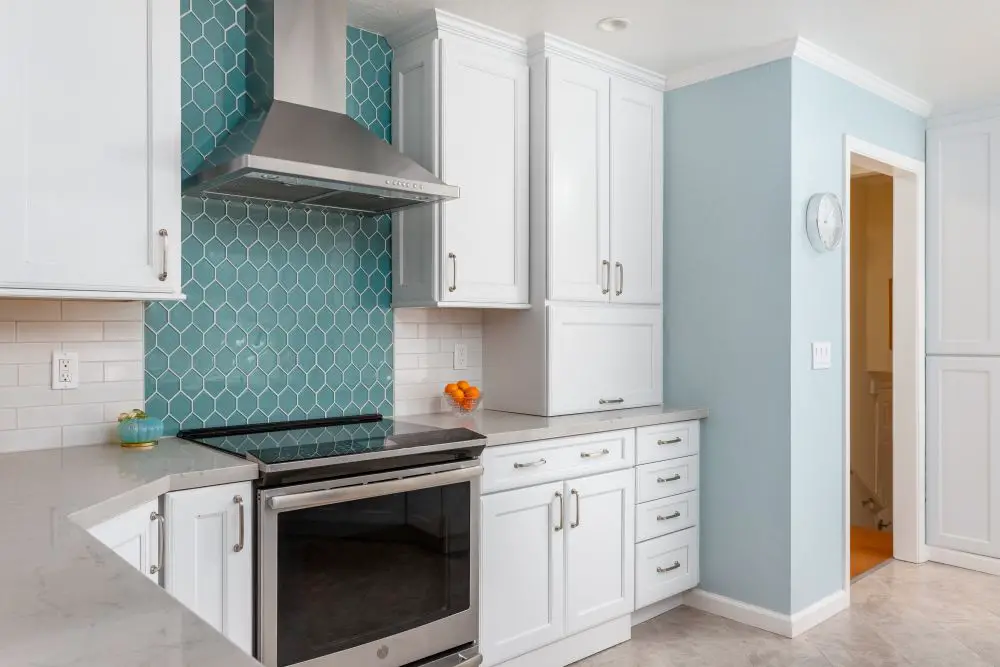 A bright kitchen featuring white cabinetry and a teal hexagon tile backsplash, highlighting clean grout lines that define the pattern and add contrast to the space.
A bright kitchen featuring white cabinetry and a teal hexagon tile backsplash, highlighting clean grout lines that define the pattern and add contrast to the space.Pick the wrong grout color and you'll spend the next ten years staring at a tile job that almost looks right. Pick the wrong grout type and you'll spend the next two years cleaning a shower that can't really be cleaned — until eventually you call us to redo it.
We've been setting tile in East Bay and Rossmoor kitchens and bathrooms for over forty years. Grout is the decision that homeowners make last, often in about five minutes at the end of a long material selection process, and it's the one they're most likely to regret. This post is about giving it the time it deserves — because the tile is the artwork, but the grout is the frame. Get the frame wrong and the whole thing is off.
What Grout Actually Does
Grout fills the joints between tiles, but that's the least interesting thing it does. It also determines the visual rhythm of the whole installation — how your eye moves across the surface, whether the tile reads as a continuous plane or as individual pieces, whether the pattern pops or quietly recedes.
It's also structural. Grout locks tiles against lateral movement, seals edges against moisture infiltration, and cushions tile edges so they don't chip against each other when the substrate shifts. Houses shift. They expand and contract with temperature and humidity. Grout is how the tile accommodates that movement without cracking.
Trade Term: Grout Joint
A grout joint is the intentional gap between tiles that gets filled with grout. Joint width is measured in fractions of an inch — typically 1/16" to 1/2" depending on the tile type and application. Rectified tile (machine-cut with precise edges) can go as tight as 1/16". Handmade tile like zellige needs more — usually 3/16" or wider — because the edges aren't perfectly uniform. Joint width affects both the structural performance and the visual look of the finished installation.
In East Bay homes specifically, grout in wet areas is doing active moisture management. The East Bay's moderately hard water leaves mineral deposits on grout surfaces. Showers that aren't properly ventilated trap humidity that finds any compromised grout joint as an entry point. The grout choice and the installation quality are working together — or against each other — every single day.
The Three Types of Grout — and Which One We Actually Recommend
Side by Side: Which Grout for Which Job
| Application | Cement | Epoxy | Urethane |
|---|---|---|---|
| Walk-in shower walls | Not recommended | Our standard | Acceptable |
| Shower floor | Not recommended | Our standard | Acceptable |
| Kitchen backsplash | Fine if sealed | Good choice | Good choice |
| Bathroom floor (dry) | With sealing | Good choice | Good choice |
| Kitchen floor | With sealing + maintenance | Best option | Good choice |
| Decorative backsplash, low moisture | Good choice | Good choice | Good choice |
| Outdoor / patio tile | Not recommended | Best option | Check product specs |
Grout Color: The Decision Nobody Takes Seriously Enough
Here's a thing we see constantly: homeowners spend weeks selecting tile and thirty seconds on grout color. They grab a standard white or gray chip at the end of the tile selection appointment and call it done. Then the installation happens and they realize the grout is reading differently than they expected — too stark, too lost, too visible — and there's nothing to do about it now.
Grout color deserves its own appointment. Here's what each approach actually does to the finished look.
"White grout on white subway tile looks clean in a showroom under controlled lighting. In a real kitchen under warm pendants, it can read almost yellow within a year. Always test your grout color under your actual lighting before you commit."
The Hard Water Factor in the East Bay
East Bay water is moderately hard — meaning it contains dissolved minerals, primarily calcium and magnesium, that deposit on surfaces over time. On grout, this shows up as a white or gray mineral haze that's resistant to normal cleaning. It's not mold, it's not damage, but it makes white and very light grout look perpetually dingy in showers that aren't squeegeed after every use.
Our local recommendation: in shower applications, go one shade warmer or darker than you think you want on grout color. A warm linen or light gray will hide mineral deposits significantly better than bright white — and will look cleaner with less maintenance over the years.
What Bad Grout Work Looks Like — and When We're Called In to Fix It
The calls we get about grout problems fall into a handful of patterns. Knowing what they are helps you avoid them.
Grout Applied Before the Mortar Has Cured
Tile mortar (thin-set) needs time to cure before anything goes over it — typically 24 hours minimum, sometimes longer in cold or humid conditions. Grouting too early traps moisture under the grout and prevents the mortar from curing properly. The result: hollow-sounding tiles, grout that cracks along the joints, and in wet areas, a bond failure waiting to happen. This is a rushing problem. The tile doesn't care how tight the deadline is.
Cement Grout in a Shower — Unsealed or Under-Sealed
We see this more than we'd like. A contractor uses cement grout in a shower (sometimes for cost, sometimes because that's what they've always done), seals it at installation, and considers it done. Within a year or two, the seal has broken down from daily moisture exposure and the grout starts absorbing everything: soap residue, mineral deposits, mold. The discoloration is almost never fully reversible. This is why we specify epoxy for wet areas — it's not precious, it's just the right material for the application.
What "Pink" or "Orange" Grout Actually Means
If your white or light gray shower grout has turned pink or orange, that's almost certainly a biofilm — a colony of airborne bacteria called Serratia marcescens that thrives in warm, moist environments with soap residue. It's not structural damage, but it's a sign the shower isn't drying out between uses. Better ventilation, a squeegee habit, and a thorough cleaning with a grout brush will address it. In badly compromised cases, we regrout. If you're seeing this in a Rossmoor unit, it's almost always a ventilation issue — original fans in those buildings are often undersized for today's shower use patterns.
Wrong Grout Width for the Tile
Matching the grout joint width to the tile type is a craft decision, not an aesthetic one. Handmade tile has variation in edge dimensions — a joint that's too tight will force tiles out of alignment as you work. Large-format tile on a floor needs movement joints at structural transitions. Get the joint width wrong and you create stress points that crack, or you end up with a finished installation that looks sloppy because the lines aren't consistent.
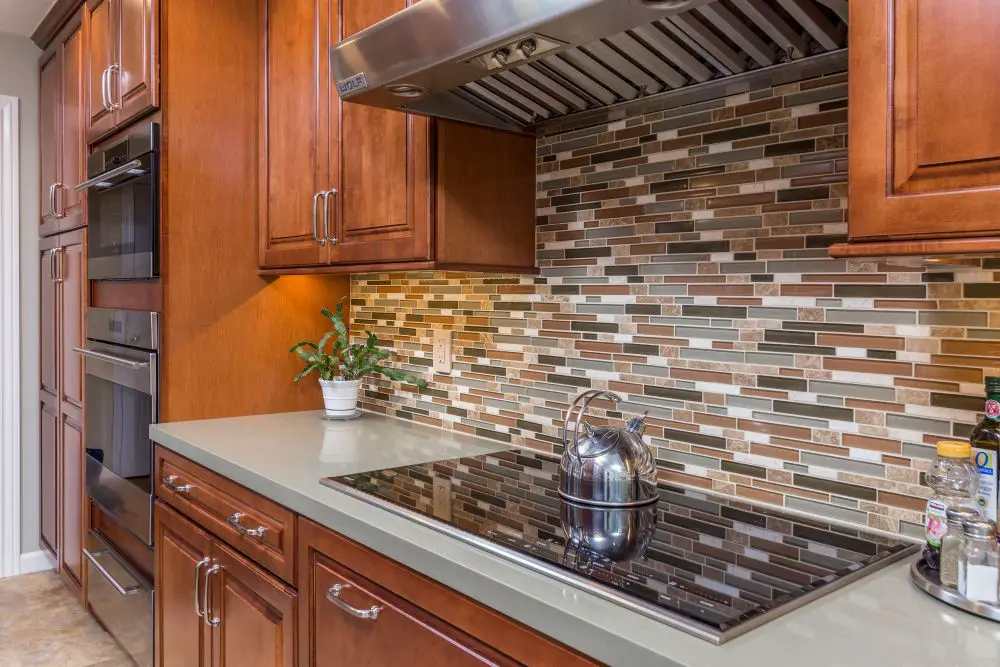 A warm-toned kitchen with wood cabinetry and a linear mosaic backsplash, where neutral grout blends seamlessly to create a cohesive and low-maintenance finish.
Grout Maintenance: What Actually Works
The maintenance conversation changes completely depending on which grout type you have. Here's the honest version.
If You Have Cement Grout
Seal it within 72 hours of installation and before it ever gets wet. Use a penetrating sealer — not a topical coating, which sits on the surface and peels. Re-seal annually in showers, every two to three years in lower-moisture applications. When you clean, use a pH-neutral cleaner and a grout brush — not bleach, which degrades the sealer and can lighten colored grout. If you see grout that's cracked, hollow-sounding, or missing in sections, address it before moisture gets into the substrate.
If You Have Epoxy Grout
Clean it the same way you clean the tile. That's it. No sealing, no special products, no annual maintenance schedule. A grout brush and warm water handles almost anything. The only thing that damages epoxy grout is prolonged exposure to certain harsh solvents — which you'd never use in a bathroom anyway.
Candi's Take
I've watched my dad set tile my whole life. The thing he does that I've never seen a less experienced installer do: he slows down at the grout stage. The tile is set, it looks beautiful, and there's always pressure to finish — client wants to see the completed bathroom, the schedule is tight, whatever. And he just... doesn't rush it. He checks the cure, he mixes carefully, he works in sections, he cleans meticulously. Every time.
Grout is the last material to go in and the most visible thing in the finished installation. The joints are what your eye follows across the whole surface. They have to be clean and consistent, or the whole thing looks off no matter how beautiful the tile is. That's not being precious about the craft — that's just understanding what you're doing and why it matters.
— Candi Toupin, Toupin Construction
Grout Questions We Hear on Every Job
Can I change my grout color after it's been installed?
Sort of — but not easily. Grout colorants and stains exist and can change the color of cement grout, particularly if you're going darker. Going lighter is very difficult. The colorant needs to be worked into the grout with a brush and cleaned off the tile surface, and the results are inconsistent — especially on textured tile. If you're unhappy with your grout color, the real fix is regrouting: removing the existing grout with an oscillating tool and applying new grout in the right color. It's labor-intensive but it's the only reliable solution. This is exactly why the sample test before installation matters.
How long does grout last?
Epoxy grout in a well-installed shower can last the life of the tile — twenty to thirty years or more with normal use. Cement grout in a wet area, sealed and maintained properly, typically needs regrouting in ten to fifteen years depending on use and maintenance consistency. Unsealed cement grout in a shower can fail in two to three years. The type of grout and the quality of the installation and maintenance are more predictive than any specific number.
My grout is cracking. Is that a grout problem or a tile problem?
Almost always a substrate problem — which shows up as a grout problem. Grout cracks when the surface underneath it moves: a subfloor with too much flex, a missing movement joint where two materials transition, an improper mortar bed that didn't bond correctly. The cracks tell you where the movement is happening. You can regrout the cracks, but if you don't address the underlying movement, they'll come back. When we see cracked grout on an inspection, we start by checking the substrate, not the grout itself.
Is dark grout harder to maintain than light grout?
Not really — it's different. Dark grout in cement doesn't show staining as readily as white, but it can show mineral deposits (white haze from hard water) and efflorescence (white salt deposits that can migrate through grout from behind). Light grout shows organic staining more readily — soap scum, mold, food. In East Bay showers where hard water is a factor, mid-tone grays and linens tend to perform best visually over time because they hide both types of buildup. For kitchen floors, darker grout around cooking areas where oils can drip is usually the smarter choice.
Do I really need to seal new grout if the installer already did it?
Check what was used. If it's cement grout, sealing at installation is the start of a maintenance schedule, not a one-time event. Most penetrating sealers for cement grout need to be reapplied every one to three years in shower applications — more often with heavy use. If you're not sure whether your grout has been sealed, do the water test: drop a small amount of water on the grout surface. If it beads up, the sealer is intact. If it absorbs into the grout and darkens the surface, it needs to be resealed. If your installer used epoxy grout, you don't need to do anything — it never needs sealing.
Tile project coming up? Let's talk grout before you commit.
Seriously — grout is the conversation most homeowners skip and then wish they hadn't. We're happy to walk you through the options and tell you what we'd actually specify for your specific project.
Get a Free Consultation See Our WorkCall us: 925-937-4200 · CA Lic #626819
Toupin Construction
Ready to start your remodel?
Whether you're dreaming of a new kitchen, a spa-worthy bathroom, or a whole-home transformation — we’d love to hear about your project. Reach out and let's talk.
‹ Back
Comments