


We are Covid compliant according to OSHA guidelines.

Blog

The Top 5 Kitchen Code Violations — And How We Avoid Them

Published July 24th, 2025 by Candi

Kitchen Remodeling · Permits & Code

The Top 5 Kitchen
Code Violations —
And How We Avoid Them

Everything you need to know before your East Bay kitchen remodel hits inspection day.

By Candi Toupin  ·  Toupin Construction  ·  Walnut Creek, CA

We walked into a kitchen in Walnut Creek a few years ago — homeowner had hired someone off Craigslist to "save money" on a remodel. The guy did nice finish work, honestly. But the microwave was on the same circuit as the refrigerator, there was a vent hood blowing grease vapor directly into the attic, and there wasn't a single GFCI outlet within six feet of the sink. The project failed inspection three times. By the time they called us to fix it, they'd spent more than if they'd just hired a licensed contractor from the start.

Kitchen remodels are code-sensitive. More so than most rooms in your house, because you're combining electricity, water, gas, ventilation, and combustion all in one space. The building code isn't bureaucratic busywork — it exists because things go wrong when these systems aren't installed correctly, and kitchens are where a lot of those things go wrong.

We've been remodeling kitchens across the East Bay since the 1980s. These are the five violations we see most often. Not because homeowners are careless — but because most people don't know what they don't know until the inspector shows up.
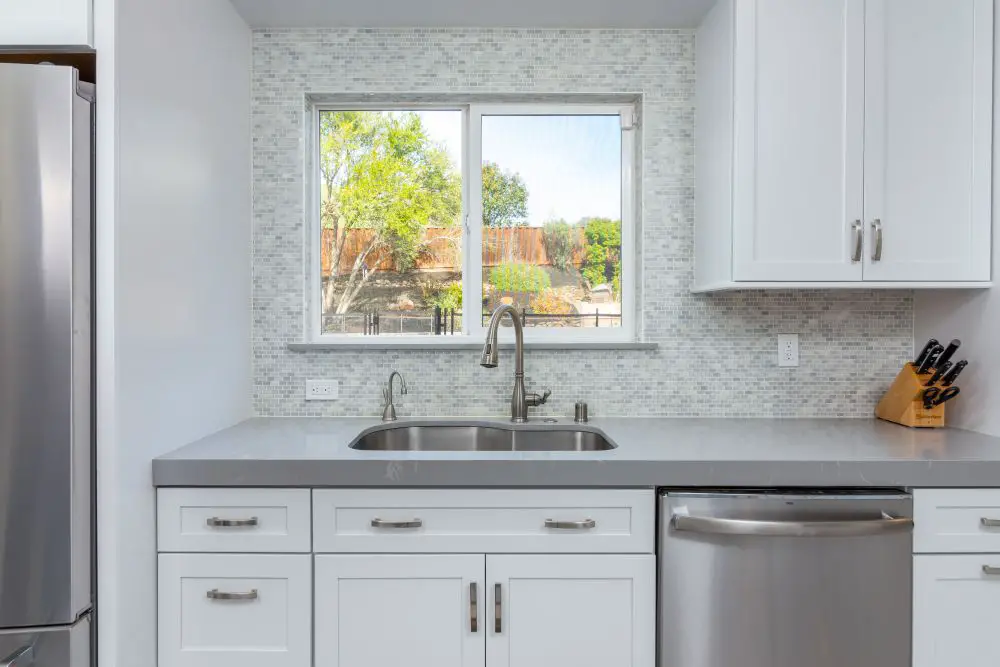
Kitchen sink under window with properly spaced outlets and backsplash in Walnut Creek

Walnut Creek kitchen with sink centered under a window, featuring properly spaced countertop outlets and a full-height backsplash—meeting electrical code requirements while keeping a clean, functional layout.

"A beautiful kitchen that fails inspection isn't finished. It's just expensive."

1
Most Common Violation
Missing or Wrong GFCI Protection
Know the Term
GFCI — Ground Fault Circuit Interrupter

A GFCI outlet constantly monitors the flow of electricity through a circuit. If it detects even a tiny imbalance — the kind that happens when current starts flowing through a person instead of the wire — it shuts off power in about 1/40th of a second. That's fast enough to prevent electrocution. You've seen them: the outlets with the TEST and RESET buttons, usually found near sinks and in bathrooms.

Why This Gets Flagged

California code requires GFCI protection for every outlet within 6 feet of a sink, plus dishwasher circuits and any outlet in a countertop prep area. Contractors working without permits often skip this. So do homeowners who DIY electrical. The inspector will test every outlet — it takes them about 90 seconds to find violations that took weeks to create.

How We Handle It

Every kitchen we remodel gets a full electrical map before we start. We identify every outlet that needs GFCI protection, run it through the plan, and have our licensed electrician install and verify each one before we call for inspection. It's not complicated — it just has to be done.

  • GFCI outlets at all countertop locations within 6 feet of any sink
  • Dishwasher circuit properly protected
  • GFCI breaker accessible and clearly labeled
2
Electrical
Not Enough Dedicated Circuits

A modern kitchen has a lot of appliances drawing a lot of power. The refrigerator. The dishwasher. The microwave. The garbage disposal. The countertop appliance circuits. Run too many of these on shared circuits and you get tripped breakers at minimum — overloaded wiring and potential fire risk at worst.

Know the Term
Dedicated Circuit

A dedicated circuit serves only one appliance. It has its own breaker in the panel and its own wire running to that single outlet or connection point. The refrigerator gets one. The dishwasher gets one. The microwave gets one. This is how a modern kitchen is supposed to be wired — not three appliances sharing a single 15-amp circuit from 1972.

Why This Gets Flagged

Older East Bay homes — especially properties built before 1980, which describes most of Rossmoor and a huge chunk of Walnut Creek — often have undersized electrical panels and shared circuits that were fine for the appliance loads of that era. A remodel is the time to bring this up to current standards. If we're already inside the walls, adding circuits is far less disruptive than doing it later.

How We Handle It

During the design phase, we map the entire appliance load before we finalize the electrical plan. Our licensed electricians confirm dedicated circuits for every major appliance and properly rated countertop circuits. We also label everything at the panel — because someone is going to need to find that breaker at 11pm someday.

  • Separate dedicated circuits for fridge, dishwasher, microwave, and disposal
  • At least two 20-amp small appliance circuits for countertop outlets
  • All breakers properly labeled in the panel
3
Ventilation
The Range Hood That Vents Into the Attic

This is the one that makes us cringe every time we find it. A range hood that exhausts into the attic instead of to the exterior of the building. We've seen it more times than we'd like to admit — usually installed by someone who didn't want to deal with the complexity of running ductwork through an exterior wall.

Why This Matters

Every time you cook, your range hood is capturing grease-laden air, moisture, and combustion byproducts. If that air dumps into your attic, you're depositing grease on your insulation and framing, creating conditions for mold, and potentially building toward a fire hazard. California code requires exterior venting — meaning the duct terminates outside the building envelope, with a proper backdraft damper so air doesn't come back in.

Know the Terms
CFM · Backdraft Damper · Recirculating Hood

CFM (Cubic Feet per Minute): The measurement of airflow capacity. A range hood needs enough CFM to handle your cooktop's BTU output. Undersized hoods are quiet and useless.

Backdraft damper: A flap at the exterior termination point that opens when the fan runs and closes when it doesn't — preventing outside air from flowing back in.

Recirculating hood: A ductless hood that filters air and returns it to the kitchen. Removes some particles but cannot remove moisture or combustion gases. Generally does not meet California code for new installations or full remodels.

Hood TypeRemoves Grease & SmokeRemoves MoistureCA Code Compliant
Exterior vented✅ Yes✅ Yes✅ Required
Recirculating (ductless)Partially❌ No❌ Usually not
Vents to atticOut of kitchen, into atticInto attic (bad)❌ Code violation
  • Duct terminates at exterior — not attic, not crawlspace
  • Hood CFM matched to cooktop BTU output
  • Backdraft damper installed at exterior termination
  • Duct sized to manufacturer specification
4
Layout & Clearances
Inadequate Clearances Around Appliances

This one surprises people because it sounds like an aesthetic issue — "give things some breathing room" — but it's actually about safety and functionality. Appliances generate heat. They need airflow. And they have doors that swing open, drawers that extend, and service requirements that need physical access.

The Numbers That Matter
Clearance Requirements

Walkway width: 36 inches minimum between facing cabinets or appliances in a single-cook kitchen. 48 inches if multiple people work in the space simultaneously.

Landing zones: 15 inches of counter space on at least one side of the cooktop, and beside the refrigerator. This is where hot pans and groceries land — code requires it because people get burned when it's missing.

Refrigerator clearance: Follow manufacturer specs — typically 1/2 inch on each side, 1 inch at the back, and enough above for door swing. Tight enclosures trap heat and reduce efficiency.

Where We See This Go Wrong

Usually in Rossmoor kitchens and other smaller condo layouts where the original footprint is tight. Homeowners want to maximize storage, so cabinets creep toward the cooktop, walkways narrow, and landing zones disappear. We have to design around these constraints carefully — and sometimes have honest conversations about tradeoffs between storage and code compliance.

How We Handle It

We draw every layout to scale with all clearances marked before we order a single cabinet. What looks fine in your head can fail in the field — the drawings catch it early, when changes cost nothing instead of everything.

  • 36" minimum walkway maintained throughout
  • 15" landing zone on at least one side of cooktop
  • Refrigerator clearances meet manufacturer specs
  • All appliance doors open without obstruction
5
California Title 24
Lighting That Doesn't Meet Energy Code
Know the Term
Title 24 — California's Energy Efficiency Standards

Title 24 is the section of the California Building Standards Code that covers energy efficiency. For kitchens, it means your lighting needs to meet a minimum threshold of efficiency — which in practice means LEDs or other high-efficacy fixtures. That old halogen under-cabinet lighting your 1998 kitchen came with? Not compliant for a remodel. Task lighting above work surfaces is also required, not optional.

California has the most stringent energy code in the country. That's not a political statement — it's just the reality of building here. When you pull permits for a kitchen remodel, your lighting plan gets reviewed. Incandescent and most halogen fixtures won't pass. Old recessed cans with screw-in bulbs typically won't pass either.

What Gets Missed

Contractors not familiar with California code sometimes spec fixtures that look great but use non-compliant bulbs or lamp types. Or they focus on ambient lighting (the overhead fixtures) and forget that Title 24 also requires dedicated task lighting above the sink and cooking surface. The inspector looks at the whole lighting plan, not just the general fixtures.

How We Handle It

We design lighting plans that layer ambient, task, and accent light — which happens to also be what good kitchen lighting looks like. The code requirements and the design best practices point in the same direction here: well-lit work surfaces, energy-efficient fixtures, and dimmers where appropriate. We make it beautiful and make sure it passes.

  • All fixtures are LED or high-efficacy rated
  • Dedicated task lighting above sink and cooking surface
  • Dimmer switches where applicable (must be LED-compatible)
  • Lighting plan included in permit submission
Local Focus: Rossmoor & East Bay Condos

Older Homes Need Extra Attention

Most Rossmoor units — the co-ops and condos that make up those ~6,700 homes built between 1964 and the early 1980s — were wired and plumbed to the standards of their era. Those standards are significantly different from today's.

That means kitchen remodels in Rossmoor almost always involve electrical upgrades (adding circuits, GFCI protection, panel evaluation), new ventilation routing, and careful layout planning around smaller footprints. It also means permitting through both the Mutual board and the City of Walnut Creek — a dual process we know well and navigate for our clients routinely.

We've remodeled thousands of units in Rossmoor. We know what the inspectors look for, we know the Mutual board's requirements, and we design every project to pass both on the first try.

Let's Get Your Kitchen Done Right — The First Time

We handle permits, inspections, and code compliance so you don't have to think about it. You focus on the design. We make sure it passes.

Start a Conversation See Our WorkCall us: 925-937-4200  ·  CA Lic #626819

Source

‹ Back