

By using our website, you agree to the use of cookies as described in our Cookie Policy
Blog
The Great Escape: Turning Spare Bedrooms Into Mini Retreats
Whole Home · Design Inspiration
That Spare Room Deserves Better
How East Bay homeowners are turning their junk rooms into the spaces they actually want to live in
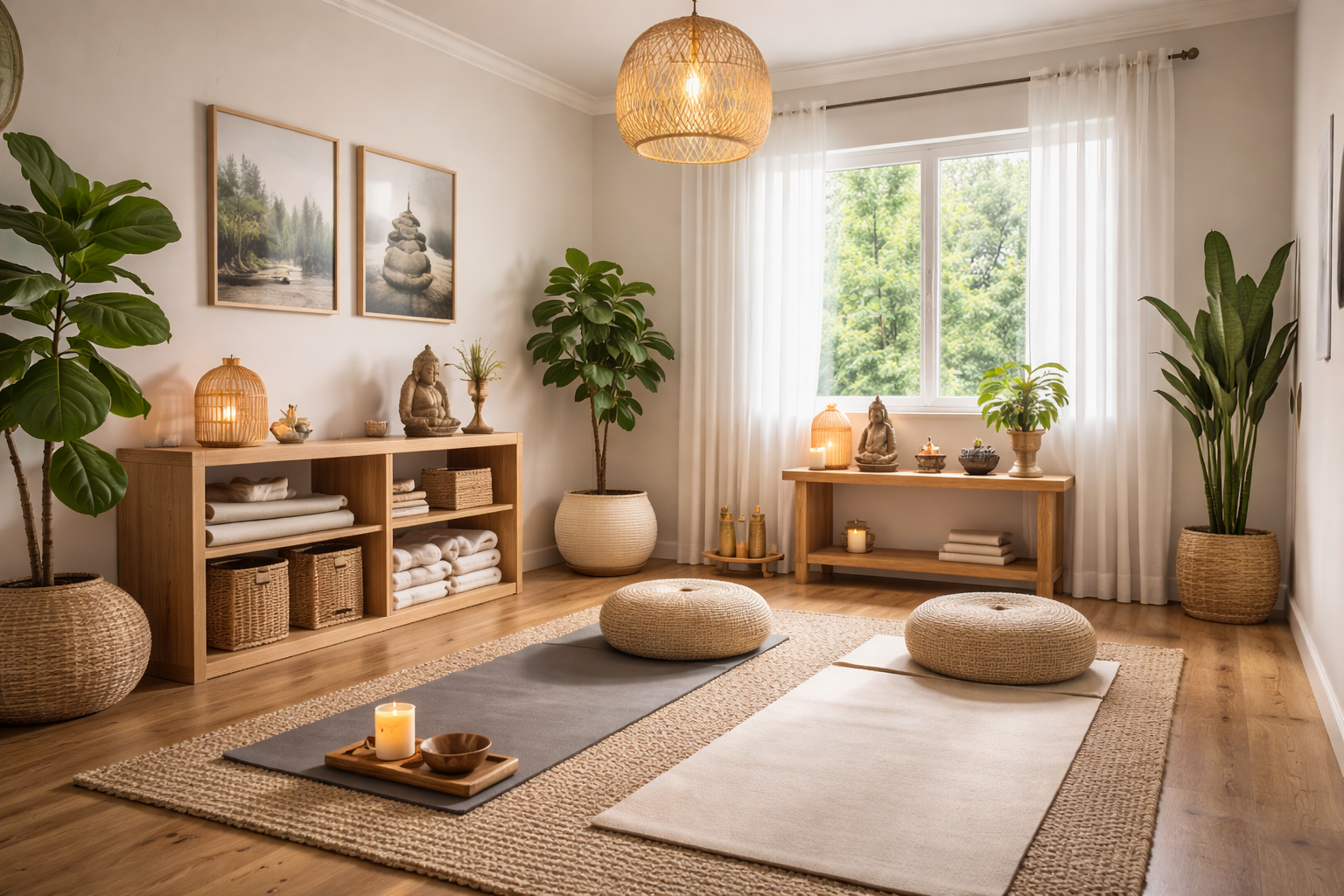 This tranquil yoga and meditation space features a minimalist design with warm wood furniture, woven textures, and soft neutral colors. Two yoga mats are placed on a textured rug, surrounded by floor cushions, candles, and indoor plants. Natural light filters through sheer curtains, creating a peaceful, spa-like atmosphere ideal for relaxation and mindfulness.
Okay, real talk. My spare bedroom has a treadmill with exactly one shirt draped over it, a box of holiday decor that hasn't been opened since 2021, and a bag of yarn from a crocheting phase I apparently had. I am not special. This is most of our spare bedrooms.
But here's what I've watched happen on job after job: homeowners who finally commit to making that room something — a real reading room, a proper guest suite, a meditation space that isn't the corner of their closet — end up using it every single day. That's the transformation that doesn't show up in a before-and-after photo. It's the feeling of a room that finally earns its square footage.
This isn't a decorating post. This is a contractor's take on how to actually make it happen — what you can tackle yourself, what's worth calling us for, and how to avoid the mistakes that leave the room half-done and back to storage mode six months later.
Step One
Decide What This Room Is Actually For
Vague intentions produce vague rooms. "I want it to feel peaceful and cozy" is a Pinterest mood board, not a design brief. The rooms that actually get finished — and stay finished — are the ones where someone made a real decision up front.
So before you move a single piece of furniture, answer this: what is this room for? Here are the five directions we see most often:
Reading & Coffee Room
A proper chair, warm lighting, and a bookshelf that isn't being used as overflow storage. This is the room you sneak into before the rest of the house wakes up.
Movement & Mindfulness
Yoga mat space, a good floor surface, and zero visual clutter. If the treadmill is truly going to live here, give it proper company — floor-to-ceiling storage for the gear.
Guest Suite
The room that makes guests feel like they're staying somewhere that thought of them. Small details do the heavy lifting: a reading lamp, a place to hang clothes, an outlet that doesn't require moving the bed.
Creative Studio
Whether you paint, sew, do puzzles, or just need a desk that isn't the kitchen table — a dedicated creative space changes how you use your whole house.
Home Office + Flex
A room that functions as a real workspace but can also host overnight guests. Requires smarter furniture choices, but it works well in smaller East Bay homes and condos.
Spa-Inspired Retreat
Warm tones, soft surfaces, a sound machine that doesn't fall off the nightstand. This one leans more into sensory design — lighting and acoustics matter as much as decor.
Pick one. Two at most, if they're naturally compatible (office + guest, or reading room + meditation). Once the purpose is clear, every other decision — furniture, storage, lighting, finishes — gets a lot easier.
Step Two
Start With the Bones, Not the Decor
I know it's tempting to go straight to throw pillows. Don't. The rooms that feel genuinely good — not just staged for a photo — are the ones where the underlying finishes were addressed first.
Here's what to look at before you shop for anything:
- Walls: Does the paint have scuffs, dings, or that bumpy orange-peel texture that makes everything look dated?
- Trim and baseboards: Are they chipped, painted over too many times, or just sad? New trim costs very little but makes a significant visual difference.
- Doors: Old hollow-core doors with brass hardware are a room's quickest aging mechanism. New hardware or a new door can shift the whole feel.
- Flooring: Old carpet in a spare room is a common discovery. Sometimes it cleans up. Sometimes there's good hardwood underneath. We've found both in the same week.
- Lighting: Does the room have only one overhead light with a glass globe fixture from 1997? That's fixable, and it matters more than most people realize.
- Outlets: If you're adding a desk or charging station, adding an outlet in the right spot is a quick electrical job — and not having one in the right spot is endlessly annoying.
"We see it constantly in East Bay homes built in the '60s and '70s: the bones are great — solid construction, good room sizes — but the finishes haven't been touched since someone installed them the first time. Addressing those first makes everything else look intentional."
Trade Term: Skim Coat
If your walls have that bumpy orange-peel texture and you want smooth walls, the fix is a skim coat — a thin layer of joint compound that gets spread across the wall surface and sanded smooth. It's a skilled trade task, not a Saturday afternoon project. But the result looks like a completely different room.
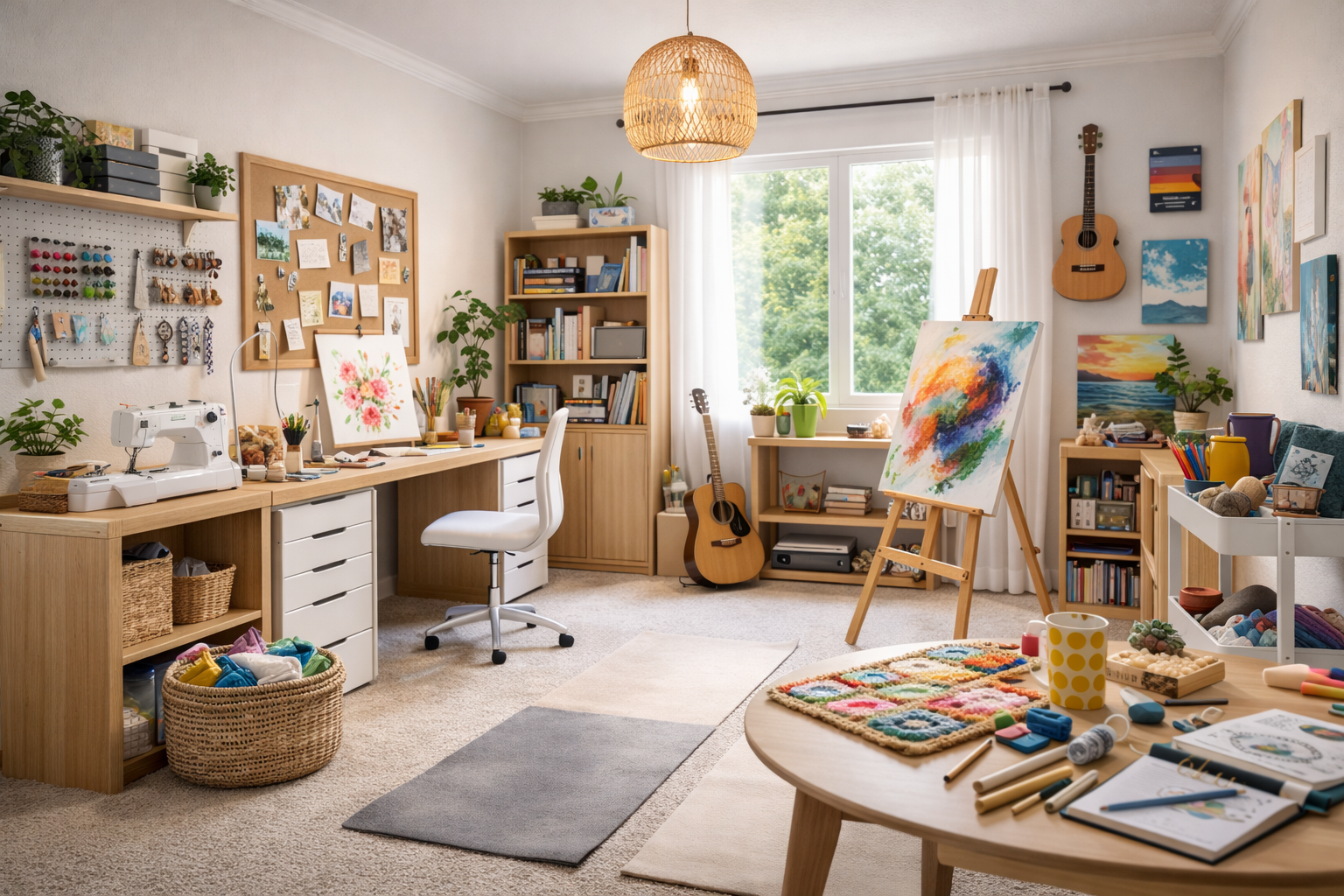 A vibrant and inviting creative studio filled with art supplies and handmade projects. The space includes a sewing station, a desk with drawing materials, a bookshelf, and an easel displaying a colorful abstract painting. Personal touches like a guitar, plants, and pinned inspiration boards make this room feel lively, organized, and perfect for artistic expression.
Step Three
Get the Lighting Right Before Anything Else
Lighting is the single most underestimated element in any room makeover. And it's also the one thing people almost always address last, after they've already bought furniture and painted the walls — when they realize the room still doesn't feel right.
Retreats need layered lighting. That means:
- Ambient light — the overhead source that fills the room. If it's a single ceiling fixture, consider replacing it with a flush mount that takes a warm-toned bulb (2700K–3000K is the sweet spot).
- Task light — for reading, working, or crafting. This is where a good lamp earns its place.
- Accent light — a soft glow that adds depth. A lamp on a low surface, a small fixture in a built-in, even a simple strip light behind a shelf.
- Dimmers — genuinely life-changing. A dimmer switch on the overhead light costs almost nothing and gives you complete control over the room's energy at any time of day.
If you're adding a wall sconce or relocating a fixture, that's electrical work — permit-required in Walnut Creek and something we handle as part of a broader room refresh.
Trade Term: Color Temperature (Kelvin)
Bulbs are measured in Kelvins (K). Lower numbers (2700K–3000K) produce warm, amber-toned light — the kind that makes a room feel cozy and relaxed. Higher numbers (4000K+) are cool and blue-ish — great for task areas, not great for a retreat. Check the packaging: the Kelvin number tells you what you're actually buying.
Step Four
Built-Ins Change Everything (And They're Not as Expensive as You Think)
I'm going to make a case for built-ins here, because we do a lot of them and I've watched them completely transform how people use their spare rooms.
A built-in — whether it's a window seat with storage underneath, a floor-to-ceiling bookshelf, or a desk nook built into an alcove — does something that freestanding furniture can't: it makes the room feel designed. Finished. Like someone actually thought about how this space works.
For Rossmoor residents in particular, built-ins can be a smart use of a spare bedroom that doesn't have a lot of square footage to work with. A shallow built-in along one wall — 12 to 14 inches deep — can hold hundreds of books, display objects, and equipment without eating into the floor space you need to actually move around in the room.
Trade Term: Built-In vs. Furniture
A "built-in" is a piece that's installed directly into the room — anchored to the wall or floor, often custom-sized to fit the space exactly. Unlike freestanding furniture, built-ins don't shift, tip, or leave awkward gaps at the ceiling. They're especially good in rooms with non-standard dimensions, which is common in East Bay homes from the 1960s and '70s.
Step Five
DIY vs. Call Us — An Honest Breakdown
This is the part where I give you the actual answer instead of being vague about it. Some of this you can and should do yourself. Some of it is genuinely better handled by a contractor. Here's the honest version:
Step Six
The Details That Keep It From Sliding Back
Here's the part nobody talks about: how to keep the room from drifting back to storage mode. Because it will, if the design doesn't actively resist it.
The rooms that hold their purpose over time have a few things in common:
- Closed storage. Open shelves collect clutter. If storage is part of the room, give it doors or baskets. Out of sight, out of mind — in the best way.
- No extra surface area. Every flat surface that isn't purposeful becomes a landing zone. A dresser top, a chair, a treadmill — all of them will accumulate stuff if they don't have a clear job.
- The room has to feel good to enter. This sounds obvious but it's the real test. If you walk past the door and never feel pulled in, the room will revert. Lighting, scent, and order all play into this.
- It serves a real ritual. The rooms that stay good are the ones tied to something you actually do: morning coffee, evening reading, daily exercise, creative work on weekends. A room with no habit attached to it is a room looking for a new purpose.
"The question isn't just 'what do I want this room to look like.' It's 'what do I want to do in this room every day?' Design backward from that answer."
Ready to make that room earn its square footage?
Whether you need a quick consult on what's worth doing yourself or you want to talk through a full room refresh — built-ins, flooring, lighting, the whole thing — we're happy to take a look.
Get a Free Quote Call 925-937-4200
Toupin Construction
Ready to start your remodel?
Whether you're dreaming of a new kitchen, a spa-worthy bathroom, or a whole-home transformation — we’d love to hear about your project. Reach out and let's talk.
‹ Back
Comments