


By using our website, you agree to the use of cookies as described in our Cookie Policy
Blog
Countertop Materials: What We've Learned from 40 Years of Installing Them
Deep Dive · Kitchen & Bathroom
Countertop Materials: What We've Learned from 40 Years of Installing Them
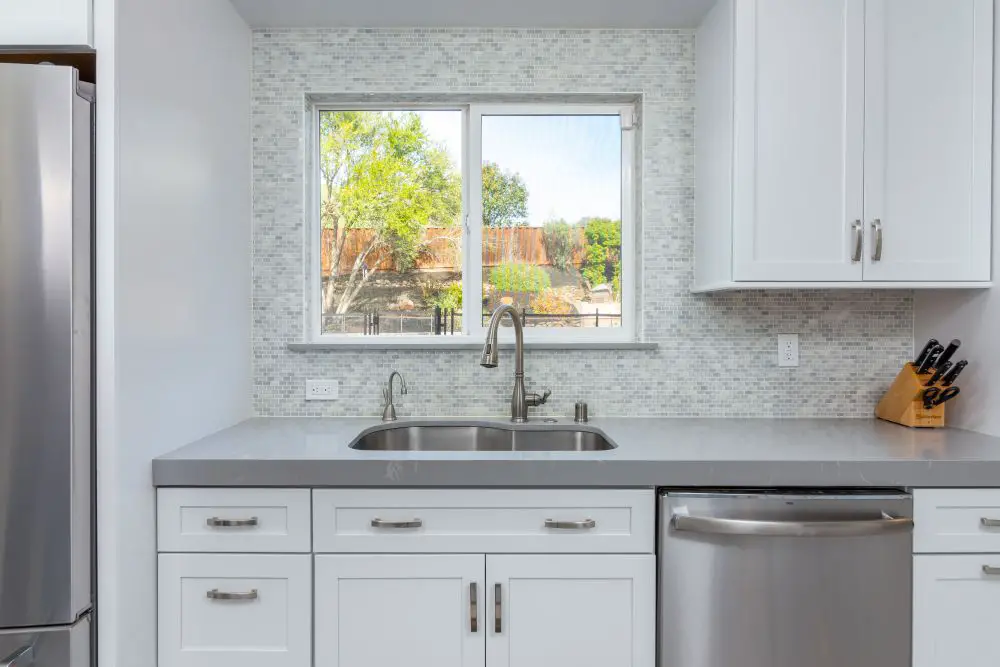
A bright kitchen with a light gray quartz countertop, offering a clean, durable surface that pairs well with white cabinetry and a neutral backsplash.
We get asked about countertops constantly — and not just "which one looks the best." The real questions are: which one holds up, which one fits my budget, and which one am I not going to regret in five years? After 40+ years of installing countertops across Walnut Creek, Rossmoor, Lafayette, and Danville, we have some actual opinions. Here they are.
The honest answer to "what's the best countertop material?" is: it depends on how you cook, how you clean, and how long you plan to stay in your home. I'll break down each material the way I'd explain it to a friend — what it's genuinely good at, where it lets you down, and what it actually costs when all is said and done.
The Move Most People Don't Know About: Mixing Materials
One of the most useful things we do on kitchen remodels is mix countertop materials. Quartz on the main perimeter for durability and easy cleaning, butcher block on the island for warmth and food prep, marble on a small vanity for that luxury moment. It's a smart way to get the benefits of multiple materials while controlling cost.
If you've been stuck choosing between two materials — you might not have to.
Quartz
$50–$150 / sq. ft. installedQuartz is the material I recommend most often to clients who want something that looks great and requires almost no thought to maintain. It's not a natural stone — it's engineered from crushed quartz crystals bound with resin — which means it's non-porous, consistent in color, and never needs sealing. For a busy household where the countertop sees daily cooking, that matters enormously.
Trade Term Explained"Non-porous" means the surface has no microscopic holes or channels where liquids, bacteria, or stains can penetrate. Natural stones like granite and marble are porous — they need sealing to close those gaps. Quartz is manufactured to be non-porous from the start, which is why it doesn't need sealing and why red wine doesn't terrify quartz owners the way it does marble owners.
The Upsides
- Non-porous — zero sealing required
- Scratch and stain resistant for daily use
- Consistent color and pattern (great for matching slabs)
- Wide range of looks, including stone mimics
- Strong resale value in the East Bay market
The Trade-offs
- Not heat resistant — trivets are non-negotiable
- Can look "too perfect" if you want natural variation
- Price overlap with high-end granite
- Outdoor use not recommended (UV fades the resin)
Best for: Busy kitchens, families with kids, resale-focused remodels, anyone who doesn't want to think about maintenance
Granite
$40–$120 / sq. ft. installedGranite has been the standard for kitchen countertops for a long time, and there's a reason it hasn't gone away: it's genuinely beautiful, genuinely durable, and adds real value to a home. Unlike quartz, no two granite slabs are identical — the veining and mineral patterns are completely natural. If you want a surface that looks like it came from the earth (because it did), granite delivers that in a way engineered stone can't replicate.
The maintenance requirement is real but manageable. Granite needs to be sealed when it's installed and resealed about once a year — think of it like oiling a cast iron pan. It's not difficult, but if you're the type of person who forgets annual maintenance tasks, quartz is probably the smarter call.
The Upsides
- 100% natural stone — every slab is unique
- Heat resistant — pots directly off the stove are fine
- Scratch resistant for everyday kitchen use
- Strong long-term resale value
- Often less expensive than quartz at mid-range
The Trade-offs
- Requires sealing at install and annually after
- Can chip at edges with heavy impact
- Natural variation means slabs need to be matched carefully
- Heavier than engineered stone — older cabinets may need reinforcement
Best for: Homeowners who want natural stone character, serious cooks who appreciate heat resistance, long-term owners
Marble
$60–$200 / sq. ft. installedMarble is the material I have the most honest conversations about. It's genuinely stunning — there's a reason it's been used in architecture for thousands of years. But it's also the most high-maintenance countertop material on this list, and I've seen clients fall in love with it based on showroom samples and then be disappointed six months later when it started showing wear.
Here's the thing nobody tells you upfront: marble etches. Etching is when acidic substances — lemon juice, vinegar, wine, even tomato sauce — react with the calcium carbonate in the stone and leave dull marks. These aren't stains you can wipe away. They're changes to the surface itself. Some people love the way marble develops a patina over time. Others find it stressful. Know which type you are before you commit.
Trade Term Explained"Etching" is different from staining. A stain is when something penetrates the surface — sealing helps prevent this. Etching is a chemical reaction between acid and the stone that dulls the finish — sealing does not prevent it. It's the most common surprise for first-time marble owners, and it's worth knowing the distinction before you fall for a showroom slab.
The Upsides
- Timeless, genuinely beautiful material
- Naturally cool surface — great for baking and pastry
- No two slabs are identical
- Develops character and patina over time
The Trade-offs
- Etches from acids — ongoing and unavoidable
- Requires sealing every 6 months
- Softer than quartz or granite — scratches more easily
- High-end pricing with higher maintenance than either
Best for: Clients who love character over perfection, bakers, powder rooms and vanities, statement islands where cooking doesn't happen
Butcher Block
$40–$100 / sq. ft. installedButcher block brings warmth into a kitchen the way nothing else does. If you've ever been in a farmhouse kitchen with wood counters and thought "this feels right," that's butcher block doing its job. We use it a lot on islands specifically — it's beautiful, it's functional for food prep, and it creates a natural contrast when paired with stone on the perimeter counters.
The maintenance reality: butcher block needs to be oiled regularly, especially in the first year. Think of it like a wooden cutting board — you wouldn't leave it wet or ignore it, but you also don't need to be precious about it. Scratches and dents can be sanded out and re-oiled. It's a living surface.
East Bay ConsiderationOur area has moderately hard water, which can leave mineral deposits on wood surfaces over time if water pools and sits. We generally recommend keeping butcher block away from the main sink run and using it on islands or prep zones instead — where it shines and where moisture exposure is minimal.
The Upsides
- Warm, organic look that softens hard kitchen lines
- Can be sanded and refinished — extends lifespan significantly
- Excellent food prep surface
- Mid-range price point
The Trade-offs
- Requires regular oiling (monthly in year one, quarterly after)
- Vulnerable to water warping — avoid near main sink
- Can stain from certain foods and liquids
- Not heat resistant — trivets required
Best for: Kitchen islands, farmhouse and transitional kitchens, clients who want warmth and don't mind occasional maintenance
Laminate
$20–$60 / sq. ft. installedLaminate has a reputation problem it no longer deserves. The laminate of 2025 is not the peeling, dated stuff from the 1980s. Modern laminate — especially from brands like Wilsonart and Formica — can mimic stone convincingly, comes in a huge range of finishes, and performs well for everyday use. It's the honest budget choice, and there's no shame in it.
Where we most often use it: rental properties, quick cosmetic updates, and guest bathrooms where the goal is a clean look at a controlled cost. It's not the material for a forever kitchen, but it's exactly right for the right situation.
The Upsides
- Lowest installed cost of any option
- Huge range of colors, patterns, and finishes
- Easy to clean — soap and water
- No sealing, no oiling, no maintenance
The Trade-offs
- Not heat resistant — burns and scorches permanently
- Scratches visibly and can't be repaired
- Seams show, especially on longer runs
- Lower perceived value — affects resale in some markets
Best for: Rental units, budget-conscious updates, guest spaces, short-term refresh before a future full remodel
Solid Surface (Corian & Similar)
$45–$100 / sq. ft. installedSolid surface is one of those materials that doesn't get enough credit. It's not glamorous — you won't see it in design magazines — but it's genuinely practical. The seamless installation is its strongest feature: the material can be joined invisibly and shaped around sinks, which means no grout lines, no seams to trap bacteria, no caulk to re-do every few years. In bathrooms especially, that's a meaningful advantage.
The Upsides
- Seamless joins — no visible seams or grout lines
- Integrated sinks possible — one continuous surface
- Scratches can be buffed out with light sanding
- Non-porous — no sealing needed
The Trade-offs
- Not heat resistant — trivets essential
- Matte look — less visual "wow" than stone
- Can dull over time in busy kitchens
- Not as widely recognized as quartz or granite
Best for: Bathrooms, Rossmoor condos where a seamless modern look works well, clients who want zero-maintenance with integrated sinks
Concrete & Stainless Steel
$75–$150 / sq. ft. installedThese two live in their own category: genuinely cool, genuinely niche. Concrete offers complete customization — shape, color, texture, embedded materials — and it's one of the few countertop materials that functions as a design statement on its own. Stainless steel is what you see in professional kitchens for a reason: it's hygienic, heat-resistant, and almost indestructible.
The reason we don't lead with these: concrete requires ongoing sealing and can crack as the house settles. Stainless shows every fingerprint and scratch, and it amplifies kitchen noise. Both materials reward the right client and frustrate the wrong one. If you're drawn to either, we're happy to talk through whether it fits your project — but know what you're signing up for.
Concrete: Best Attributes
- Fully custom — any shape, color, or texture
- Heat resistant and durable
- Distinctive, architectural look
Stainless: Best Attributes
- Hygienic and easy to sanitize fully
- Heat and stain resistant
- Professional kitchen aesthetic
Best for: Design-forward clients who've thought it through — not a default choice, a deliberate one
"The countertop question I ask every client: how do you actually use your kitchen on a Tuesday? Not a dinner party, not a fantasy version of yourself. Tuesday. The answer usually tells me everything."
All Eight Materials at a Glance
A note on cost ranges: the low end of each range reflects a simpler slab with standard edges and straightforward installation. The high end reflects premium slabs, custom edge profiles, more complex layouts, or materials that require extra labor (concrete especially). Get quotes on both ends so you know what's driving the number.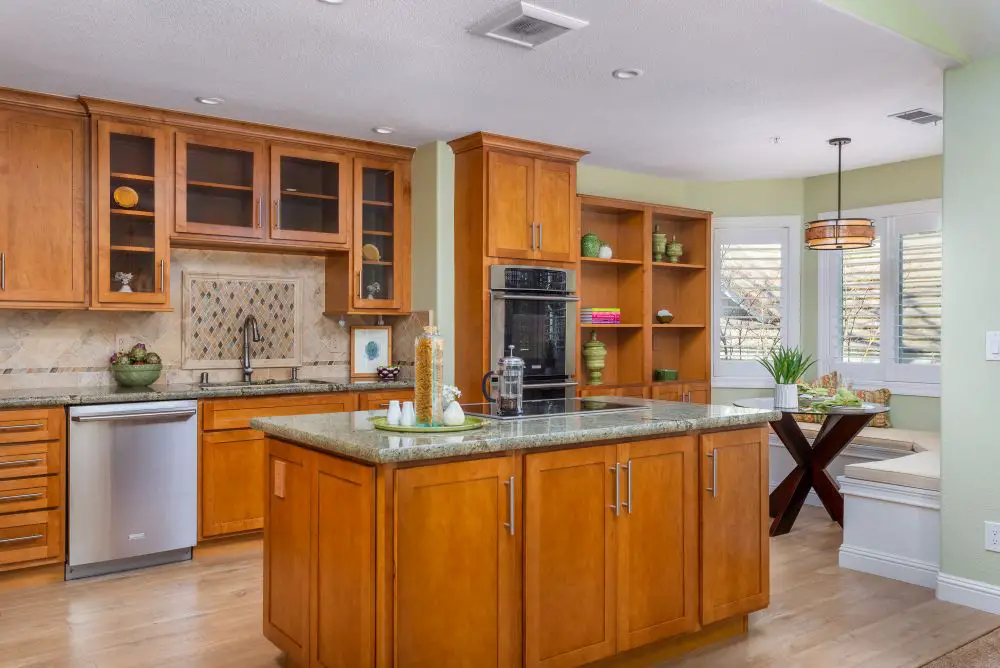
A warm kitchen with wood cabinetry and a stone countertop island, combining durability with a natural, inviting look for gathering and prep space.
Questions We Get Asked All the Time
Quartz or granite — which should I actually choose?
If you want zero maintenance and consistent color, quartz. If you want natural stone character and don't mind annual sealing, granite. Both are excellent long-term investments. The honest tiebreaker: go to a stone yard and see them in person. Your gut reaction to the slabs will tell you more than a comparison chart.
How much does countertop installation actually cost for an average East Bay kitchen?
A typical kitchen countertop run in the East Bay is somewhere between 30 and 50 square feet, depending on layout. At the quartz mid-range (~$80/sq. ft. installed), that's $2,400–$4,000 for the countertops alone. Marble at the higher end can run $6,000–$10,000 for the same footprint. Islands, edge profiles, cutouts for sinks, and custom work all add to that. We always provide a line-item quote so nothing is a surprise.
I'm in a Rossmoor condo with a small kitchen. Does material choice matter more or less?
It matters more, actually — because a smaller surface means the material choice is more visible and more impactful proportionally. We often recommend quartz or solid surface for Rossmoor kitchens because the seamless look and low maintenance work especially well in compact spaces. Marble can feel heavy in a small kitchen; butcher block on a peninsula adds warmth without overwhelming the room.
Can I mix countertop materials in one kitchen?
Yes, and we actively recommend it in many cases. The most common combination we do: quartz on the perimeter for durability, butcher block on the island for warmth and food prep. It's both practical and visually interesting — and it lets you stay within budget on the main surfaces while adding a premium material where it counts most.
Which countertop is most eco-friendly?
Butcher block from FSC-certified wood (FSC = Forest Stewardship Council, a certification that the wood was harvested responsibly) is a solid sustainable choice. Recycled glass countertops are another option we haven't covered here but are worth asking about if sustainability is a priority. Concrete with recycled aggregate content is a third option for the right project.
Not Sure Which Material Is Right for Your Kitchen?
We'll walk through it with you in person — look at your existing space, talk through how you cook and clean, and give you a straight recommendation. No showroom pressure, no upsell agenda. Just 40 years of installed experience. Call us at 925-937-4200 or request a free consultation below.
Request a Free Consultation See Our Kitchens
Toupin Construction
Ready to start your remodel?
Whether you're dreaming of a new kitchen, a spa-worthy bathroom, or a whole-home transformation — we’d love to hear about your project. Reach out and let's talk.
‹ Back
Comments