

By using our website, you agree to the use of cookies as described in our Cookie Policy
Blog
Prefab vs. Custom Showers: Which One Is Right for Your Remodel?
Bathroom Remodeling · Deep Dive · Remodeling Tips
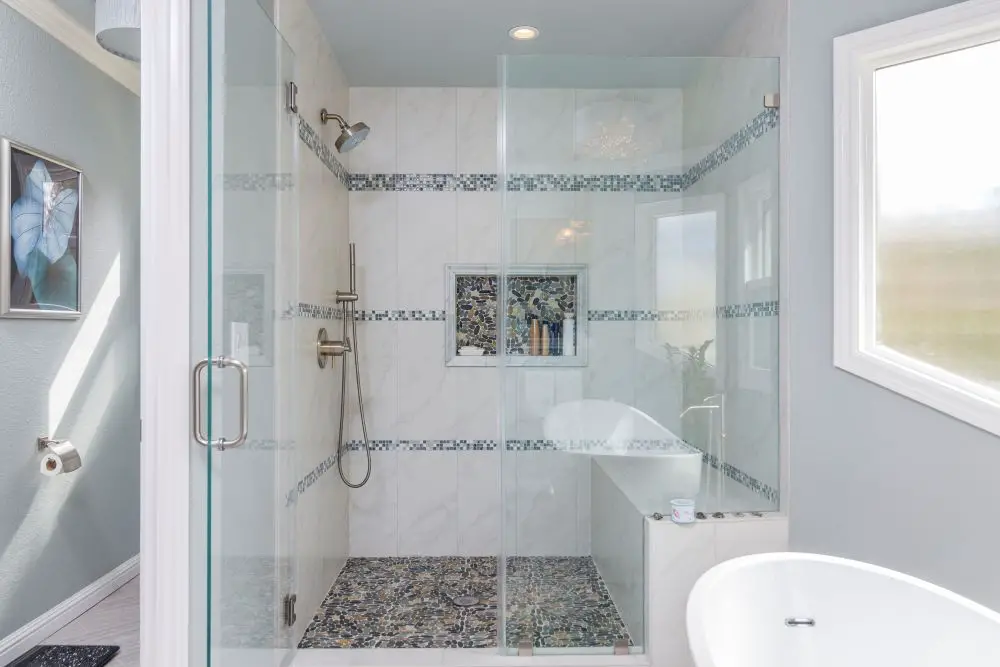
A high-end custom bathroom featuring a glass-enclosed shower with pebble flooring and mosaic tile accents alongside a freestanding tub. This layout showcases the design freedom of custom showers, combining materials and features to create a spa-like environment.
We get this question a lot, and I'll be honest — most of the time it answers itself within the first five minutes of looking at the bathroom and talking about the budget. But "prefab or custom?" is also a question where people sometimes make the wrong call because they're anchored on the wrong comparison.
The wrong comparison: "Custom looks better, prefab costs less." That's true, and it's not useful. The right comparison is: "What is this bathroom for, how long are you keeping it, and what decision will you still feel good about in five years?"
We've installed both across hundreds of bathrooms in Walnut Creek, Rossmoor, Lafayette, and Danville. Here's the honest version of how we think about this choice.
What Each Option Actually Is
Trade Terms Explained
Waterproofing membrane: A flexible, liquid-applied or sheet layer installed between the shower substrate and the tile. Think of it as a waterproof skin that sits under everything you see. Without it — or with a poorly installed one — water eventually finds its way into the walls and subfloor. We use LATICRETE® HYDRO BAN® as our standard membrane on custom showers. It's not optional, it's not an upgrade, and any contractor skipping this step is setting you up for a very expensive problem down the road.
Substrate: The structural layer that the tile bonds to — typically cement board (like Durock or Hardiebacker) or a foam-based board. The substrate needs to be rigid, flat, and moisture-tolerant. Tile installed over drywall or a substrate with flex will crack — usually at the grout lines first.
Curbless shower: A shower with no raised threshold at the entry — the floor is flush with the rest of the bathroom, sloped subtly toward the drain. Easier to step into, easier to clean, and a significant accessibility benefit as you age. Can only be done with a custom shower, not prefab.
The Real Cost Conversation
The original cost numbers in most prefab vs. custom comparisons are misleading because they compare unit cost (the product itself) without total installed cost. Let me give you real East Bay numbers.
| Item | Prefab | Custom Tile (Mid-Range) | Custom Tile (Upper-Mid) |
|---|---|---|---|
| Unit / materials | $800–$4,000 | $2,500–$5,000 | $5,000–$12,000+ |
| Labor (installation) | $500–$1,500 | $3,500–$6,000 | $6,000–$10,000 |
| Plumbing rough-in | $400–$1,000 | $800–$2,000 | $800–$2,500 |
| Glass enclosure | Often included | $1,200–$2,500 | $2,500–$5,000+ |
| Fixtures & hardware | $200–$600 | $500–$1,500 | $1,500–$4,000+ |
| Total installed range | $2,000–$7,500 | $8,500–$17,000 | $16,000–$35,000+ |
The gap is real — we're not going to pretend it isn't. But the relevant comparison is total cost over your ownership horizon, not just installation day. A well-built custom tile shower in a primary bathroom adds measurable resale value in East Bay markets, lasts 20–30 years with basic maintenance, and transforms how the room feels every single day. A prefab unit in a primary bath recovers less of its cost in resale and typically looks dated within a decade.
In a guest bathroom or an ADU? The math flips. Prefab is often the right answer there.
We've never had a client regret a well-done custom tile shower. We've had plenty tell us they wish they'd done it sooner.
How to Actually Decide: The Right Questions
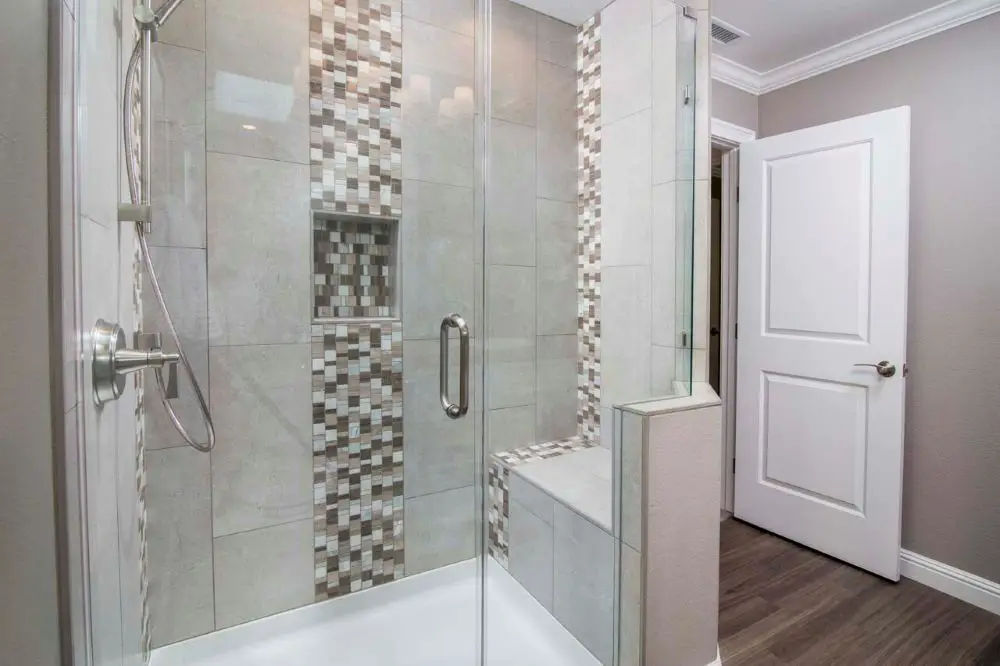
A custom walk-in shower with a glass enclosure, vertical mosaic accent tile strips, and a built-in bench. The layered tile design and integrated features demonstrate how custom showers allow for personalization in layout, accessibility, and overall style compared to prefab units.
Waterproofing: Where We Never Cut Corners
Whether you go prefab or custom, waterproofing is the thing that determines whether your shower causes problems five or ten years from now. It's also the most invisible part of the installation — which is why it's where some contractors cut corners, because you can't see it once the tile is on.
With prefab units, the factory-molded seams and joints are the waterproofing — and the critical installation step is properly sealing every perimeter joint where the unit meets the wall and floor. That caulk joint needs to be done right and inspected annually. A failing caulk joint on a prefab shower will leak into the wall cavity without any visible warning until there's real damage.
With custom tile showers, waterproofing is a dedicated installation step before a single tile goes up. We apply a liquid membrane to the pan (the floor area) and the lower walls, paying particular attention to corners and transitions — which are where water finds every weakness. We don't tile over that membrane until it's fully cured and tested.
Something Worth Saying Directly
If you're getting bids on a custom shower and one comes in significantly lower than the others — 30% or more — ask specifically what waterproofing system they're using and whether they're using a certified membrane. The difference in material cost between a proper membrane and skipping it is a few hundred dollars. The difference in outcome if something goes wrong is a full demo, mold remediation, and a rebuild. We've been called in to fix showers where the original contractor skipped the membrane. It's not a small problem.
This is also why we pull permits on shower remodels. An inspection at the right stage — before tile goes up — means someone other than us is confirming the waterproofing was done correctly. That's a layer of protection for you as the homeowner, not just a bureaucratic hoop.
Maintenance: What You're Actually Signing Up For
The "prefab is low maintenance" framing is mostly true but needs some nuance for East Bay homes specifically.
Prefab maintenance reality: The smooth fiberglass or acrylic surface doesn't trap mold the way grout does. But — and this matters in our region — hard water leaves mineral deposits on these surfaces that can be harder to remove than on tile. Walnut Creek's water is moderately hard. Over time, without regular cleaning with a product designed for mineral buildup, prefab surfaces can look permanently hazy. The caulk joints at the perimeter need to be inspected annually and reapplied when they start to crack or pull away from the wall.
Custom tile maintenance reality: Grout sealing is the main task. In our dry East Bay climate, we recommend sealing grout every 12–18 months in a shower — once a year is a good habit. This is a 30-minute DIY task with a store-bought sealer. Epoxy grout, which we use in applications where grout maintenance is a concern, doesn't require sealing at all and is virtually stain-proof — at the cost of a more involved installation. We'll tell you when it's worth specifying.
Grout Types Explained
Sanded grout: Standard grout for joints wider than 1/8". Porous — requires periodic sealing to prevent staining and mold.
Unsanded grout: For narrow joints (under 1/8"). Also porous, also needs sealing.
Epoxy grout: A two-part resin-based grout that's non-porous, stain-resistant, and requires no sealing. More expensive and more labor-intensive to install — it sets fast and has to be worked carefully. Worth it in high-use showers and for clients who genuinely don't want to think about grout maintenance.
Rossmoor & Condo Considerations
This Section Is Specifically for Rossmoor & Condo Owners
Rossmoor shower remodels have constraints that don't apply to single-family homes, and they affect this decision directly.
Floor penetration restrictions: Some Rossmoor Mutuals restrict or require specific approvals for work that penetrates or modifies the floor system — which affects drain relocation and certain custom shower pan configurations. Before you commit to a shower layout that moves the drain, confirm what your Mutual allows. We know which Mutuals have these restrictions and can guide you.
Weight considerations: Some condo buildings have subfloor load considerations that affect the use of heavier tile or thick mortar beds. This is less commonly an issue than floor penetrations but worth verifying on upper-floor units.
Dual approval timeline: Any remodeling work in Rossmoor — including a shower replacement — requires both Mutual board approval and a City of Walnut Creek permit. Plan 3–6 weeks of lead time for approvals before work begins. We handle all of this documentation on your behalf.
The good news: custom showers in Rossmoor bathrooms, done within the allowed scope, are some of the most impactful remodels we do. When your square footage is fixed and you can't expand the footprint, upgrading the quality and design of what you have is exactly the right move. Learn more about our Rossmoor remodeling experience.
Frequently Asked Questions
How much does a prefab shower cost installed in the East Bay?
Total installed cost typically runs $2,000–$7,500 depending on the unit, plumbing complexity, and whether a glass door needs to be replaced. The unit itself is $800–$4,000; labor and plumbing make up the rest. This is for a standard swap in an existing bathroom — if the walls need repair or plumbing needs to be moved, add to that.
How much does a custom tile shower cost in Walnut Creek or the East Bay?
Mid-range custom shower: $8,500–$17,000 installed, including waterproofing, tile, labor, frameless glass, and fixtures. Upper-mid to premium: $16,000–$35,000+, depending on tile selection, glass specification, specialty features (heated floor, steam, multiple body sprays), and overall bathroom scope. These are full installed costs, not materials-only numbers.
How long does each take to install?
A prefab unit swap: typically 1–2 days for installation once materials arrive, plus permit time if required. A custom tile shower: 7–12 days of active work — waterproofing cure time, tile setting, grout cure, glass installation. From contract signing to completion for a bathroom remodel that includes a custom shower, plan 4–8 weeks total including permits.
Can I add a bench or niche to a prefab shower?
Some prefab units come with molded seats or corner shelves built in — you get what the manufacturer designed. You can't add a custom tiled bench or recessed niche to a prefab unit after the fact. If those features matter to you, custom is the path.
Does a custom shower require more maintenance than prefab?
Somewhat — grout sealing once a year is the main task. In practice, most people spend about 30 minutes annually on grout sealer and a bit more attention to daily squeegeeing. Prefab requires less grout maintenance but more attention to the caulk perimeter joints, which need annual inspection and periodic replacement. Neither is burdensome if you stay on top of it.
Which option is better for aging in place?
Custom, clearly. A curbless entry, properly placed grab bars integrated into the tile design, a built-in bench, and slip-resistant floor tile are all things you can only do with a custom shower. These features make the shower dramatically safer and more comfortable for everyone — not just seniors. If there's any chance you'll be in this home for 10–15+ years, designing for accessibility now costs far less than retrofitting it later. We work on a lot of aging-in-place remodels across the East Bay and this is consistently one of the smartest investments homeowners make.
Not Sure Which Direction Makes Sense for Your Bathroom?
We'll walk through your space, your goals, and your budget and give you a straight answer — including when prefab is genuinely the right call and when it isn't. No pressure, just honest advice from people who've done this for 40 years.
Get a Free Quote → 925-937-4200
Toupin Construction
Ready to start your remodel?
Whether you're dreaming of a new kitchen, a spa-worthy bathroom, or a whole-home transformation — we’d love to hear about your project. Reach out and let's talk.
‹ Back
Comments