
We are Covid compliant according to OSHA guidelines.

Blog

5 Kitchen Layout Mistakes East Bay Homeowners Make
Published October 31st, 2025 by Candi

5 Kitchen Layout Mistakes East Bay Homeowners Make

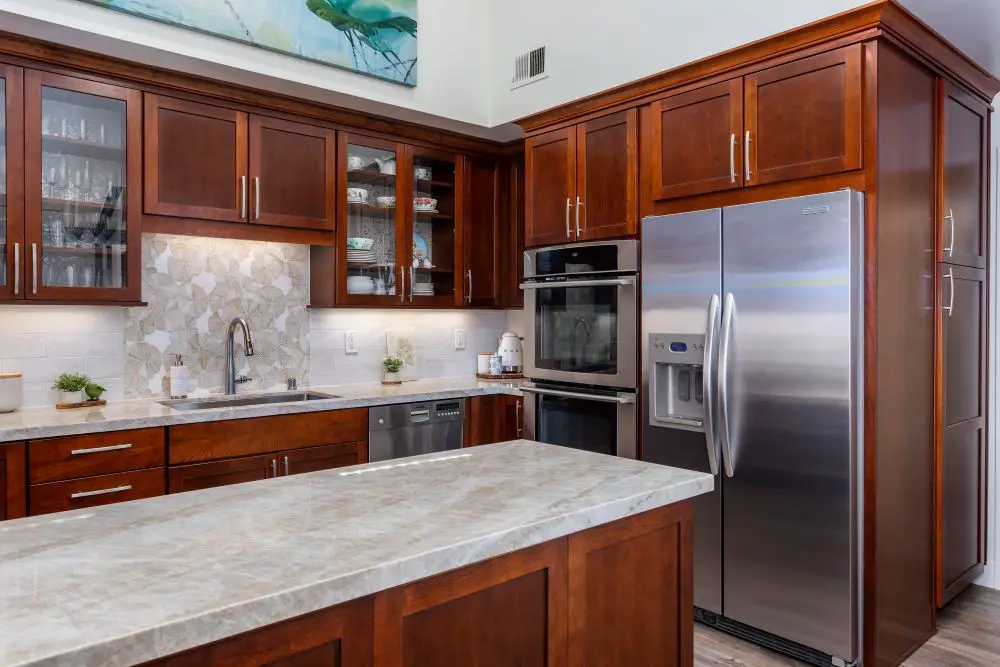
Well-designed kitchen layout with thoughtfully placed refrigerator, ovens, and island, supporting an efficient work triangle and smooth traffic flow.

Well-designed kitchen layout with thoughtfully placed refrigerator, ovens, and island, supporting an efficient work triangle and smooth traffic flow.

We walked into a Rossmoor kitchen a few years back where the homeowner had lived with the same layout for twenty-two years. The fridge was across the room from the sink. The trash was in a corner that required a full turn every time you scraped a plate. The only counter space for prep was next to the stove, which meant someone always had their elbow in someone else's business. She'd adapted to it so completely she didn't even notice anymore — until we pulled it apart and put it back together the right way. Two weeks later she called and said, "I didn't know kitchens were supposed to feel like this."

Layout is the thing nobody talks about when they're dreaming up a remodel — everyone's focused on the countertops and the cabinet finish — but it's the thing that determines whether your kitchen is a pleasure to use or a daily source of low-grade frustration. Here are the five mistakes we fix most often in East Bay kitchens, and what we do instead.

01
Breaking the Work Triangle

Why It Fails

When the sink, cooktop, and fridge are too far apart — or something's cutting through the path between them — cooking becomes a daily obstacle course. You're covering distance when you should be making dinner.

What We Do Instead

Keep each leg of the triangle between 4 and 9 feet with no tall cabinets or islands cutting through the middle. If the plumbing won't allow a perfect triangle, we define clear zones instead: prep near the sink, cook near the range, clean near the dishwasher.

Trade Term: Work Triangle

The work triangle is the invisible path between the three most-used points in a kitchen: sink, cooktop, and refrigerator. Kitchen designers have used it as a planning tool since the 1940s because those three points handle almost everything that happens in a kitchen. The total of all three legs should fall between 13 and 26 feet — enough room to move, not so much that you're logging miles.

4–9 ft
Ideal length per triangle leg
13–26 ft
Total triangle perimeter
0
Obstacles allowed inside the triangle
Rossmoor & Older Walnut Creek Homes

In condos and homes built in the '60s and '70s, plumbing stacks and venting often dictate where the sink and range can go — which is exactly why so many of these kitchens ended up with broken triangles in the first place. We can safely reroute those systems to restore balance. It's more involved than a standard remodel, but it's the difference between a kitchen that works and one that just looks good.

02
Getting the Island Size Wrong

Why It Fails

Too big and it's a wall — you're walking around it every time you cross the kitchen. Too small and it's a glorified plant stand. Either way, you've spent a lot of money on something that doesn't actually help you cook.

What We Do Instead

42 inches of clearance on all sides minimum — 48 if two people regularly cook together. For seating, 24 inches per stool and a 12–15 inch overhang (with support brackets if you go larger). If the room can't accommodate those clearances, we look at a peninsula or a rolling island instead.

42"
Minimum clearance, single cook
48"
Clearance for two cooks
24"
Space per barstool
12–15"
Seating overhang

Islands are also one of the most underutilized storage opportunities in the whole kitchen. Hidden outlets, deep drawers, a pull-out trash — if every inch of your island isn't doing something, that's a missed opportunity. We plan that from the start, not as an afterthought.

Peninsula vs. Island — Which One Fits Your Kitchen?

A peninsula connects to the wall on one end, which means you only need clearance on three sides instead of four. For smaller East Bay kitchens — and a lot of Rossmoor units especially — a peninsula gives you the workspace and the seating without sacrificing the walkway. → See our kitchen remodeling work

"Nobody dreams about clearance measurements when they're picking out countertops. But clearance is the thing that determines whether your kitchen feels open or cramped every single day."
03
Treating Electrical and Lighting as an Afterthought

Why It Fails

A lot of older East Bay homes are running kitchens on one overloaded circuit. Trip the breaker every time the toaster and microwave run at the same time? That's not a quirk — it's a layout problem masquerading as an appliance problem.

What We Do Instead

Plan electrical early — ideally before the cabinets go in. Outlets every 4 feet along the counter (code), dedicated circuits for major appliances, GFCI protection near water, and dimmers on everything possible. We handle California Title 24 requirements during design so it's not a surprise at inspection.

Trade Term: GFCI Outlet

GFCI stands for Ground Fault Circuit Interrupter — it's the outlet with the little test and reset buttons you see near sinks and in bathrooms. It monitors for any imbalance in electrical current and cuts power instantly if it detects one, which protects against shock in wet areas. California code requires them within 6 feet of any sink. In older homes, we often find none at all.

Lighting is its own conversation. A single overhead fixture is the most common lighting mistake in kitchen remodels — it casts shadows exactly where you're trying to chop and read recipes. The right approach layers three types of light:

LayerWhat It DoesWhere It Goes
AmbientGeneral illumination — fills the roomRecessed ceiling fixtures, flush mount
TaskFocused light for work surfacesUnder-cabinet lights over counters
AccentAtmosphere, personality, visual interestPendants over island, toe-kick lighting
Dimmer Switches: Non-Negotiable

Every zone in a well-designed kitchen should be on a dimmer. Full brightness when you're cooking, low and warm when you're having coffee in the morning — it's a small thing that changes the feel of the room completely. We spec dimmers on every zone as a default.

04
Designing for How the Kitchen Looks, Not How It Works

Why It Fails

Trash in the wrong corner. Deep base cabinets where you lose pots in the back. Dishes stored across the room from the dishwasher. The kitchen photographs beautifully and drives you crazy to actually use.

What We Do Instead

We map out how the kitchen actually gets used before we design anything. Where does trash go? Where does the mail land? Where do the kids grab snacks? Then we design storage and function to match real life — not a showroom photo.

A few specific changes that make a big difference:

  • Pull-out trash and recycling bins near the sink — not tucked in a corner
  • Drawers in base cabinets instead of deep shelves — you can actually see and reach what's in there
  • Pots and pans stored near the range, not across the kitchen
  • Dishes stored near the dishwasher so unloading takes 90 seconds instead of five minutes
For Families With Kids

One of our favorite additions for family kitchens: a dedicated snack drawer or breakfast station at a lower height, stocked with everything kids can grab themselves in the morning. It sounds small. Parents tell us it's one of the best things we've ever done for them. → See our kitchen remodeling work

05
Forgetting That the Kitchen Is Also a Hallway

Why It Fails

In most homes, the kitchen sits between the garage, the backyard, and the living area — which means people cut through it constantly. Position a refrigerator door or pantry door in the wrong spot and it becomes a collision course every time someone wants a glass of water while dinner's happening.

What We Do Instead

Plan traffic flow before finalizing appliance placement. 36 inches of clear walkway is the minimum — 42 to 48 inches in high-traffic zones. The fridge and pantry should be positioned so someone can grab a snack without walking through the cooking zone.

36"
Minimum walkway width
42–48"
Recommended in busy areas

Open-concept kitchens make this more complicated — not simpler. When the kitchen flows into the living room and the dining area, you have more traffic coming from more directions. That's why we treat traffic flow mapping as its own step in the design process, before a single cabinet is placed.

The Drop Zone Problem

Keys, mail, backpacks, chargers — if there's no designated place for them near the entry, they land on the kitchen counter. Every time. We've turned a lot of unused corners and dead wall space into small drop zones — a bench, a cabinet, a row of hooks — and it changes the whole feel of the kitchen without touching the layout at all.

Candi's Take

Every one of these mistakes has the same root: people design kitchens for a magazine spread instead of for their actual life. The countertop material matters — but it matters a lot less than whether you can open the dishwasher without backing into the island.

My dad has a saying he uses on almost every job: "You'll live in this kitchen every single day. Design it for Tuesday morning, not for the dinner party." Tuesday morning is when the coffee maker is running and two kids are getting backpacks and someone's looking for their keys and you're trying to make lunches. That's the kitchen your layout needs to support.

— Candi Toupin, Toupin Construction
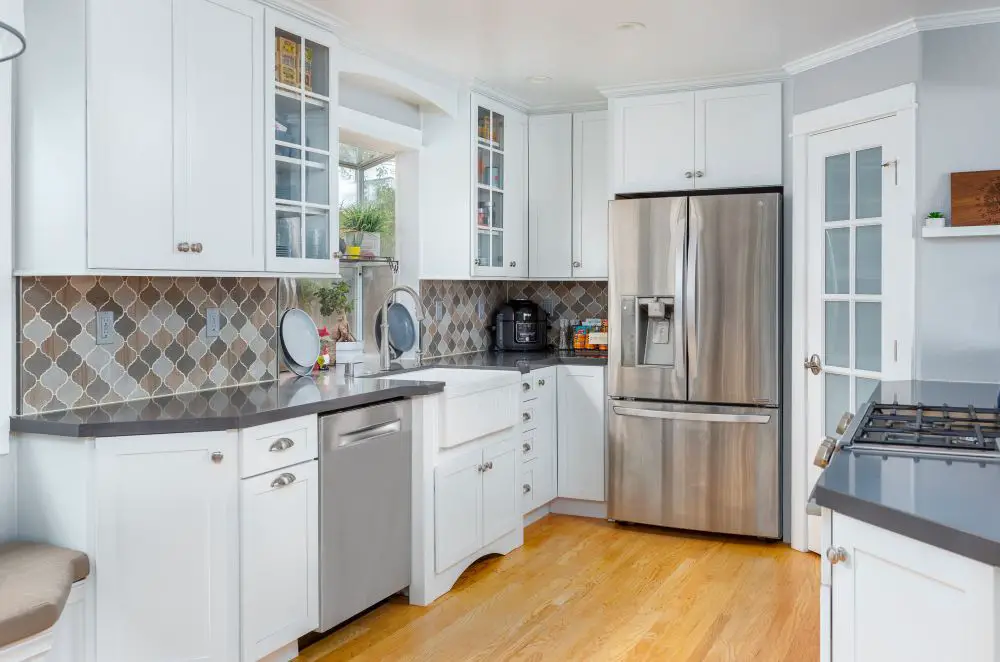
Kitchen sink with streamlined counter space and efficient layout

Clean kitchen layout with sink positioned along a continuous counter run, providing practical workspace for prep and everyday use.

Quick Recap: The 5 Layout Mistakes

  • Work triangle too long, too short, or blocked — cooking feels like cardio
  • Island sized for a showroom, not your actual square footage
  • Electrical and lighting planned after the cabinets go in
  • Storage designed for aesthetics, not for how you actually use the space
  • No plan for traffic flow — the kitchen becomes a bottleneck

Questions We Hear Before Almost Every Kitchen Remodel

Can I move my sink or range to fix the work triangle, or is that a huge project?

It depends on your plumbing and venting situation. Moving a sink is usually manageable — it's mostly a matter of rerouting supply and drain lines. Moving a gas range requires rerouting the gas line, which needs a licensed plumber and a permit. In older Rossmoor and Walnut Creek homes, the plumbing stack location sometimes limits your options. We assess that early in the design conversation so there are no surprises.

My kitchen is small. Is an island even worth it, or should I skip it?

If you can't maintain 42 inches of clearance on all sides, a fixed island will make your kitchen feel tighter, not better. But that doesn't mean you're out of options — a peninsula (one end attached to the wall) works well in smaller spaces because you only need clearance on three sides. A rolling butcher block island is another option if you need flexibility. We'd rather you have a functional small kitchen than a beautiful cramped one.

How do California's electrical codes affect kitchen remodels specifically?

Quite a bit, actually. California requires dedicated circuits for major appliances (refrigerator, microwave, dishwasher), GFCI outlets within 6 feet of any sink, and arc-fault protection on most kitchen circuits. The state also follows Title 24 energy codes, which affect which light fixtures can be installed. This is all standard for us — we handle it during design so it doesn't become a permit issue at the end of the project.

What's the biggest layout mistake you see in Rossmoor specifically?

The broken work triangle, almost every time — and it usually traces back to original construction decisions from the 1960s that made sense for a different way of living. Kitchens in that era were designed to be closed off and utilitarian. Open them up, and suddenly the fridge is way over here and the sink is way over there and the cooktop is somewhere in the middle. It's not unsolvable — but it does take real planning and sometimes some plumbing work to fix properly.

How early in the process should we be thinking about layout?

Before you pick a single finish. Layout affects everything — where the plumbing goes, where the electrical runs, what cabinet configuration makes sense. If you fall in love with a specific tile or countertop first, you can paint yourself into a corner. Start with how the space needs to function, then make it beautiful. The order matters more than most people realize.

Thinking about a kitchen remodel in Walnut Creek or Rossmoor?

Let's start with the layout — because that's what everything else is built on. We'll walk through your space, talk through what's working and what isn't, and give you an honest picture of what's possible.

Schedule a Free Consultation See Our WorkCall us: 925-937-4200  ·  CA Lic #626819

‹ Back