

By using our website, you agree to the use of cookies as described in our Cookie Policy
Blog
A Kitchen That Doesn't Fight Your Hands
Accessibility & Aging in Place
A Kitchen That Doesn't Fight Your Hands
Counter heights, pulls, and faucets that actually reduce joint strain — no clinical look required
We get this request more than almost any other in Rossmoor: "I want my kitchen to feel easier. My hands aren't what they used to be." Sometimes it comes with a diagnosis — rheumatoid arthritis, osteoarthritis, carpal tunnel. Sometimes it's just the slow truth of getting older and noticing that twisting a faucet handle has become a two-handed job.
The good news is that most of these problems are design problems, and design problems have design solutions. None of them require a clinical-looking kitchen. The best accessibility work we do is the kind you can't see — the kind that just makes the space feel effortless.
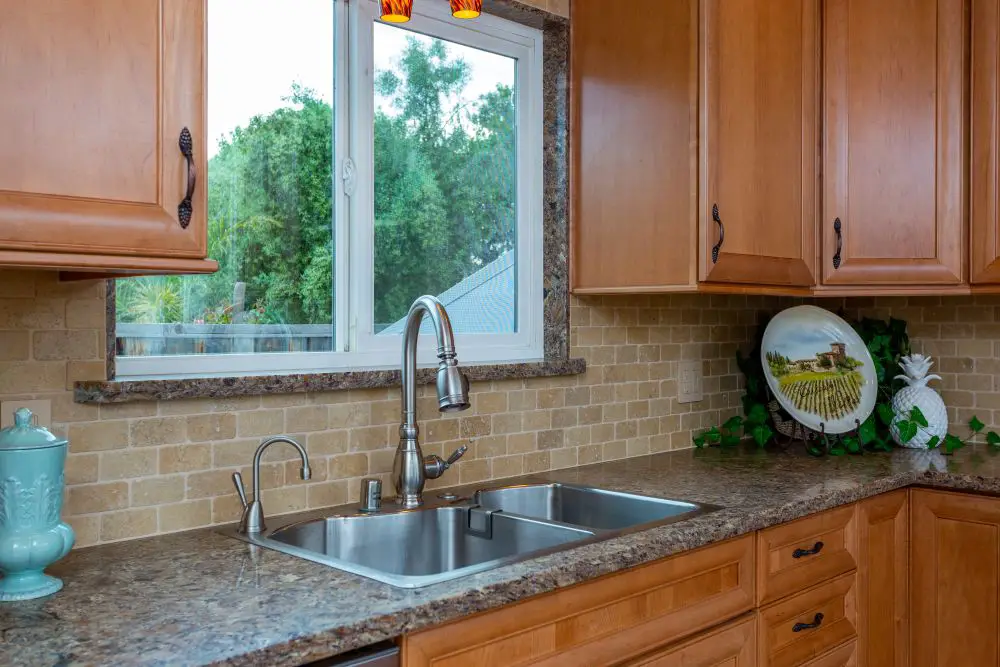 This kitchen setup features arthritis-friendly design elements, including a single-handle pull-down faucet that allows for easy temperature and water control with minimal wrist strain. The cabinetry is equipped with large, curved pulls that are easier to grasp than small knobs, reducing hand fatigue. The counter height appears standard but offers ample clearance for comfortable use, making this a practical and stylish choice for accessible kitchen design.
 Part One
Counter Height: The Most Overlooked Fix
The standard American kitchen counter sits at 36 inches. That height was established when the "average" American woman was shorter, and it's been repeated ever since without much questioning. For many people with arthritis — especially in the shoulders and wrists — working at a standard 36-inch surface means subtle but constant strain. Your shoulders creep up. Your wrists bend at an angle. You compensate without realizing it, and by the time dinner is done, you're exhausted in a way that feels disproportionate to the task.
The Elbow Test
Stand in your kitchen with your arms relaxed at your sides. Measure the distance from the floor to your elbow — that's your neutral working height. If your counters are significantly above or below that mark, you're working against your body every time you cook. Most people are surprised to discover that the right height for them isn't 36 inches at all.
The practical solution for most kitchens isn't to rebuild everything — it's to add a lower prep zone. On jobs in Rossmoor, we often drop one section of counter (typically near the sink or main prep area) to 32–34 inches. That lower surface is where the chopping, mixing, and detail work happens. The standard 36-inch surface remains for other tasks.
| Use & Who It's For | Counter Height | Why It Helps |
|---|---|---|
| Standard standing prep — most adults | 36 inches | Neutral wrist angle, less shoulder lift |
| Seated prep or fine-detail work | 30–34 inches | Relaxed shoulders, full arm control |
| Baking (rolling, pressing) | 32–33 inches | Leverages body weight, less wrist load |
| Taller users (6'+ range) | 38–39 inches | Eliminates hunching and back strain |
Rounded countertop edges are another small win worth noting. Sharp 90-degree edges dig into forearms when you brace yourself against the counter. A simple eased or bullnose edge is gentler on skin and puts less pressure on the arm — something most people don't think to ask for but immediately notice once they have it.
Part Two
Pulls and Hardware: The Daily Friction You Can Eliminate
Cabinet hardware is the thing you interact with most in your kitchen, by a wide margin. Every drawer, every door — dozens of times a day. And yet most people choose hardware based entirely on how it looks, without thinking at all about how it feels on a hard day.
Small round knobs require a pinch grip. That's the grip that taxes the small joints of the fingers most directly, and it's the first grip to go when arthritis flares. A bar pull or D-shaped handle allows an open-palm motion — fingers hook, wrist pulls, no pinching involved. It's a completely different mechanical demand on the hand.
✓ Bar Pulls (5–12")
Best all-around choice. Long enough to grab from any angle, no pinch required, easy to locate by feel. Go longer on wider drawers — 10–12 inches on pot drawers so you can use your whole hand.
✓ D-Shaped Pulls
Full wrap-around grip, comfortable even on swollen days. The curved shape naturally guides your hand into position. Works especially well on refrigerator and pantry doors.
✗ Small Round Knobs
Require a pinch grip that directly stresses finger and thumb joints. Avoid on any high-use drawer or cabinet — the savings in hardware cost is not worth the daily friction.
✓ Soft-Close Slides & Hinges
This isn't about the pull shape — it's about how hard you have to push. Soft-close hardware means a light touch closes everything. No slamming, no force required. One of the highest-value accessibility upgrades per dollar spent.
"We had a client in Rossmoor who came to us specifically because opening her lower cabinet doors had become painful. We added D-pulls and soft-close hinges — no structural changes, no tile work — and she called us two weeks later to say it had changed her mornings."
Part Three
Faucets: No More Two-Handed Jobs
The wrong faucet forces you to grip, twist, and exert — all with wet hands. Every one of those motions is harder on arthritic joints than it sounds. The right faucet practically operates itself.
Single-Handle Lever Faucets
One lever controls both temperature and flow. It can be moved with a palm, a wrist, or even a forearm on a bad day — no grip required. Look for a long lever arm (more leverage = less force), a high-arc spout for pot-filling, and a pull-down sprayer with a magnetic dock so it snaps back into place without precision.
Trade Term: Ceramic Disc Cartridge
Inside most quality faucets is a cartridge — the mechanism that controls water flow. Ceramic disc cartridges use two hard ceramic discs that rotate against each other. They're smooth, require almost no force to operate, and last far longer than older rubber-washer designs. When you hear "quarter-turn" operation, that's a ceramic disc cartridge at work. Ask for it by name when selecting fixtures.
Touchless and Touch-Activated Faucets
A wave of the hand or a tap on the spout turns water on and off. These have become genuinely reliable — the sensor tech has improved significantly — and they're especially useful when hands are covered in something that makes gripping a lever difficult. Make sure the model you select has a manual override, adjustable sensor sensitivity, and a battery backup option.
- Anti-scald limiters — prevent burns when grip and reaction time are slower; valuable for both arthritis and general safety
- Pull-down sprayer with magnetic dock — lighter to maneuver than a fixed sprayer, no reaching required, snaps back without effort
- Under-cabinet task lighting near the sink — not a faucet feature, but it eliminates the squinting and reaching that happens when you can't see clearly what you're doing
Beyond the Kitchen
Bathroom Considerations Worth Knowing
The same principles apply in the bathroom, often with even more daily impact. A bathroom sink faucet gets used morning and night, every day. A stiff cross-handle or two separate hot/cold knobs is a daily irritant that adds up.
In the bathroom, we also frequently add grab bars near the toilet and in the shower — not the institutional chrome bars of older accessible design, but textured brushed-nickel bars that read as intentional design elements. Our ADA/accessibility service page shows examples of what thoughtful accessible design actually looks like in practice.
Rossmoor Context
Rossmoor units were built primarily between 1964 and the early 1980s — which means original kitchens often have two-handle faucets, small round knobs, and standard-height counters designed for a previous generation's idea of a kitchen. The good news: upgrading faucets and hardware in a condo typically doesn't require Mutual board approval. Counter height changes that affect cabinetry or plumbing routing do go through the approval process, and we handle that paperwork as part of the project.
The Bigger Picture
What You Can Do This Weekend vs. What to Plan For
- This weekend: Swap knobs for bar pulls on your most-used drawers and cabinets — this is a screwdriver job and takes about an hour
- This weekend: Add a mounted phone charger or cup hook near the coffee station — small friction reductions compound quickly
- Plan for your next project: Faucet upgrade — a licensed plumber or us as part of a broader kitchen project
- Plan for your next project: Lower prep section at the sink — requires cabinet modification and potentially countertop work
- Plan for your next project: Soft-close hardware retrofit on existing cabinets — straightforward carpentry, often done in a day
- Plan for your next project: Grab bars in bathroom — requires proper blocking in the wall to anchor securely; not a drywall anchor situation
Does accessible design mean my kitchen will look like a hospital?
No — and this is the misconception we spend the most time correcting. Bar pulls are a mainstream design choice. Lever faucets are standard in most modern kitchen remodels. Lower counter sections read as a design feature, not a medical accommodation. The clients whose kitchens we design for accessibility regularly get compliments on how beautiful the space looks.
Does making these changes affect resale value?
Bar pulls and lever faucets are neutral to positive — they're what most buyers expect anyway. A lower prep counter is an interesting selling point, especially for East Bay buyers who are increasingly thinking about staying in their homes long-term. Grab bars installed with proper blocking are less visible than people assume, and can be removed without significant repair if a future owner wants to.
At what point should I involve a contractor vs. doing this myself?
Hardware swaps: do it yourself. Faucet replacement on an existing connection: a confident DIYer can handle it. Anything involving changing the counter height, moving plumbing, adding electrical, or installing grab bars with structural blocking: call us. The structural anchor point for a grab bar matters — a bar pulled out of drywall under force is worse than no bar at all.
We design kitchens for real hands, not showrooms.
If you're thinking about making your kitchen or bathroom easier to use — at any stage of life — we're happy to walk through what's possible. No pressure, just an honest conversation.
Get a Free Consultation Call 925-937-4200
Toupin Construction
Ready to start your remodel?
Whether you're dreaming of a new kitchen, a spa-worthy bathroom, or a whole-home transformation — we’d love to hear about your project. Reach out and let's talk.
‹ Back
Comments