

By using our website, you agree to the use of cookies as described in our Cookie Policy
Blog
Reface or Replace? How to Make the Right Cabinet Call
Remodeling Tips · Kitchen
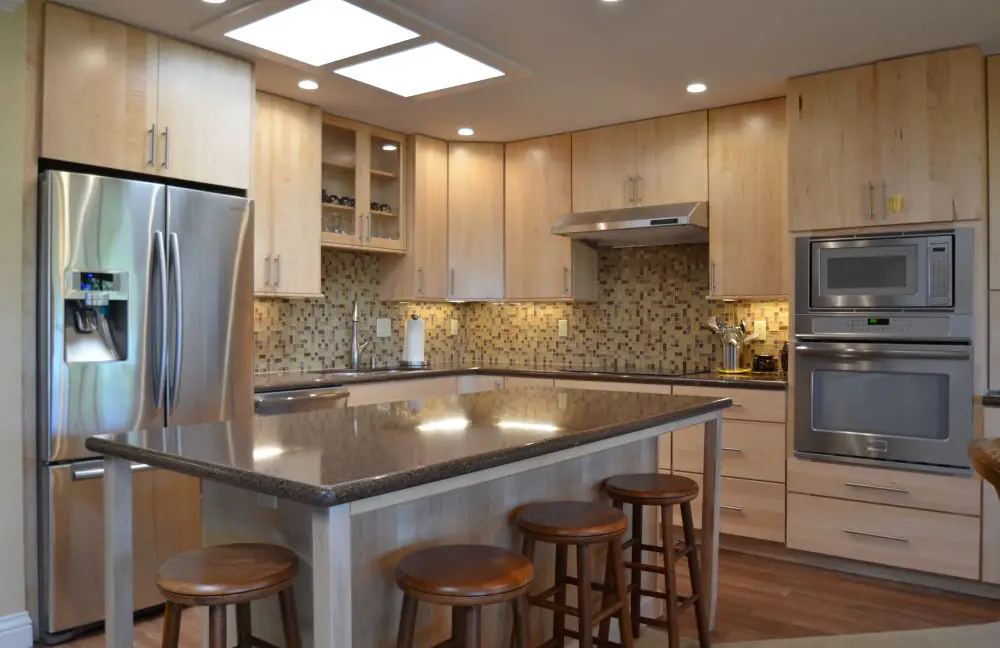 A modern kitchen featuring light wood cabinetry, a central island with seating, and skylights that bring in natural light for a bright and functional layout.
A homeowner called us last year with a question I get at least once a month: "I hate my cabinets. Do I have to rip them all out?" The short answer? Not necessarily. But the real answer depends on a few things we can figure out pretty quickly — and knowing the difference could save you thousands. Here's how we walk through it.
Cabinet decisions are the most emotionally loaded part of a kitchen remodel. They're the first thing you see when you walk into the room, and they make up roughly 30–40% of the average kitchen remodel budget. That means choosing wrong in either direction — spending on a replacement you didn't need, or doing a reface on boxes that should've been replaced — is a genuinely costly mistake.
I want to lay this out in plain language, because we've had this conversation with hundreds of homeowners across Walnut Creek, Rossmoor, Lafayette, and Danville — and the confusion usually comes from the same two or three misunderstandings. Let's clear those up.
What Does "Refacing" Actually Mean?
Refacing is essentially a facelift for your existing cabinets. We keep all the boxes — the interior carcasses that are mounted to your walls — and replace everything you actually see and touch.
Trade Term Explained"Cabinet box" or "carcass" refers to the interior shell — the sides, top, bottom, and back of each cabinet unit. It's what's bolted to the wall. During a reface, these stay. During a replacement, these come out entirely.
In a typical reface, we cover the exposed box faces with a thin layer of veneer or laminate — material that matches your new doors — and then install brand new doors, drawer fronts, and hardware. Done well, it's indistinguishable from a replacement once the counters are in.
✓ Reface: The Upsides
- Significantly lower cost than full replacement
- Faster timeline — often 2 to 4 days
- Less construction disruption to your home
- Eco-friendly — reuses existing structure
- Can look completely brand new
✓ Replace: The Upsides
- Complete design flexibility — change anything
- New boxes, new structure, new storage features
- Opportunity to fix a layout that doesn't work
- Long-term durability with quality cabinetry
- Strongest return on investment over time
What Does "Replacing" Mean?
Replacement is exactly what it sounds like: we remove everything — boxes, doors, hardware, the whole setup — and start from scratch with new cabinetry. This gives you total design freedom. New layout, new depths, new features, new everything.
It also costs more and takes longer. Neither of those things is a reason to avoid it — but they're reasons to make sure you actually need it before you commit.
Trade Term Explained"Soft-close" refers to a hinge or drawer slide mechanism that gently decelerates before fully closing — no slamming. If you've ever been in a newer kitchen and noticed the doors just... glide shut, that's soft-close hardware. It's now standard in most cabinet lines and can dramatically change how a kitchen feels to use.
 A modern kitchen featuring light wood cabinetry, a central island with seating, and skylights that bring in natural light for a bright and functional layout.
Side-by-Side: Which Option Fits Your Situation?
Trade Term Explained"Particleboard" is an engineered wood product made from compressed sawdust and resin — cheaper to manufacture than plywood, and common in builder-grade cabinets from the 1970s and 1980s. It doesn't hold screws as well over time, and it's vulnerable to moisture. If your boxes are particleboard and have seen any water exposure, refacing over them is usually a short-term fix for a long-term problem.
Three Real Jobs. Three Different Calls.
This is where it gets concrete. Here's how we've actually applied this thinking on recent jobs in the East Bay.
Rossmoor, Walnut Creek
Solid Oak Boxes, Dated Look — Perfect Reface Candidate
The homeowners had original oak cabinets from the early 1980s. Dated style, yes. But when we opened a couple doors and looked at the boxes? Dead solid. No warping, no water damage, hinges still worked. We refaced with white shaker doors, added brushed nickel hardware, and paired it with new quartz countertops. Looked completely new. Came in at nearly half the cost of a full replacement. The homeowners couldn't believe it.
Walnut Creek
Damaged Boxes, Wrong Layout — Replacement Was the Only Answer
This kitchen had cabinets that looked fine from the outside — freshly painted, actually — but the boxes were sagging particleboard with swollen bottoms from a slow dishwasher leak years earlier. A reface would've been putting new clothes on a problem. We replaced everything with KraftMaid cabinetry featuring full-extension drawers and pull-out storage. Better layout, better storage, built to go decades.
Rossmoor, Walnut Creek
Aging in Place Needs — Layout Had to Change
For a couple planning to stay in their home long-term, the existing layout simply didn't work for their accessibility goals. We replaced the base cabinets with full-extension drawers for easier reach, adjusted countertop depths to improve wheelchair clearance, and added pull-out shelving throughout. Refacing couldn't have gotten us there — only replacement gave us the flexibility we needed. This is one of those jobs that still sticks with me because it genuinely changed how they live in that kitchen every day.
A Note on Rossmoor Specifically
If you're in Rossmoor, there's an extra layer worth knowing: any remodeling work requires approval from both your individual Mutual board and the City of Walnut Creek. This doesn't have to be complicated — we handle permit coordination as part of every project — but it does affect timelines, and it's one of the reasons we always start with an in-person assessment rather than a number over the phone.
The good news is that Rossmoor condos built in the 1960s and 70s often have solid original cabinet boxes. We see a lot of great reface candidates in there. The layouts are compact and generally well-thought-out — they just need a style refresh, not a structural overhaul.
"Refacing is not the cheap shortcut. Done right, it's the smart call — when the bones are worth keeping."
When We Recommend KraftMaid for Replacements
When a replacement is the right call, we often work with KraftMaid cabinetry. Not because they sponsor us — they don't — but because we've installed enough of their product over the years to trust it.
What sets them apart is the storage engineering: pull-out trays, deep drawers, soft-close everything, hidden waste bin inserts, spice pull-outs. For East Bay homeowners who cook seriously and plan to stay in their homes for another 10 to 20 years, that functional quality matters more than the style on the door. The style you can change. The box construction is what you live with.
Learn more in our KraftMaid Cabinet Story.
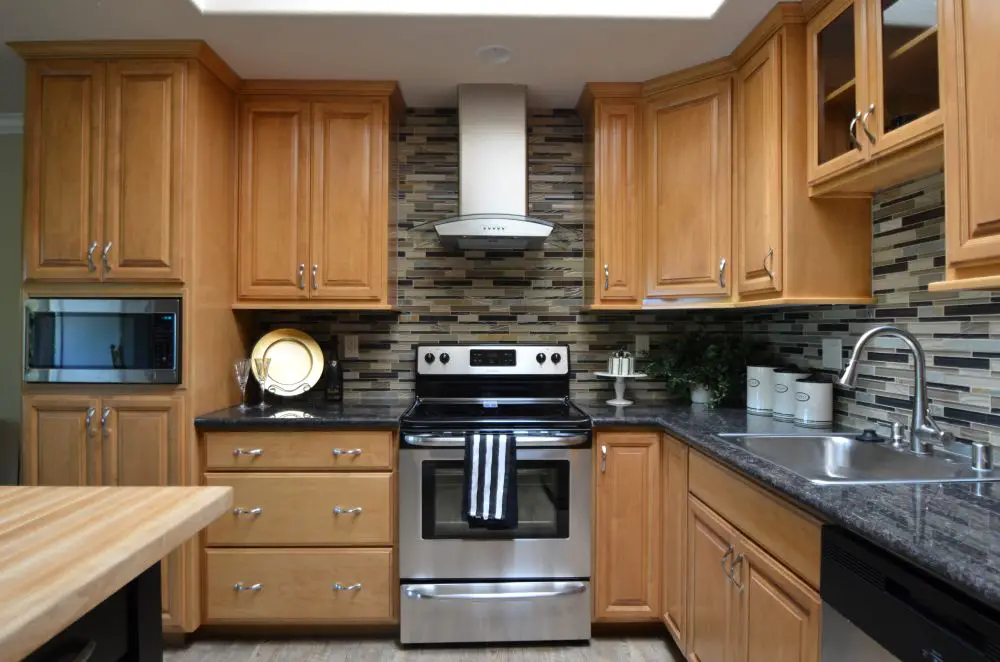
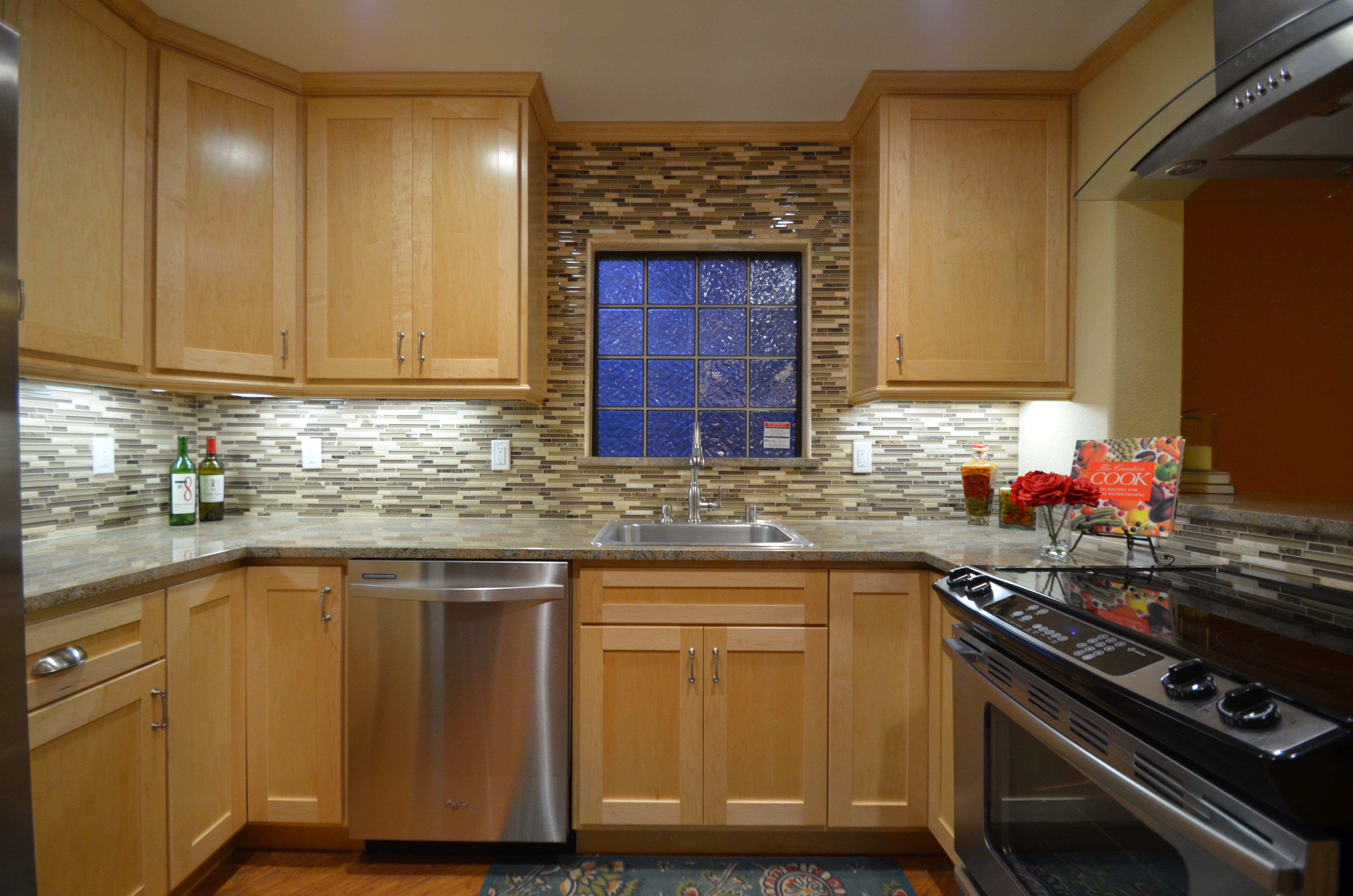 A functional kitchen layout with a centered window, mosaic tile backsplash, and under-cabinet lighting that enhances visibility and highlights the workspace.
Your Quick Decision Guide
Choose based on what's true for your kitchen
Lean toward Reface if…
- Boxes feel solid — no soft spots, no warping
- No history of water leaks under the sink or dishwasher
- You're happy with the current layout
- Budget is the primary driver right now
- You want minimum disruption, faster turnaround
- Short-term refresh before selling or renting
Lean toward Replace if…
- Boxes show any moisture damage or sagging
- Cabinets are builder-grade particleboard
- You want to change the layout or open the kitchen
- Accessibility upgrades are part of the plan
- You're already redoing floors, counters, or lighting
- This is your forever home — invest accordingly
Frequently Asked Questions
Can I reface cabinets that were painted over?
Yes, in most cases. The key is whether the underlying box is structurally sound. Paint on the exterior doesn't prevent a reface — but we'll need to assess the box condition and the substrate before committing. Heavy coats of paint can sometimes affect how well veneer adheres, so we'd evaluate that on-site.
How much cheaper is refacing compared to replacement?
It varies by scope, but refacing typically runs 40–60% less than a full replacement for the same kitchen footprint. The savings come from not purchasing new box material and reducing labor time significantly. That said, if you go with premium door styles and finishes, that gap can narrow — so it's worth getting numbers on both options before you decide.
Will refaced cabinets look as good as new ones?
Honestly, yes — when it's done by someone who knows what they're doing. The biggest variables are the quality of the veneer material and how well the new doors are fitted and finished. A sloppy reface looks like a reface. A proper one looks like a new kitchen.
Does Rossmoor require a permit for cabinet work?
It depends on the scope. Purely cosmetic cabinet work — like a reface — often doesn't trigger a permit, but if you're doing a full replacement that involves any plumbing or electrical changes, you'll need City of Walnut Creek permits and Mutual board approval. We handle all of that coordination as part of our process.
How do I know if my cabinet boxes are in good condition?
Check the interior bottom of the base cabinets — that's where water damage shows up first, usually from under-sink leaks or dishwasher issues. Press along the bottom and sides. If anything feels soft or spongy, that's a problem. Look at the shelf pin holes — if they're elongated or stripped, that's a sign of aging particleboard. Still unsure? That's what a free assessment is for.
Not Sure Which Way to Go?
We'll look at your cabinets with you and give you a straight answer — not a sales pitch. Forty years of East Bay kitchens means we've seen just about every situation. Call us at 925-937-4200 or request a free assessment below.
Request a Free Assessment See Our Work
Toupin Construction
Ready to start your remodel?
Whether you're dreaming of a new kitchen, a spa-worthy bathroom, or a whole-home transformation — we’d love to hear about your project. Reach out and let's talk.
‹ Back
Comments