


By using our website, you agree to the use of cookies as described in our Cookie Policy
Blog
Tile 101 How to start choosing tile without losing your mind (or your budget)
Global Tile Series — Part 1 of 5
How to start choosing tile without losing your mind (or your budget)
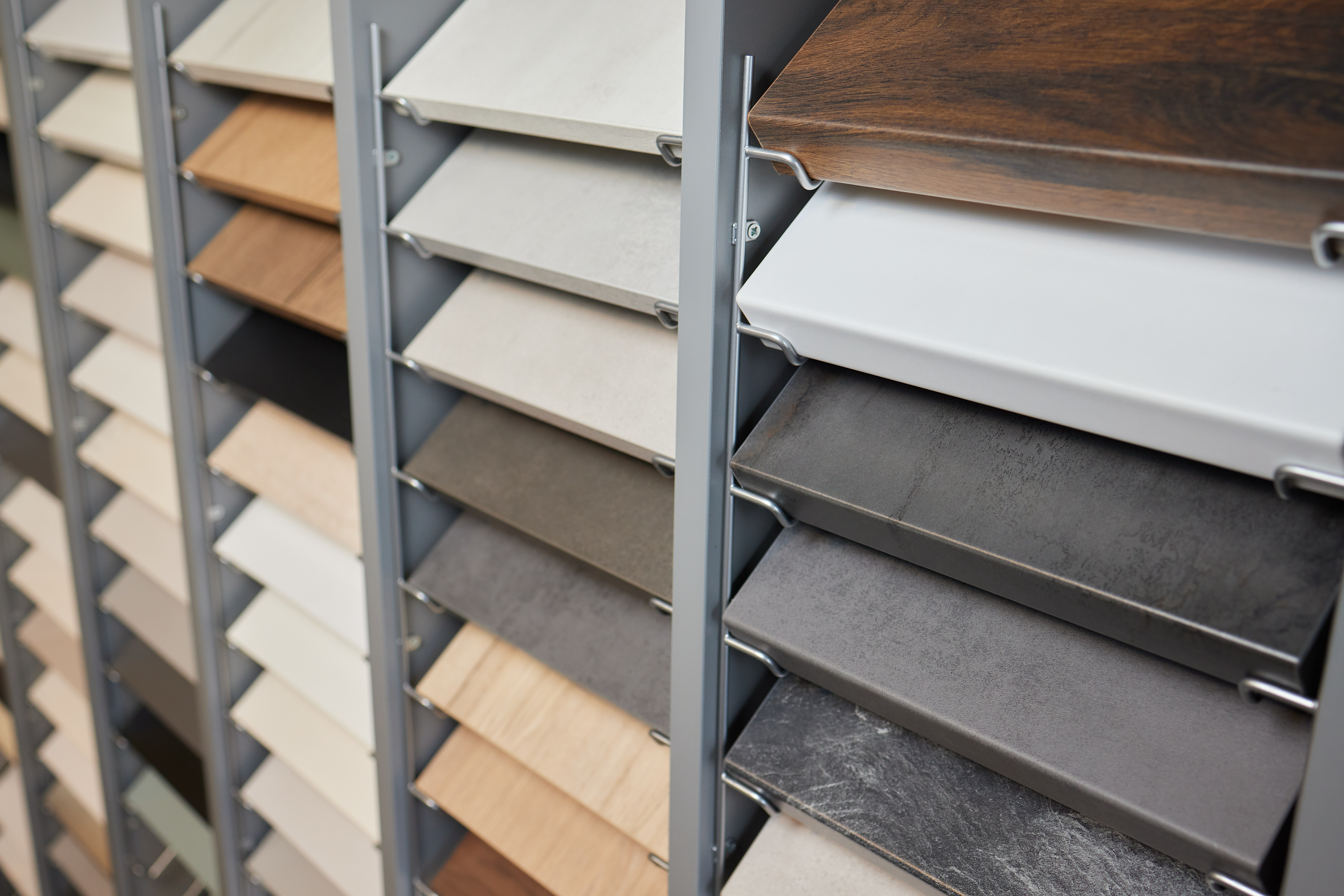 Display rack of countertop and tile material samples in a remodeling showroom featuring modern wood tones, matte finishes, and stone-inspired surfaces for kitchen and bathroom design selections.
I walked into a tile showroom in Walnut Creek a few years back with a client who had a very clear vision: "I want something timeless." Two hours later she was holding a handmade zellige sample in one hand, a matte concrete-look porcelain in the other, and genuinely considering large-format marble she'd originally said was out of her budget. That's tile for you. It pulls you in.
If you've ever stood in a showroom and felt that particular combination of excitement and overwhelm — you're not alone. There are hundreds of tile types, thousands of combinations, and approximately zero bad options if you know how to narrow it down. That's what this guide is for.
We're going to walk through the fundamentals: where tile goes, what it's made of, how size and finish change the feel of a room, and what the real costs look like here in the East Bay. Think of it as the conversation we have with every client before we start pulling samples.
Start With Where, Not What
The single most common mistake I see is homeowners falling in love with a tile before they know where it's going. You find something stunning at the showroom, bring it home, and then realize it's rated for walls only — and you wanted it on your bathroom floor.
Location determines material. Here's the honest breakdown:
Bathroom Floors
You need slip resistance — not just good looks. Textured porcelain or ceramic with a PEI rating of 3 or higher. Glossy tile on a wet floor is a lawsuit waiting to happen.
Shower Walls
Waterproof and easy to clean. Smaller tiles or mosaics handle curved niches and corners beautifully. Grout maintenance matters more here than anywhere else.
Kitchen Backsplash
This is your creative playground. Color, shape, texture — all fair game. Just make sure it wipes down easily. Grease happens.
Outdoor Spaces
Not every tile survives the Bay Area's wet winters. Look for porcelain or natural stone rated for exterior use and frost resistance. We've seen plenty of patios redone after someone bought indoor tile.
Trade Term
PEI Rating
PEI stands for Porcelain Enamel Institute, and it's a 0–5 scale for tile hardness and durability. PEI 0–2 is wall tile only. PEI 3–4 is residential floors with regular foot traffic. PEI 5 is commercial or very heavy use. Most of what you're selecting for a kitchen or bathroom floor should be PEI 3 or 4.
The Tile Types, Explained Honestly
The showroom won't always tell you what's actually best for your project — they want to sell tile. Here's what you're actually looking at when you walk through those aisles:
| Type | Best For | Watch Out For | East Bay Price Range |
|---|---|---|---|
| Ceramic | Walls, light-traffic floors, backsplashes | Less dense than porcelain; absorbs more water | $2–$8/sq ft |
| Porcelain | Floors, showers, outdoor, high-traffic | Heavier; needs proper substrate prep | $4–$20/sq ft |
| Natural Stone | Bathrooms, kitchens, feature floors | Requires sealing; higher maintenance | $8–$35+/sq ft |
| Glass | Backsplashes, accent walls | Slippery; shows water spots; not for floors | $10–$30/sq ft |
| Cement/Encaustic | Statement floors, patios, stair risers | Must be sealed; more maintenance than porcelain | $8–$25/sq ft |
Trade Term
Encaustic Tile
Encaustic tiles are cement-based tiles where color and pattern are embedded into the surface during manufacturing, not glazed on top. That means the pattern goes all the way through — no wearing off. They're handmade, which gives them gorgeous variation, but they're also porous and need to be sealed before installation and periodically after. If you've seen those bold geometric Moroccan or Spanish tiles, there's a good chance they were encaustic.
Size and Shape Change Everything
Tile size affects how a room feels. This isn't interior design philosophy — it's geometry. Fewer grout lines in a small bathroom make it feel larger and cleaner. More tiles in a tiny shower niche give your installer precise control over curves and transitions.
Here's a quick read on size:
- Large format (24"×24" and up): Modern, seamless, visually expansive. Popular in master baths and open kitchens. Requires a very flat, well-prepared substrate — uneven floors show up more with big tiles.
- Standard (12"×12" to 12"×24"): The workhorses. Versatile, widely available, easy to install. Never a wrong choice.
- Mosaics and small tiles (under 4"): Excellent for showers, niches, and slip-resistant floor sections. More grout = more cleaning. Worth it for the right application.
- Shaped tiles (hex, fish scale, arabesque, chevron): These are your personality tiles. Use them where you want the eye to land — a powder room floor, a kitchen backsplash, the back of a niche.
Trade Term
Substrate
The substrate is whatever surface your tile gets installed on — concrete slab, cement board, backer board, or existing flooring. The substrate has to be flat, stable, and properly waterproofed in wet areas. A tile installer who tells you the substrate doesn't matter is one you don't want on your project. If the substrate moves or flexes, the tile cracks. It's that simple.
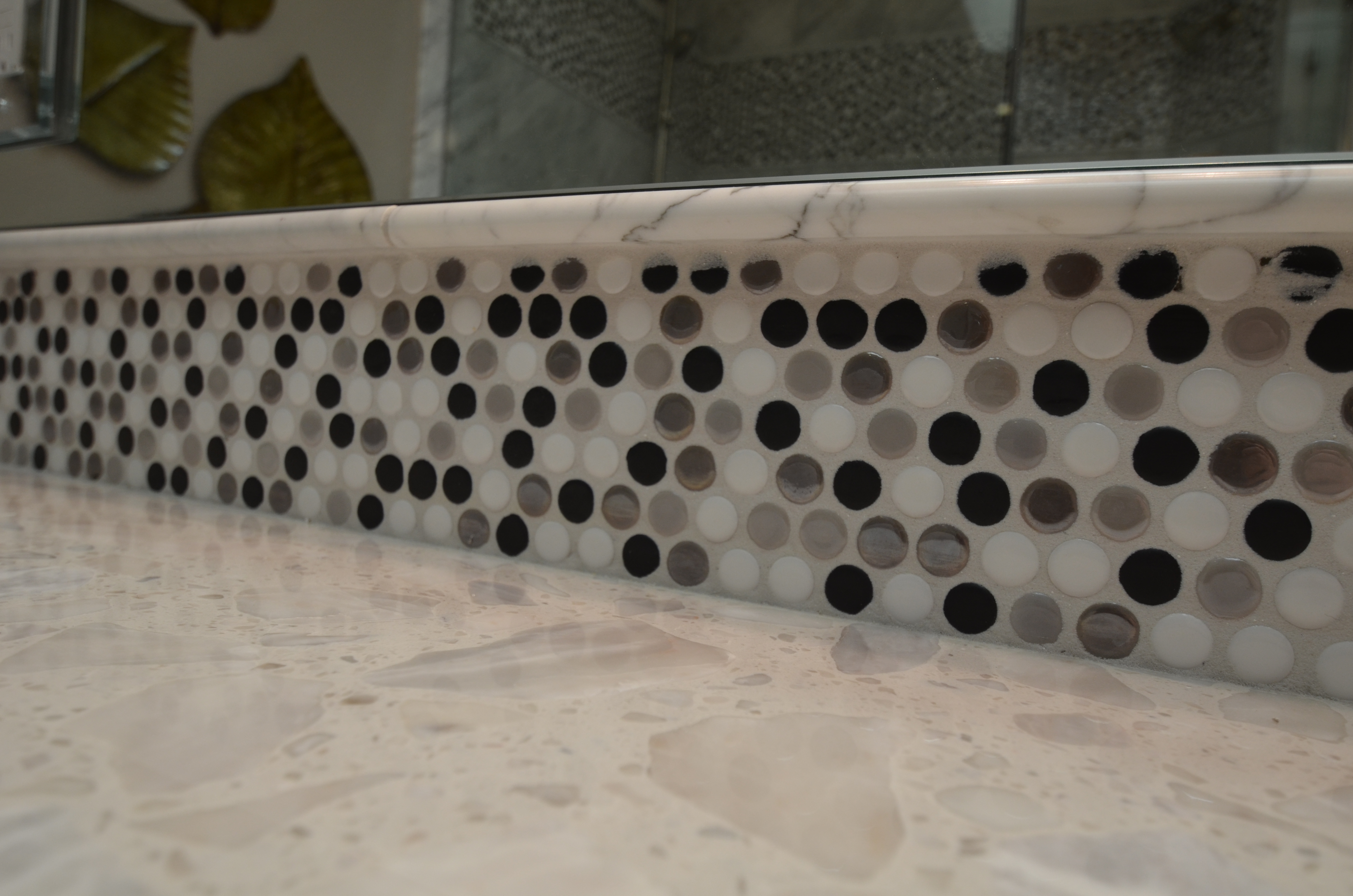
Close-up of a bathroom vanity backsplash featuring black, white, and gray penny round mosaic tile paired with a terrazzo-style countertop and frameless shower glass in a Walnut Creek bathroom remodel.
Finish Matters More Than You Think
Same tile, different finish — completely different room. The finish you choose changes both the look and the daily maintenance of your space.
- Glossy/Polished: Reflects light, makes small rooms feel bigger, shows every fingerprint and water spot. Great for walls, be careful on floors.
- Matte/Honed: Soft, contemporary, forgiving with water marks. Currently everywhere in East Bay remodels and for good reason — it's practical and handsome.
- Textured/Tumbled: Adds grip on floors, mimics natural stone, hides the occasional scuff. Good for entryways, outdoor spaces, shower floors.
- Satin: The compromise between glossy and matte — a little shine without the maintenance headache.
"Bring samples home and look at them in your own light. A tile that looks soft white in the showroom can look starkly clinical under recessed lighting. The showroom has flattering light on purpose."
What Tile Actually Costs in the East Bay
Here's where I'm going to be straight with you, because national pricing guides are nearly useless. Labor costs in Walnut Creek and the surrounding East Bay communities are not the same as they are in Phoenix or Atlanta. Plan accordingly.
| Budget Level | Material | Installation (East Bay) | Total Estimate |
|---|---|---|---|
| Entry | Ceramic or basic porcelain, $2–$6/sq ft | $8–$12/sq ft | $10–$18/sq ft installed |
| Mid-range | Porcelain or stone-look, $6–$15/sq ft | $10–$15/sq ft | $16–$30/sq ft installed |
| Upper | Natural stone, hand-made, or large format, $15–$40/sq ft | $15–$25/sq ft | $30–$65/sq ft installed |
And yes — add 10–15% to your tile order for cuts, waste, and the broken one that happens on install day. Always. Without exception.
The Grout Conversation (You Can't Skip It)
I'll do a full post on grout because it genuinely deserves one. But for now, the quick version: your grout choice can completely change how your tile reads.
- Matching grout: Clean, seamless, tile-forward. The tile is the star.
- Contrasting grout: Bold, graphic, pattern-forward. Think black grout on white subway tile.
- Epoxy grout: The professional's choice for high-traffic and wet areas. Non-porous, stain-resistant, doesn't require sealing. More expensive, harder to work with, worth it.
We wrote a whole post on why epoxy grout is the gold standard if you want to go deep on this.
Test Before You Commit
This is not optional. Order samples. Take them home. Tape them to the wall in the actual room. Look at them in the morning when sunlight is coming through the windows. Look at them at night under your light fixtures. Live with them for three days minimum.
We've had clients save themselves from expensive mistakes — and discover unexpected tiles they never would have chosen in the showroom — just by doing this one thing. The showroom has curated, flattering light and the tile is surrounded by other tiles. Your bathroom has recessed LEDs and white walls. It's not the same room.
Where This Series Goes Next
This post is the foundation. The rest of this series is where it gets fun — we're taking tile around the world.
Each culture has developed its own relationship with clay, glaze, and geometry. The way Spain used tile is completely different from the way Japan did, which is completely different from Morocco or Scandinavia. And each of those traditions has something genuinely useful to offer when you're designing a kitchen or bathroom right here in the East Bay.
Ready to start talking tile?
We've helped hundreds of East Bay homeowners navigate the showroom rabbit hole and come out the other side with a tile they love and a plan they can execute. Give us a call — no pressure, just an honest conversation.
925-937-4200Toupin Construction · CA Lic #626819 · Walnut Creek, CA
Toupin Construction
Ready to start your remodel?
Whether you're dreaming of a new kitchen, a spa-worthy bathroom, or a whole-home transformation — we’d love to hear about your project. Reach out and let's talk.
‹ Back